No Singapore laws breached in Meta-Manus deal; Singapore respects China, US concerns: Chee Hong Tat
Singapore did not comment publicly on China's decision to block Meta's acquisition of AI startup Manus because no Singapore laws were breached, National Development Minister Chee Hong Tat said, stressing that both China and the United States have legitimate national security considerations.
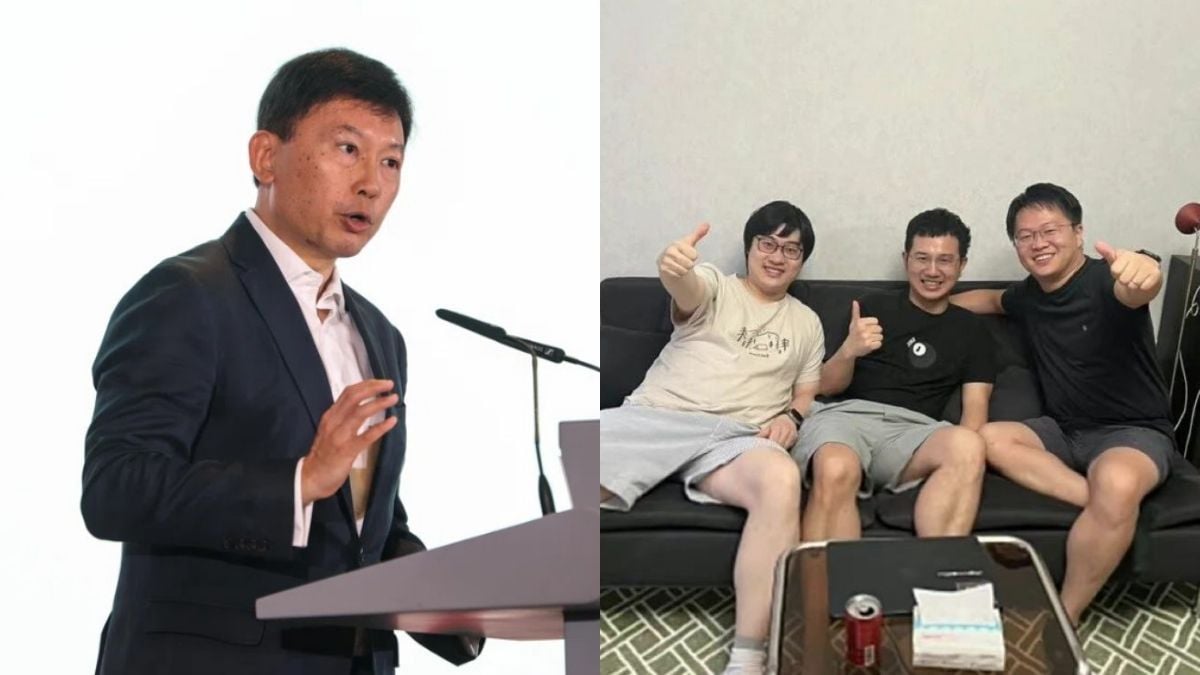
- Chee said Singapore had no reason to comment because no Singapore laws were violated in the Meta-Manus case.
- Singapore respects the national security considerations of both China and the United States over the blocked acquisition.
- Singapore aims to remain a trusted global business hub built on transparency, disclosure and trust.

Singapore did not issue any public statement after China halted United States technology firm Meta's planned acquisition of artificial intelligence (AI) startup Manus because the case did not involve any breach of Singapore law, National Development Minister Chee Hong Tat said.
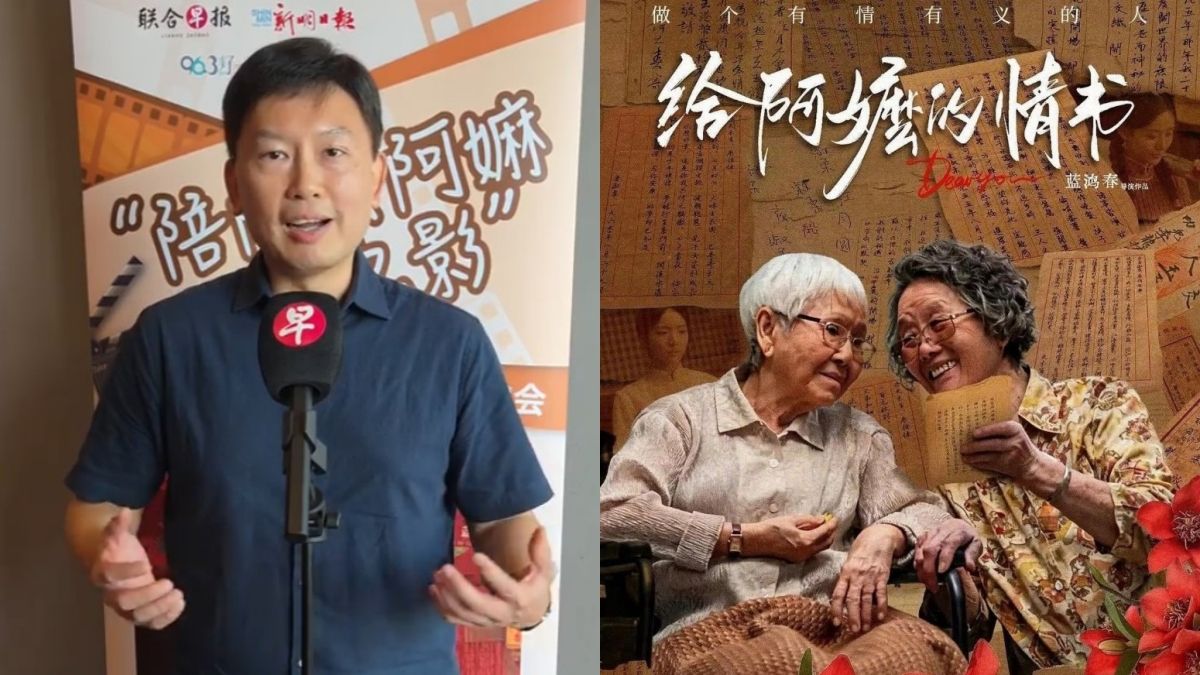
Addressing questions at the eighth Singapore-China Forum organised by Lianhe Zaobao on 6 July 2026, Chee said Singapore respected the national security and strategic considerations of both China and the United States regarding the proposed transaction.
"First, I want to make one point clear. There was no need for the Singapore Government to comment on this incident because no Singapore laws were violated," Chee said.
"Both the Chinese Government and the United States Government have their own national security and strategic considerations, and we respect them."
Questions on Manus acquisition
Chee made the remarks during a dialogue session with Zaobao Editor-in-Chief Ang Yiting, where audience members raised several questions about the aborted acquisition.
Three participants asked whether Manus' decision to establish its headquarters in Singapore could help Chinese AI companies reduce geopolitical risks, how Singapore viewed its role in supporting the internationalisation of Chinese AI companies, whether Singapore should safeguard the interests of AI firms registered in the country, and why the Government had remained silent throughout the Manus episode.
Chee reiterated that decisions on whether a technology company could relocate to Singapore ultimately rested with the government of its country of origin rather than Singapore.
"If we want to continue advancing international cooperation in AI, it is important to understand and respect each other's concerns and considerations," he said.
"Whether a technology company leaves its home country and comes to Singapore is not Singapore's decision. It is determined by the government of the country concerned, whether China or the United States, based on its national security considerations."
Singapore's role as a trusted hub
Chee said Singapore's responsibility was to continue strengthening its position as a trusted international business and financial centre.
He said three elements were essential to maintaining that reputation: disclosure, transparency and trust.
"We will continue to build Singapore into a trusted business and financial centre," he said.
Chee stressed that Singapore's approach was not determined by whether a company originated from China, the United States or any other country, nor whether it operated in artificial intelligence or another fast-growing technology sector.
"The important point is that if you come to Singapore, you will find a stable and trusted environment. It is a base from which you can conduct business, raise capital and expand into the rest of the world through Singapore's ecosystem."
China blocks Meta-Manus transaction
The comments followed China's decision to prohibit Meta's planned acquisition of Manus.
In April 2026, China's National Development and Reform Commission announced that it had decided, in accordance with the law, to prohibit foreign investment in the acquisition of the Manus project and instructed the parties involved to cancel the transaction.
The regulator stated: "A decision has been made in accordance with the law to prohibit foreign investment in the acquisition of the Manus project, and the parties involved are required to cancel the transaction."
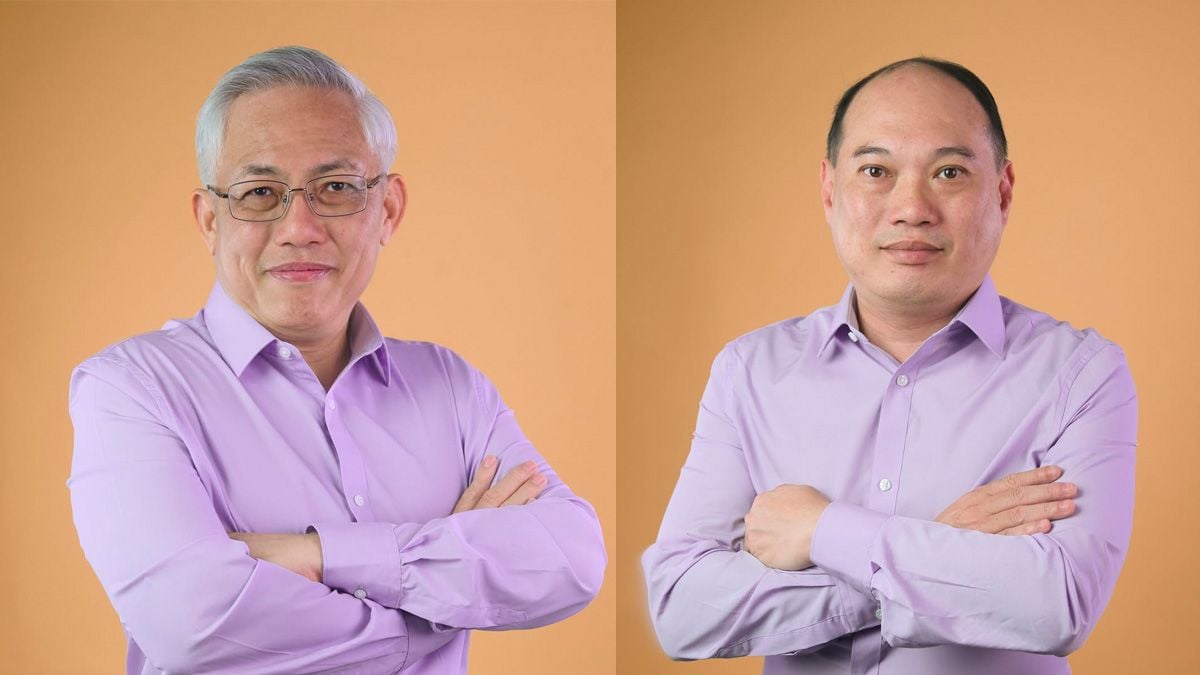
The intervention came after reports in March that Manus chief executive Xiao Hong and chief scientist Ji Yichao had been barred from leaving China while authorities reviewed the proposed acquisition.
Both executives had previously been based in Singapore, where much of their personal assets had reportedly been relocated.
The proposed sale of Manus to Meta had been viewed by observers as part of a broader trend of private Chinese technology entrepreneurs shifting operations overseas amid growing geopolitical uncertainty.
Meta had acquired Manus in December 2025 for more than US$2 billion as part of its efforts to strengthen capabilities in AI agents.
Following China's intervention in April, Meta maintained that the transaction fully complied with applicable laws and said it anticipated "an appropriate resolution to the inquiry".
Growing competition in AI
The planned acquisition formed part of Meta's wider strategy to compete in next-generation AI technologies as global competition in the sector continues to intensify.
AI agents are designed to perform complex tasks autonomously with significantly less human intervention than traditional chatbots.
Manus attracted international attention in March 2025 after gaining widespread visibility on social media platform X.
The company introduced what it described as the world's first general AI agent.
Approximately four months after the surge in global attention, its parent company, Butterfly Effect, relocated its headquarters from China to Singapore.
Respecting geopolitical realities
In his address at the forum, Chee also said Singapore recognised that closer engagement between China and the United States did not mean all outstanding issues had been resolved.
Although bilateral relations had become more stable following meetings between leaders from both countries, he said the relationship remained one that required careful and sustained management.
"The relationship between China and the United States remains a very important one that requires continued attention," Chee said.
"Both sides need to continue investing time and effort to ensure that stability and good relations can be maintained. This is not a one-off exercise but a long-term and continuous process."
Expanding Singapore-China cooperation
During his address, Chee also identified three areas where Singapore and China should deepen cooperation: the green transition, artificial intelligence and robotics, and ageing populations.
He said climate change, technological disruption and demographic shifts represented common global challenges that no country could solve independently.
"No country has all the answers, nor the capacity and resources to act alone," Chee said, adding that Singapore and China could continue expanding and deepening cooperation based on their longstanding bilateral relationship.
On climate change, Chee described it as "one of the most pressing tasks of our time" and said all countries shared responsibility for building a more sustainable future.
He highlighted China's leadership in renewable energy technologies, including solar power, wind energy, battery storage and small modular nuclear reactors, saying these capabilities could contribute to regional decarbonisation initiatives such as the ASEAN Power Grid.
Singapore, meanwhile, could contribute expertise in sustainable urban planning and integrated development.
Harnessing AI and robotics
On AI and robotics, Chee said discussions should move beyond concerns about job displacement and instead examine how technology could improve productivity while creating new opportunities.
He pointed to Singapore's built environment sector, where AI and robotics were already helping companies reduce costs, redeploy workers into higher-value roles and generate specialist employment and startup opportunities.
Describing China as "a world leader in AI, robotics and intelligent manufacturing", Chee said Singapore could learn from China's large-scale deployment of advanced technologies across construction, logistics and urban infrastructure.
He added that stronger cooperation among governments, businesses and academic institutions would help ensure technological progress benefits society.
Preparing for ageing societies
Chee also highlighted ageing populations as a major shared challenge.
By 2030, one in four Singaporeans and one in five Chinese citizens are expected to be aged 65 or above.
He said both societies should ensure older people could "have good health and peace of mind to enjoy their golden years".
Chee cited Singapore's ageing-in-place initiatives and China's mutual-aid eldercare programmes, where younger seniors support older residents, as examples from which both countries could continue learning.
He also identified stronger domestic consumption, a more stable property market and expanded youth exchanges as important priorities for China's future development.
Chee said encouraging more face-to-face exchanges among young people would become increasingly important amid evolving United States-China relations and the rapid development of artificial intelligence.
"We must avoid a situation where our young become inward-looking," he said, adding that countries should not view one another as enemies but as competitors capable of cooperating where interests align.