Singapore proposes halving drink-driving alcohol limit and tougher penalties under Road Traffic Bill
Singapore has proposed sweeping changes to its road traffic laws, including lowering the legal drink-driving alcohol limit by more than half, introducing tougher penalties for serious offenders, creating a new drug-driving offence and expanding the use of technology to strengthen enforcement.
- Singapore proposes cutting the legal drink-driving alcohol limit by more than half.
- First-time offenders with very high alcohol levels could face imprisonment under new sentencing guidelines.
- The Bill introduces a new drug-driving offence and expands technology to strengthen traffic enforcement.

Singapore has proposed sweeping changes to its road traffic laws, including lowering the legal alcohol limit for drivers by more than half, introducing tougher penalties for serious drink-driving offenders and creating a new offence targeting drug-driving as part of efforts to improve road safety.
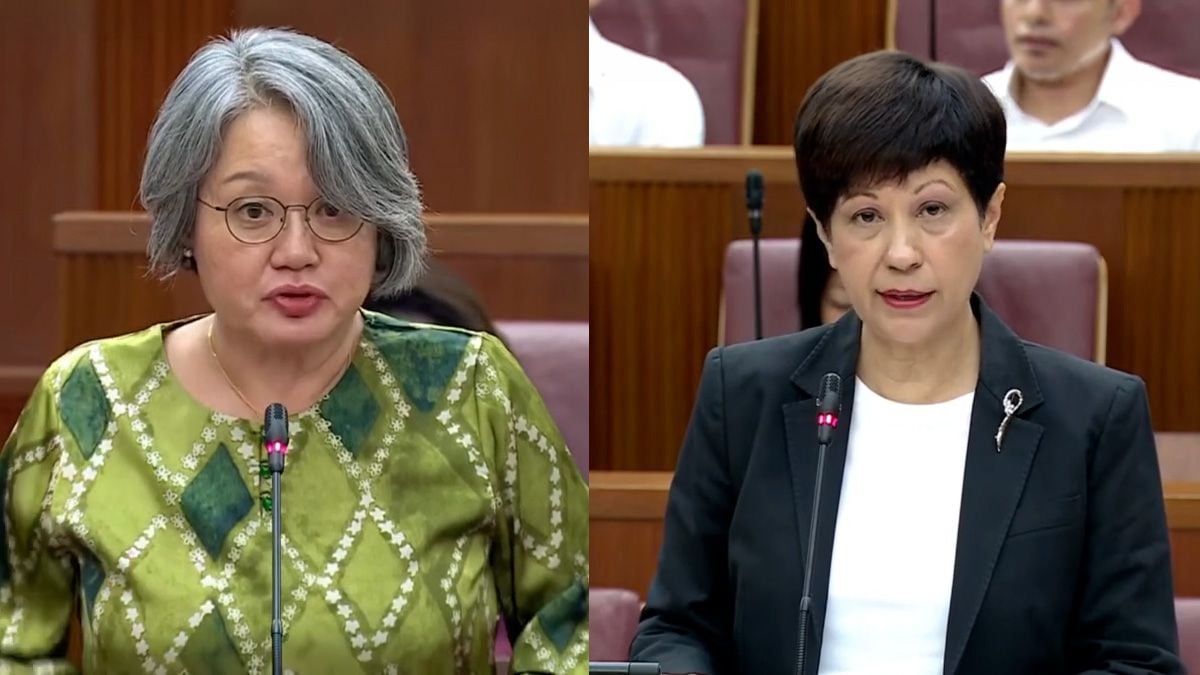
The Road Traffic (Miscellaneous Amendments) Bill was introduced for First Reading in Parliament on 7 July 2026 by Senior Minister of State for Home Affairs Sim Ann.
According to the Ministry of Home Affairs (MHA), the proposed amendments seek to tighten enforcement and penalties for traffic offences while enabling the Traffic Police (TP) to better leverage technology to improve operational efficiency.
Lower alcohol limit proposed
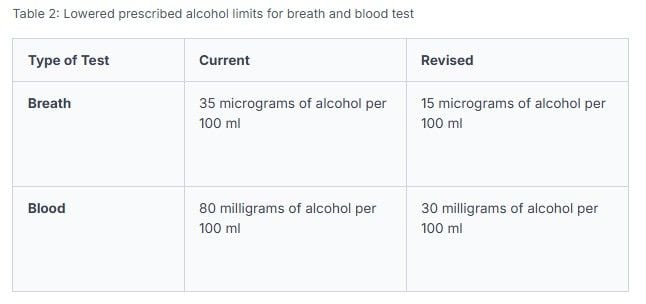
The Bill proposes reducing the prescribed alcohol limit for breath tests from 35 micrograms of alcohol per 100ml of breath to 15 micrograms.
The legal blood alcohol limit will also be lowered from 80 milligrams of alcohol per 100ml of blood to 30 milligrams.
MHA said the revised thresholds would bring Singapore in line with comparable jurisdictions such as Taiwan, Japan and South Korea.
"There is no 'safe' number of alcohol drinks before driving," the ministry said.
"The effect of alcohol on a person varies depending on factors including a person's gender, age, health, and body composition."
The ministry strongly advised motorists not to consume alcohol if they intend to drive, describing it as the safest way to avoid breaching the revised limits.
As a general illustration, MHA said the proposed limits are equivalent to approximately 1.5 standard drinks for males and not more than one standard drink for females consumed three hours before driving, while stressing that alcohol affects individuals differently.
The lower alcohol limits were first announced by Sim Ann during the Ministry of Home Affairs' Budget debate in February.
Tougher approach to drink-driving
MHA will also work with the Sentencing Advisory Panel to develop sentencing guidelines recommending imprisonment for first-time drink-driving offenders found with very high blood alcohol levels.
Currently, first-time offenders without aggravating factors such as accidents or injuries are generally fined and disqualified from driving for two years, although existing laws already allow courts to impose up to 12 months' imprisonment in addition to a fine and driving ban.
The ministry said imprisonment for serious first-time cases would better reflect the significant risks posed to other road users.
"No one accidentally drinks and drives," MHA said.
"Offenders deliberately choose to do so, placing themselves and others at risk of traffic accidents."
New breathalyser to speed up enforcement
The proposed legislation would also allow TP officers to use a portable Handheld Breath Evidential Analyser capable of producing evidential-grade breath alcohol readings immediately at the roadside.
Under the current process, officers first conduct a preliminary breath test before escorting the suspect to a police lock-up for a second evidential-grade test using a larger machine.
Only the second reading is admissible in court.
MHA said the time taken to transport suspects often results in a lower recorded alcohol concentration than at the time they were stopped.
Where a suspect disputes the handheld breathalyser reading, authorities may continue relying on existing evidential procedures, including blood tests.
New offence for drug-driving
The Bill also introduces a new offence covering drivers found with controlled drugs, intoxicating substances or psychoactive substances in their blood.
Currently, enforcement action generally requires proof that the driver was impaired and incapable of properly controlling the vehicle, as well as establishing a link between the substance consumed and the impairment.
Under the proposed changes, drivers may be prosecuted if prohibited substances are detected in their blood, regardless of the quantity present or whether impairment was observed.
The new offence will cover substances defined under the Misuse of Drugs Act 1973, Intoxicating Substances Act 1987 and Tobacco and Vaporisers Control Act 1993.
However, MHA said motorists would not be liable if the drugs had been legally prescribed for medical purposes and they did not know the medication could impair their driving.
The ministry added that drivers impaired by any form of drug, including medication, would continue to be liable under existing laws.
Blood sample process revised
The Bill also proposes changes to the procedure for obtaining blood specimens from hospital patients.
Current legislation requires a doctor responsible for the patient's care to explicitly authorise the taking of a blood sample after determining it would not affect treatment.
The proposed amendments replace this requirement with one focused on patient safety.
Instead, the registered medical practitioner or nurse taking the specimen, together with anyone instructing or supervising the procedure, must each be satisfied that taking the sample does not endanger the patient.
The change follows a recent court case in which a drink-driving suspect was acquitted after the prosecution failed to prove beyond reasonable doubt that the attending doctor had authorised the collection of a blood sample.
According to the court, the suspect refused to provide the sample while the doctor remained silent, apparently under the mistaken impression that police possessed an independent power to compel the procedure.
Wider traffic law changes
Beyond drink-driving reforms, the Bill contains several broader amendments aimed at improving road safety.
It introduces a new offence of purposeful endangerment using a vehicle causing death or grievous hurt, carrying mandatory imprisonment of up to 15 years, discretionary caning, fines and lifetime driving disqualification unless special reasons exist.
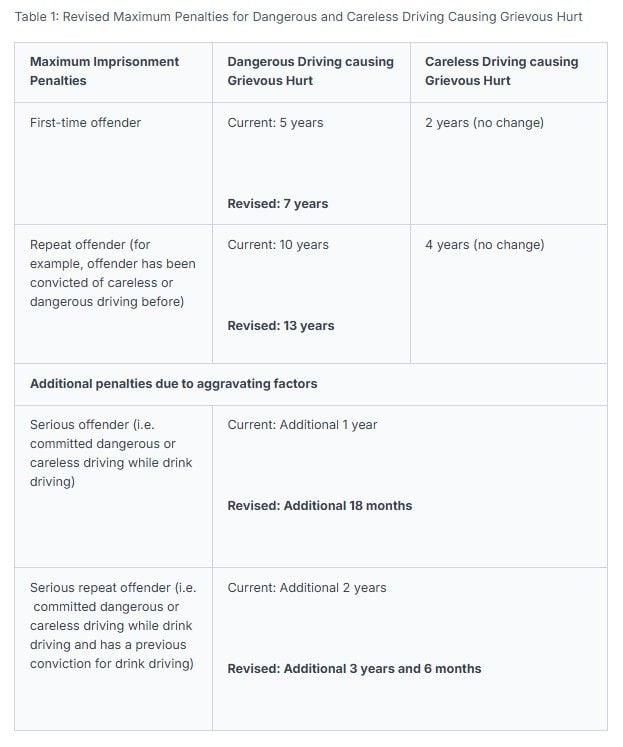
Maximum imprisonment terms for dangerous driving causing grievous hurt would also increase from five years to seven years for first-time offenders and from 10 years to 13 years for repeat offenders.
The Bill further amends laws governing mobile phone use while driving, making it an offence simply to hold a mobile communication device while a vehicle is moving, removing the need to prove the device was being operated.
The amendment would also allow enforcement using cameras and photographic or video evidence submitted by members of the public.
In addition, TP would be able to deploy automated decision-making systems to process technical traffic offences, including speeding and red-light violations, before automatically issuing notices requiring vehicle owners to identify the driver.
MHA said the proposed measures come as Singapore's roads have become less safe, with traffic fatality rates increasing by about 24 per cent and traffic violations rising by about 38 per cent between 2021 and 2025.