Chan Chun Sing defends political pay framework but avoids detailing compensation ranges
Chan Chun Sing defended Singapore’s political salary framework, unchanged since 2012, but did not disclose compensation ranges or address comparisons with top household incomes. A new independent committee has been formed to review and possibly refine the current system.

- Minister Chan stated that political salaries have remained unchanged since 2012, with entry-level ministers earning a norm salary of S$1.1 million under a fixed framework.
- He outlined the structure of fixed and variable components but did not provide the full compensation ranges requested or address comparisons with 90th percentile household incomes.
- An independent committee has been appointed to review the salary framework, following public scrutiny and previous reviews in 2012 and 2017.

In a written reply to parliamentary questions on 3 February 2026, Minister-in-Charge of the Public Service Chan Chun Sing stated that the salary framework for political office holders in Singapore has remained unchanged since 2012, with entry-level ministers continuing to receive a norm annual salary of S$1.1 million.
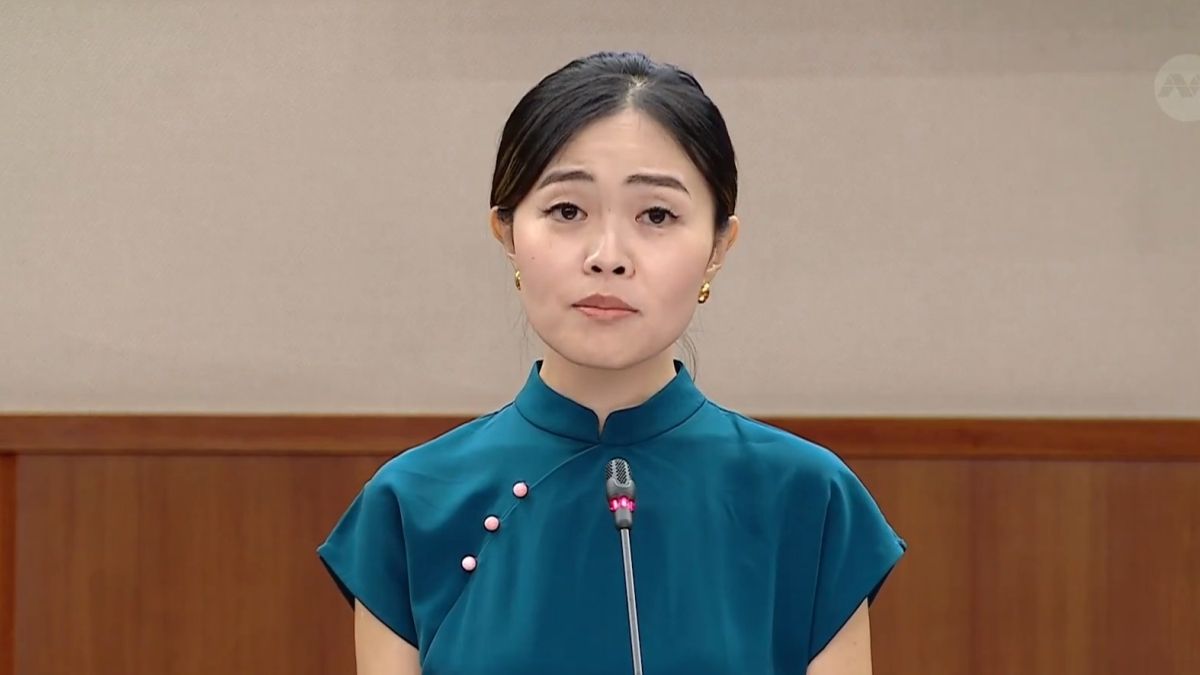
The response was addressed to Workers’ Party Non-Constituency Member of Parliament Eileen Chong Pei Shan, who had asked for details on the total annual compensation range for political office holders between 2018 and 2024. She also requested a breakdown of key variable components and a comparison of these salaries against median and 90th percentile household incomes.
Minister Chan, who is also the Education Minister, explained that the current framework was established by an independent committee in 2012 and retained following a 2017 review, which concluded that the structure remained sound. At that time, the Government decided not to adjust salaries, citing transitional economic conditions.
He said the annual salary for an entry-level MR4 Minister comprises fixed and variable components, with a 65:35 ratio.
The fixed component includes the monthly salary and the 13th-month Non-Pensionable Annual Allowance. Variable components include the National Bonus, Annual Variable Component (AVC), and the individual Performance Bonus.
The National Bonus is tied to four socio-economic indicators: real median income growth, income growth for the 20th percentile, the unemployment rate, and GDP growth. Between 2018 and 2024, the AVC, paid to all civil servants, ranged between 0 and 1.5 months.
The Performance Bonus, which may range from 0 to 6 months annually, is determined by the Prime Minister for other political office holders. However, the Prime Minister himself does not receive a Performance Bonus; instead, a greater portion of his variable pay is allocated to the National Bonus.
| Component | Description |
| Fixed Pay | 12 months + 13th month bonus (65% of total) |
| Variable Pay | AVC, Performance Bonus, and National Bonus (35% of total) |
| Benchmark | Median income of top 1,000 SG citizens, minus 40% |
| Status | Frozen since 2012; currently under review (2026) |
Minister Chan reiterated that the S$1.1 million figure for entry-level ministers already includes these variable pay elements. This figure reflects a 40% discount from the market benchmark based on the median income of the top 1,000 Singaporean earners, as recommended in the 2012 White Paper on ministerial salaries.
Addressing salary-to-income comparisons, he stated that political salaries have remained unchanged since 2012, while incomes at the 20th percentile and median levels rose by 87% and 80% respectively over the same period, based on Ministry of Manpower data. He added that comparisons should be made with individual incomes rather than household incomes.
Minister Chan also confirmed that a new independent committee has been appointed to review the existing salary framework and propose refinements if necessary.
Announced in January 2026, the committee is chaired by Gan Seow Kee and includes representatives from the public, private, and people sectors. It has been tasked to assess the relevance of the current political salary framework and recommend refinements where appropriate. Its findings will be submitted to the Government upon completion, after which Parliament will be updated.
However, Minister Chan did not provide the full range of total annual compensation actually received by political office holders between 2018 and 2024, as requested.
He also did not address the requested comparison against the 90th percentile of household incomes, choosing instead to frame the comparison around individual incomes.
This review of ministerial pay follows years of public discourse and periodic parliamentary questions on the issue of political compensation—particularly as Singapore’s political office holders are widely acknowledged to be among the highest-paid in the world.
In 2012, political salaries were adjusted downwards following the 2011 General Election, in which the People’s Action Party lost its first Group Representative Constituency to the Workers’ Party. However, no increases have been made since.
While the 2017 Committee recommended aligning salaries with market movements, the Government chose not to implement changes due to economic uncertainty.
This 2026 review also follows a notable deferment. Although the 2012 White Paper recommended a review every five years—which would have required a committee to be formed by 2023—Minister Chan explained in Parliament that the exercise was postponed.
He cited the Government’s focus on “pressing issues”, including a volatile geopolitical landscape marked by conflicts in the Middle East and Ukraine, as well as global economic uncertainties affecting Singapore’s inflation and wage outlook.
The annual salary of the Prime Minister is publicly stated to be around S$2.2 million, making it one of the highest for a head of government globally.
However, the full breakdown—particularly how much of this figure comes from variable components such as bonuses—has not been officially confirmed.
This lack of detail remains relevant in the context of Eileen Chong’s question, which sought transparency on the actual range of compensation received by political office holders over the past six years.
Minister Chan concluded that the ongoing review is a timely exercise to ensure that the framework remains robust, fair, and aligned with the national interest.