Eileen Chong: AI must protect Singaporeans’ time, presence and space, not just productivity
Eileen Chong urges the Government to make liveability central to Budget 2026, warning that unchecked AI adoption may intensify work and erode family time. She calls for stronger childcare leave, flexible work policies and education reforms to give Singaporeans more time and space.
- Eileen Chong urges Budget 2026 to prioritise time, family and liveability.
- Warns AI may intensify work and increase burnout without safeguards.
- Proposes stronger childcare leave, flexible work laws and education reform.

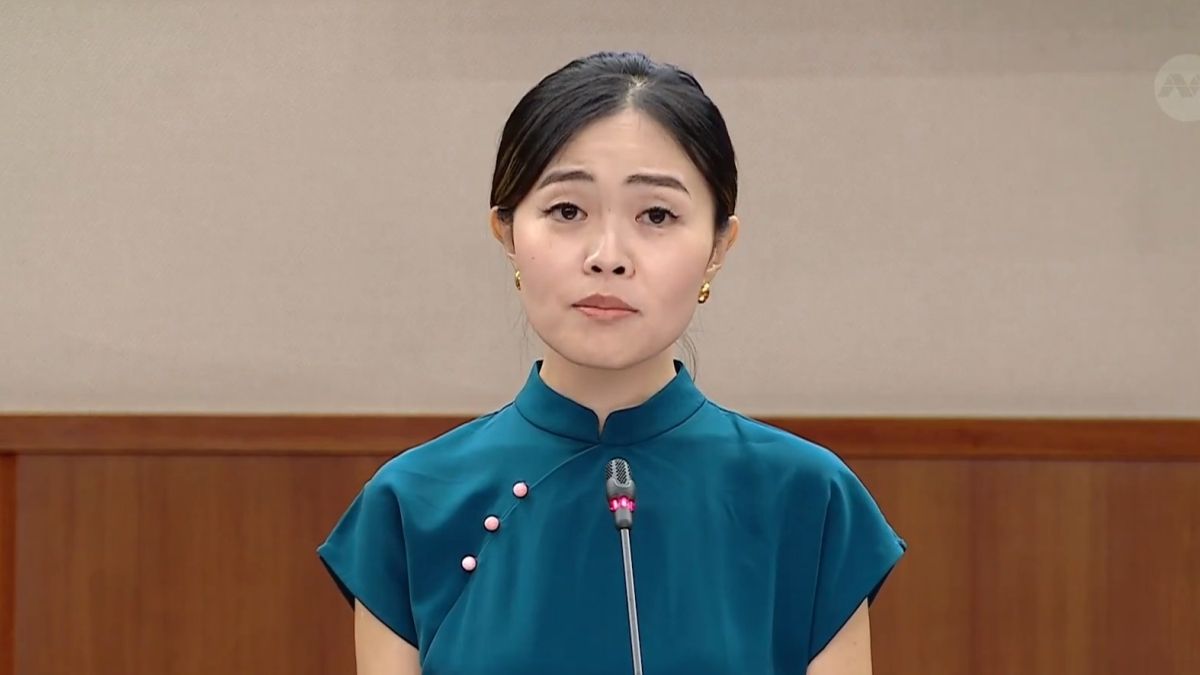
Participating in the Budget 2026 debate on 24 February 2026, Eileen Chong, Non-Constituency Member of Parliament from the Workers’ Party, urged the Government to centre liveability in Singapore’s next phase of development.
She argued that while growth and innovation matter, Singaporeans are increasingly concerned about whether they can “live well” amid rapid technological and economic change.
“I rise today to offer a complementary perspective as a young millennial Singaporean,” she said. “For many of us, the question we want an answer to is not whether Singapore is competitive. It is whether Singapore is still a place where we can live well.”
She added that a good life “is not built only on GDP per capita or AI adoption rates. It is built on time – time for the people we love.”
Time: the resource we cannot print
A significant portion of the Prime Minister’s Budget speech focused on artificial intelligence, positioning it as a strategic advantage. Chong said she supported this ambition, but cautioned against overlooking the human cost.
“AI fatigue is real,” she said, describing it as the sense that “no matter how fast we learn, the ground is always shifting beneath us”.
Citing a Harvard Business Review article on an eight-month study of a US technology company, she noted that generative AI adoption did not reduce workloads. Instead, it intensified them by accelerating tasks and raising expectations for speed.
Researchers found that apparent productivity gains could mask “silent workload creep and growing cognitive strain”, making it harder to distinguish sustainable efficiency from unsustainable intensity.
Chong said this had implications for Singapore, especially as workers are encouraged to embrace AI tools. The risk, she argued, was not only job displacement but job intensification.
“The risk is not that AI replaces us – though it will replace some jobs – but that it makes us run faster on the same treadmill,” she said.
Singapore’s average full-time working week stands at nearly 44 hours, excluding unpaid overtime.
She highlighted that 61 per cent of employees report feeling exhausted, while burnout costs the economy an estimated S$15.7 billion annually in lost productivity.
“Productivity gains do not automatically become human gains,” she said. “Without deliberate policy choices, they tend to remain employer gains.”
If AI automates routine tasks, she suggested, the benefit should include leaving the office on time more often, not simply adding more tasks.
Referring to the Prime Minister’s call last year for a “We First” society, Chong said such a vision required time and energy. “A ‘We First’ society needs people who have the time and energy to show up for each other,” she added.
Presence: the conditions for care
Chong then turned to family life and fertility, arguing that financial incentives alone would not close the gap between aspirations and outcomes.
She shared conversations with peers about having children. “These conversations rarely begin with money,” she said. “They begin with a pause… and a shared concern that we cannot be the parents we want to be. Present. Engaged. Patient.”
According to the 2021 Marriage and Parenthood Survey, more than 90 per cent of married respondents wanted two or more children. However, over half had one or no children. Singapore’s total fertility rate has held at 0.97 since 2023.
“This gap between aspiration and reality is not a gap in desire. It is a gap in enabling conditions,” she said.
Chong acknowledged that Budget 2026 includes measures such as additional Child LifeSG credits, enhanced preschool subsidies and extended means-testing support.
“These financial measures matter,” she said. However, she called for complementary policies focused on restoring time and energy to families.
She said she would propose per-child childcare leave, caregiving leave and enforceable flexible work arrangement policies, rather than guidelines, at the upcoming Committee of Supply debate.
“These will help us to better support Singaporean families as they grow and age, and hopefully, lead to higher fertility and stronger family outcomes,” she said.
Space: room to grow, explore and become
Chong’s final theme was space, particularly for young people navigating an AI-driven future.
While welcoming efforts to strengthen AI literacy, she questioned what constituted “rigorous foundations” in a world where AI can generate code, analyse data and compose music.
“Surely the competitive advantage is no longer what we know, but who we are,” she said, pointing to empathy, creativity and resilience as enduring strengths.
She welcomed a comprehensive review of the education system and argued that if AI changes the nature of work, it must also change what Singapore values in education.
Singaporean families spent S$1.8 billion on private tuition in 2023, a 64 per cent increase from a decade earlier. Chong described this as a rational response to a system that “sorts early and sorts sharply”.
She stopped short of calling for the abolition of the bell curve, but urged a rethink of how it is used. Instead of competitive sorting, she suggested using it diagnostically to track progress and identify learning needs.
“When access to opportunities is too tightly tied to early academic performance, those of us who take longer to find our footing may find some doors closing before we have had a chance to knock,” she said.
Chong also welcomed the merger of Workforce Singapore and SkillsFuture Singapore into a new statutory board, expressing hope that it would update frameworks for career development and labour protection.
She noted that some youths are building portfolio careers that combine roles and projects. This, she said, reflects adaptability and entrepreneurial thinking.
“I believe Singaporeans are ready for a conversation about what we are willing to prioritise to build a Singapore that is both successful and sustainable,” she said.