Singapore Renovation firm flags layout & liveability flaws in Tampines BTO flat
Local renovation firm Reno Scout has released a video criticising the layout of a newly completed four-room BTO flat, highlighting dining space constraints, a “dumbbell-shaped” layout, and air-conditioning and bathroom design issues.

- Reno Scout released a new video criticising the layout and space planning of a four-room BTO flat at Block 957.
- The firm highlighted issues including lack of dining space, a “dumbbell-shaped” layout, air-conditioning constraints, and a cramped master bathroom.
- The host called for earlier consultation with renovation professionals to prevent liveability problems in public housing design.

SINGAPORE: Local interior design and renovation firm Reno Scout has released a new video expanding its criticism of Build-To-Order (BTO) flat design, this time focusing on overall layout and space planning in a newly completed four-room unit.
The video was filmed at a BTO project identified as "Block 957" in Tampines.
The host described the unit as “problematic”, arguing that its configuration failed to support basic daily living needs.
According to the host, the issues went beyond aesthetics and reflected deeper shortcomings in functional planning.
He said these decisions affected how families could realistically furnish and use the space.
An online check indicates that the BTO project is likely Tampines Green Jade, located at Tampines Street 96 near Tampines West MRT (Downtown Line).
Launched in August 2021, the project has an estimated completion date of September 2025.
Prices, excluding grants, range from S$342,000 to S$419,000 for four-room flats and S$475,000 to S$564,000 for five-room flats.
No clear space or a dining table
One of the first issues highlighted was the absence of a practical location for a four-seater dining table.
Overlaying the unit’s floor plan, the host explained that placing a dining table near the sofa would obstruct movement through the living area.
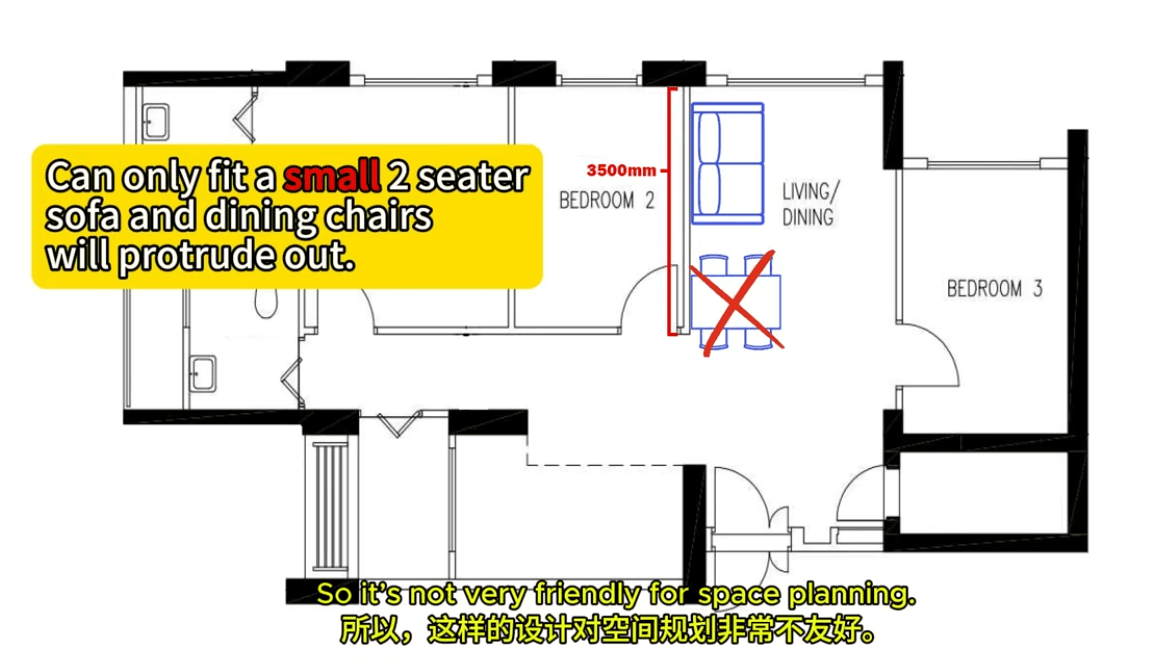
Positioning it in front of the household shelter would block access entirely.
“This is one of the most logical and cheapest options,” he said, referring to the shelter-facing placement.
However, he noted that residents would have to shift the table every time the shelter was used.
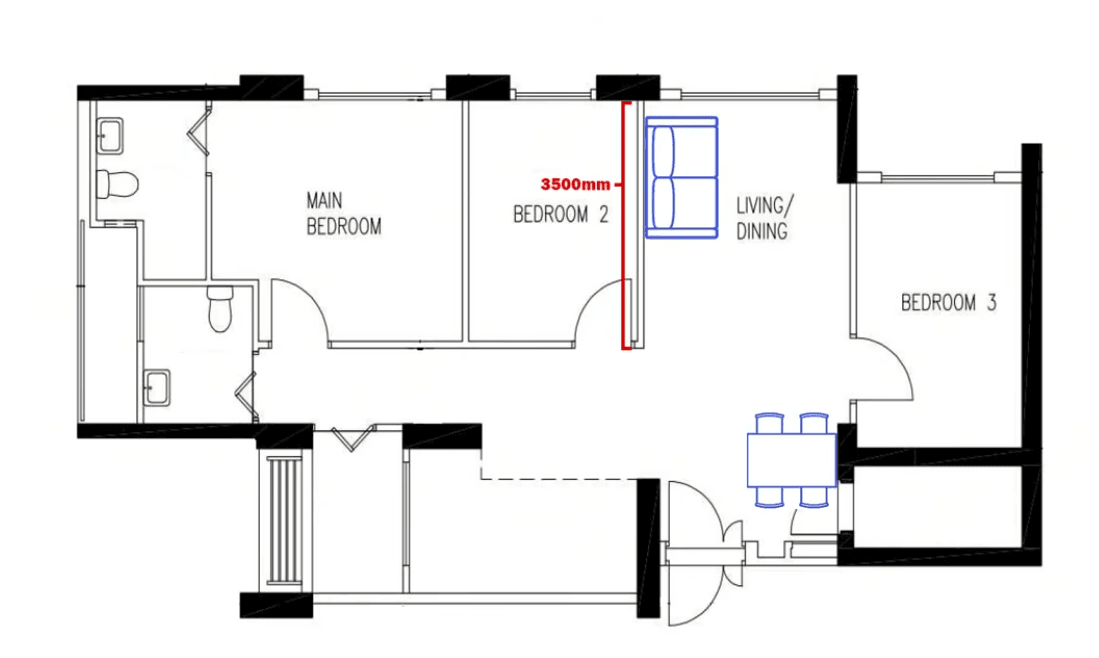
With no other viable locations, the host said many homeowners were forced to forgo a dining table.
Instead, they opted for a kitchen island as a substitute.
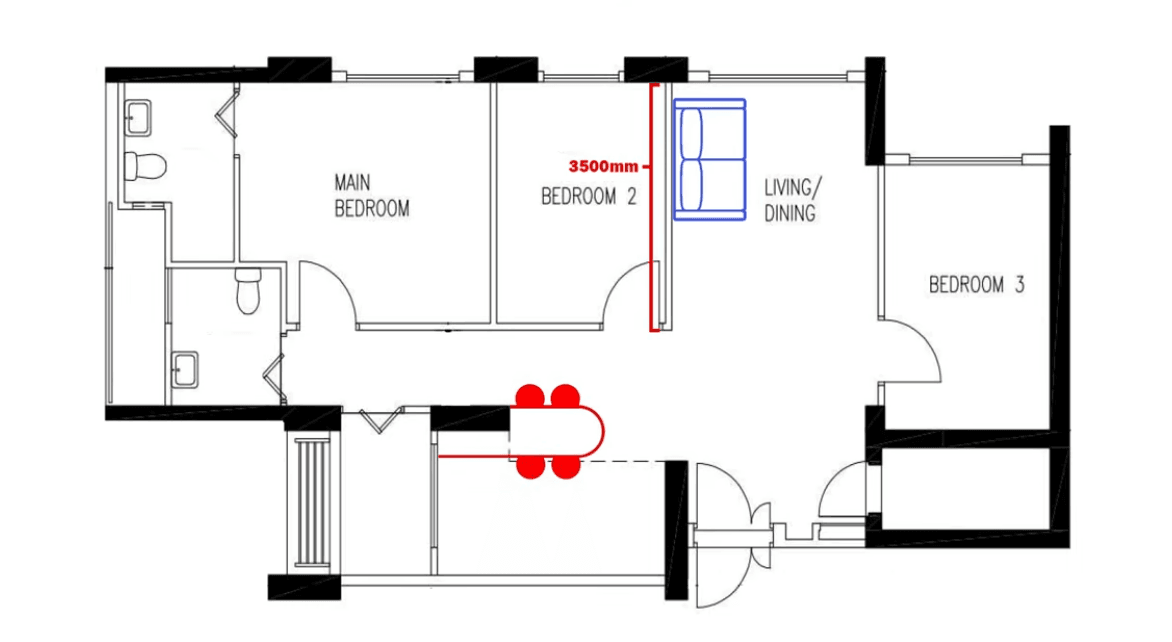
He argued that this compromised shared family interaction during meals.
Visibility of the television was reduced, and family members were more dispersed.
‘Dumbbell-shaped’ layout criticised
The host went on to describe the unit as having a “dumbbell-shaped” layout.
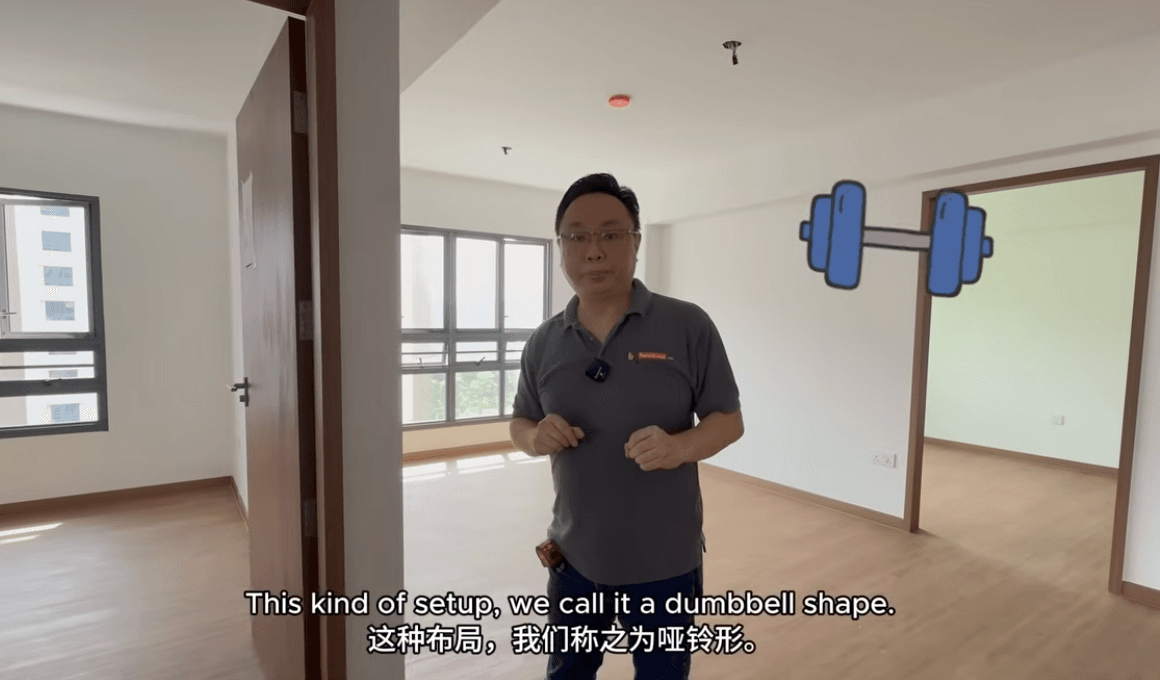
In this configuration, one bedroom sits on one side of the flat.
The living and dining area occupies the centre, while two bedrooms are located on the opposite end.
He argued that the design disrupted the traditional separation between private resting areas and active communal spaces.
It also increased circulation space without improving usability.
“For anyone with space planning experience, you want all your bedrooms on one side,” he said.
He added that the central corridor area felt inefficient and underutilised.
While acknowledging that some households might prefer separation between occupants, he said such layouts created additional technical complications.
These challenges, he argued, had not been adequately addressed in the design.
Air-conditioning routing raises concerns
One key technical issue highlighted involved routing air-conditioning piping to the third bedroom.
According to the host, the flat had a single air-conditioning ledge. This allowed straightforward installation for the master bedroom and one additional room.
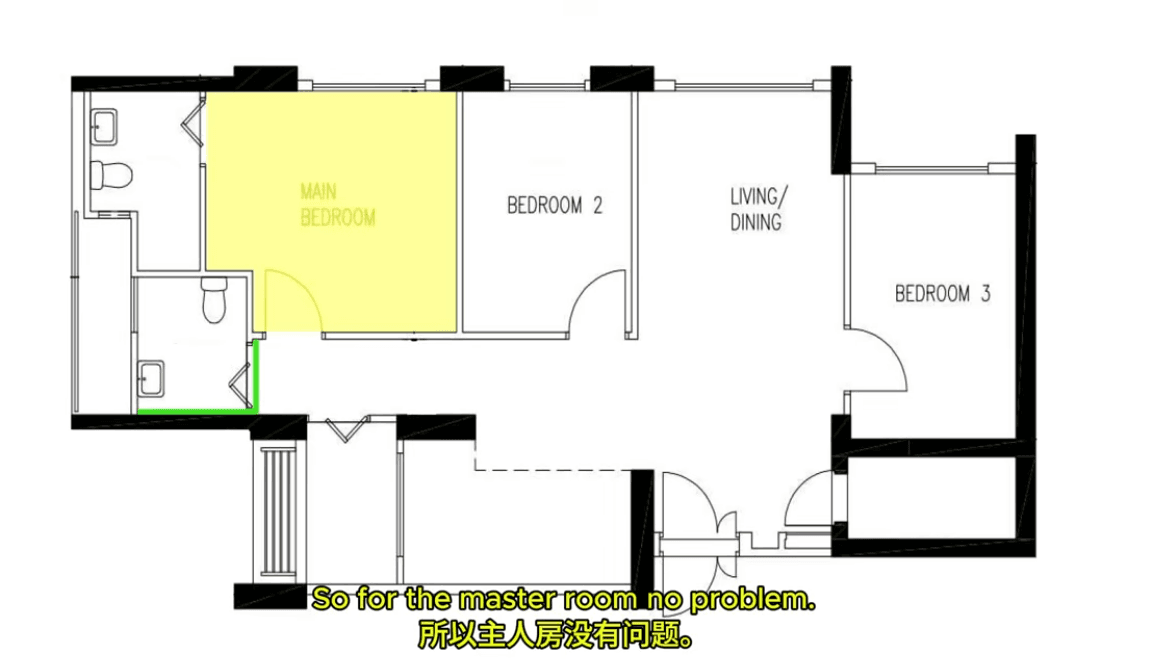
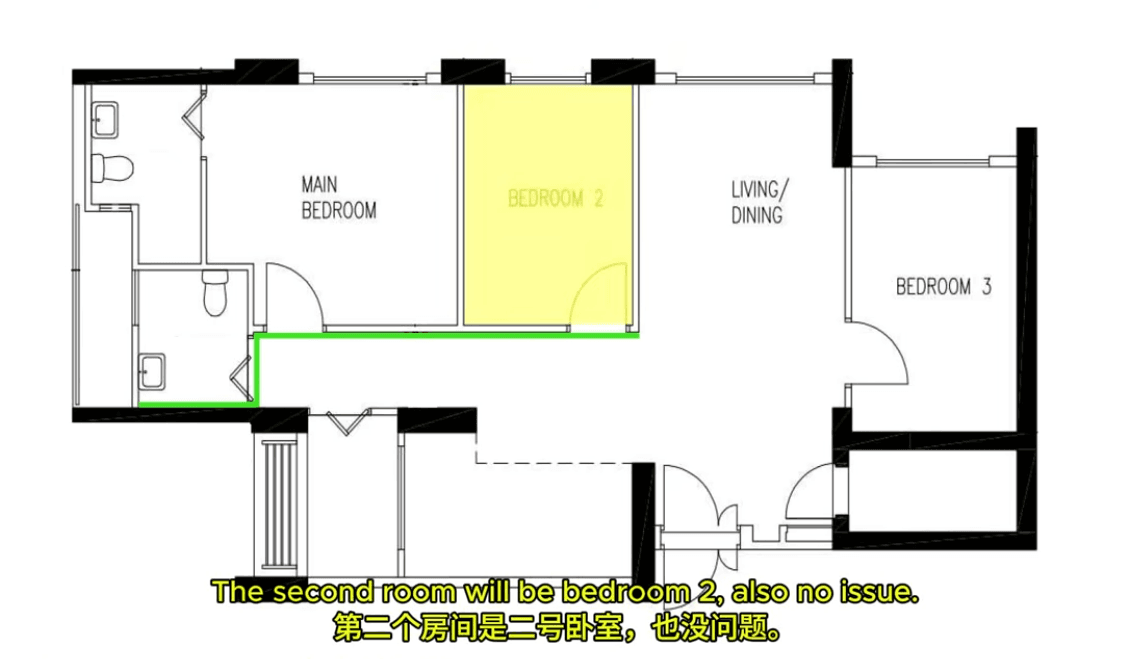
However, for the third bedroom, conventional piping routes were constrained. The height of the window and absence of beams limited installation options.
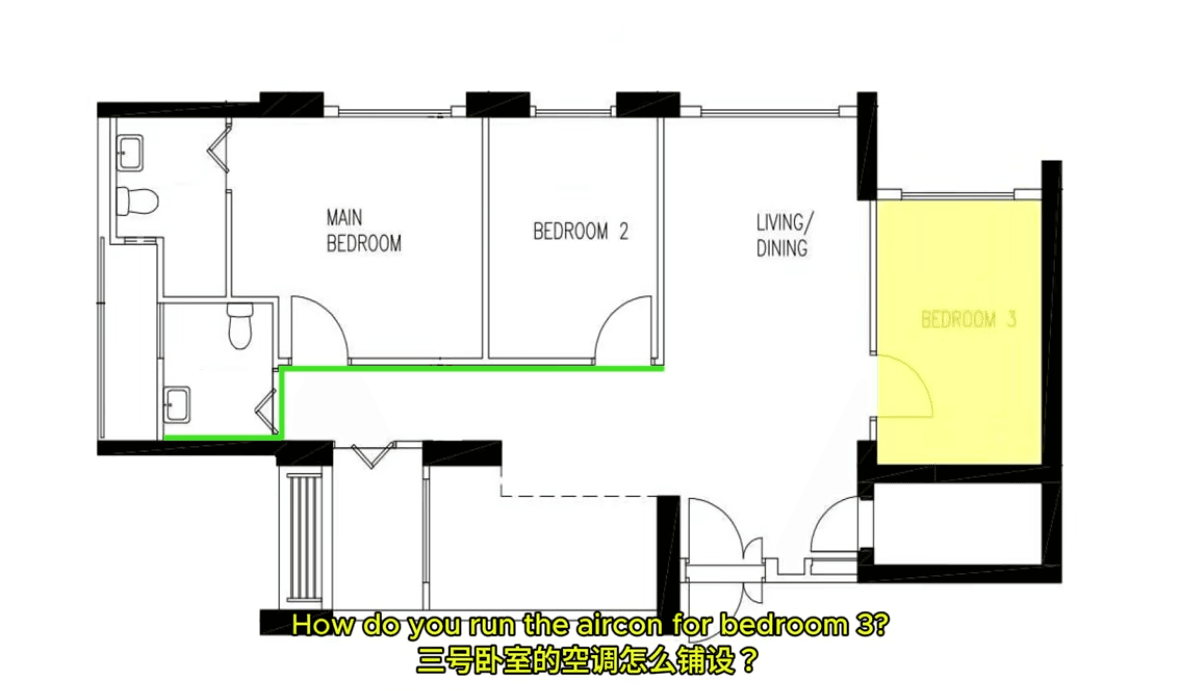
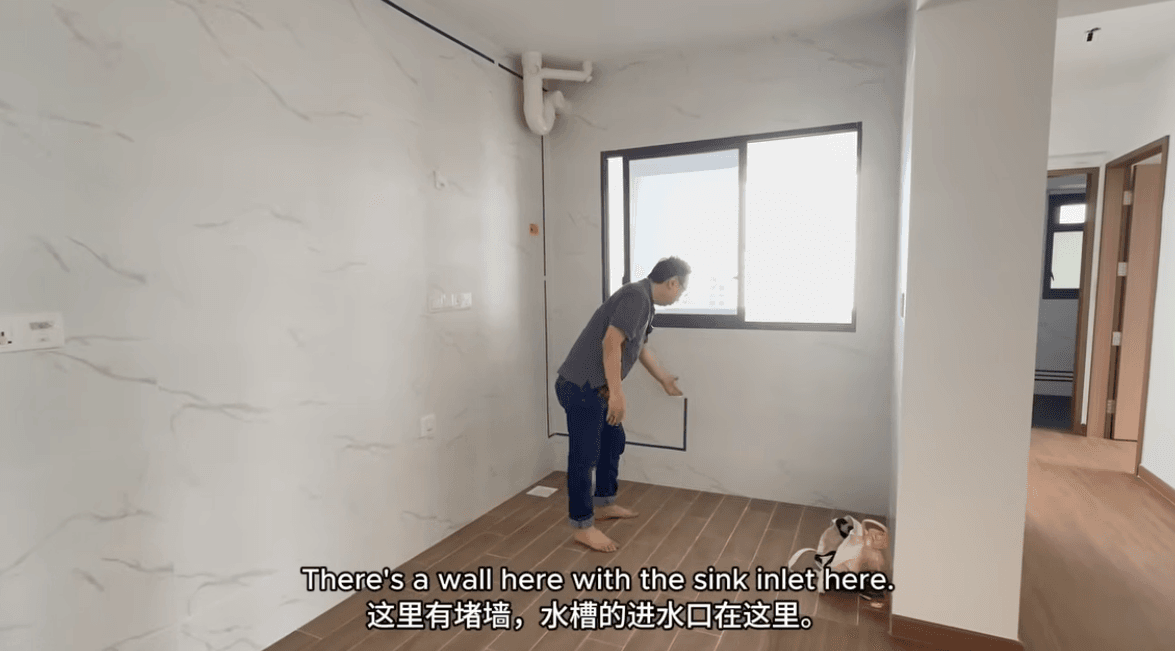
He said the only feasible solution involved installing a drainage pump.
Such pumps can generate noise, potentially disturbing light sleepers at night.
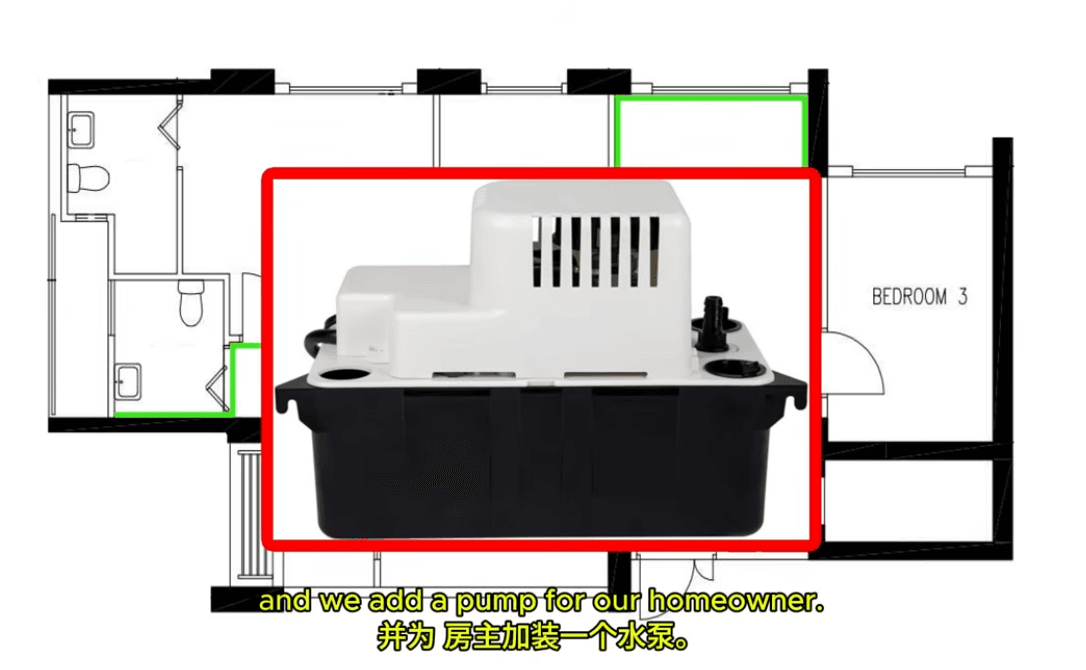
“If you want to do a dumbbell shape, you need to give people options,” he said.
He suggested that an additional air-conditioning ledge could have mitigated the problem.
Kitchen flow and service yard questioned
The video also criticised the kitchen layout and its relationship with the service yard.
The host said the placement of walls, windows, and an additional door disrupted workflow. This prevented the creation of a functional galley-style kitchen.
As a result, homeowners were forced into a U-shaped kitchen configuration.
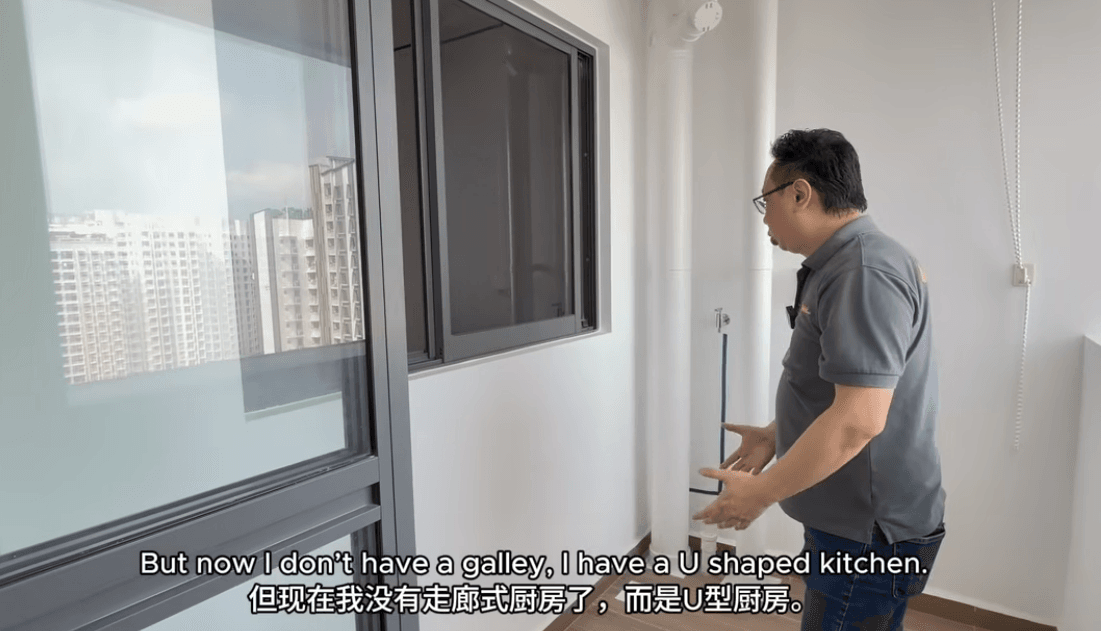
He argued that this reduced cabinet space and created awkward, underused corners.
“This design is a waste of space,” he said.
He added that the same walls could have been better utilised for storage or built-in appliances.
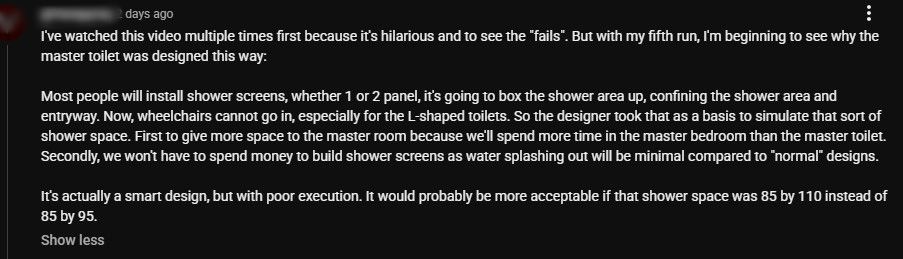
Master bathroom described as ‘pathetic’
The strongest criticism was reserved for the master bathroom.
The host said it was smaller and less functional than the common bathroom.
He highlighted a shower width of about 95cm, which he described as inadequate.
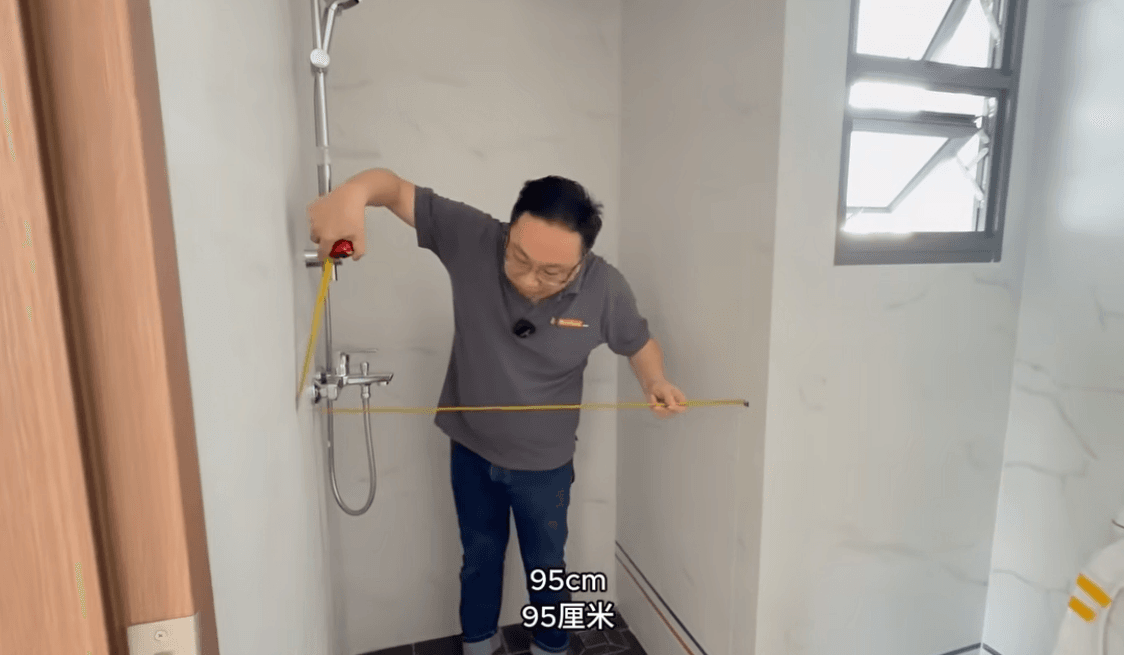
According to him, the narrow width limited comfort for larger users or those with mobility needs.
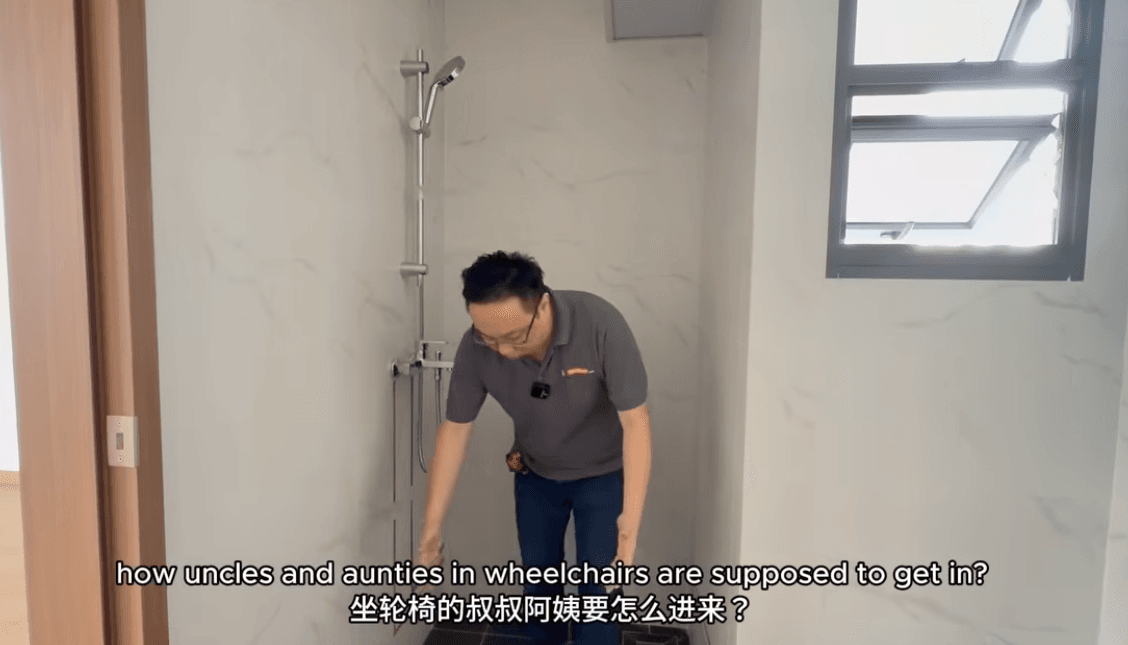
Structural protrusions further reduced usable space.
He also questioned the placement of the vanity and fittings.
These, he said, compromised comfort and usability within the shower area.
“This is called a master toilet?” he asked.
He argued that relocating the bathroom footprint could have produced a more practical layout.
Call for earlier industry consultation
Throughout the video, the host repeatedly called for earlier engagement with renovation professionals.
He said experienced practitioners could review layouts before construction begins. This, he argued, would help flag potential liveability issues early.
“Rather than approving drawings and building first, let people on the ground give feedback,” he said.
He warned that poor designs could erode public confidence in BTO housing.
The host added that he had already encountered multiple homeowners from the same blocks expressing dissatisfaction.
These conversations took place before the video was released.
Broader concerns about BTO liveability
While acknowledging that structural constraints could not always be avoided, the host argued that many problems stemmed from avoidable planning decisions.
He stressed that BTO flats represented a lifetime investment for many families. This followed years of saving and waiting.
“Anybody with common sense knows this is a failure in space planning,” he said.
He described the layout as impractical for everyday living.
Netizens ridicule inconvenient home layout
Reno Scout on its Youtube channel have shared issues that they find while renovating the BTO flats that they are engaged to.
In one such video, published in September last year, the firm criticised the design of BTO toilets—particularly the placement of floor traps—calling it “nonsense”.
As with the earlier video, the latest clip sparked renewed online discussion.
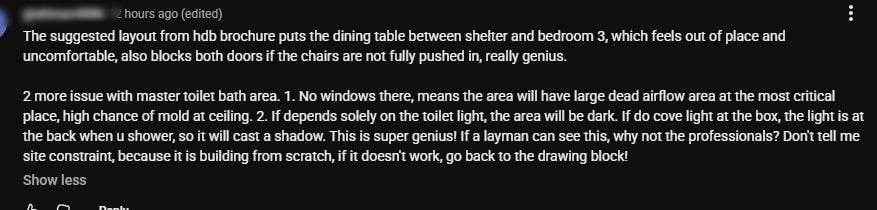
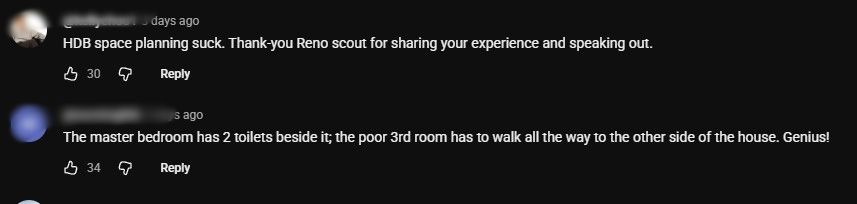
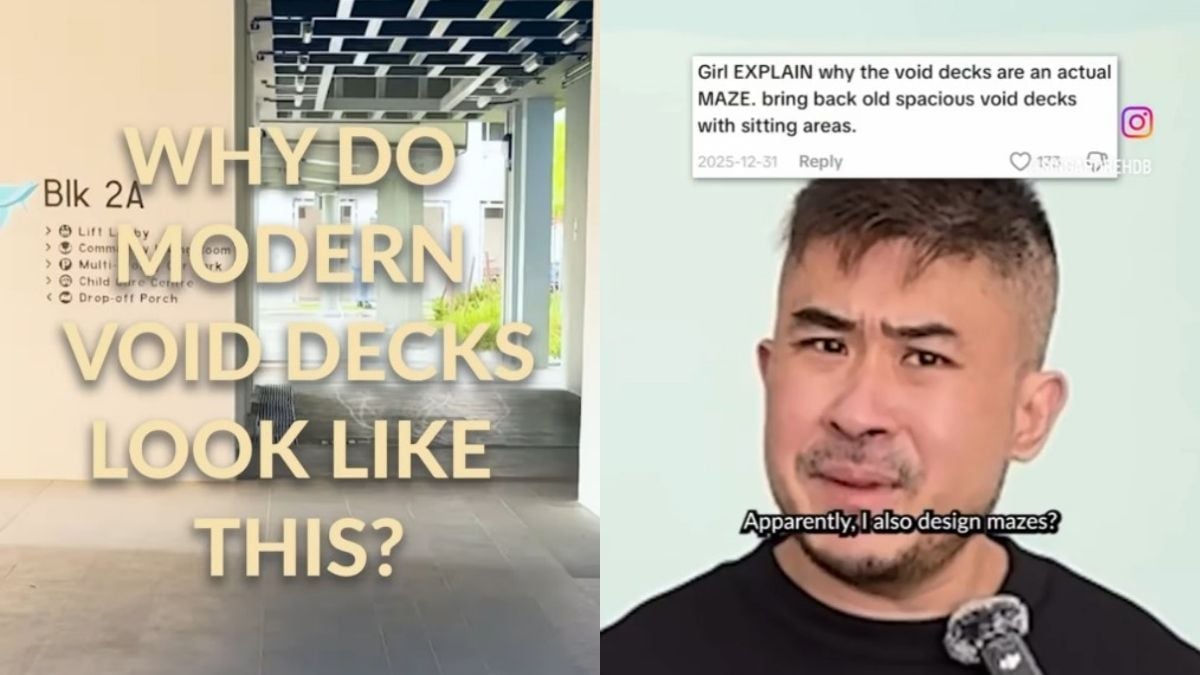
Commenters on Reno Scout’s video largely echoed the criticism. Many questioned whether HDB’s space planning had deteriorated over the years.
The “dumbbell-shaped” layout drew particular ridicule.
Netizens described it as illogical, wasteful, and inconvenient for families needing three functional bedrooms.
The master bathroom was repeatedly cited as a major flaw. Viewers noted its smaller size compared with the common toilet and awkward fittings.
Air-conditioning routing, the isolated third bedroom, and the kitchen–service yard relationship were also criticised. These were seen as signs of poor practical planning.
While a minority said the layout could work for small households or be fixed through costly renovations, most felt homeowners should not have to pay extra to correct basic design issues.