Kenneth Tiong calls for R&D overhaul to prevent Singapore’s innovation ‘leakage’
WP MP Kenneth Tiong warned that Singapore’s R&D system risks losing value overseas despite decades of public investment. Citing the case of Mirxes and international models such as France’s Bpifrance, he urged reforms to funding structures, visa rules, procurement policies and IP protections to ensure taxpayers benefit from innovation.
- WP MP Kenneth Tiong warns Singapore’s R&D ecosystem lacks strong commercial outcomes and risks offshore value leakage.
- Proposals include a consolidated policy investment bank, faster funding and visa reforms.
- IP conditionality laws are needed to retain benefits of publicly funded innovation.

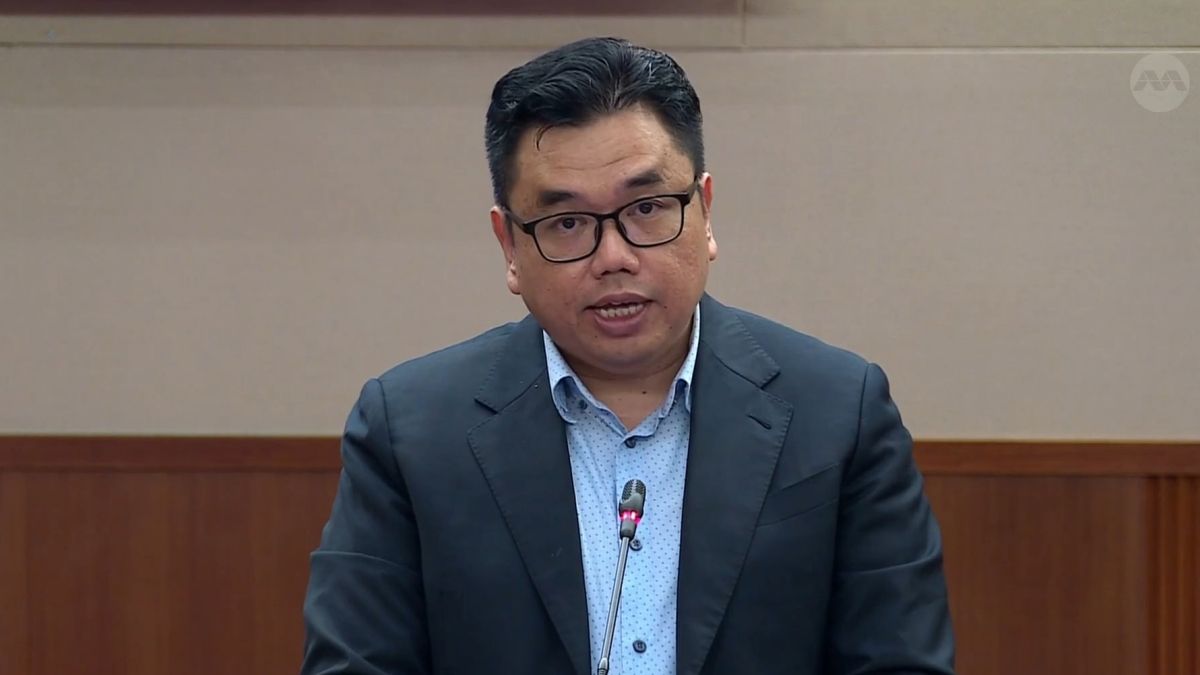
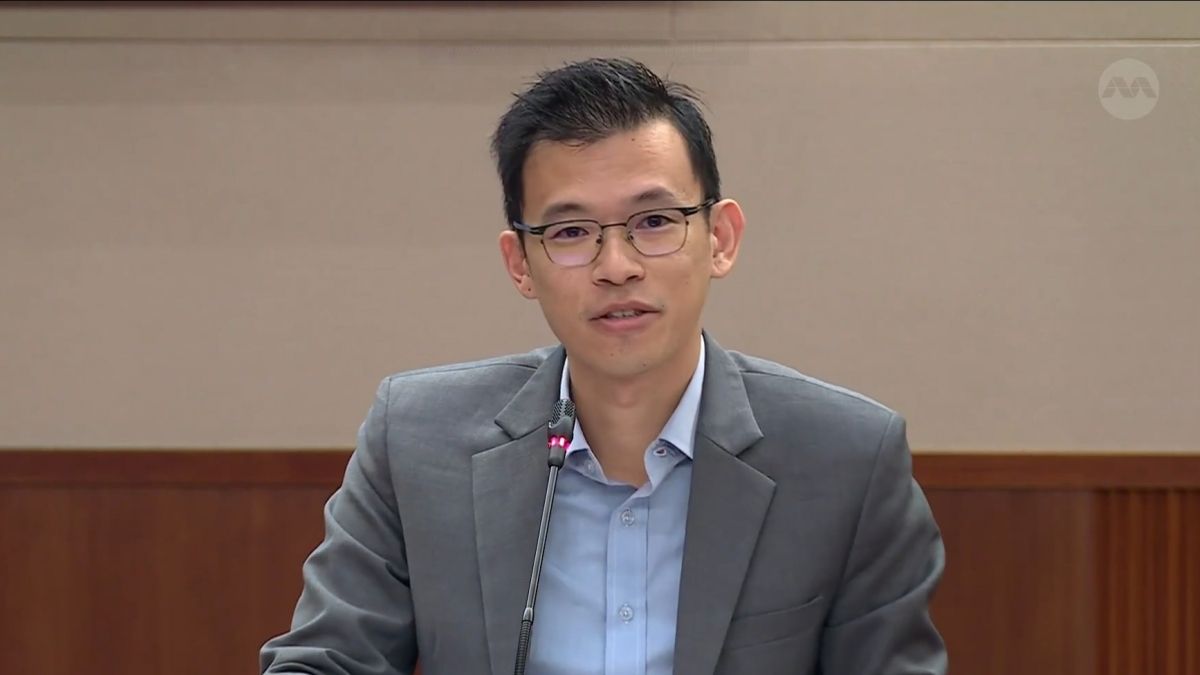
Speaking during the Budget 2026 debate on 26 February 2026, Kenneth Tiong of the Workers’ Party called for sweeping reforms to Singapore’s research and development ecosystem, warning that decades of public investment have yielded limited commercial returns.
He argued that while scientific capability has grown, value creation has too often “leaked” overseas. His speech combined international case studies, structural critique and proposals spanning funding, visas, procurement and intellectual property protection.
From Japanese citrus to Singapore biotech
Tiong began with a Lunar New Year anecdote about the Xiangshan Hongmeiren mandarin orange, described as “eating jelly”. The fruit, originally developed in Japan as Ehime No. 28, took fifteen years of breeding at a prefectural experiment station.
Yet, due to weak intellectual property protection, cuttings were taken to China in 2001. Production now spans more than one million mu across multiple provinces, dwarfing Japan’s cultivation footprint.
“Fifteen years of breeding, gone like that,” Tiong said, describing it as one of the most consequential agricultural IP losses in modern Japanese history.
He then turned to Singapore’s own innovation landscape.
Mirxes as both milestone and warning
Tiong said he had long criticised the country’s R&D ecosystem for lacking major commercial outcomes.
He pointed out that on 23 May 2025, when Mirxes, a microRNA cancer diagnostics firm incubated from research at A*STAR’s Biopolis, listed on the Hong Kong Stock Exchange.
The IPO raised HK$1.09 billion with China-linked cornerstone investors. It marked a rare billion-dollar listing arising from Singapore’s public research base.
However, Tiong described the story as “more complicated”. Mirxes listed in Hong Kong rather than on the Singapore Exchange because SGX lacks a pre-revenue biotech pathway equivalent to Hong Kong’s.
He added that its cornerstone investors were Chinese entities holding more than forty per cent of the IPO, and that its manufacturing is in Zhejiang province. “The initial science came from Singapore. Commercialisation leaked offshore.”
“If this is success, what does failure look like?” he asked.
Structural flaws in the system
Tiong argued that the ecosystem suffers from two structural weaknesses: a limited pipeline of commercially viable R&D companies, and failure to capture value even when successes emerge.
He attributed this to agencies being structured as grant-givers rather than investors or ecosystem builders.
“If you are a grant-giver, your job is to mark the market,” he said, explaining that civil servants face audit scrutiny with little upside incentive. “There is absolutely no reason to stick your neck out.”
He criticised annual key performance indicator cycles that judge long-term innovation bets within twelve months, leading to promising ventures being prematurely cut.
“Our agencies are structured to avoid losing money, not to make it. That is why thirty years of spending has not produced thirty years of returns,” he said.
Consolidating capital under one roof
Tiong welcomed the S$37 billion commitment under RIE2030 and expansion of Startup SG Equity into growth capital. However, he argued that fragmentation across multiple funds dilutes mandate and authority.
He cited France’s public investment bank, Bpifrance, as a model. Formed in 2012 through the merger of four investment bodies, Bpifrance combines innovation investment, SME lending, guarantees and strategic equity under one institution.
In 2024, Bpifrance deployed €60 billion and reported net income of €896 million. It deliberately accepts below-market returns to catalyse ecosystem development.
“I believe we need an equivalent policy investment bank,” Tiong said, calling for an institution outside the civil service, empowered to take risks and operate on ten-year mandates.
He argued that Singapore has capital, but “the wrong type of capital for R&D commercialisation”, with excessive early-stage metric obsession and limited patient investment.
Speed and talent mobility
Beyond funding, Tiong emphasised speed. He said delayed approvals and cash flow can be fatal for startups, and that roughly eighty per cent of bets may fail in good faith.
“Speed is not just about money. It is about people,” he added.
He criticised income-based visa thresholds such as Tech.Pass and ONE Pass as ill-suited for deep tech talent, where expertise may not command headline salaries.
To address this, he proposed a company-driven deep tech visa segment. Startups meeting defined criteria could access a small number of flexible visas, subject to annual performance review.
“Is the company growing? Are Singaporeans being hired and trained alongside foreign specialists? If yes, renew. If not, exit,” he said.
He also urged faster visa decisions, arguing that even rejections should be delivered within weeks to avoid wasting founders’ time.
Building a market for innovation
Tiong said money and speed are insufficient without buyers. He called for structured offtake mechanisms, requiring multinational corporations receiving incentives to pilot or procure from local startups.
Tax incentives, he argued, should require backing from both regional and global headquarters to ensure continuity beyond executive rotations.
He also advocated stronger government innovation procurement and SME contract quotas, drawing parallels with practices in Europe and China.
Protecting intellectual property
Returning to the theme of value capture, Tiong examined IP protection regimes in Israel, Taiwan and South Korea.
He highlighted Israel’s Innovation Authority, which attaches binding conditions to public R&D funding, prohibiting offshore IP transfer without approval.
He proposed a similar IP conditionality regime in Singapore, legislating that IP developed with public funds cannot be permanently transferred overseas without prior approval.
“Better to have fewer startups with real upside capture, than sexy headlines, nice PR pieces in CNA, and nothing to show for it,” he said.
He concluded with a warning drawn from his citrus analogy.
“You may be very proud of your Ehime No. 28. But unless you take preparatory measures — unless you design for the upside — one day you will find your R&D being sold as a Hongmeiren mandarin. Incubated in Singapore, harvested in Zhejiang and HK.”