Kenneth Tiong questions R&D returns; PM Wong defends Temasek mandate in Parliament
In Parliament on 26 February 2026, WP MP Kenneth Tiong questioned the commercial returns from Singapore’s S$125 billion R&D spending since 1991, citing a lack of major IPOs. PM Lawrence Wong rejected the claim, defending broader outcome measures and Temasek’s commercial mandate.
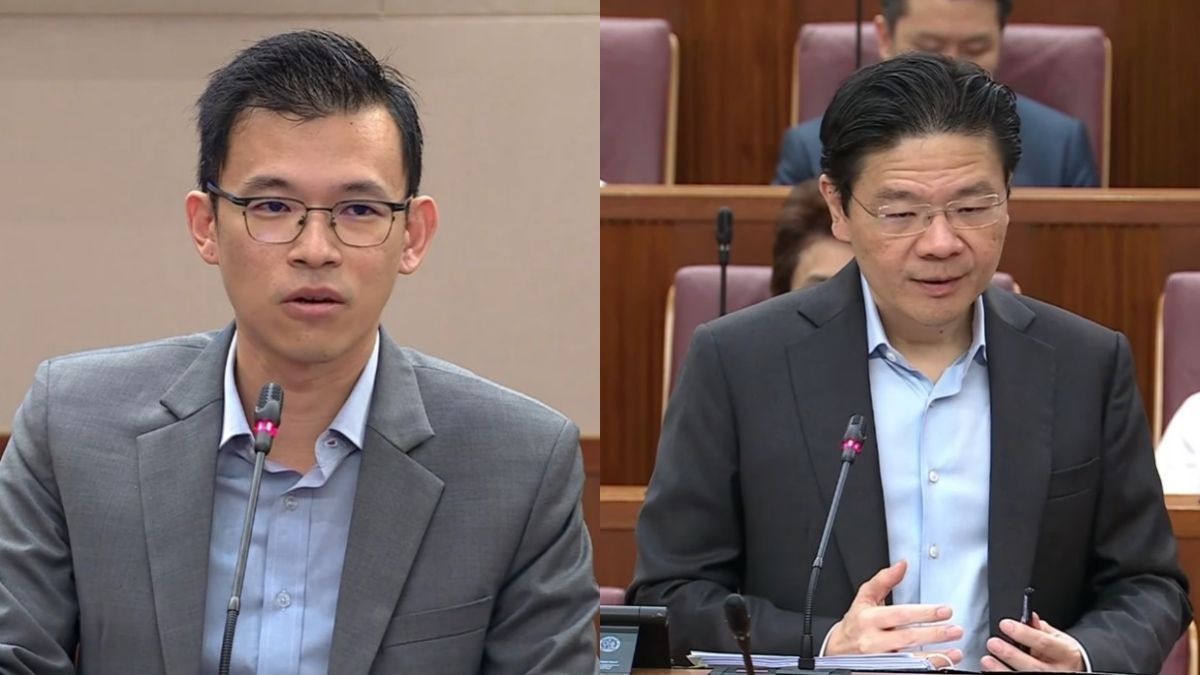
- Kenneth Tiong argued S$125 billion in R&D spending since 1991 yielded limited commercial success.
- Lawrence Wong said R&D outcomes include jobs, spillovers, and research output, not just IPOs.
- Wong reaffirmed Temasek’s commercial mandate and rejected calls for a policy investment bank.

On 26 February 2026, debate over Singapore’s long-term research and development strategy took centre stage in Parliament, as Workers’ Party MP Kenneth Tiong challenged the Government’s record on commercial returns from public investment.
Tiong argued that despite committing approximately S$125 billion to R&D since 1991, Singapore has seen few visible commercial successes. P
rime Minister and Finance Minister Lawrence Wong rejected that characterisation, calling it “rather one-sided” and defending both the broader metrics used to assess R&D outcomes and Temasek’s longstanding commercial mandate.
S$125 billion in R&D spending questioned
Rising after Wong’s wrap-up speech, Tiong said he respected the Prime Minister’s prerogative to describe his views as one-sided, but sought “the opportunity for a fuller defence”.
He pointed to three groups of facts. First, he noted that since the launch of the first national technology plan in 1991 through to Research, Innovation and Enterprise 2030, about S$125 billion had been committed.
“Mirxes in 2025 was the first and only billion-dollar IPO,” he said, referring to the biotechnology firm’s listing. “I don’t recall any other commercially significant companies out there.”
Tiong argued that even if the strategy was multinational corporation-driven in its early phases, outcomes had been mixed.
He cited the initial phase of the Biopolis biomedical hub, saying it “was not a big success”, and pointed to the departure of several pharmaceutical companies over the years.
These included Eli Lilly in 2010, Pfizer in 2013, GlaxoSmithKline in 2014, and Novartis in 2016, which he said raised questions about the long-term impact of the biomedical push.
“I don’t really quite see where perhaps he is having his different view from,” Tiong added, referring to Wong’s earlier remarks.
Proposal for policy investment bank
Tiong’s second clarification concerned what he described as a missing “policy investment bank function”.
He asked whether the Government would consider reconstituting such a function, which he said had been absent since Ho Ching took over as chief executive of Temasek in 2002.
The suggestion implied a stronger state-led role in directing strategic investments, particularly in sectors where commercial returns might be longer term or less certain.
PM Wong: Outcomes go beyond IPOs
Responding, Wong said the Government tracks “a whole range of outcomes” from R&D spending, not merely whether companies achieve successful public listings.
“As far as the outcomes of R&D are concerned, we track a whole range of outcomes. It’s not just on the basis of a company getting IPO success,” he said.
“There are outcomes with regards to jobs created. There are outcomes with regard to the spillovers to local industries and SMEs that support our MNEs doing research here.”
He added that broader economic effects, including raised incomes and increased business expenditure on R&D, were also monitored.
“It’s not just a narrow focus on a single measure of success but a wide range of different indicators,” he said.
Wong emphasised that the Government’s objectives extend beyond commercialisation alone.
“We are not only wanting commercialisation success. We also want to anchor strong basic research. That scientific base is important,” he said.
Such research outcomes are tracked through separate indicators, including academic publications generated from R&D investments.
“That’s why I said just now that the views that Tiong had highlighted were rather one-sided,” Wong added.
Enterprise-building approach and risk appetite
Wong, however, acknowledged one area of agreement.
“I do agree… that sometimes the system can be risk averse,” he said, referring to civil servants overseeing R&D investments.
“There are ways to do more in terms of value capture. There’s no disagreement in principle in terms of that direction.”
He said the Government aims to encourage more private innovation and adopt a stronger “enterprise-building approach” in growing the economy, rather than relying solely on specific grant schemes.
“There is scope to have less fragmentation. These are things we are already doing and will continue to do,” he said.
Temasek’s mandate unchanged
On the proposal for a policy investment bank function, Wong disagreed that any shift had occurred under Temasek’s leadership.
“This has never been the case. Temasek, when it started, was always very clear about its mandate from the very beginning,” he said.
“Commercial, not doing national service. Focus on commercial outcomes.”
He stressed that when Temasek partners the Government, it does so based on commercial considerations.
“If there are things that the Government wants to do and Temasek thinks it’s useful to do from a commercial point of view, then yes, we can partner Temasek to do so,” Wong said.
He noted that even today, some equity funds operate on a co-investment model with Temasek.
“Not because we force Temasek to do these as national undertakings, but because they see commercial value in growing enterprises and growing the enterprise ecosystem, and in achieving and securing better long-term returns for their portfolio,” he said.
“This has been consistently the approach from the start, and that is the same approach we will continue with Temasek going forward.”