Law minister defends AG reappointment process, deflects Lim's shortlisting question
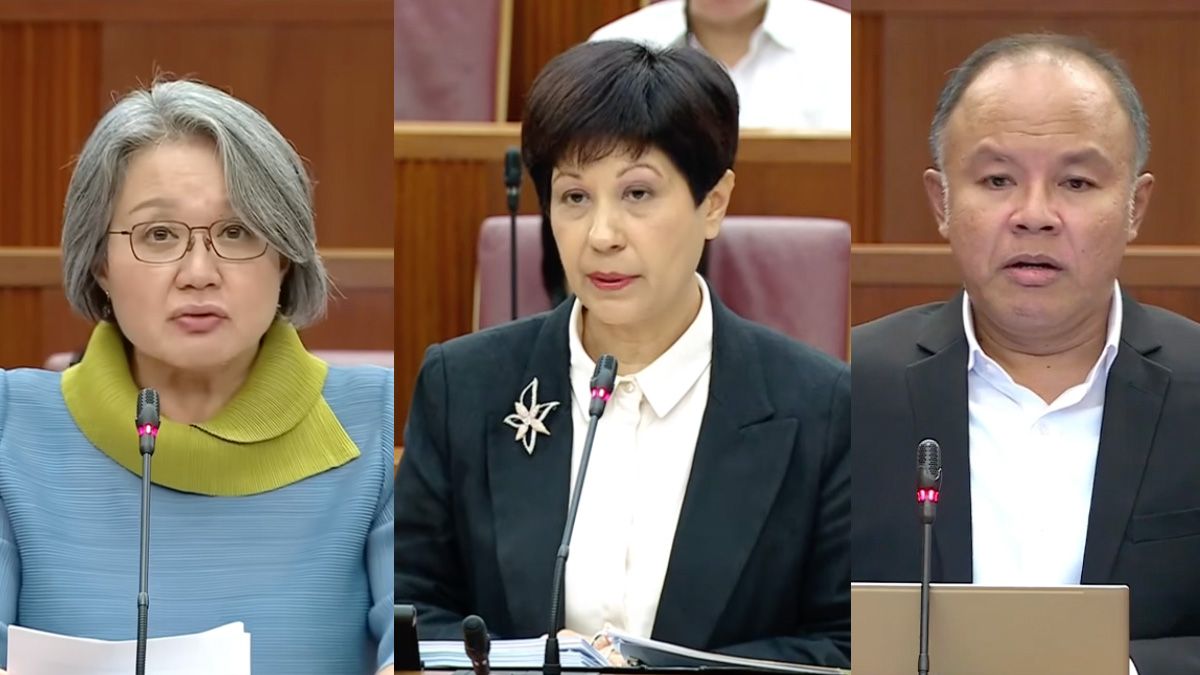
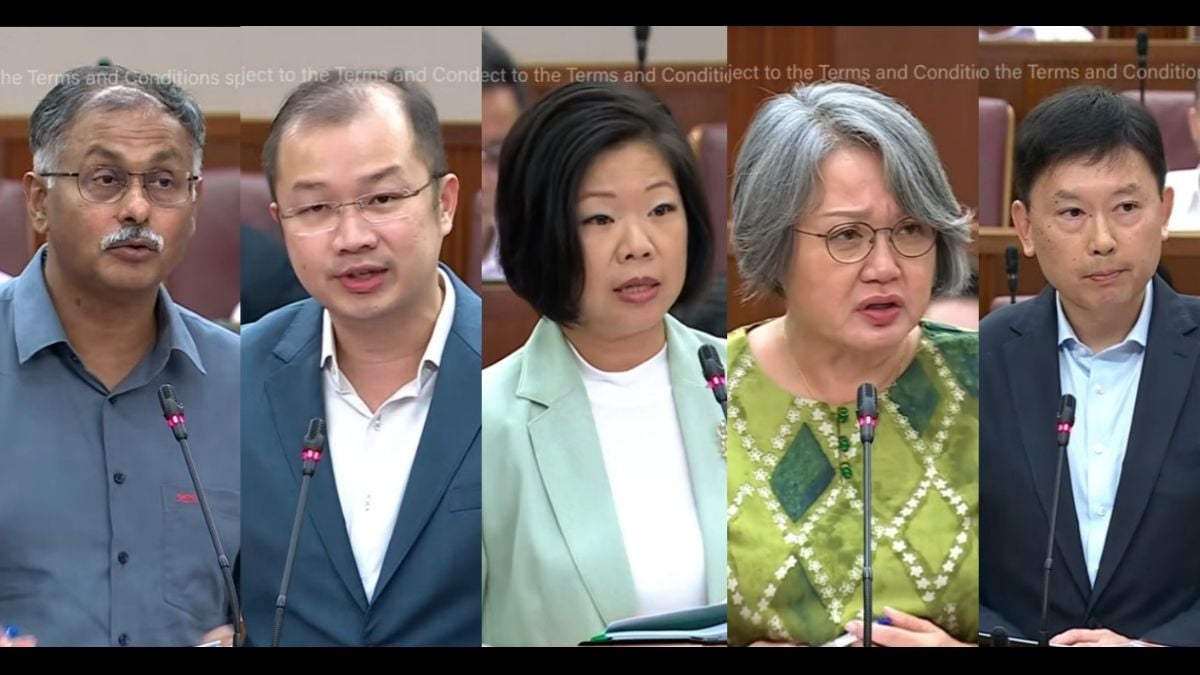
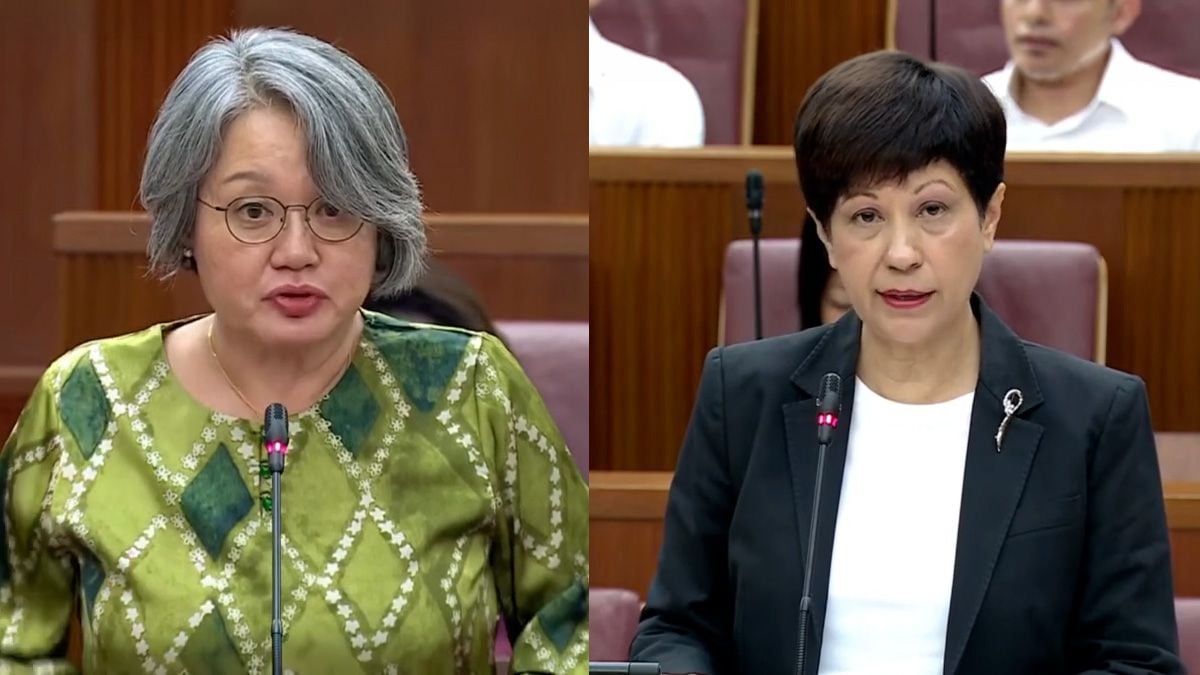
Minister for Law Edwin Tong defended the reappointment of Attorney-General Lucien Wong during the Ministry of Law Committee of Supply debate on 2 March 2026, pushing back against Workers' Party MP Sylvia Lim's call for greater transparency. Two of her specific questions went without a direct answer.

- Tong defended Lucien Wong's reappointment, citing ongoing maritime, tax, and cross-border legal matters requiring continuity.
- Lim's direct question on whether other candidates were shortlisted was not answered; Tong declined to confirm or deny any shortlist.
- Lim was not called by the Speaker after Tong's closing remarks, preventing further clarification from the opposition benches.

Minister for Law Edwin Tong has defended the government's process for appointing and reappointing Attorney-General (AG) Lucien Wong, rejecting calls for greater public transparency from Workers' Party (WP) Member of Parliament Sylvia Lim during the Ministry of Law (MinLaw) Committee of Supply (COS) debate on 2 March 2026.
Wong, who has served as AG since January 2017, began his fourth consecutive three-year term in January 2026 following a reappointment announced by the Attorney-General's Chambers (AGC) in October 2025. The new term runs until January 2029, at which point Wong will be 75 years old.
Lim, who represents Aljunied Group Representation Constituency (GRC), had raised the matter in a parliamentary cut delivered on 27 February 2026.
Two specific questions she posed — whether other candidates had been shortlisted, and whether succession planning was in place — were not answered directly.
After Tong concluded his remarks, the Speaker of Parliament, Seah Kian Peng, did not call upon Lim to respond, leaving her without a further opportunity to follow up before the debate closed.
The cut and its redirection
Lim had originally filed her parliamentary cut with the Prime Minister's Office (PMO), on the basis that the appointment of the AG — a constitutional office under the purview of the Prime Minister — warranted direct accountability from that office.
The cut was, however, redirected to the MinLaw COS. Tong acknowledged this at the outset of his response, stating: "Miss Lim's cut was originally filed to the PMO. It was redirected to MinLaw. As I will respond on behalf of the Prime Minister."
This procedural circumstance was itself quietly noted. Lim had argued in her speech that the Prime Minister, rather than the Minister for Law, should be more forthcoming on a matter of this constitutional weight — which made the redirection a point of some significance even before the substantive debate began.
Tong's defence of the appointment process
Tong opened his substantive reply by pushing back against the central characterisation in Lim's speech. She had described the constitutional requirements governing the AG's appointment as "thin," observing that Article 35 requires only that the Prime Minister consult the Chief Justice and the incumbent AG before tendering advice to the President.
Tong disputed that framing directly. He noted that Article 35 also requires consultation with the Chairman of the Public Service Commission (PSC) — a detail he suggested had not been fully captured in Lim's account. More significantly, he emphasised that the President does not simply receive the Prime Minister's advice passively.
"The president in turn consults the Council of Presidential Advisers, the CPA, and makes an independent assessment of the appointment," Tong said.
He concluded: "This is not a perfunctory process, nor is it thin by any measure. It involves consultation with the head of the judiciary, the leadership of the PSC, the elected president exercising his constitutional role in consultation with the CPA before the AG is either appointed or renewed."
Tong characterised the overall structure as "a careful and considered balance between executive responsibility and institutional safeguards."
Why public disclosure would be counterproductive, Tong argues
On Lim's call for greater transparency in the deliberations surrounding the appointment, Tong argued that publicising internal consultations would undermine rather than strengthen the integrity of the process. He offered two reasons.
First, the CPA conducts its own independent assessment and does not publish its advice to the President. The government itself, he said, is not privy to the CPA's deliberations, meaning any partial disclosure would present only one side of a multi-party process.
Second, Tong warned that opening appointment deliberations to public debate would deter strong candidates from being considered at all. "If you put it out publicly, you put the candidates up for public debate," he said.
"Even the best of candidates will have some detractors. A small minority, but there will be some. Suitable candidates may well then be deterred from even being considered if discussions as to their suitability, and perhaps their rejection, were to be made publicly."
He also raised the risk of politicisation. "The consultation process also requires candour and frank assessment, and putting it into a public debate risks politicising an office that must remain scrupulously nonpartisan," Tong said.
He pointed to other jurisdictions where AGs are elected officials, and argued that Singapore's model — grounding the appointment in professional merit and institutional safeguards — had served the country well.
"Our adherence to the rule of law has consistently been marked internationally very well," he said, "and I think we want to continue with this."
What the government looks for in an AG
Tong elaborated on the qualities the government considers essential in any candidate for the post. He acknowledged that many individuals might meet the basic eligibility criteria, but argued that formal qualification was only the starting point.
"Beyond formal qualification, it calls for an individual of high professional standing, wide-ranging legal experience, sound judgment, and a strong sense of public duty," he said.
He added that the AG "must also have unimpeachable integrity and strong moral fibre" and must be prepared to "render objective advice and act fairly in the conduct of prosecutions, even when doing so may be difficult or unpopular."
Most notably, Tong stated that the AG "must be prepared to uphold the law impartially and apply equally to everyone, whether one is a minister or the leader of the opposition" — a formulation that implicitly addressed longstanding concerns about the independence of the office from political influence.
"Individuals with the requisite experience, judgment and integrity for this office are not easily found," he said.
Why Wong was reappointed: ongoing sensitive matters
Tong provided new information on the reasoning behind the specific decision to reappoint Wong for a fourth term. He cited a number of significant ongoing legal matters for which continuity of leadership was considered important.
"The government continues to rely on Mr Wong's counsel on significant matters that remain in progress today, including negotiations on maritime boundaries, tax and financial sector legal reforms, and complex cross-border criminal matters," Tong said.
He described these as "substantial responsibilities that will benefit from deep expertise, sound judgment, and a steady hand."
Tong also underscored the confidence the government had developed in Wong's performance over time. "We've worked with him, we have assessed, and we know the quality of the work, including on sensitive matters," he said. "He remains fit, able and willing to continue."
Having considered all relevant factors and completed the required constitutional consultations, Tong said, the Prime Minister advised the President to reappoint Wong. The President then exercised his constitutional function accordingly. Wong's current term runs from 14 January 2026 to 13 January 2029, at which point he will be 75 years old.
Two questions, two evasions
Following Tong's remarks, Lim was given the floor to seek clarification. She posed two specific questions.
The first was direct. "Can you confirm then that the Prime Minister did not shortlist any other candidates in the recent round of appointment of AG?" she asked.
The second concerned succession planning. Noting that Tong had cited ongoing projects as a reason for retaining Wong, Lim asked whether this implied that Wong had become individually indispensable to those projects. "Is no one being groomed to take over?" she asked. "Because from a system point of view, it seems to me precarious. And in three years' time we might be facing the same argument again."
Tong's response to both questions was notably oblique. On the ongoing projects, he reiterated that matters such as maritime boundary discussions were not new developments, and that he could not go into sensitive materials.
On the question of indispensability, he said: "It is not that any individual is indispensable, but at a given point in time, a multitude of factors are taken into account — including whether he's available, whether he's able to continue. That is one factor, but it's not the only one."
On the shortlisting question, Tong declined outright to confirm or deny whether other candidates had been considered. "I'm not going to go into whether there's a long list or a short list," he said.
He indicated only that the government "thinks about what the incumbent has done, whether there's a need to change at that point in time, and if so, what are the options" before making a recommendation to the President.
He did not address Lim's concern that the government might find itself in the same position three years hence, nor did he indicate whether any candidates were being developed to assume the role in future.
No further opportunity given to Lim
After Tong concluded his response, the Speaker of Parliament, Seah Kian Peng, did not give Lim the floor again. She was therefore unable to follow up on the evasions in Tong's answers — including the absence of any direct reply on whether a shortlist existed and the lack of a substantive response on succession planning.
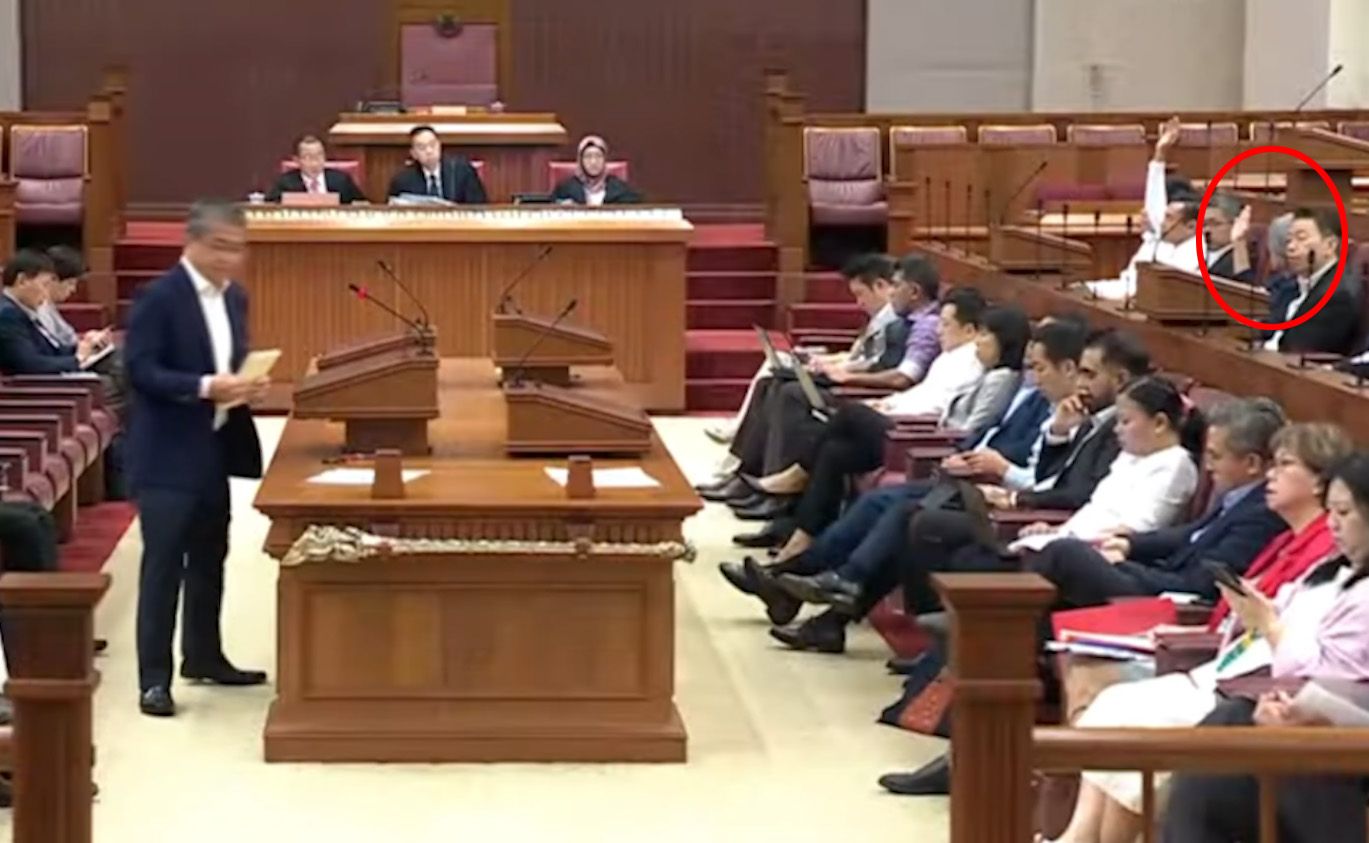
The procedural outcome meant that Lim's core concern — whether the Prime Minister had genuinely considered alternatives before recommending Wong's reappointment — remained publicly unaddressed at the close of the debate.
Lim acknowledged at the start of her clarifications that Tong's initial reply had provided some new information. "I'd like to thank him for the additional information that he has just given to us on the recent reappointment of the AG, which was information we didn't have before," she said, adding: "So that was the thrust, actually, of my cut."
Background: a tenure marked by controversy
Wong's original appointment in 2017 had attracted sustained criticism. Despite his reputation as one of Singapore's foremost corporate lawyers — he had built and led the country's largest law firm — he had no courtroom experience at the time of appointment, a qualification widely considered essential given the AG's role as Public Prosecutor.
Additional controversy arose from Wong's prior personal relationship with then Prime Minister Lee Hsien Loong, for whom he had served as personal legal counsel during the high-profile family dispute over the late Lee Kuan Yew's residence at 38 Oxley Road. Critics, including academic Li Shengwu — a relative of the Lee family — raised concerns about the appearance of a conflict of interest, with Li telling the New York Times that the appointment was evidence of legal institutions being used to suppress dissent.
The government responded at the time by confirming that both Wong and his deputy would recuse themselves from matters they had previously handled in private practice. Lee, then still Prime Minister, stated publicly that there was no conflict of interest, as professional lawyers routinely manage such matters through recusal.
Lim herself had previously raised structural reform proposals during the 2020 COS debate, including separating the AG's dual roles as government legal adviser and Public Prosecutor, and introducing a minimum fixed term to safeguard institutional continuity and morale within the Attorney-General's Chambers (AGC). Those proposals were not adopted.
Wong's fourth reappointment, and the manner in which parliamentary scrutiny of it was handled on 2 March 2026, suggest the questions around the office's independence, accountability, and succession remain live issues within Singapore's political discourse.