Singapore to inject S$70 million into local farming to bolster food security
Senior Minister of State Zaqy Mohamad announced a S$70 million funding extension for local farms to enhance production and climate resilience amid global supply uncertainties.
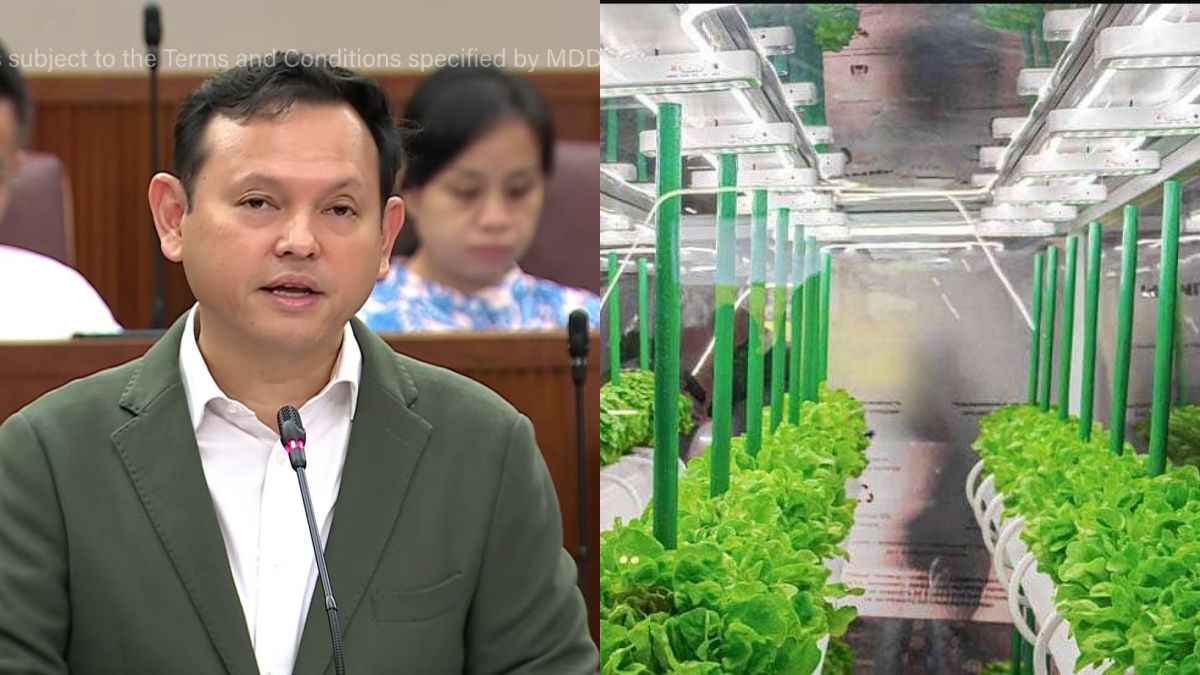
- The Agri-Food Cluster Transformation Fund will be renamed ACT Fund 2 and receive S$70 million in new funding over the next five years.
- A new Industry Partnerships for Capability Transformation Grant will encourage collaborative solutions to address limited economies of scale and supply inefficiencies.
- The initiative shifts focus toward high-efficiency fibre and protein production to reduce Singapore’s 90 per cent reliance on food imports.

Singapore will commit S$70 million over the next five years to assist local farms in expanding production capacity and building technological capabilities.
The initiative aims to strengthen national food resilience against a backdrop of increasing global volatility and supply chain disruptions.
Senior Minister of State for Sustainability and the Environment Zaqy Mohamad announced the new funding tranche on 04 March 2026.
The existing Agri-Food Cluster Transformation (ACT) Fund, first introduced in April 2021, will be renamed ACT Fund 2.
This extension allows local farmers to continue upgrading operations through the purchase of modern equipment and the adoption of productivity-enhancing technologies.
This measure serves as a central component of the Singapore Food Story 2 strategy unveiled in November 2025.
The strategy focuses on four pillars: diversifying imports, growing local produce, stockpiling essential items, and forging international partnerships to secure supplies.
Currently, Singapore imports more than 90 per cent of its food requirements.
This significant reliance leaves the domestic market vulnerable to external shocks, including climate change, disease outbreaks, and geopolitical tensions that impact international logistics and production.
SMS Mohamad noted that the government has refined its approach following lessons learned from the previous 30 by 30 initiative.
He stated that focusing solely on growing local produce left the nation vulnerable to specific disruptions that the original policy sought to mitigate.
In November 2025, Singapore has revised its “30 by 30” food production goal, extending the timeline to 2035 and scaling down certain targets amid challenges faced by local farms.
According to SMS Mohamad, a single-pillar approach cannot provide the comprehensive supply resilience Singapore requires.
However, he emphasised that local farms remain a vital regenerative source of fresh food that can be maintained even during prolonged periods of international disruption.
The government is encouraging farms to transition toward controlled environments.
These high-tech settings are designed to be more climate-resilient and land-efficient, allowing for consistent output regardless of external weather patterns or limited geographic space.
Under the updated production targets, the Singapore Food Agency (SFA) will prioritise the farming of fibre and protein types.
These specific categories have been identified as the most feasible options for efficient, large-scale production within the city-state's constraints.
ACT Fund 2, administered by SFA, represents the largest industry scheme to date for supporting local agricultural capabilities.
The scheme has been expanded to include coverage for marketing, branding, and both pre- and post-harvest production facilities.
A new funding component, the Industry Partnerships for Capability Transformation Grant, will also be launched.
This grant is specifically designed to foster collaborations between farms and industry partners to develop shared solutions for common sector-wide challenges.
A joint factsheet from SFA and the Ministry of Sustainability and the Environment noted that the grant responds to industry feedback.
Farmers expressed a need for collaborative approaches to overcome limited economies of scale and various supply chain inefficiencies.
Eligible farmers can apply for support under the new five-year period starting in April 2026.
SFA confirmed that further details regarding the specific application processes and criteria will be released to the industry at a later date.
In addition to direct co-funding, SFA plans to increase support for technology adoption within the aquaculture sector through demonstration projects. These projects will test international farming technologies under local tropical marine conditions before farms commit to major investments.
The national breeding programme will also expand to include red snappers.
Furthermore, SFA intends to increase the supply of whiteleg shrimp larvae and grouper fingerlings through strategic partnerships between local hatcheries and experienced overseas breeders.
To ensure commercial viability, the government is working to increase the market demand for locally farmed goods.
The Singapore Agro-Food Enterprises Federation (SAFEF) will expand its SG Farmers' Market brand to include more vegetable varieties and manufactured sauces.
New ready-to-eat products, such as marine tilapia under The Straits Fish brand, will be introduced through collaborations with private entities like TheSeafoodCompany. These efforts aim to integrate local produce into the menus of more food and beverage players.
The Farm-to-Table Recognition Programme, which acknowledges businesses sourcing at least 15 per cent of their produce locally, continues to see growth. As of December 2025, a total of 119 food businesses in Singapore have joined the initiative.