Health Minister open to MediSave flexibility review after Jamus Lim raises 'lumpy' healthcare spending concern
Health Minister Ong Ye Kung signalled openness to reviewing MediSave withdrawal flexibility after Workers’ Party MP Jamus Lim proposed allowing unused limits to be carried forward to reflect the “lumpy” nature of healthcare costs and rising chronic disease spending.

- Jamus Lim proposed carrying forward unused MediSave withdrawal limits for up to three years.
- The proposal aims to better reflect “lumpy” healthcare spending and rising chronic disease costs.
- Health Minister Ong Ye Kung said the suggestion is “interesting” and will be considered in future policy reviews.

SINGAPORE: Health Minister Ong Ye Kung signalled openness to reviewing MediSave withdrawal flexibility after Workers’ Party MP Jamus Lim raised concerns about whether current limits reflect the uneven nature of healthcare spending.
Lim argued that healthcare costs often come in sudden spikes rather than predictable yearly expenses.
He suggested allowing unused MediSave withdrawal limits to be carried forward for up to three years, alongside introducing age-based claim limits that rise gradually as people grow older.
Ong said the suggestion was an “interesting idea” and confirmed the Ministry of Health (MOH) would take it into account during regular reviews of the MediSave system.
Concerns over “lumpy” healthcare spending
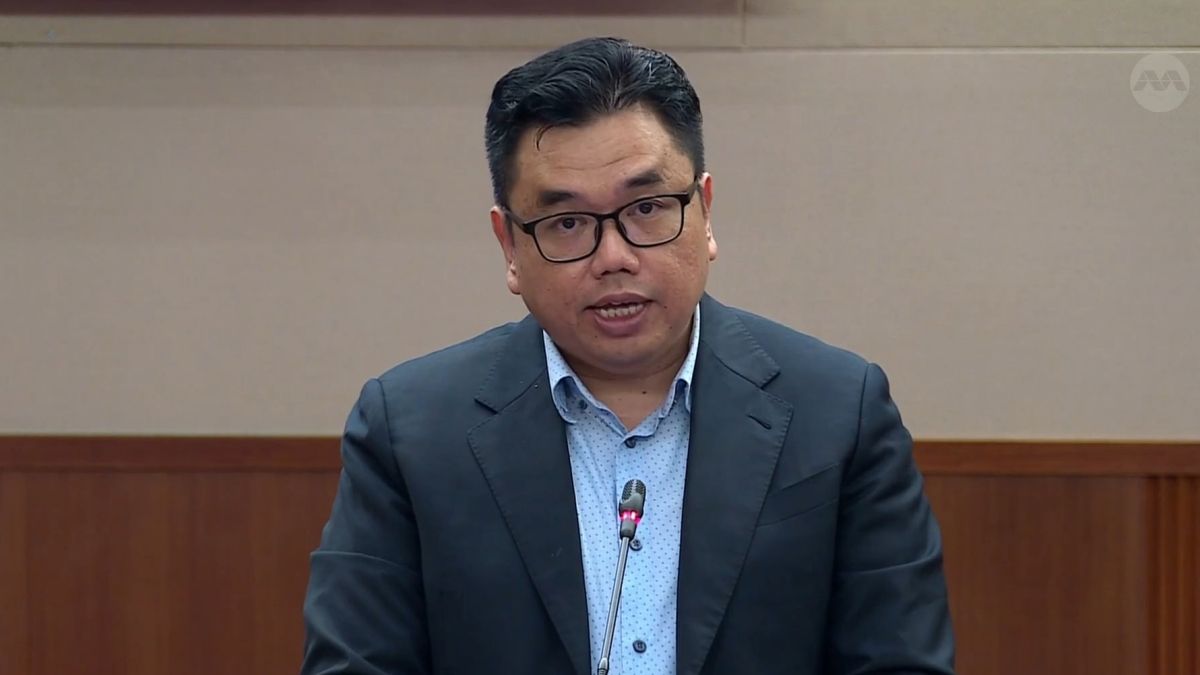
During the MOH's Committee of Supply debate on 4 March, Lim said many patients experience long periods without medical expenses, followed by years when bills increase significantly.
“Those of us who have fallen seriously ill at one point or another will be keenly aware of how our healthcare expenditures are lumpy,” he told Parliament.
“That is, we may go one year without any medical expenses, but in another year we may end up spending far more than we would have anticipated.”
He added that this pattern also occurs among patients with chronic conditions, where specialised tests or treatments may only be required periodically rather than every year.
According to Lim, health economics research supports the observation that healthcare spending tends to spike during certain periods, particularly towards the end of life.
Patients often incur the highest medical expenses during their final years, which he described as another example of uneven spending patterns.
Proposal to allow carry-over of withdrawal limits
Lim said current MediSave policies impose annual withdrawal limits for different types of healthcare expenses.
While the system aims to ensure savings remain available for future needs, he argued it may not align well with the real pattern of healthcare spending.
“The policy is well-meaning. One does not wish for a patient to exhaust their medical funds, especially knowing that most healthcare costs will indeed be incurred at the tail end,” Lim said.
“But this is problematic because the policy is not aligned with the lumpy nature of medical expenses.”
He proposed allowing unused annual withdrawal limits to be carried forward for up to three years.
Lim said this would help patients who suddenly face higher medical costs without forcing them to rely heavily on out-of-pocket payments.
He noted that retirees often depend on working family members to help cover medical expenses when MediSave limits are insufficient.
A limited carry-over system, he suggested, could provide flexibility while still maintaining prudent controls on withdrawals.
Suggestion for age-based claim limits
Lim also proposed a tiered system in which MediSave claim limits gradually increase with age.
He argued that as people grow older, their health tends to deteriorate and healthcare needs rise.
“It is intuitive to allow more spending at later ages where individuals’ health will have deteriorated more,” he said.
Lim noted that aggregate mortality and healthcare data could help guide how such limits are adjusted across different age groups.
He added that the approach could help align MediSave withdrawals with the realities of ageing and medical demand.
Government emphasises balance in MediSave design
Responding to the proposals on 5 March, Ong acknowledged that Lim’s description of healthcare spending patterns was accurate.
He noted that hospital expenses often increase sharply near the end of life.
“Even after accounting for inflation, the average Singaporean living up to their mid-eighties spends almost four times as much on hospital expenses in the last ten years of their life, compared to the previous ten years,” Ong said.
He explained that this trend underpins the current design of MediSave withdrawals.
The system is structured to help patients co-pay for major hospitalisation episodes while preserving savings for future needs.
Existing flexibility within MediSave schemes
Ong said the healthcare financing system already includes measures to provide some flexibility for everyday medical expenses.
These include schemes such as Flexi-MediSave and MediSave500 or MediSave700, which allow withdrawals for chronic disease management, diagnostic scans and certain outpatient services.
“These schemes provide flexibility without overly diluting MediSave’s original objective of catering for these big lumpy hospital bills in old age or during emergencies,” Ong said.
After government subsidies, MediShield Life coverage and MediSave withdrawals, he added that nine in ten Singaporeans pay less than S$500 out of pocket for subsidised inpatient bills.
Minister says proposal will be considered
Lim later sought clarification on whether allowing a limited carry-over of annual withdrawal limits might help balance the tension between current and future medical spending.
He asked whether such a system could allow flexibility while still preserving long-term savings.
Ong said he would not immediately accept or reject the proposal.
“I think it is an interesting idea. As I say we review the scheme every year.”
He added that the ministry would study how greater flexibility could be introduced without undermining MediSave’s long-term objectives.