US Tomahawk missile linked to Iran school strike that killed more than 170, analysis finds
Investigative outlet Bellingcat has geolocated footage showing a US Tomahawk missile striking an Iranian Revolutionary Guard facility adjacent to a girls' school in Minab, where more than 170 people were killed on 28 February. The findings contradict President Donald Trump's claim that Iran was responsible.

- Bellingcat geolocated footage showing a US Tomahawk missile striking an IRGC site beside the school.
- Multiple outlets, citing officials and satellite imagery, suggest American forces were likely responsible.
- UNESCO condemned the killing of students as a grave violation of international humanitarian law.

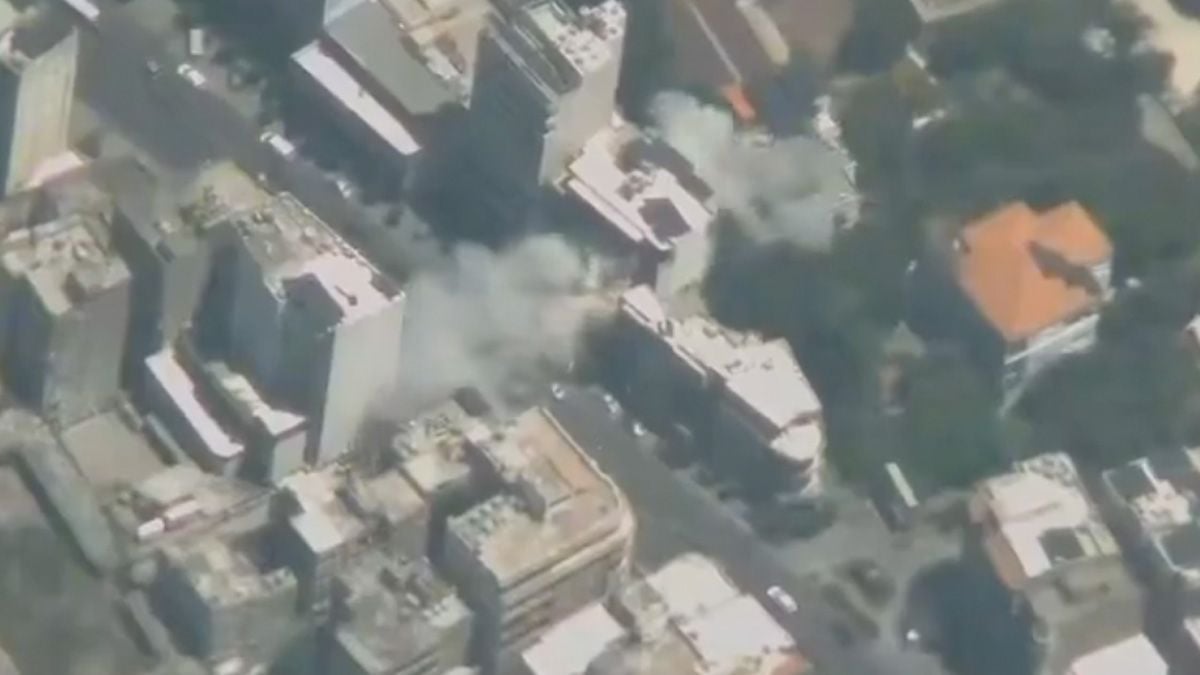
New video footage has been linked to a US Tomahawk missile striking a facility of Iran's Islamic Revolutionary Guard Corps (IRGC) in the southern Iranian town of Minab on 28 February, 2025.
The Washington Post, which verified the footage with eight munitions experts, reported the findings on Sunday alongside the Netherlands-based investigative outlet Bellingcat.
The strike on Shajarah Tayyiba Primary School killed at least 175 people, many of them children, according to Iranian authorities.
The attack is widely believed to be the deadliest for civilians in the weeklong conflict between Iran, the United States, and Israel. No government or military force has formally claimed responsibility.
Footage verified by experts and geolocated
The seven-second video was first published by Mehr, a semiofficial Iranian news agency, and represents the first publicly available footage of the attack itself rather than its aftermath.
The Washington Post verified the footage by comparing landmarks visible in the video against Google Earth and Google Maps. The video was filmed from a position south of the school, less than a quarter of a mile away.
Two identifiable landmarks are visible in the footage: the distinctive sign and gate of the Shaheed Absalan Specialist Clinic adjacent to the school, and a small tower located in the corner of the IRGC compound.
At the start of the video, grey smoke can already be seen streaming from the area where the school is located. The missile enters the frame from the left before landing and exploding out of view, partially obscured by trees. A thick black cloud erupts from the impact site, and screams are heard almost immediately.
Two digital forensics experts reviewed the footage at the Washington Post's request and found no indication of manipulation or fabrication. Hany Farid, a digital forensics professor at the University of California at Berkeley, plotted the missile's trajectory and found it followed a straight path — which he noted would be difficult to falsify given the movement of the camera between frames. Siwei Lyu, a professor of computer science and engineering at the State University of New York at Buffalo, said his analysis found no artefacts indicating the video had been generated using artificial intelligence.
Eight munitions experts identify a Tomahawk
Eight munitions experts consulted by the Washington Post said the footage appeared to show a US Tomahawk cruise missile.
Wes Bryant, a former US Air Force Special Operations targeting expert and former chief of civilian harm assessments at the Pentagon, told the Post that the length of the straight, cylindrical munition with a bevelled nose correlated with a Tomahawk, and that the explosion was consistent with the weapon's explosive payload.
A former Navy official who helped develop the Tomahawk programme, speaking anonymously due to fear of retribution, said the missile's profile in the video — including its wings — "does seem to be a Tomahawk."
N.R. Jenzen-Jones, director of Armament Research Services, said the apparent Tomahawk strike strengthened the case for US involvement across all strikes in the vicinity. "Given the fact that combat operations appear to be clearly delineated between the US and Israeli areas of responsibility, the appearance of Tomahawk suggests all the strikes in the area were conducted by the United States," he said.
The Tomahawk is a long-range cruise missile launched from Navy ships or submarines. Each missile weighs approximately 3,000 pounds. The weapons are preprogrammed with target locations and use sophisticated guidance systems — incorporating terrain data and GPS — to adjust their flight paths in real time.
Tomahawks are also equipped with onboard cameras that relay images of the target to military operators after launch, and their target and direction can be altered mid-flight.
The US military is the only participant in the current conflict known to possess the Tomahawk in its arsenal. Israel does not operate the weapons system.
Trump's claim contradicted
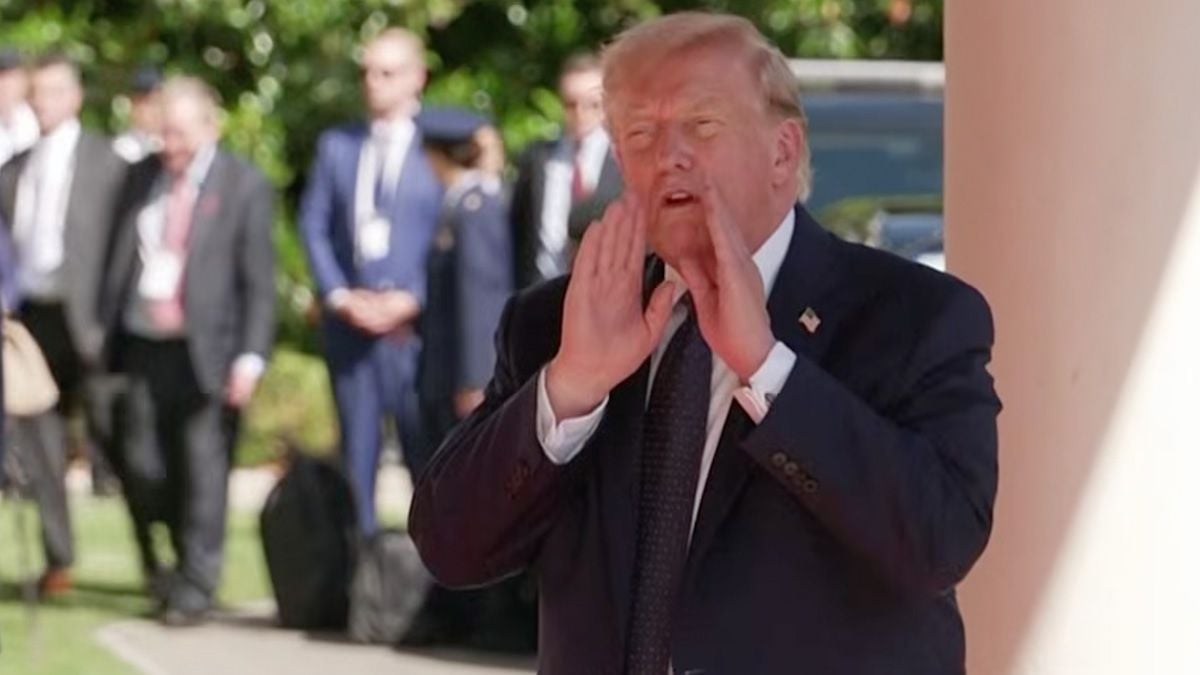
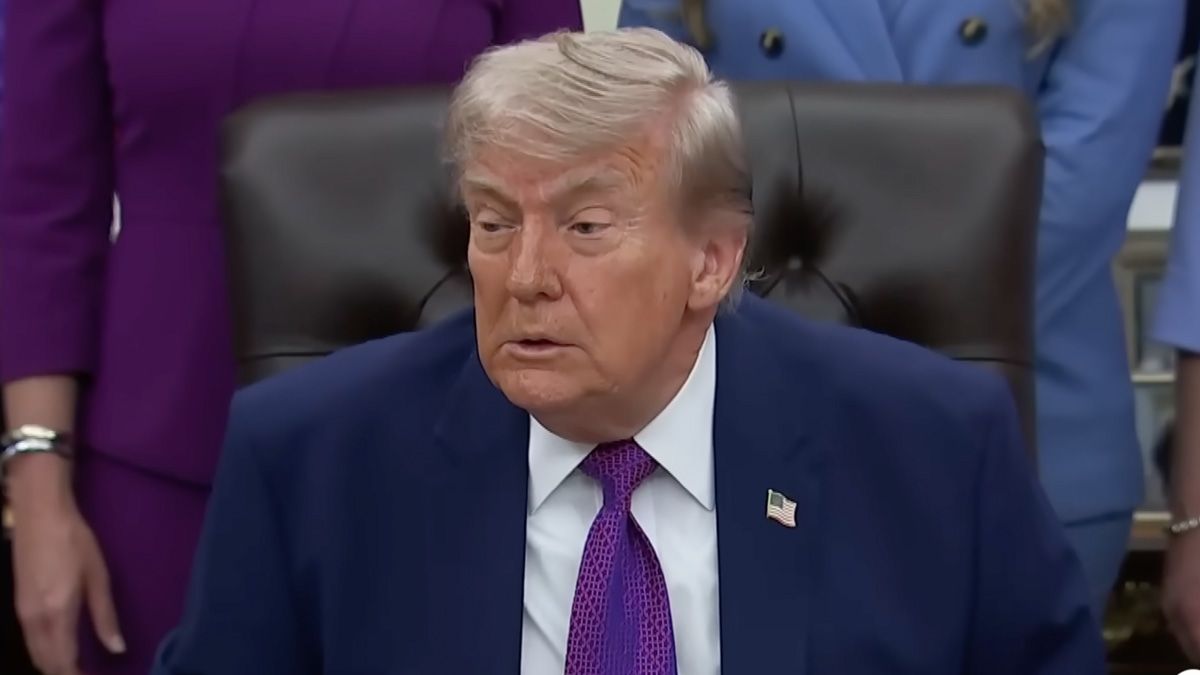
The findings appear to directly contradict a statement made on Saturday by US President Donald Trump, who told reporters: "It was done by Iran. They are very inaccurate with their munitions." Defence Secretary Pete Hegseth, speaking alongside Trump, said: "We're certainly investigating, but the only side that targets civilians is Iran."
When approached for comment, a spokesperson for US Central Command declined to address the video footage or confirm whether it depicted a Tomahawk missile fired by American forces, according to the Washington Post. A US military investigation into the circumstances of the strike is described as ongoing, and no final conclusion has been reached by American authorities.
Senior US military official confirms Tomahawk use nearby
General Dan Caine, chairman of the Joint Chiefs of Staff, confirmed at a news conference last week that the United States launched Tomahawk missiles on 28 February as part of strikes in southern Iran. He displayed a map showing two targeting icons in the vicinity of Minab, though the map did not identify the city by name.
His remarks place confirmed US Tomahawk activity in the immediate area on the same day as the school strike.
Scale of damage across the site
Satellite imagery taken in the days following the attack and verified by the Washington Post shows damage to at least 11 sites across the area, consistent with multiple strikes. The Post's examination of satellite imagery also suggests the missile visible in the video likely struck a building on the adjacent IRGC base rather than the school directly.
Bellingcat similarly geolocated footage showing the Tomahawk's impact and noted that smoke was already rising from the school's location at the time of the strike on the compound.
School's proximity to IRGC compound
Publicly available satellite imagery reviewed by the Washington Post shows the school and the IRGC naval compound have shared a boundary for many years, though the relationship between the two sites has shifted over time.
As of 2016, the school was already separated from the military buildings. A separate entrance to the school appears to have been constructed sometime between 2013 and 2016, and outdoor play areas are also visible in the imagery.
The Guardian's independent reconstruction similarly found the school to be directly adjacent to the IRGC compound, separated only by a wall built in recent years.
Corroborating analyses from multiple outlets
The Washington Post's findings are consistent with several earlier investigations.
The New York Times, drawing on Pentagon statements, satellite imagery, and geolocated video, concluded that the school building was likely struck in the same set of strikes that targeted the adjacent naval base. A former US Air Force official quoted by the Times suggested "target misidentification" as the most probable explanation.
Reuters reported last week that US military investigators believe American forces were likely responsible for the attack on the school, though no final conclusion has been reached.
BBC Verify identified multiple impact sites and burn marks across both the school and nearby IRGC facilities, with analysts saying the damage pattern was consistent with the use of a penetrating munition — a weapon designed to pierce reinforced structures before detonating.
Middle East Eye, citing survivors and first responders, reported the possibility of a "double-tap" strike — a second explosion striking the area shortly after the first, hitting people who had moved to take shelter. Such tactics are widely condemned under international humanitarian law.
CBC News noted the attack coincided with the first wave of US-Israeli strikes across southern Iran.
UNESCO condemns the attack
The United Nations Educational, Scientific and Cultural Organisation (UNESCO) described the killing of students as a "grave violation" of protections afforded to educational facilities under international humanitarian law, and called for a full and transparent investigation.
Under the laws of armed conflict, schools hold special protected status. Attacks on such facilities — whether deliberate or through misidentification — may constitute a war crime if found to breach the principles of distinction and proportionality.
As of the time of publication, no state or military force has formally accepted responsibility for the strike. The US military investigation is continuing.