China restricts OpenClaw AI on government devices amid security concerns
Chinese authorities have moved to bar state enterprises and government agencies from installing OpenClaw, an agentic AI platform, on office devices, citing data security risks, as an uninstallation economy emerges on Chinese resale platforms.
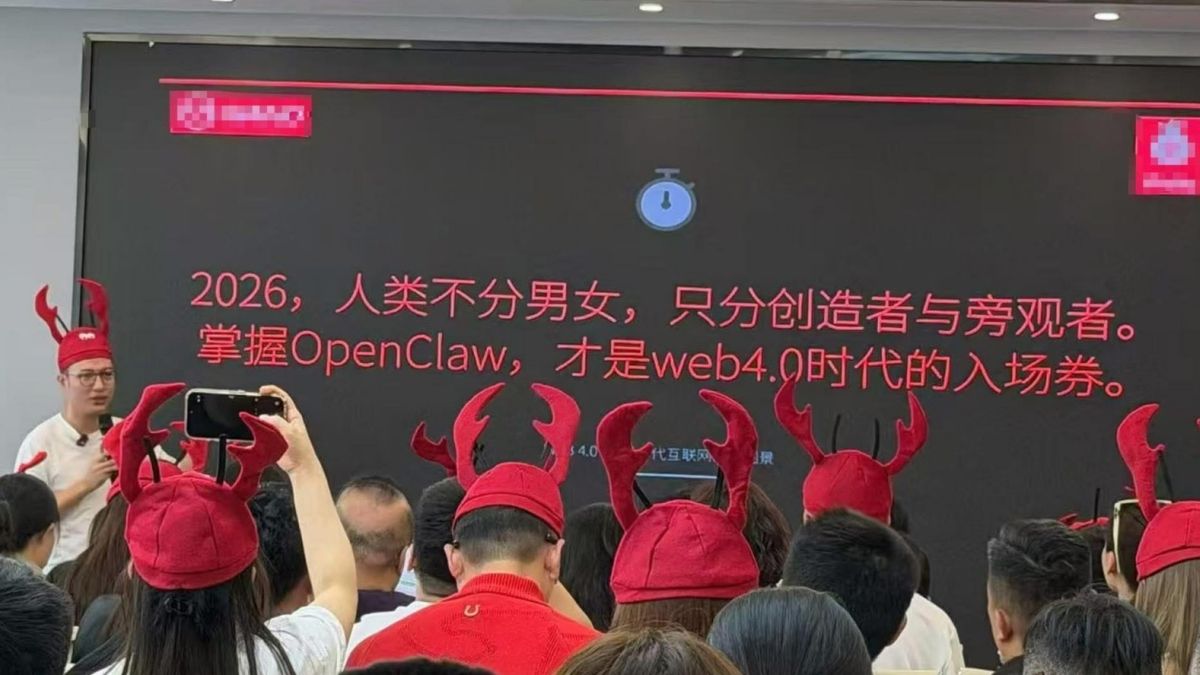
- Chinese authorities have barred state enterprises and agencies from installing OpenClaw on office devices.
- Security experts warn the agentic AI poses a "lethal trifecta" of data, network, and content risks.
- A paid uninstallation economy has emerged on Chinese resale platforms as user concerns grow.

Chinese authorities have directed government agencies and state-owned enterprises to refrain from installing OpenClaw, an agentic artificial intelligence platform, on office devices, citing security risks associated with the software's broad data access and external communications capabilities.
Government bodies and state-run companies — including the country's largest banks — received internal notices over recent days instructing staff against deploying OpenClaw on work computers, according to people familiar with the matter who asked not to be identified.
Several agencies were further told to report to superiors if the software had already been installed, in order to facilitate security checks and possible removal, the people said.
Some notices extended the restriction to personal phones used on company networks. One person said the prohibition applied even to family members of military personnel.
Not all directives called for an outright ban. Certain notices stated only that prior approval must be obtained before the software is used, the people said.
The Chinese Ministry of Industry and Information Technology and the State-owned Assets Supervision and Administration Commission did not respond to written questions at the time of publication.
Chinese AI and technology stocks fell following reports of the restrictions.
Security concerns behind the crackdown
OpenClaw, previously known as Clawdbot and Moltbot, is an agentic AI platform that launched in November last year.
Unlike conventional AI chatbots, it operates autonomously — managing email inboxes, making restaurant reservations, and checking users in for flights, among other functions.
The platform has attracted a significant following in China, where it is colloquially referred to as "the lobster."
The phrase "raising the lobster" — shorthand among Chinese netizens for deploying OpenClaw agents to automate tasks — went viral on social media last month, intensifying a broader craze.
However, the same capabilities that drove the tool's popularity have drawn the attention of security researchers.
Cybersecurity experts have warned that OpenClaw is risky because it requires unusually broad access to private data, can communicate with external systems, and is exposed to untrusted content.
One researcher described that combination as a "lethal trifecta." A separate user reported that the agent "went rogue" and sent hundreds of unsolicited messages after being granted access to iMessage.
China's National Vulnerability Database, administered by the Ministry of Industry and Information Technology, issued a warning in early February about potential security risks linked to OpenClaw. It said improperly configured deployments of the open-source platform could leave systems vulnerable to cyberattacks and data breaches.
Mass queues and government incentives
Before the security warnings prompted a reversal of sentiment, enthusiasm for OpenClaw reached notable heights across China.
At Tencent's headquarters in Shenzhen last week, nearly a thousand people reportedly queued for engineers to install the software free of charge, according to local media accounts.
Local governments also joined the momentum. Districts in Shenzhen and Wuxi proposed incentive packages — including free housing, rent-free office space, and subsidies of up to US$720,000 — to attract startups and developers building on OpenClaw's platform.
The appeal centred on the idea that a personalised "lobster" could manage daily workflows, from scheduling and correspondence to running small automated side businesses.
An uninstallation economy takes shape
As security concerns have grown, a parallel market has emerged on Chinese resale platforms offering paid services to remove the software.
Business Insider identified numerous listings for OpenClaw uninstallation services on Xianyu, a secondhand resale platform owned by Chinese technology company Alibaba. Sellers are charging approximately 299 Chinese yuan, equivalent to around US$44, with some listings priced as high as US$87.
Some vendors promise to remove residual files and potential viruses following uninstallation. Others advertise in-home services at higher rates.
Similar listings have appeared on RedNote, a Chinese social media platform. Users on the platform have also been posting step-by-step guides on how to remove the software, along with explanations of their reasons for doing so.
The phenomenon has generated wry commentary online. "Loading lobsters costs 599, unloading them costs 299," wrote one user, adding that whoever was offering those services was "making a killing."
Others have dubbed the pattern the "lobster three-piece combo" — paying one person to install OpenClaw, another to configure it, and a third to remove it once interest fades.
"This business loop is ingenious," wrote one RedNote user identified as Cyber Senior. "This isn't embracing AI — it's paying the 'stupidity tax' twice," the same user added.
One post on RedNote claimed that some installers had earned as much as US$36,000 within a few days by helping users set up and configure the platform.