‘MOM sleeping?’ netizens demand tougher action after CNA report on exploitation of Myanmar workers
Public criticism has intensified after a CNA report revealed alleged exploitation of Myanmar workers in Singapore. Netizens questioned enforcement gaps, while NGOs reported a rise in cases, pointing to systemic vulnerabilities and urging stronger action. MOM said it has not observed a “notable trend or increase”, adding such issues are similar to those faced by other migrant workers.

- CNA report highlights systemic exploitation risks for Myanmar workers in Singapore
- Netizens criticise MOM’s response, calling for stricter enforcement and inspections
- NGOs report sharp rise in cases, urging reforms and stronger worker protections

Public criticism has intensified following a report published on 11 March 2026 by Channel NewsAsia, which detailed alleged exploitation involving Myanmar migrant workers in Singapore.
The report has prompted widespread reaction online, with many netizens questioning whether the Ministry of Manpower (MOM) has acted sufficiently to address longstanding issues.
Some described regulators as “sleeping”, arguing that enforcement efforts have been too slow or ineffective despite repeated warning signs.
Allegations point to broader pattern of abuse
According to the CNA report, led by CNA Senior journalist Aslam Shah, the cases described extend beyond isolated incidents, suggesting systemic vulnerabilities affecting Myanmar workers.
Many individuals were reportedly promised legitimate employment before being redirected to different roles upon arrival, including illicit or exploitative work arrangements.
Workers who refused such roles allegedly faced dismissal, reduced wages, or other forms of pressure.
One worker, identified as Mary, said she paid more than S$5,800 in agency fees for a beauty salon position.
Upon arrival, she was allegedly redirected to a massage parlour and pressured to provide illicit services. After refusing, she was dismissed and had her salary reduced under a revised arrangement.
Rising vulnerability linked to Myanmar crisis
The issue has grown alongside ongoing conflict in Myanmar, which has driven more workers to seek employment abroad.
This situation has increased vulnerability, as many migrants face financial pressure and limited alternatives.
Fear of deportation or retaliation discourages workers from reporting abuses, allowing problematic practices to persist.
Investigations also point to complex cross-border recruitment networks, complicating enforcement and enabling questionable practices to continue.
NGOs report sharp increase in cases
Non-governmental organisations have reported a significant rise in cases involving Myanmar nationals.
Data from Transient Workers Count Too (TWC2) shows that the organisation assisted just one such case in 2022, compared to 131 cases in 2025.
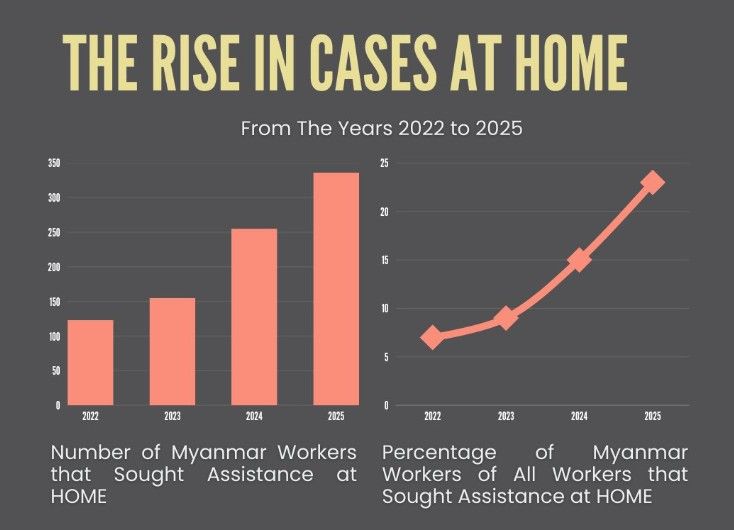
Similarly, the Humanitarian Organisation for Migration Economics (HOME) reported an increase from over 120 cases in 2022 to nearly 350 cases in 2025.
Many of these workers reported being misled about salaries and working conditions before arriving in Singapore.
NGOs have called for stronger preventive measures and greater cross-border collaboration to address the issue.
Authorities dispute broader trend
MOM told CNA that it has not observed a “notable trend or increase” in errant employment practices.
It added that issues faced by Myanmar workers are similar to those experienced by other migrant groups.
The ministry emphasised existing regulations limiting recruitment fees under the Employment Agencies Act.
Penalties for violations include fines and potential imprisonment for employers and agents.
Authorities also noted that special passes may be issued for workers involved in ongoing investigations.
In the documentary, when asked why MOM had seen no significant change while NGOs reported rising cases, Aslam suggested that many Myanmar workers are scammed by dubious agents operating outside Singapore, limiting what authorities can do even when complaints are filed.
He also noted that workers often avoid lodging formal complaints out of fear of job loss or blacklisting.
NGOs have urged MOM to adopt stronger preventive measures and pursue cross-border collaboration to curb abuse of the work pass system.
TOC has also written to the MOM to seek clarification on figures related to alleged sexual coercion cases involving migrant workers from Myanmar and other nationalities in recent years, as well as the number of errant employers or agencies investigated or penalised for breaches of employment regulations.
Should MOM respond, we will update this post.
Public calls for stronger enforcement
The issue has sparked widespread discussion, with over 200 comments on CNA’s YouTube channel and a similar number on CNA’s Facebook page.
Several comments questioned whether the Ministry of Manpower was “sleeping”, suggesting that authorities possess the capability to investigate migrant worker issues but failed to act early.
Netizens argued that delayed intervention allowed exploitative practices to persist unnoticed until cases were exposed publicly.



Debt burden and precarious employment
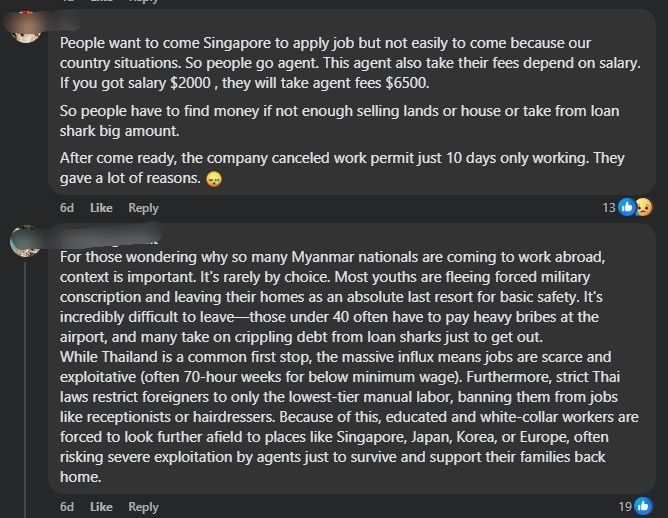
Some netizens highlighted the heavy financial burden faced by workers, noting that many pay agent fees far exceeding their expected salaries.
In some cases, workers reportedly sell property or take on loans to secure employment, despite having no guarantee of stable work.
Upon arrival, some face sudden dismissal or contract discrepancies, leaving them stranded and financially distressed.
Allegations of exploitative cycles
Netizens further alleged that certain agents and employers exploit this cycle, subjecting workers to unfair treatment before repatriating them while they remain in debt.
These concerns have prompted calls for the MOM to take firmer and more decisive action against errant parties.

Some discussions pointed to conditions in Myanmar, including civil conflict and forced conscription, as factors driving workers into vulnerable situations abroad.
These circumstances were said to limit workers’ options, increasing their susceptibility to exploitative arrangements.
Broader concerns over worker welfare
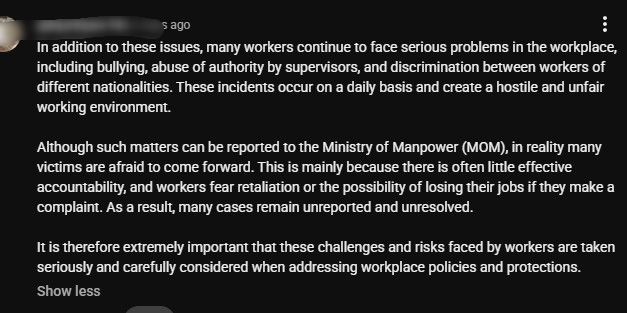
Netizens expressed concern over the treatment of Myanmar and other foreign workers, citing issues such as excessive agent fees ranging from S$4,000 to S$7,000, unpaid or underpaid wages, long working hours, and inadequate living conditions.
Many workers are reportedly reluctant to report abuses due to fears of retaliation, deportation, or unresolved debt, leaving them trapped in difficult situations.
HOME proposes policy reforms to protect migrant workers
Separately, In a statement on 17 March, HOME highlighted issues not fully addressed in the CNA report, including gaps in Singapore’s legal framework for recognising trafficking victims.
The organisation noted evidence suggesting some recruitment fees are collected by Singapore-based agents.
It called for a victim-centred approach to enforcement, prioritising protection over punishment.
HOME proposed several reforms, including allowing workers greater flexibility to change employers.
They also recommended harsher penalties for abusive employers and agents, improved reporting channels, and faster investigations.
Advocates further urged stronger legal protections for workers in high-risk sectors.