Who has the wheel? Israel Is stepping on the gas while America reaches for the brake
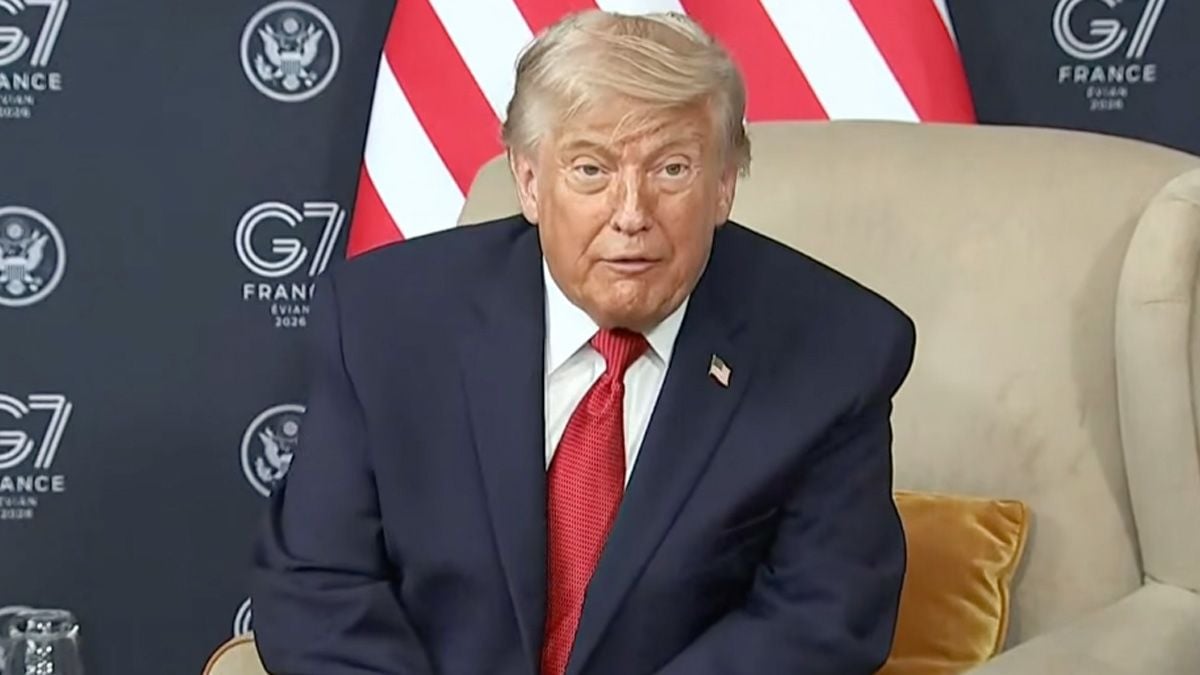
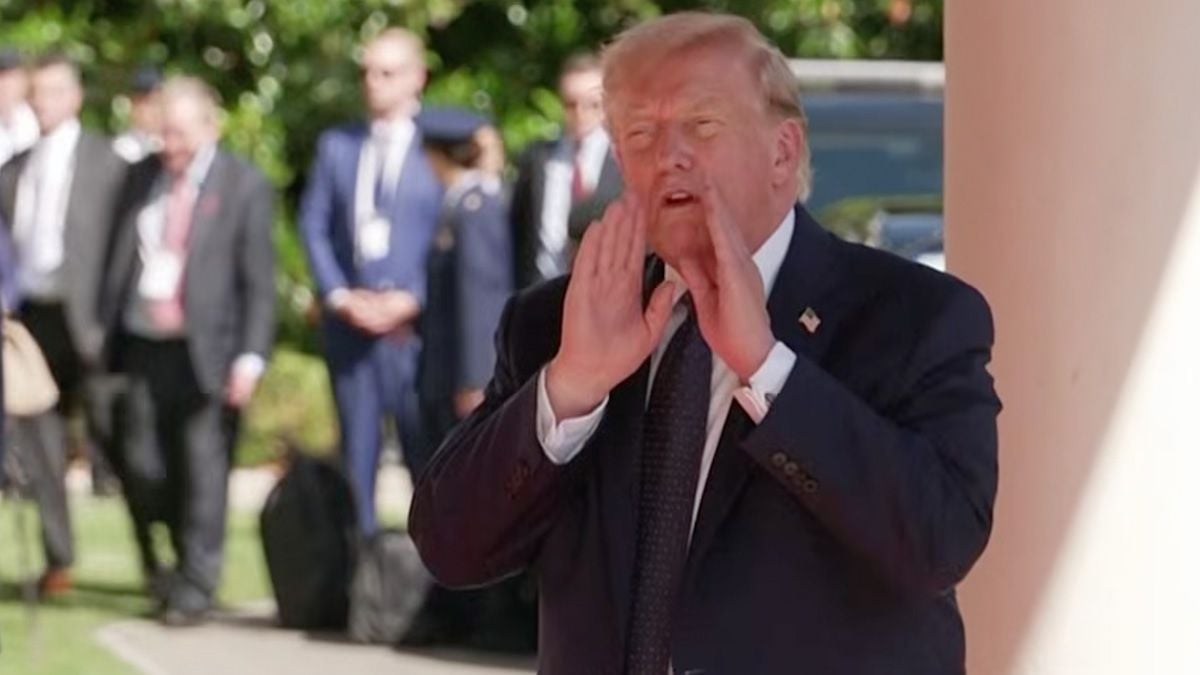
Washington signals wind-down. Jerusalem announces escalation. The treasury secretary is buying Russian and Iranian oil to keep the lights on. Congress is being asked for US$200 billion for a war the president promised would never happen. And the Gulf states are watching in silence. This is what a superpower being driven by its own ally looks like.


"We regarded Witkoff and Kushner as Israeli assets that dragged a president into a war he wants to get out of."
— Diplomat with direct knowledge of US-Iran Geneva talks, quoted in The Guardian
That sentence, spoken by a diplomat inside the room, is not an allegation. It is not a theory. It is a firsthand assessment from someone who watched the process unfold. Everything that follows in this piece is the explanatory framework for what that diplomat has already confirmed happened.
The Deal That Was Killed in Geneva
Before the bombs fell, there was a table. And by every independent account, that table was close to producing an agreement.
On February 27, Omani Foreign Minister Badr Albusaidi appeared on CBS News and told the world, on record, that a peace deal was "within our reach." Iran had agreed it would never possess nuclear material capable of producing a bomb. Existing enriched uranium stockpiles would be blended down, converted into fuel, and made irreversible.
Full IAEA access to all nuclear sites. Zero accumulation, zero stockpiling, full verification. Technical talks were scheduled for Vienna on March 2. Further meetings with the American negotiating team were planned for days afterward. The mediator's message to Trump was direct: "Give those negotiators enough room and enough space to really close these remaining areas."
Eight days later, on March 7, the bombs fell.
What happened in those eight days is now partially on the record, and what the record shows is damning.
The American negotiating team in Geneva was led by Steve Witkoff and Jared Kushner. Their assessment of the talks would, according to reporting from February 23, directly shape Trump's decision on whether to strike. If they said the talks had failed, the war would start. If they said diplomacy was viable, it wouldn't.
Kushner told Trump that Iran was "basically playing games." He told Trump that the best achievable outcome would be an "Obama kind of deal" and that even that would take months. The diplomatic window that the Omani mediator had just publicly described as days from closing productively was, in Kushner's telling to the president, effectively worthless.
Trump launched the war.
Then, at a press conference on March 10, Trump named the advisers who convinced him. Kushner was on the list. "Based on what Steve and Jared and Pete and others were telling me," Trump said, "I thought they were going to attack us. Within a week, they were going to attack us, 100 percent."
That claim — the imminent Iranian attack that made the war an act of self-defence rather than aggression — was directly contradicted by US intelligence within days. Trump administration officials told congressional staff in private briefings that US intelligence did not suggest Iran was preparing a preemptive strike against American interests.
CNN reported that officials acknowledged to congressional staff that Iran was not planning to strike US forces unless Israel attacked first. Senator Mark Warner, the top Democrat on the intelligence committee who receives classified briefings, was unequivocal: "I saw no evidence that Iran was on the verge of launching any kind of preemptive strike against the United States of America."
The imminent attack was not in the intelligence. It was in Kushner's briefing to Trump.
The Guardian's diplomat who was present in Geneva called Witkoff and Kushner Israeli assets. That assessment — not Saudi assets, not Emirati assets, but specifically Israeli assets — is the operationally accurate one. Kushner's actions in Geneva served Israeli strategic interests: closing the diplomatic window, framing Iran as intractable, and delivering an intelligence picture to Trump that his own agencies did not share.
What the financial disclosures establish is something distinct but equally significant — that Kushner was serving in a government negotiating role of enormous consequence while carrying undisclosed financial entanglements that should have disqualified him from the position entirely.
Affinity Partners received US$2 billion from Saudi Arabia, generating US$25 million per year in management fees to Kushner personally. It received more than US$200 million from the UAE. These are not small interests. They are financial relationships with regional governments that have their own stakes in Iranian power being degraded — interests that ran parallel to but were not identical with Israeli objectives.
The point is not that Kushner was executing Saudi or Emirati instructions in Geneva. The point is that a man with nine figures of financial exposure to regional governments was serving as America's chief negotiator on the most consequential regional decision in a generation, with no disclosure, no recusal, and no apparent acknowledgement from the administration that this represented a fundamental conflict of interest. Whether he was acting on Israeli alignment, financial self-interest, or ideological conviction, the American public and America's allies in the room had no way of knowing whose interests he was actually representing.
That is the point the diplomat's assessment captures. Not which paymaster Kushner served. But that he was not serving the one he was supposed to.
A President Who Did Not Expect This
The war was sold to the American public and to Congress on a single proposition: Iran was on the verge of acquiring nuclear weapons and had to be stopped. That was the stated justification on March 7. That was the casus belli. That was the reason American forces were committed to a theatre that has now entered its fourth week, cost US$11.3 billion in its first week alone, and triggered a global energy crisis.
Then Marco Rubio said the quiet part out loud. The Secretary of State suggested that US involvement was partly driven by the need to preempt Israeli-triggered escalation getting out of control — that America had entered the war at least partly to manage risks created by its ally, not purely to advance its own strategic objectives.
In a single unrehearsed moment, the nuclear justification was quietly supplemented by an admission that Washington had effectively been pulled into a damage-containment role for Israeli operational decisions it had not fully authorised.
What Rubio did not say — but what the Guardian's account of the Geneva talks makes unavoidable — is why the diplomatic alternative failed before the first bomb fell. Britain's national security adviser Jonathan Powell was in that room. He assessed Iran's nuclear proposal as substantive enough to keep diplomacy alive and avoid escalation entirely. The talks collapsed anyway. And the diplomat's explanation was not Iranian intransigence. It was the composition of the American team itself.
Read Rubio's admission and the Geneva account together and the picture is complete. The nuclear justification was the public framing. The diplomatic off-ramp was available but not taken. The negotiating team was assessed by allies as working for a different principal.
The imminent attack claim that closed Trump's decision loop was contradicted by his own intelligence agencies. And the Secretary of State subsequently confirmed that preventing Israeli-triggered escalation — not Iranian nuclear weapons — was at least part of why America ended up in the war at all.
Two justifications announced in sequence, pointing in opposite directions, bracketing a diplomatic process that was compromised before it began — by negotiators whose financial relationships with the governments lobbying for war had never been disclosed to the American public.
Trump's own public posture throughout has carried the unmistakable signature of a man who expected something different. His expressed shock at Iran's responses, his reactive rather than anticipatory tone, his repeated gestures toward off-ramps — none of this resembles a commander who greenlit a deliberate strategic campaign with fully war-gamed response scenarios. It resembles a president who was sold a picture that didn't survive contact with reality, by people who had every financial and ideological reason to paint it that way.
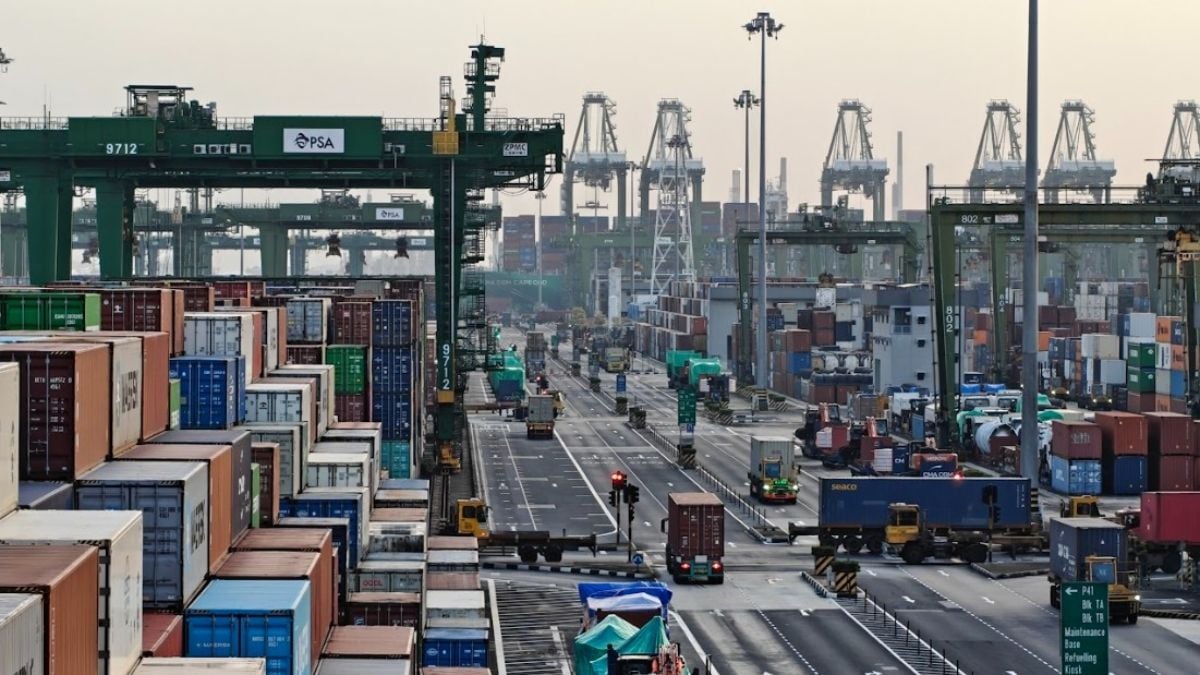
A CNN report confirms the structural failure explicitly. Multiple sources familiar with the planning confirmed that the Pentagon and National Security Council significantly underestimated Iran's willingness to close the Strait of Hormuz — one of the most fundamental and long-anticipated Iranian response options, a scenario that has been a bedrock of US national security planning for decades.
A former official who served across Republican and Democratic administrations described himself as "dumbfounded." The interagency analysis that would normally stress-test these assumptions was, according to sources, treated as a secondary consideration, sidelined by Trump's preference for a tight circle of close advisers — the same tight circle that had just told him the diplomatic track was dead and an Iranian attack was days away.
This was not a sophisticated strategic miscalculation. This was a failure to account for the most predictable move on the board, by a team whose composition was already raising alarm among allied diplomats in the negotiating room.
Trump's response to the Strait closure has been characteristic. He told Fox News that oil tanker crews should "show some guts" and transit the waterway — a statement that simultaneously reveals he did not anticipate this scenario and that he has no immediate solution to it.
The Navy has declined all industry requests for escorts, informing shipping executives repeatedly that conditions are too dangerous and that available assets are committed to offensive operations. Energy Secretary Wright confirmed the US military is "simply not ready" to escort tankers through a strait it told itself would never need to be reopened.
The administration that entered this war promising energy market stability is now temporarily lifting sanctions on Russian oil stranded at sea to compensate for a closure it had convinced itself would never happen.
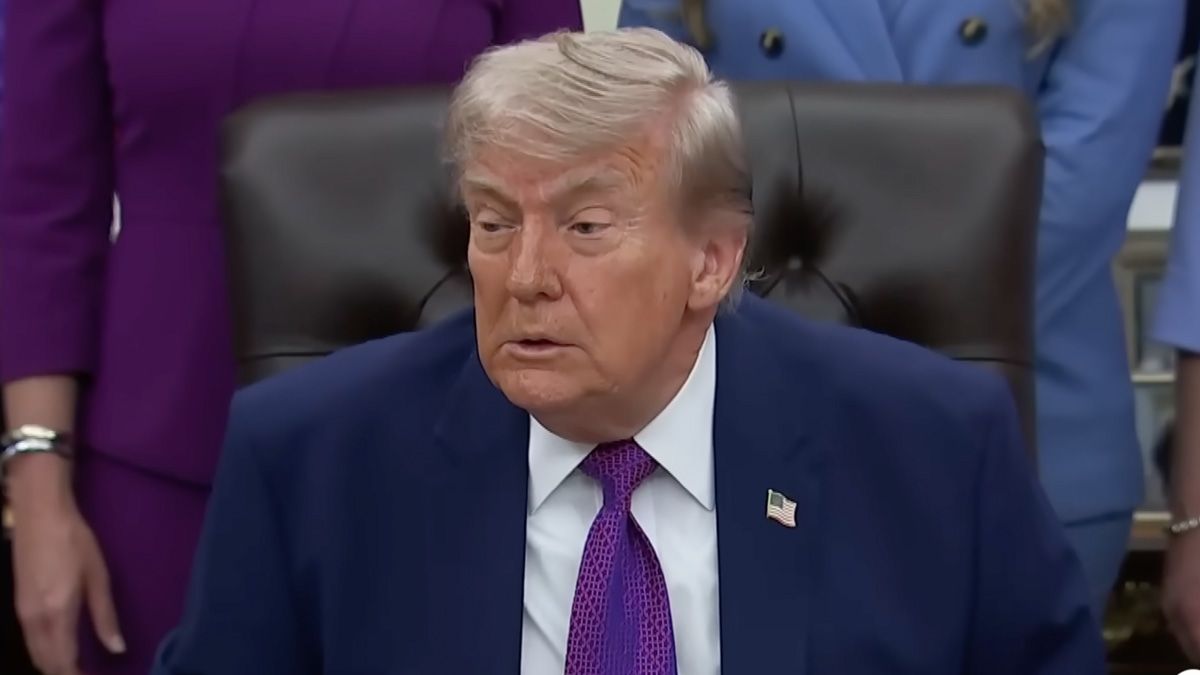
In a post on Truth Social on March 21, Trump wrote: "We are getting very close to meeting our objectives as we consider winding down our great Military efforts in the Middle East with respect to the Terrorist Regime of Iran."
Israel Steps on the Gas
Into this picture of a president looking for exits and an administration managing consequences it did not anticipate came Defence Minister Israel Katz's declaration on March 21, just hours after Trump's post.
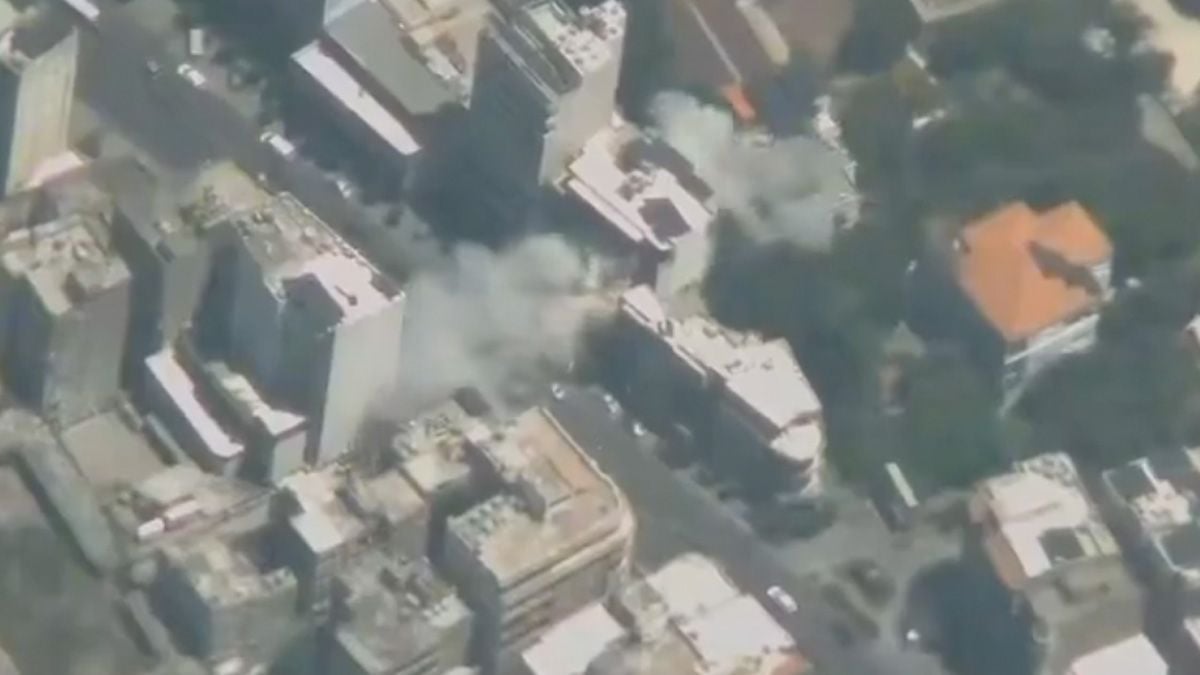
“This week, the intensity of the strikes that the IDF and the US military will carry out against the Iranian terror regime and the infrastructure it relies on will significantly escalate,” he says during an assessment with military officials.
The IDF's announcement of thousands of remaining targets and several more weeks of planned operations makes the structural trap explicit. Once that is public, any American move toward ceasefire becomes a visible abandonment of an ally mid-campaign. The political cost of the exit ramp just rose overnight, regardless of what Trump actually wants. Israel does not need formal control of American decision-making to shape it. Operational momentum does that work automatically.
This is what international relations scholars call agenda locking — the practice of creating facts on the ground that constrain an ally's choices without requiring their explicit consent. Every additional strike raises the sunk costs. Every Iranian retaliation against Gulf infrastructure widens the theatre. Every day the war continues makes a clean American exit harder to execute without appearing to have lost something.
The Katz declaration carries a second dimension that the international press has been conspicuously reluctant to examine — one that is not speculation but documented constitutional reality. Rumours about Netanyahu's health and governing capacity have circulated with increasing persistence — particularly with the series of videos which netizens claim to be AI generated.
In March 2023, the Knesset passed what became known as the Incapacitation Law, an amendment to Israel's Basic Law on Government that was widely documented as a personal law designed to protect Netanyahu specifically. Netanyahu himself acknowledged its personal significance when he said after its passage that "until now, my hands were tied."
The law restricts the grounds for declaring a prime minister incapacitated to physical or mental health only, requires either Netanyahu's own declaration or a 75 percent cabinet supermajority followed by a two-thirds vote of the Knesset House Committee, and explicitly prevents the Supreme Court from intervening in any incapacitation determination.
The effect is a constitutional mechanism that makes formal succession nearly impossible without Netanyahu's own cooperation — a law he built for his protection that may now be functioning as a trap of his own construction. If Netanyahu is unable to govern at full capacity for any reason, the institutional pathway to formally transferring authority is deliberately and extensively obstructed by legislation he pushed through to shield himself from his corruption trial.
This is the constitutional context in which Defence Minister Israel Katz — the designated acting authority on defence matters during prime ministerial incapacitation — publicly committed both the IDF and American forces to significantly intensified strikes while the American president was simultaneously signalling wind-down. A fully functioning Netanyahu at the helm of an active war would not allow his Defence Minister to make that declaration in his place. That is not how wartime command operates. The message committing allied forces to escalation would come from the head of government, not his designated successor.
The fact that it came from Katz instead — against the explicit signal of the senior alliance partner — sits inside a constitutional framework that Netanyahu designed to make questions about his capacity impossible to formally raise or legally resolve. Whatever the explanation, the Incapacitation Law ensures that the question of who is actually authorising these decisions cannot be cleanly answered by any Israeli institutional process. Netanyahu built that ambiguity into law. The international community is now living inside it.
The Deeper Strategic Logic
The operational tempo Israel is maintaining serves objectives that extend well beyond the stated justification of neutralising Iran's nuclear program — a justification that has grown increasingly difficult to sustain.
If the genuine concern were nuclear weapons development, the logical campaign targets enrichment facilities, centrifuge infrastructure, the specific physical nodes of a weapons program. Iran's nuclear infrastructure is large, but it is not thousands-of-targets large. That target list is a comprehensive strategic degradation campaign — the kind built when the actual objective is the systematic dismantling of an adversary's entire military and economic capacity.
Iran is not merely a nuclear concern for Israel. It is the logistical backbone of every armed group that has contested Israeli military dominance across the region — Hezbollah, Hamas, the Houthis. A comprehensively degraded Iran does not just remove a weapons program. It defunds and demoralises the entire network simultaneously.
But the second objective is less discussed and more consequential for the regional order. Every Iranian retaliatory strike against Gulf infrastructure — the entirely rational Iranian response to being attacked — damages the fundamental premise of the American regional presence. The US has based its Middle East posture on being the security guarantor for Gulf states. If hosting American bases makes those states targets rather than protected partners, the bargain collapses. Public pressure in Qatar, Kuwait, Bahrain, and the UAE builds against basing arrangements that are visibly making their countries less safe, not more.
Israel does not need to pressure Gulf states directly. Iran does that work by responding logically to Israeli strikes. The result is the same: American basing rights become politically untenable, American regional presence contracts, and the strategic landscape that has constrained Israeli ambitions for decades begins to dissolve.
The Dollar's War It Didn't Sign Up For
Beyond the military miscalculations, Israel's actions are striking at something the United States has spent fifty years defending with more consistency than any alliance commitment — the petrodollar system.
The architecture is straightforward: oil is priced and traded in dollars, which creates structural global demand for US currency, underpinning American financial dominance and its ability to run deficits that would cripple any other economy. The Strait of Hormuz closure has not just disrupted oil supply. It has accelerated a parallel financial realignment that Washington is entirely powerless to reverse through military means.
Iranian oil continues to flow — to China, transacted in yuan. That alone is not new. But the Strait crisis has added urgency to conversations that Gulf states were already having quietly. If the waterway through which their own exports must pass is now a war zone, and if the American military that was supposed to guarantee safe passage is committed to offensive operations and cannot spare escorts, the foundational promise of the petrodollar arrangement — American military power guaranteeing the flow of Gulf oil in exchange for dollar-denominated transactions — has visibly broken down.
The question Gulf finance ministers are now asking is not hypothetical. If China can guarantee market access, if Chinese naval presence offers an alternative security framework, and if trading in yuan removes exposure to American sanctions that Washington has demonstrated it will weaponise — why maintain the dollar arrangement at all?
A Gulf state decision to accept yuan for oil exports would not be announced dramatically. It would happen incrementally, in bilateral deals, in quiet amendments to existing contracts. By the time it registered as a systemic shift, the petrodollar architecture would already be structurally compromised.
The Gulf states have not responded publicly to the Iranian oil unsanctioning. That silence is itself a signal worth reading carefully. These are governments with sophisticated diplomatic communications apparatus — when they go quiet on a development of this magnitude, it is not because they have nothing to say. It is because what they are saying is being said in different rooms, to different interlocutors, in a different language.
What they are watching is the United States unsanction the oil of the country whose missiles are still striking Gulf infrastructure. The implicit American guarantee — we will bear costs to protect your security — has been replaced by something that looks, from Riyadh and Abu Dhabi, like the opposite. Washington is now effectively subsidising Iranian oil revenues to manage its own domestic energy politics, while Gulf states remain in the crosshairs of Iranian retaliation triggered by Israeli strikes Washington did not fully control.
The move toward a Chinese-mediated regional settlement was always going to happen incrementally — quiet bilateral deals, careful amendments, strategic ambiguity maintained until the moment it wasn't. But there is a threshold between quiet repositioning and public declaration, and the Iranian oil waiver may be the event that pushes Gulf state calculations across it. When the security guarantor is buying your attacker's oil to protect its own midterm polling, the case for maintaining public alignment with that guarantor becomes very difficult to make domestically. The question is no longer whether Gulf states hedge toward China. It is whether the hedging remains quiet long enough for Washington to notice.
This is the dimension of the current conflict that receives almost no attention in Western coverage, because acknowledging it requires acknowledging that the United States is participating in a war that is actively undermining its own financial foundations. Every week the Strait remains closed, every Iranian missile that strikes Gulf infrastructure, every day Gulf states calculate that American protection is making them less secure — is a week, a missile, a day in which the alternative settlement architecture China has been quietly building becomes more attractive.
Israel's operational tempo is not just locking America into a military campaign it did not fully choose. It is creating the precise conditions under which the Gulf states might conclude that the rational exit is not an American-brokered security arrangement, but a Chinese-mediated one — with oil priced accordingly.
The Trap Iran Knows Trump Is In
To understand why Trump has been publicly pleading for oil tanker crews to "show some guts" and transit the Strait of Hormuz, and why his administration is lifting sanctions on Russian and Iranian oil stranded at sea, and why he keeps posting about winding down a war his own Defence Minister's Israeli counterpart immediately contradicts — you have to understand what losing the midterms actually means for him personally.
This is not about ideology or legacy. This is about procedural survival.
A Democratic House majority does not need to prove Donald Trump guilty of anything to cause him irreversible damage. They need committee chairmanships and a calendar. Subpoena power, document production orders, public hearings, witnesses under oath — the investigative process itself is the instrument. Every stalled declassification process, every uncomfortable question that the Iran war has displaced from the news cycle, every dormant inquiry that lost oxygen when the Strait of Hormuz became the dominant story — all of it returns to the surface with institutional backing the moment the gavel changes hands.
But the assumption that this threat is purely a future Democratic one evaporates when you examine a document dated March 17, 2026 — ten days into the Iran war. House Oversight Committee Chairman James Comer, Republican, Kentucky, issued a formal subpoena to Attorney General Pamela Bondi requiring her deposition on April 14.
The scope is comprehensive: mismanagement of the Epstein and Maxwell investigation, the circumstances of Epstein's death, how Epstein and Maxwell sought to curry favour with and exercise influence over elected officials, and potential ethics violations by those elected officials. This is not a Democratic opposition manoeuvre. This is Trump's own party's oversight apparatus formally subpoenaing his own Attorney General over a matter with direct personal exposure implications for the president himself.
The investigative process was already in motion before the first strike on March 7. The Iran war did not prevent the subpoena. It did not stop the April 14 deposition date. What it did was ensure that a Republican chairman subpoenaing a Republican attorney general over a matter implicating a Republican president received a fraction of the press coverage it would have commanded in any other news environment. The Strait of Hormuz did not create this problem for Trump. But it has been the most effective suppression mechanism available.
Trump's entire defensive architecture has always rested on two pillars — controlling the news cycle through his own messaging, and maintaining a congressional firewall that prevents investigative processes from gaining traction. The Iran war has been performing the first function whether by design or by fortune, consuming the oxygen that sustained inquiries require. But wars that produce four dollar gasoline destroy the second pillar by handing the opposition exactly the kitchen-table issue that converts midterm sentiment into seat changes.
Iran understands this perfectly. Tehran does not need to defeat the United States militarily. It needs to hold the Strait long enough for American pump prices to do their work on the American electorate. Every week the Strait remains closed is a week of compounding political damage to the party in power, a week closer to a midterm environment that strips Trump of his congressional protection, a week in which the investigative apparatus he has been holding at bay moves closer to having the institutional tools to operate freely.
The Strait closure is therefore not just an economic weapon. In the context of American domestic politics, it is a precision instrument aimed directly at Trump's political survival timeline. Iran does not need to win the war. It needs to outlast a midterm cycle.
This is why Trump's signals toward ceasefire and de-escalation are genuine rather than performative. He is not pivoting for diplomatic reasons or strategic reassessment. He is looking at a calendar and a polling map and calculating that the war needs to end before November or the consequences extend well beyond foreign policy.
The US$200 billion war funding request makes the political trap concrete in a way that no amount of analytical framing can match. This is a president who campaigned explicitly against forever wars, who promised his base that American blood and treasure would no longer be spent on Middle Eastern conflicts that served other people's interests — now asking Congress for US$200 billion for a war he initiated without congressional consultation, while the Pentagon estimates it has already cost US$11.3 billion in the first week alone.
The numbers that Democrats will put next to that figure on the campaign trail write themselves. A one-year extension of health insurance subsidies that Republicans blocked would have cost US$35 billion. The entire DOGE exercise — sold to working Americans as reclaiming wasted government spending — claimed US$175 billion in savings, a figure independent analysts found to be aspirational at best. PolitiFact, the Wall Street Journal, and the New York Times all found the tallies riddled with errors and inflated projections, with verified real savings roughly half the claimed amount. Americans were told their health grants and research funding had to go. One hundred billion dollars fed lower-income American families for an entire year.
Trump is now asking for twice that to fund a war that has made gasoline more expensive, triggered an energy crisis, forced the unsanctioning of Russian and Iranian oil, and which a majority of Americans, according to polls, do not support.
Democratic congressman Jim Himes put the congressional dimension with surgical precision. Hegseth, he said, should remember the old saying: "If you want me there for the landing, make sure I'm there at the takeoff." Trump started this war without consulting Congress. He is now asking Congress to fund it. That is not a legislative problem. That is a midterm advertisement for every Democratic candidate in every competitive district in America.
The clearest evidence that the administration is already making desperate concessions to manage the fallout is a sequence of treasury actions that, taken together, constitute a visible unravelling of the war's own logic.
On March 12, Treasury Secretary Scott Bessent issued a sanctions waiver on Russian oil stranded at sea — quietly lifting restrictions on an adversary's oil to compensate for an energy supply gap created by a war the administration did not fully choose to enter. A presidency built on maximum pressure against adversaries, that weaponised sanctions as its primary foreign policy instrument, buying Russian oil to manage the domestic consequences of a war it cannot exit. European leaders responded with immediate blowback, warning the move strengthened Putin and prolonged the Ukraine war simultaneously.
Then came the confirmation. On March 20, Bessent issued a narrowly tailored, short-term authorisation permitting the sale of Iranian oil currently stranded at sea. The oil of the country American forces are actively bombing is now officially unsanctioned by the administration doing the bombing. Approximately 140 million barrels, crude and petroleum products already loaded on vessels, authorised for sale until April 19.
The energy picture that forced this decision is not abstract. Brent crude is holding around US$112 a barrel — up 53 percent on the past year. UK gas has nearly doubled from 80 pence per therm before the crisis to around 151 pence. About a fifth of the world's daily oil consumption normally transits the Strait of Hormuz. Since the war began that flow has effectively stopped, knocking roughly a tenth of global supply out of the market.
The administration's own framing — that it would use Iranian barrels against the Iranians — is the kind of sentence that sounds like strategic cleverness in a treasury briefing room and sounds like complete institutional collapse everywhere else. Experts were not diplomatic about it.
"To put it mildly, this is bananas," Blackstone Compliance Services' David Tannenbaum told the BBC. "Essentially we're allowing Iran to sell oil, which could then be used to fund the war effort." Capitol Peak Strategies founder Alex Zerden warned that Iran would likely profit from the sales, providing more money to fund its regime, the war, and its proxies.
The F-35 that made an emergency landing after being struck by suspected Iranian fire — a jet costing up to US$77 million — is the image that accompanies all of this. The forever war Trump promised would never happen is now losing aircraft, burning through ammunition stockpiles, requesting US$200 billion from a Congress it bypassed, lifting sanctions on the enemies it is simultaneously bombing, and watching Defence Secretary Hegseth tell reporters with a straight face that "it takes money to kill bad guys."
To a strategist these are supply gap fixes and budget replenishment requests — rational responses to operational constraints. To a voter the picture is starker. Trump lifted sanctions on Russian oil. Then Trump lifted sanctions on Iranian oil. He is asking for US$200 billion for a war he said would never happen, while telling Americans there is no money for healthcare subsidies. Both sanction waivers fund adversaries. All of it was forced by the consequences of a war the administration did not anticipate and cannot control.
That is the trap made visible not in rhetoric but in dated treasury announcements and budget requests. The symbolic surrenders are not hypothetical. They are already happening, sequentially, with accelerating desperation. Every sanction lifted on an adversary, every billion requested from a bypassed Congress, is another data point for investigators and another advertisement for opposition campaigns. Not as evidence of guilt — but as evidence of a presidency driven by events it no longer controls, making decisions that contradict its own stated principles under pressure it did not anticipate and cannot publicly acknowledge.
Iran does not need to win this war on the battlefield. It is already winning it on the treasury secretary's announcement calendar and the Pentagon's budget requests.
And into all of this steps Israel, publicly committing to hitting Iran harder, announcing thousands of remaining targets and several more weeks of operations, with a Defence Minister speaking for American forces that Washington has not committed. Every such declaration is another week on the clock. Another week of Strait closure. Another week of pump prices. Another week of US$200 billion questions that have no good answers. Another week closer to November with no off-ramp in sight.
The Endgame Nobody Is Saying Aloud
The United States is fighting a war that is simultaneously degrading its military posture, its alliance relationships, its regional basing infrastructure, and now the financial system that underwrites its global power. And at every decision point that has produced this outcome, the accelerant has been Israeli operational choices that Washington either did not anticipate or could not prevent — shaped from the very beginning by advisers whose financial relationships with the governments that wanted this war were never disclosed to the American public.
The Gulf states are not blind to this dynamic. They are watching a situation in which the American umbrella is transforming from protection into provocation. The more sophisticated among them — Qatar, UAE — are already running parallel diplomatic tracks.
The 2023 China-brokered Saudi-Iran rapprochement was not an accident of timing. It was precisely this kind of hedge against a future in which American security guarantees can no longer be relied upon. A Gulf state decision to vacate American bases in exchange for Chinese-mediated security guarantees and yuan-denominated oil trade is no longer an unthinkable scenario. It is the logical conclusion of the trajectory now in motion.
The uncomfortable conclusion that follows is this: if American bases leave the Gulf, and Iran has been comprehensively degraded as a military force, the regional order that has existed since 1979 is fundamentally gone. The resistance networks are defunded. The external power that has occasionally restrained Israeli expansion is no longer present.
The Gulf states, facing a newly unconstrained Israel with nuclear weapons and a governing coalition that has been publicly, unabashedly explicit about its territorial ambitions, would have to recalculate their threat matrix entirely. This is not speculation about hidden intent.
The Greater Israel project — the annexation of the West Bank, the displacement of Palestinian populations, and the eventual incorporation of territories extending into what are currently sovereign Arab states — has been articulated openly by serving Israeli ministers on Israeli television networks. Smotrich has presented maps. Ben-Gvir has made statements that would have ended political careers in any previous Israeli government.
These are not fringe positions whispered in private — they are the publicly stated objectives of men who hold actual ministerial portfolios in the current cabinet, broadcast domestically to Israeli audiences with no apparent concern about how the Arab world receives them. The restraint that prevented those ambitions from becoming operational policy was always external — American diplomatic pressure, Iranian-backed deterrence, Gulf state leverage through normalisation conditions. Strip all three away simultaneously and what remains is not a security-oriented regional power but an expansionist project with nuclear cover and no remaining constraint.
That recalculation leads somewhere that would have seemed impossible five years ago. Iran's ambitions are regional influence and regime survival — threatening, but manageable through deterrence and diplomacy, as the Saudi-Iran rapprochement demonstrated. An Israel governed by a coalition with published maps of territorial expansion, a demonstrated willingness to drag the United States into wars without full American consent, and a strategic playbook that ends with American withdrawal from the region, poses a categorically different kind of threat. One that is expansionist, nuclear-armed, and increasingly operating without external constraint.
The enemy of an existential threat is a necessary partner. That logic has produced stranger alliances throughout history. Israel may be in the process of executing a campaign whose logical endpoint is a unified Arab-Persian front backed by China — a strategic outcome significantly worse than anything it faced before October 7. And the Gulf states that sign onto that alignment would not be doing so out of affection for Tehran. They would be doing so out of a cold reading of who actually threatens their long-term existence — and arriving at an answer that Washington's strategic community is not yet prepared to say aloud.
The institutional voices within Israel that would normally identify that risk — the IDF generals, the career intelligence professionals, the strategic planners who think in decade-long arcs — have been systematically sidelined by a governing coalition whose primary qualification is political loyalty to a prime minister managing a corruption trial as much as a war.
The people who would say "this ends badly" have been removed from the room. What remains are ideologues with ministerial titles, maps of a Greater Israel on their office walls, and an American partner too entangled to walk away and too misled to understand what it is enabling.
That is not an alliance. That is a slow-motion extraction of American strategic assets in service of objectives Washington never formally agreed to pursue — executed through negotiators that allied diplomats in Geneva had already assessed as working for the other side, paid by the governments that wanted the war, delivering intelligence assessments to a president that his own agencies had already contradicted.
Trump wants to brake. Israel is on the gas. The vehicle they are both in has no neutral gear, the road ahead was never mapped, and the destination nobody planned for is now coming clearly into view.