Trump postpones Iran power plant strikes for five days as Tehran denies talks
US President Donald Trump has ordered a five-day delay on military strikes against Iranian energy infrastructure, citing ongoing negotiations — but Iranian officials flatly deny any talks have taken place.

- Trump delays Iran strikes by five days, citing productive US-Iran talks he says produced "major points of agreement".
- Iran denies any negotiations occurred, calling Trump's claims an attempt to manipulate global oil markets.
- Analysts warn the situation remains highly volatile, with Trump's past deadlines frequently shifting.

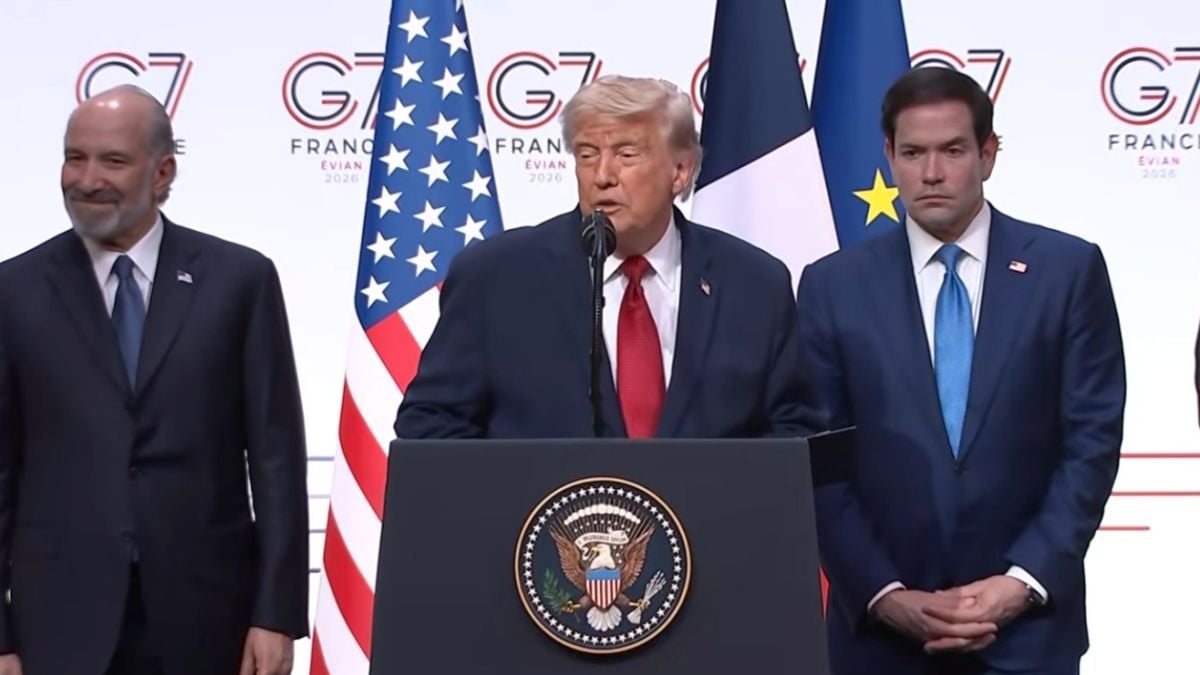
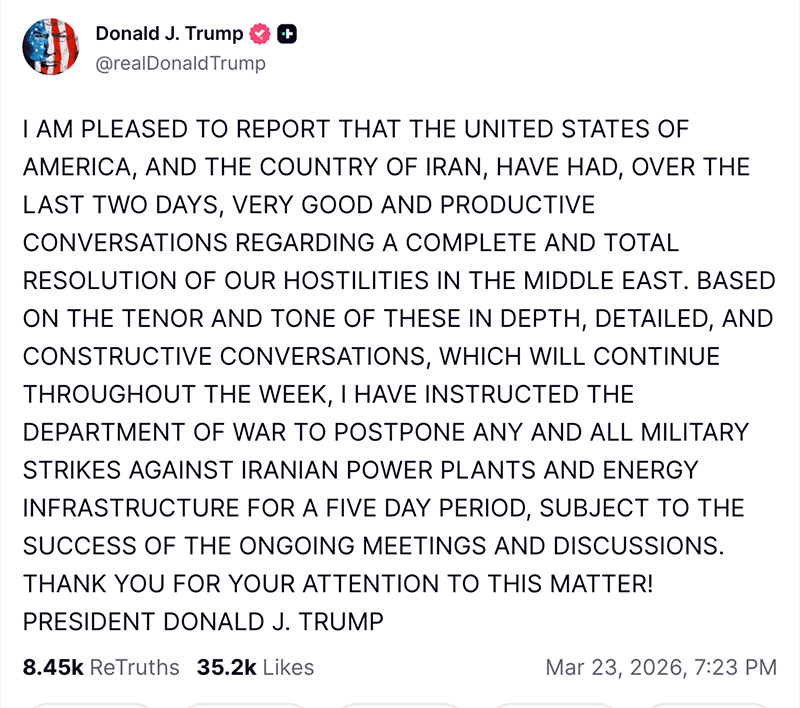
US President Donald Trump announced on Monday, 24 March 2026, that he had ordered the American military to postpone all planned strikes against Iranian power plants and energy infrastructure for five days, saying the two countries had reached "major points of agreement" through recent talks.
In an all-capitals post on his Truth Social platform, Trump said: "I am pleased to report that the United States of America, and the country of Iran, have had, over the last two days, very good and productive conversations regarding a complete and total resolution of our hostilities in the Middle East."
He said he had instructed the Department of War to delay any and all military action against Iranian energy infrastructure "for a five-day period, subject to the success of the ongoing meetings and discussions."
The announcement marked a significant reversal from Trump's posture on Saturday, 22 March, when he gave Tehran a 48-hour ultimatum to fully reopen the Strait of Hormuz or face strikes on its power plants, beginning with "the biggest one first."
Contradictory signals from both sides
Speaking to reporters at a Florida airport, Trump said Iran "wanted to make a deal" and that his envoys — Steve Witkoff and Jared Kushner — had been engaged in talks as recently as Sunday night. He said negotiations had been held with a "respected" Iranian leader, though not Supreme Leader Mojtaba Khamenei.
Trump further asserted that Iran must surrender its enriched uranium stockpile as a condition of any agreement, and suggested the Strait of Hormuz would be "opened very soon" if a deal were reached.
However, Trump's framing of who initiated talks was internally inconsistent. He claimed publicly that the Iranians had contacted him first, while also making statements over the preceding days suggesting the conflict was nearing its end — even as his administration simultaneously sought an additional US$200 billion in war funding and moved thousands of additional troops to the region.
Iran: no talks, no change in position
Iranian officials categorically rejected Trump's account. Parliament Speaker Mohammad Bagher Ghalibaf stated on Monday that "no negotiations have been held with the US", accusing Trump of deploying disinformation to "manipulate the financial and oil markets and escape the quagmire in which the US and Israel are trapped."
Foreign Ministry spokesman Esmaeil Baghaei similarly denied any discussions had taken place, stating that Tehran's position on the Strait of Hormuz and conditions for ending the war "have not changed."
In comments relayed by Iran's official Islamic Republic News Agency (IRNA), Baghaei acknowledged that "messages have been received from some friendly countries regarding the US's request for negotiations to end the war" — but stopped short of confirming any direct or indirect dialogue with Washington.
Iran's Fars news agency reported no "direct or indirect" contact between the two governments, though some sources told the outlet Axios that indirect discussions had occurred.
Markets react, but analysts urge caution
Wall Street stocks mostly rose following Trump's Truth Social post, while oil prices — which had spiked sharply since the US and Israel launched their military campaign against Iran on 28 February 2026 — fell notably on Monday.
Market analyst Neil Wilson cautioned that the positive reaction should be treated with scepticism. "It's incredibly difficult to trade these markets when Trump is swinging between massive escalation and declaring peace/victory," Wilson said, adding that "the market is happy for now that we do not enter a new phase of danger."
Stock analysts broadly warned that Trump's claims remained unverified and that the situation could shift at any moment.
Energy crisis deepens as IEA sounds alarm
The broader economic impact of the conflict continued to intensify. Fatih Birol, executive director of the International Energy Agency (IEA), warned on Monday that the situation in the Middle East was "very severe" — worse, he said, than the two energy crises of the 1970s and the fallout of Russia's invasion of Ukraine combined.
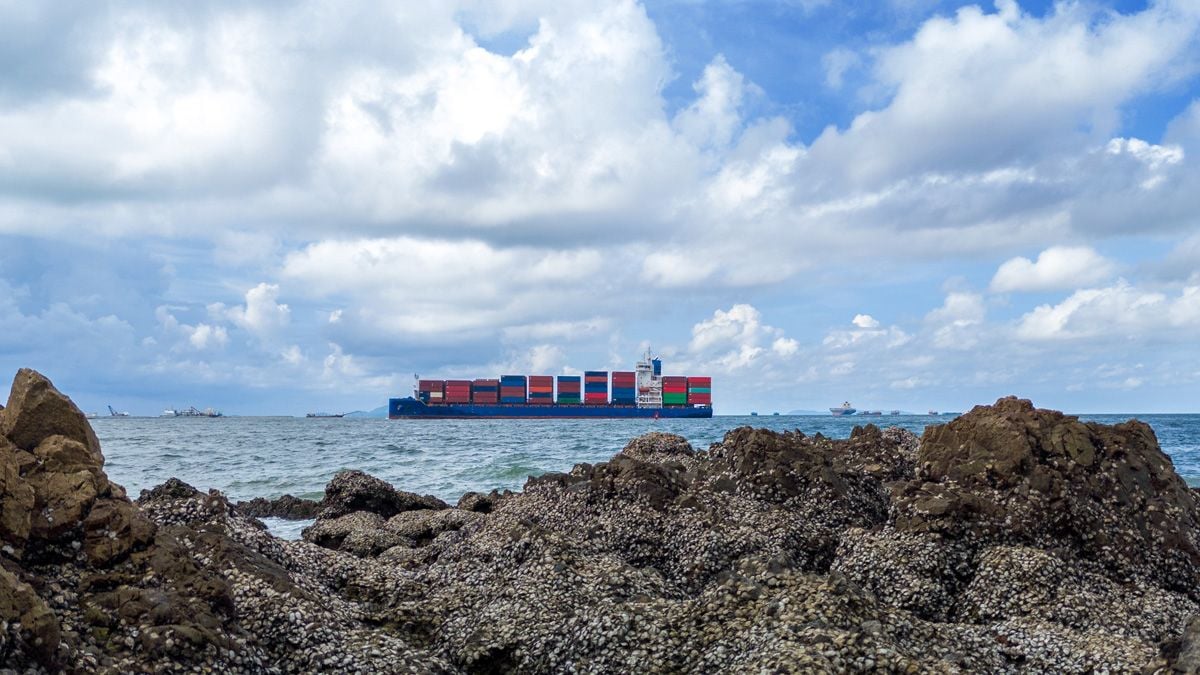
Iran's de facto blockade of the Strait of Hormuz, through which approximately one-fifth of global oil and liquefied natural gas supplies transit, has sent energy prices surging and created shortages of cooking gas across several Asian countries.
Iran raises stakes with military threats
Even as Trump floated the prospect of de-escalation, Iranian military and government bodies issued further warnings against any renewed offensive action.
The Islamic Revolutionary Guard Corps (IRGC) said on Monday that if Washington proceeded with strikes on Iranian infrastructure, it would target power plants in all regions supplying electricity to US military bases, as well as "economic, industrial and energy infrastructures in which Americans have shares."
Iran's Defence Council separately warned that any attack on Iran's southern coast or islands would trigger the laying of sea mines capable of severing Gulf shipping routes entirely, according to state media.
Analysts assess Trump's off-ramp
Al Jazeera's Alan Fisher, reporting from Washington, DC, noted that Trump's five-day deadline was consistent with his pattern of flexible timelines. "Donald Trump's deadlines tend to be elastic. They have been in the past, and it could well be, come Friday, there won't be a resolution to this question," Fisher said.
Mohamad Elmasry of the Doha Institute for Graduate Studies suggested the announcement may represent "his way of sort of giving himself a dignified exit", while questioning whether Israel would continue military operations without US backing.
Al Jazeera's Mohamed Vall, reporting from Tehran, said the likelihood that Iran would reject Trump's overture was "remote." Vall said that Iran does not want to continue the conflict and would accept a deal if credible guarantees were offered — including assurances against future aggression and a pathway to a lasting agreement.
Regime change remarks draw attention
In remarks that may complicate any diplomatic resolution, Trump told reporters on Monday that the Strait of Hormuz would be "jointly controlled", though he offered no detail on the proposed mechanism. When pressed on who would exercise that control, Trump responded: "Maybe me. Me and the ayatollah, whoever the next ayatollah is."
He added: "There will also be a very serious form of regime change," before gesturing to Venezuela as a point of comparison — a reference that went unexplained.