Trump's Gulf gamble may be the petrodollar's last hand
The US-Israeli strikes on Iran and the continued blockade of the Strait of Hormuz are doing more than disrupting oil markets. With Gulf states absorbing Iranian missile strikes, Washington unsanctioning Russian and Iranian oil, and the petrodollar's replacement infrastructure already operational, the security bargain that underwrote dollar dominance for half a century is unravelling in real time.

- The petrodollar system rests on a US security guarantee that the current conflict is actively undermining.
- Iraq and Libya's fates are cited as warnings to states that challenge dollar oil pricing — warnings that may be losing their force.
- Saudi-China yuan deals and the mBridge settlement platform signal that a post-dollar energy order is already under construction.

There is a version of the current Gulf crisis that treats the Strait of Hormuz blockade as a temporary disruption — an ugly chapter in a conflict that will eventually end, after which oil markets will stabilise and the dollar will resume its accustomed place at the centre of global energy trade.
That version is probably wrong. And the reason it is probably wrong has less to do with Iran than with the United States itself.
How the petrodollar was built
To understand what is now at risk, it is necessary to understand what was actually constructed in the early 1970s. When the United States abandoned the gold standard in 1971, the dollar lost its intrinsic anchor. What replaced it was a geopolitical arrangement of extraordinary design.
In 1974, following intense diplomacy led by Secretary of State Henry Kissinger, the United States and Saudi Arabia reached a series of arrangements — formalised through the creation of the United States-Saudi Arabian Joint Commission on Economic Cooperation, established on 8 June 1974 — that would define the next five decades of global finance. There was no single treaty. What emerged was a convergence of interests: Washington needed oil market stability, and Riyadh needed a deep, safe destination for its rapidly accumulating petroleum revenues. The US bond market provided both.
Riyadh would price its oil exclusively in US dollars. Surplus petrodollar revenues would be recycled into US Treasury bonds and American financial markets. In exchange, Washington would guarantee Saudi security — providing arms, intelligence, and military presence across the Gulf. The arrangement was replicated across the Gulf Cooperation Council (GCC).
Global demand for the US currency was substantially reinforced — not only by American productivity or the depth of its capital markets, but by energy necessity. Oil alone does not anchor the dollar; US Treasury markets, their liquidity, and the rule of law underpin reserve currency status. But oil ensured that every economy on earth had a structural reason to hold dollars, compounding that dominance at scale.
This had profound consequences for the United States. It allowed Washington to run persistent trade and fiscal deficits that would have collapsed any other economy. It funded an overseas military presence of more than 750 bases across 80 countries. It made the dollar the world's reserve currency not by merit alone, but by design.
The lessons of Baghdad and Tripoli
The system's enforcers were not always visible. But they became visible on two occasions that analysts and historians continue to debate with urgency.
In 2000, Saddam Hussein began selling Iraqi oil in euros, explicitly framing the move as a challenge to dollar hegemony. In 2003, the United States invaded Iraq. The official justifications centred on weapons of mass destruction, none of which were found. Most historians attribute the invasion to a combination of neoconservative regional strategy, post-September 11 pre-emptive doctrine, and faulty intelligence assessments. The petroeuro explanation remains heterodox, though it circulates persistently in realist foreign policy analysis.
In 2009, Muammar Gaddafi proposed a gold-backed African dinar as an alternative oil pricing currency for the continent, a move that would have directly undermined dollar demand from African energy producers. In 2011, NATO forces — led by France, the United Kingdom, and the United States — intervened militarily in Libya. Gaddafi was killed. The gold dinar proposal died with him.
Most historians attribute the intervention to the Responsibility to Protect doctrine following Gaddafi's threats against Benghazi, and to sustained lobbying by France under Nicolas Sarkozy for regional influence. The currency-protection thesis gained renewed traction following leaked diplomatic correspondence referencing Gaddafi's gold reserves, but remains disputed.
These are contested historical interpretations. But the pattern has been noted, widely and persistently, by economists and foreign policy analysts across the ideological spectrum. The implicit message to any state considering a challenge to dollar oil pricing was legible: the consequences are existential.
That deterrent logic has rested on two pillars: US military willingness to act, and the credibility of the US security umbrella over compliant Gulf states. Both pillars are now being tested simultaneously.
When the protector becomes the problem
The current US-Israeli military campaign against Iran — launched on 28 February 2026 under the designation Operation Epic Fury — has, from the Gulf states' perspective, created a situation their security arrangements were never designed to handle. Washington is not protecting Gulf stability. It is actively disrupting it.
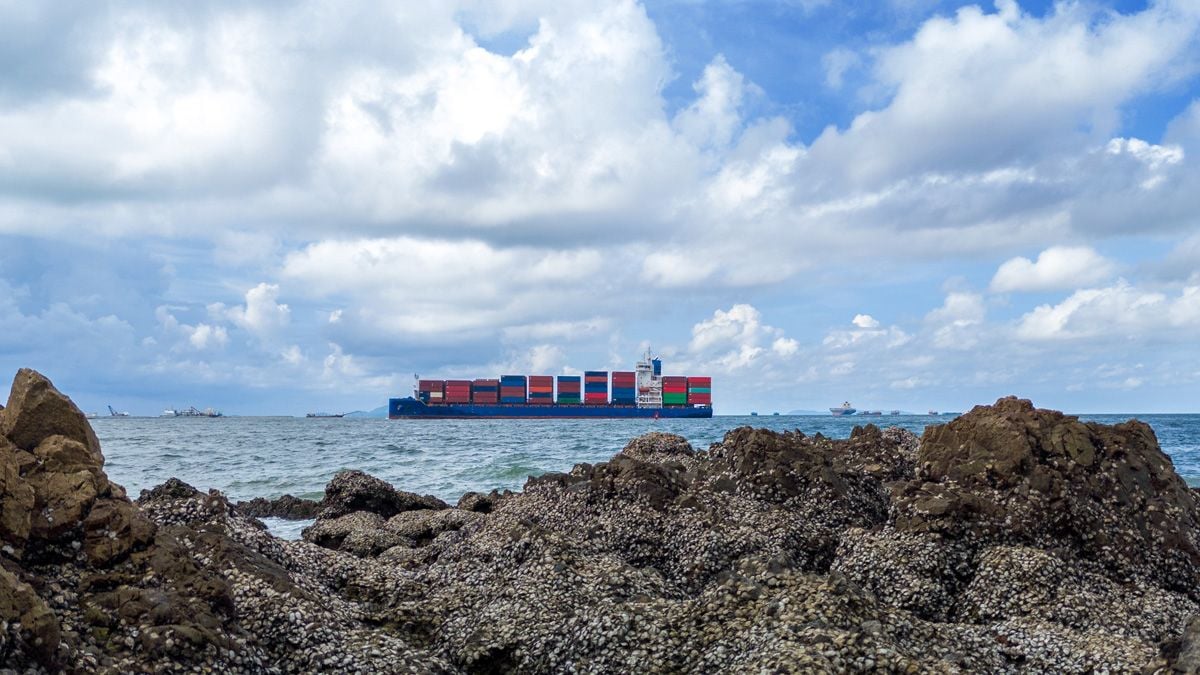
Iranian retaliatory measures have produced an effective rather than total closure of the Strait of Hormuz. The physical waterway remains navigable, but the withdrawal of war risk insurance by international underwriters in early March — with premiums reaching approximately five percent of ship value at their peak — rendered transit economically impossible for most Western-linked tankers. Notably, Iranian authorities have permitted Chinese-flagged vessels to continue passage — a carve-out that is less a diplomatic courtesy than a structural signal about which energy architecture Tehran is prepared to operate within.
According to data from the Lloyd's Market Association, vessels with an Iranian nexus or operating under Chinese consent now account for more than 60 percent of remaining transits through the strait. Washington attempted to counter the insurance shutdown through a reported US$20 billion reinsurance backstop arrangement with Chubb Ltd, announced in mid-March. Commercial shippers have so far declined to rely on it.
The cost to Gulf states extends well beyond lost export revenues. Since the conflict began, Iran has fired almost 5,000 missiles and drones at Gulf states, targeting oil and gas infrastructure, airports, US bases, and in many instances residential neighbourhoods, diplomatic areas, and tourist sites. The UAE has borne the brunt of the attacks. At least 20 people have been killed across the Arab Gulf nations. Bahrain, Kuwait, Saudi Arabia, and the UAE have all been forced to intercept Iranian projectiles in the past 24 hours alone.
Iran's position is explicit: Gulf states are legitimate targets because the United States uses their airspace and territory to conduct strikes against Iran. All Gulf states have rejected the claim. The UAE announced on Friday that it had dismantled a terrorist network funded by Iran and Lebanon's Hezbollah and arrested its members. Kuwait that same week uncovered Hezbollah-linked cells allegedly planning sabotage operations and attacks on vital national facilities.
Saudi Arabia and the UAE spent most of the past five years attempting to stabilise relations with Tehran precisely to prevent this kind of conflict. That diplomatic investment has now been rendered worthless by a war they did not start and were not consulted on.
Gulf states weigh their options
The question now being asked in Riyadh and Abu Dhabi is no longer whether the security arrangement has failed. It is what to do about it.
According to people with knowledge of the situation cited by Bloomberg, Saudi Arabia and the UAE are losing patience and are actively considering joining military action against Iran — but only if Tehran follows through on threats to attack vital power and water infrastructure, a threshold those sources described as high.
Most Gulf states are moving in that direction, with the exception of Oman, which is seeking to preserve its role as mediator. Muscat is currently reported to be the only venue where US and Iranian diplomats are in the same building — a backchannel that stands in stark contrast to the maximalist posture emanating from Washington's renamed Department of War.
The risk calculus is not straightforward. Gulf governments are acutely aware that joining the war could trigger severe Iranian escalation against them directly. They also fear being left exposed if Trump cuts a deal with Tehran, leaving them to manage a wounded and hostile Iran on their own doorstep. A European diplomat in the region, speaking anonymously to Bloomberg, noted that many governments fear that outcome regardless of whether they join the conflict.
At a meeting of foreign ministers in Riyadh on 19 March — attended by all GCC members except Oman, and including regional powers Egypt, Pakistan, and Turkey — military action against Iran was reported to be among the options discussed, according to people with knowledge of the deliberations. Saudi Foreign Minister Prince Faisal Bin Farhan was measured but pointed at the subsequent press conference. "The patience that is being exhibited is not unlimited," he said.
The UAE has been the most direct. Foreign Minister Sheikh Abdullah bin Zayed stated on Sunday that his country would "never be blackmailed by terrorists." Senior diplomatic adviser Anwar Gargash said the UAE would not accept a ceasefire unaccompanied by a long-term solution addressing Iran's nuclear programme, missile and drone capabilities, and what he described as the "bullying of the straits." "It is inconceivable that this aggression should turn into a permanent state of threat," Gargash said.
Mohammed Baharoon, director of B'huth, the Dubai Public Policy Research Centre, framed the emerging consensus starkly. If Iran continues targeting Gulf states and blocking the strait, it may force regional countries to assemble a coalition to confront what he called Tehran's "state terror" — comparable, he suggested, to the coalition assembled to fight the Islamic State in Iraq and Syria.
Trump's administration has shown no inclination toward sustained negotiated settlement. The president framed the campaign in maximalist terms, declining diplomatic off-ramps that might have contained the damage to Gulf producers. The signal was made explicit by the administration's rebranding of the Department of Defense as the Department of War, and by Defence Secretary Pete Hegseth's public statements framing the campaign in terms of singular military focus rather than diplomatic resolution.
For GCC governments, the message has become unambiguous: the security umbrella has been replaced by something closer to a sword of Damocles. The arrangement has not merely failed to protect them. It has made them a target.
Captive to its own contradictions
The clearest evidence that Washington is already making desperate concessions to manage the fallout is a sequence of Treasury actions that constitute a visible unravelling of the war's own logic.
On 12 March, Treasury Secretary Scott Bessent issued a sanctions waiver on Russian oil stranded at sea — quietly lifting restrictions on an adversary's energy exports to compensate for a supply gap created by a war the administration had not fully anticipated.
A presidency that built its foreign policy identity on maximum pressure and sanctions as a primary instrument was buying Russian oil to manage the domestic consequences of a conflict it cannot exit. European leaders responded with immediate blowback, warning the move simultaneously strengthened Vladimir Putin and prolonged the war in Ukraine.
Then came the confirmation. On 20 March, Bessent issued a narrowly tailored, short-term authorisation permitting the sale of Iranian oil currently stranded at sea — approximately 140 million barrels of crude and petroleum products already loaded on vessels, authorised for sale until 19 April. The oil of the country American forces are actively bombing is now officially unsanctioned by the administration conducting the bombing.
The administration's own framing — that it would use Iranian barrels against the Iranians — is the kind of formulation that sounds like strategic cleverness in a Treasury briefing room and sounds like institutional collapse everywhere else. Analysts were not diplomatic. "To put it mildly, this is bananas," Blackstone Compliance Services' David Tannenbaum told the BBC.
"Essentially we're allowing Iran to sell oil, which could then be used to fund the war effort." Capitol Peak Strategies founder Alex Zerden warned that Iran would likely profit from the sales, providing more money to fund its regime, the war effort, and its proxies.
Brent crude, which had reached approximately US$112 a barrel — up 53 percent over the past year — fell back toward US$98 on 25 March following reports that Washington had submitted a 15-point ceasefire proposal to Tehran and was seeking a one-month pause in hostilities to facilitate talks.
The drop reflected market relief at diplomatic signals rather than any resolution of the underlying supply disruption. Iran denied it was engaged in negotiations and indicated it had no intention of restoring normal shipping conditions in the Strait. Tehran further warned it would strike infrastructure if US military action continued.
Roughly one-fifth of the world's daily oil consumption normally transits the Strait of Hormuz. Since the conflict began, that flow has effectively halted, removing approximately a tenth of global supply from the market. The ceasefire proposal, coming after weeks of maximalist posturing and the Department of War rebranding, is itself evidence of the bind Washington is in. Trump blinked. Iran doubled down.
The economics of dollar dependence
To appreciate what is at stake, it is necessary to be precise about what the petrodollar does for the United States.
The US national debt surpassed US$39 trillion on 20 March 2026 — a figure that has accelerated by roughly US$1 trillion every 100 days through 2025 and into 2026. As of this month, the United States is spending more than US$1 trillion annually on interest payments alone — exceeding its entire defence budget. The credit card metaphor is no longer figurative. Interest on accumulated debt has become the single largest line item in the federal budget.
The debt trajectory has already drawn formal institutional censure. The United States has now suffered credit downgrades from all three major ratings agencies — S&P in 2011, Fitch in 2023, and Moody's in May 2025, as reported by Fortune.
Each downgrade reflects the same underlying assessment: that Washington's fiscal trajectory is inconsistent with the obligations of a reserve currency issuer. The petrodollar system has, until now, insulated the United States from the market discipline those downgrades would otherwise impose. That insulation is precisely what is at risk.
Servicing that debt requires continuous global demand for US Treasury instruments. That demand is structurally reinforced by the petrodollar: countries must buy dollars to buy oil, and those dollars flow into US financial assets. Without that mechanism, the United States would face the kind of borrowing constraints that discipline every other heavily indebted nation.
Dollar dominance also provides what became known, through French Finance Minister Valéry Giscard d'Estaing, as an "exorbitant privilege" — a phrase originally attributed to his adviser Olivier Wormser but made famous by d'Estaing himself. It confers the ability to print the world's reserve currency and export inflation globally rather than absorbing it domestically.
The American standard of living, the American military budget, and the American ability to sanction adversaries by cutting them off from dollar systems all depend, ultimately, on this arrangement persisting.
The infrastructure already exists
It is important to be precise about what de-dollarisation currently means in practice. According to IMF COFER data cited by Fortune, the dollar's share of global foreign exchange reserves has fallen to roughly 56.9 percent as of the third quarter of 2025 — its lowest level since 1995 and down from a peak of 72 percent in 2001. That is a real, multi-decade structural decline.
But Fortune also notes the IMF's own finding that roughly 92 percent of the quarterly decline recorded in mid-2025 was driven by exchange rate movements — the dollar weakening making non-dollar holdings appear larger — rather than by central banks actively reallocating out of dollars. The Chinese yuan, despite years of BRICS advocacy, represents just 2.1 percent of global reserves.
There is a meaningful difference between erosion and exodus. The argument here is not that the dollar collapses tomorrow. It is that the Hormuz crisis is steepening a gradient that was already in motion — and that the alternative settlement infrastructure needed to accelerate that shift is, for the first time, operationally ready.
What makes the current moment different from previous challenges to dollar dominance is that the alternative infrastructure is no longer theoretical.
Project mBridge — a multilateral central bank digital currency platform connecting China, the UAE, Thailand, and Saudi Arabia, which joined as a full participant in June 2024 at the platform's minimum viable product stage — has since become the primary corridor for energy settlement between Riyadh and Beijing, processing transactions without SWIFT systems or dollar conversion.
It is no longer a pilot. It is operational infrastructure absorbing real trade flows diverted from dollar-clearing systems. The digital yuan now accounts for roughly 95 percent of mBridge settlement volume. For Riyadh's energy trade with Beijing, it is no longer a hedge. It is becoming the default.
In previous decades, Washington possessed a second enforcement tool beyond military intervention: financial exclusion. Regimes that challenged dollar oil pricing could be severed from the SWIFT system, cutting them off from their customers and correspondent banking relationships. With mBridge, that instrument no longer reaches its intended targets. The UAE and Saudi Arabia are now settling energy trade on a distributed ledger that operates outside US sanctions architecture. Washington can no longer unplug the Gulf states from their own customers.
Saudi Arabia has concluded yuan-denominated oil sales with China. India is settling Russian oil purchases in rupees. These are not sanctions-evasion experiments. They are the operational foundation of a post-dollar energy settlement system.
The volume is still modest relative to total global energy trade. But the architecture is in place. What it requires to scale is not new technology or new political will. It requires a sufficient shock to existing arrangements to make transition economically rational for the major producers. The Gulf states are currently absorbing that shock in real time.
An empire running on borrowed time — and borrowed money
The petrodollar system has allowed the United States to project global power on a credit card whose interest payments are subsidised by the rest of the world's energy dependence. Trump's prosecution of the Iran campaign — whatever its strategic objectives — is demonstrating to Gulf states that the credit card's terms have changed unilaterally, without notice and without compensation.
If Saudi Arabia and the UAE conclude that Washington is an unreliable guarantor and that yuan settlement through mBridge offers a more stable foundation for their energy infrastructure investments, the transition will not require a dramatic announcement or a formal break with the dollar. It will simply happen, bilaterally and incrementally, until the aggregate effect becomes visible in Treasury demand and dollar exchange rates.
Iraq and Libya no longer exercise their deterrent power over states large enough to hedge rather than comply. The military enforcement mechanism is exhausted by a war Washington cannot exit on its own terms. The financial enforcement mechanism no longer reaches the ledgers on which Gulf energy trade is increasingly settled. Both pillars of dollar dominance in the Gulf are simultaneously compromised.
Trump may believe he is winning the campaign against Iran. What he may not have calculated is the cost of winning it — and who, ultimately, will pay.