Trump hails "one of the largest" rescue missions as Iran deal deadline looms
President Trump praised the rescue of two downed F-15E crew members from inside Iran as diplomatic efforts intensify ahead of his Tuesday night deadline for Tehran to reach a deal or face massive strikes on civilian infrastructure.

- Trump described the F-15E crew rescue as one of the most complex missions in US military history, involving 155 aircraft
- Iran rejected the US 15-point peace plan and issued counter-demands as a Tuesday deal deadline approaches
- The IRGC intelligence chief was killed in a US-Israeli strike; Iran vowed a major retaliatory operation

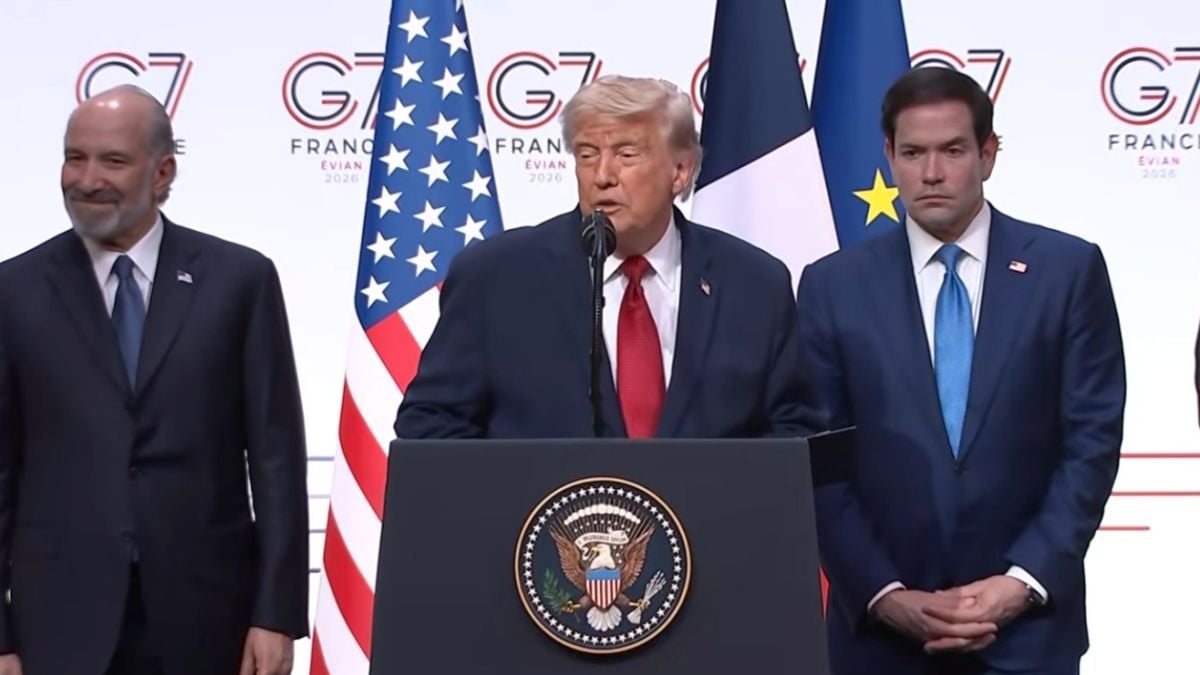
President Donald Trump on Monday convened a White House press conference to detail the successful rescue of two US airmen from inside Iran and issue a stark warning to Tehran: reach a deal by Tuesday evening or face the destruction of the country's power plants, bridges and broader civilian infrastructure.
The press conference, held at 1 p.m. Eastern on 6 April 2026, featured Chairman of the Joint Chiefs of Staff General Dan Caine, Defence Secretary Pete Hegseth, and Central Intelligence Agency Director John Ratcliffe.
It followed one of the most operationally intensive rescue missions in recent American military history and came as diplomatic efforts to end Operation Epic Fury — the US-led strike campaign against Iran launched on 28 February 2026 — entered a critical phase.
The downed jet and its crew
The sequence of events began just before 10 p.m. Eastern on Thursday, 3 April, when an F-15E Strike Eagle with the call sign Dude 44 was shot down by Iranian forces deep inside the country.
Both crew members ejected safely and landed on Iranian soil. The pilot, call sign Dude 44A, was located and extracted by an HH-60W Jolly Green II helicopter on Friday after 21 aircraft were scrambled to the area. He sustained serious injuries but has since stabilised.
The weapons systems officer, call sign Dude 44B, landed a significant distance from the pilot and climbed through mountain terrain to reach higher ground. He treated his own wounds and transmitted his location to US forces. He evaded capture for nearly 48 hours.
Trump called the weapons systems officer, described as a highly respected colonel, "heroic" and said the airman "evaded capture for almost 48 hours — that's a long time when you're in tough shape and when you're bleeding."
The rescue operation
General Caine described the rescue of Dude 44B as an operation that stretched over more than 50 hours from the moment the jet was downed.
The mission involved 155 aircraft, including four bombers, 64 fighter jets, 48 refuelling tankers and 13 rescue aircraft. More than 339 munitions were expended in total — 123 during the pilot's rescue and 216 during the recovery of the weapons systems officer.
The Pentagon planned at least four rescue scenarios for the weapons systems officer, including rotary-wing and fixed-wing options. Hegseth selected a fixed-wing approach using two MC-130 transport aircraft, partly because intelligence indicated the Iranians expected a helicopter insertion. Low cloud cover also made helicopter operations difficult.
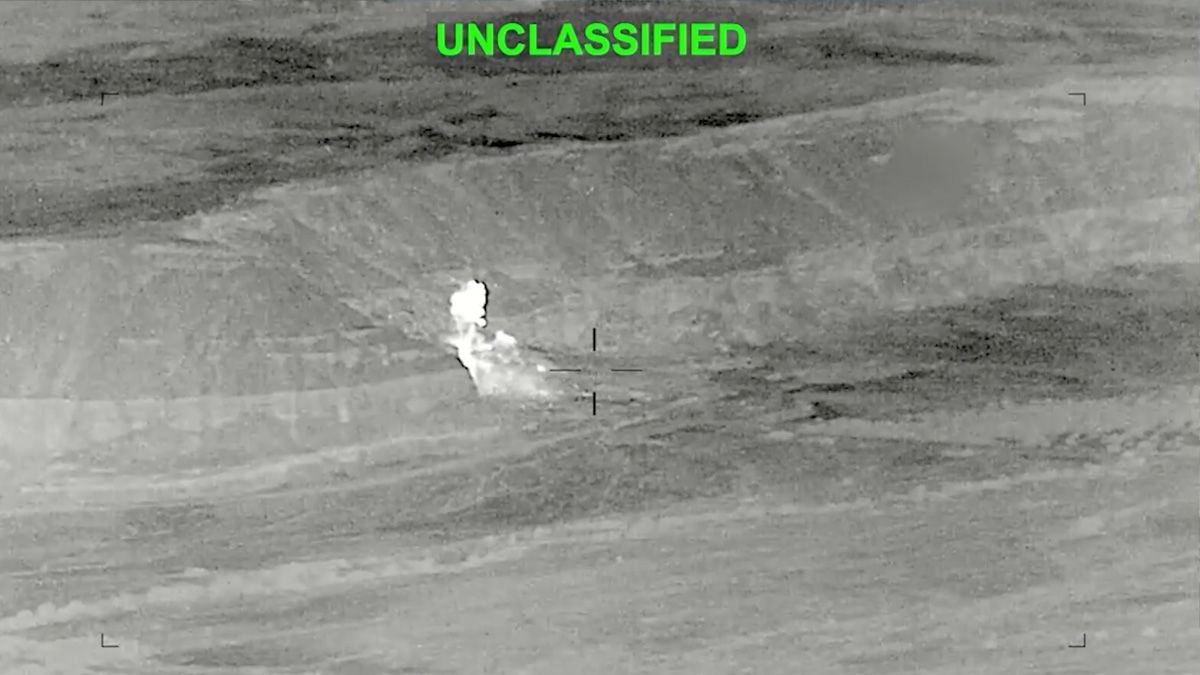
Delta Force used a rudimentary airfield on agricultural land approximately 10 miles from the crew member's position. Navy SEAL Team Six members assembled MH-6 Little Bird helicopters on the runway strip, flew a seven-minute route to the cliff face where the airman was sheltering in a mountain crevice, and extracted him before flying back.
Enemy forces had closed to within two miles of the airman's position. There was no firefight.
CIA Director Ratcliffe said his agency had deployed human assets and technology to locate the airman and ran a deception campaign to mislead Iranian search parties. By Saturday morning, the CIA had confirmed the officer was alive and concealed in a mountain crevice, describing him as "still invisible to the enemy, but not to the CIA."
Intelligence also showed Iranian forces were hunting the airman using dogs, having the animals sniff the ejector seats of the downed aircraft. The tracking proved ineffective.
At 4:30 p.m. on Saturday, Hegseth issued the order: "Go get our boy. Godspeed."
Around midnight Eastern on Easter Sunday — more than 50 hours after the jet was shot down — both crew members were declared returned to friendly territory.
Admiral Brad Cooper, chairman of the Joint Chiefs, informed Hegseth: "We have 44 Bravo. He's safe." Hegseth then telephoned the president.
Trump called it "one of the largest, most complex, most harrowing combat searches ever attempted by the military."
He said roughly 100,000 combat flights have struck more than 13,000 targets since Operation Epic Fury began, and that an estimated hundreds of personnel participated in the rescue operation.
Casualties and broader toll
As of Monday, 373 American service members had been injured since the operation began, according to a US Central Command spokesperson. Some 330 have returned to duty; five are currently classified as seriously wounded.
Fifteen Americans were injured in an Iranian drone strike on Ali Al Salem Air Base in Kuwait overnight, with most having returned to duty.
Iranian forces have also continued striking US-allied Gulf states. The United Arab Emirates Ministry of Defence reported it had intercepted 14 missiles and 19 drones over the preceding 24 hours. Since the conflict began, Iran's retaliatory fire has wounded 221 people in the UAE and killed 13, including two Emirati military service members and 10 civilians from Pakistan, Nepal, Bangladesh, the Palestinian Territories, India and Egypt.
Jordan reported two people were injured after one missile and one drone were not intercepted and landed on Jordanian territory.
Four civilians were killed in Haifa, Israel, when an Iranian ballistic missile struck a residential building. The Israeli military said 21 Israeli civilians have now been killed by Iranian strikes since the war began.
Iranian officials have stated that approximately 2,000 people have been killed inside Iran by US and Israeli strikes, which they say have hit at least one elementary school and a university on Monday.
IRGC intelligence chief killed
Earlier on Monday, US-Israeli strikes killed Major General Majid Khademi, the intelligence chief of Iran's Islamic Revolutionary Guard Corps (IRGC). He was among more than 25 people killed in a wave of strikes that day. Monday's volume of strikes was described by Hegseth as the largest single day of strikes since the operation began.
Iran's supreme leader Ayatollah Mojtaba Khamenei issued a rare public social media statement mourning Khademi, saying he had joined a "steadfast line of warriors and fighters" who sacrificed their lives.
The IRGC issued a statement on its Sepah News site vowing to avenge Khademi's death through what it termed "Operation Crushing Revenge," warning that "a major retaliatory strike by the IRGC Intelligence Organization" awaits those it holds responsible.
Israel's defence minister said the killing was a major blow to the regime, describing Khademi as a "key figure" in Iran's war effort who had planned strikes against Israeli and US targets.
Israeli Prime Minister Benjamin Netanyahu separately announced that Israeli forces had destroyed what he described as the largest petrochemical plant in Iran, framing it as part of efforts to dismantle the IRGC's financial infrastructure. Israeli Defence Minister Israel Katz said the facility, located in Eslamiyeh, accounted for approximately 50 per cent of Iran's petrochemical production, and described the economic damage in the tens of billions of dollars.
Ceasefire talks and Trump's Tuesday deadline
Diplomatic activity intensified on Monday even as strikes continued.
Iran formally rejected the Trump administration's 15-point peace proposal, with its state news agency IRNA reporting that the response, conveyed through Pakistani mediators, amounted to a flat refusal based on "past experiences." Iran submitted its own 10-point counter-proposal, which included demands for an end to all regional conflicts, a new safe passage protocol for the Strait of Hormuz, reconstruction funding for damaged Iranian infrastructure, and the lifting of Western sanctions.
Trump told reporters Iran's counter-offer was "not good enough" but acknowledged it represented "a significant step."
Pakistani mediators separately circulated a proposal for a 45-day ceasefire, with the stated aim of reopening the Strait of Hormuz. A White House official confirmed the proposal was "one of many ideas" under consideration but said Trump had not signed off on it.
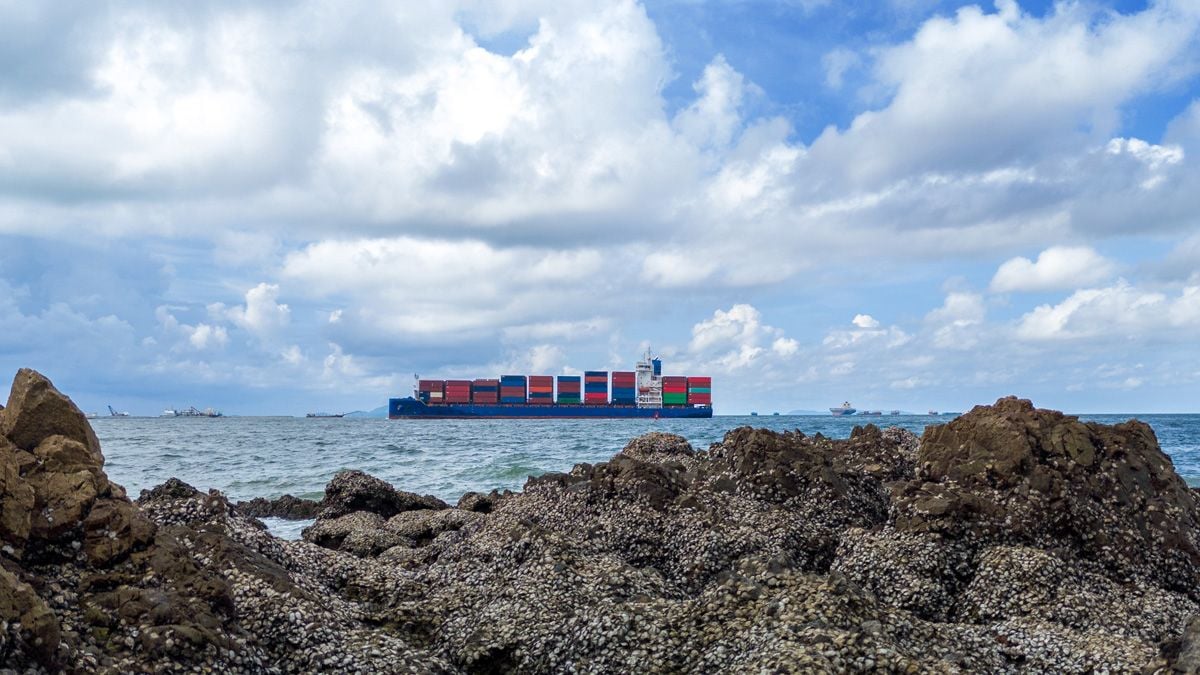
Trump told reporters he believed Iran was negotiating "in good faith" and said other countries with stakes in the outcome were providing diplomatic assistance. He stated that any acceptable deal must ensure "free traffic of oil" through the Strait of Hormuz, which he called a "very big priority."
He also floated a proposal to charge tolls on vessels transiting the strait, saying, "We have a concept where we'll charge tolls."
The White House issued a written statement warning that "Iran will be sent back to the stone ages tomorrow night if they fail to engage in a serious way" with negotiations. Principal deputy press secretary Anna Kelly named Vice President JD Vance, Secretary of State Marco Rubio, Special Envoy Steve Witkoff and senior adviser Jared Kushner as comprising the negotiating team.
Trump stated that any ceasefire would be set on his terms alone. "The only one that is going to set a ceasefire is me," he said.
Nuclear and energy risks
The International Atomic Energy Agency (IAEA) warned Monday that strikes had landed within 75 metres of Iran's Bushehr Nuclear Power Plant. The agency said the facility had not yet been struck as of Sunday but cautioned that continued military activity near the site "could cause a severe radiological accident with harmful consequences for people and the environment in Iran and beyond." Director General Rafael Grossi called for all attacks near nuclear plants to stop.
Senior adviser to the supreme leader Aliakbar Velayati warned that if Trump ordered strikes on Iran's power grid, Tehran would retaliate by targeting energy infrastructure across US-allied Persian Gulf states.
A separate analysis by Eurasia Group managing director Henning Gloystein projected that even a swift ceasefire would not immediately restore normal oil flows. Damaged refineries and energy infrastructure in the Persian Gulf would take several months to repair, and shipping companies operating oil tankers would require at least two months to resume normal operations.
Markets have tracked diplomatic signals closely. On Monday, the S&P 500 rose 0.44 per cent, the Dow Jones Industrial Average gained 0.36 per cent, and the NASDAQ Composite rose 0.54 per cent — the fourth consecutive day of modest gains. West Texas Intermediate crude rose 0.81 per cent and Brent crude 0.3 per cent on the day, though both remain substantially elevated compared to the day before Operation Epic Fury launched.
War crimes debate
Iran's foreign ministry spokesman Esmail Baqaei said Trump's repeated threats to strike civilian power plants constituted war crimes under both international humanitarian law and the Rome Statute of the International Criminal Court, and that "negotiation can in no way be compatible with ultimatums, crimes, or threats to commit war crimes."
European Council President Antonio Costa called for a negotiated settlement and warned that "any targeting of civilian infrastructure, namely energy facilities, is illegal and unacceptable." He also called on Iran to cease attacks on regional countries and to allow free navigation through the Strait of Hormuz.
Iran's Foreign Minister Abbas Araghchi condemned Costa's statement as "disgraceful" for failing to address Israel's role in the conflict.
Legal analysts have offered differing assessments. Tess Bridgeman, a former legal adviser to President Obama's National Security Council, told CBS News that targeting power plants supplying hospitals, schools, and water sanitation facilities would be "flatly illegal." Elliott Abrams, who served as special representative for Iran under the first Trump administration, cautioned that targeting civilian infrastructure risked losing Iranian public support, saying, "We want the Iranian people on our side."
In one of several striking remarks at the Easter Egg Roll earlier the same day, Trump said the war was fundamentally about preventing Iran from obtaining a nuclear weapon, but added: "If it were up to me, I'd take the oil."