Iran-US ceasefire frays as Lebanon dispute and Strait of Hormuz closure threaten deal
The two-week conditional ceasefire between the United States and Iran, announced by President Donald Trump on Tuesday, faces collapse after Tehran accused Washington and Israel of multiple violations, including continued Israeli strikes on Lebanon and a disputed closure of the Strait of Hormuz.

- Iran suspended Strait of Hormuz tanker traffic, citing Israeli attacks on Lebanon as ceasefire violations.
- Washington insists Lebanon was never part of the US-Iran ceasefire; Tehran says it explicitly was.
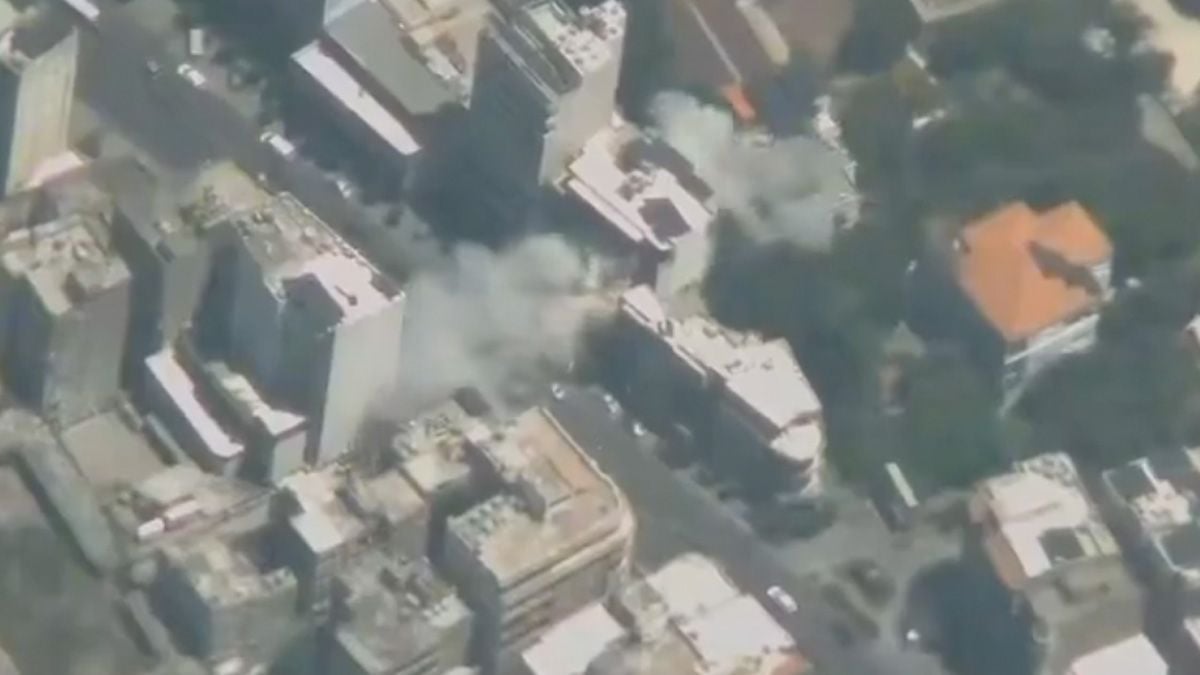
- At least 254 people were killed in Lebanon on Wednesday amid Israel's largest wave of strikes since March.

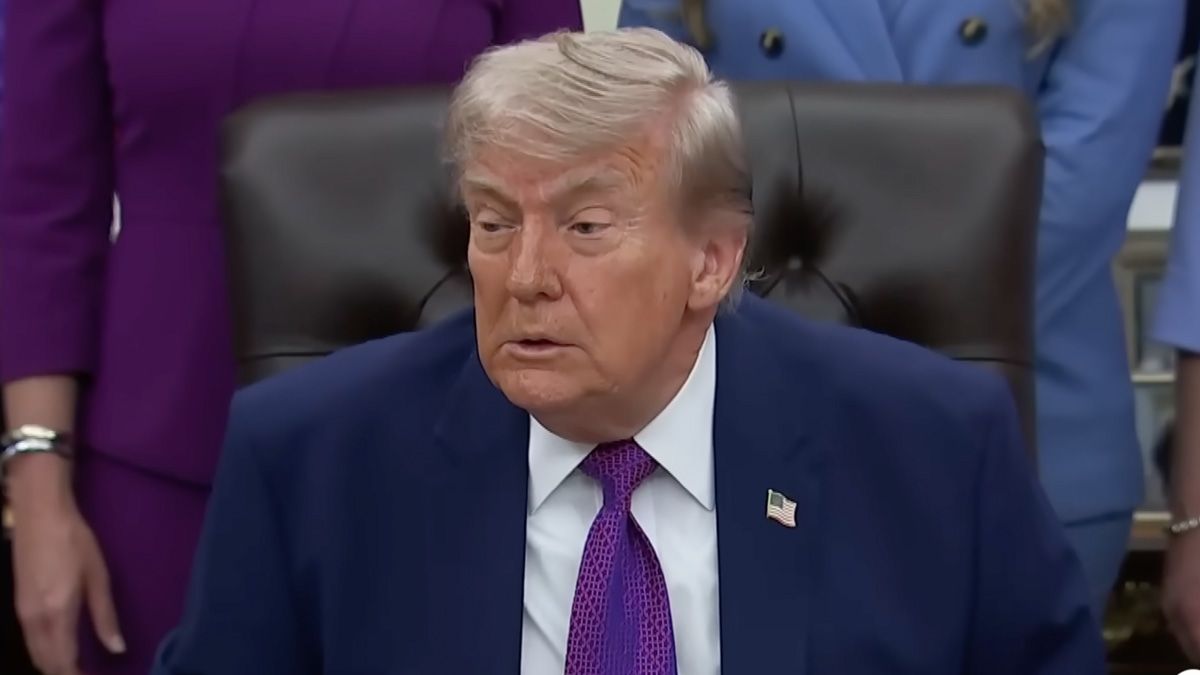
A two-week conditional ceasefire between the United States and Iran announced by President Donald Trump on Tuesday evening began unravelling within hours, as Iran accused Israel of violating the agreement through large-scale attacks on Lebanon and suspended tanker traffic through the Strait of Hormuz — a central condition of the truce.
The ceasefire, brokered by Pakistan, has produced an immediate and fundamental dispute over its scope. Tehran insists the deal covers all fronts, including Lebanon. Washington says it does not.
The breakdown in the agreement's first day drew condemnation from the Lebanese government, expressions of alarm from the United Nations and the International Committee of the Red Cross, and urgent calls for restraint from France and Pakistan.
Lebanon dispute at the heart of the crisis
Iranian Foreign Minister Abbas Araghchi posted on X: "The Iran-US Ceasefire terms are clear and explicit: the U.S. must choose — ceasefire or continued war via Israel. It cannot have both." He attached a post from Pakistani Prime Minister Shehbaz Sharif stating that Iran and the United States had agreed to "an immediate ceasefire everywhere, including Lebanon."
Iran's Supreme National Security Council, cited by the semi-official Tasnim news agency, published what it described as the 10-point framework underpinning the deal. That document explicitly includes "stopping the war on all fronts, including against the heroic Lebanese Islamic resistance."
Tasnim, which is closely linked to the Islamic Revolutionary Guard Corps (IRGC), quoted an anonymous senior security source as saying Tehran was "assessing the possibility of exiting the deal should the Israeli regime persist in its breaches."
Iran's Parliament Speaker Mohammad Bagher Ghalibaf accused Washington of violating three of Tehran's 10 conditions: Israel's Wednesday strikes on Lebanon, the incursion of a drone into Iranian airspace after the ceasefire took effect, and the Trump administration's stated refusal to accept any Iranian uranium enrichment capability as part of a final settlement.
"The deep historical distrust we hold toward the United States stems from its repeated violations of all forms of commitments — a pattern that has regrettably been repeated once again," Ghalibaf said.
Washington's position: Lebanon was never included
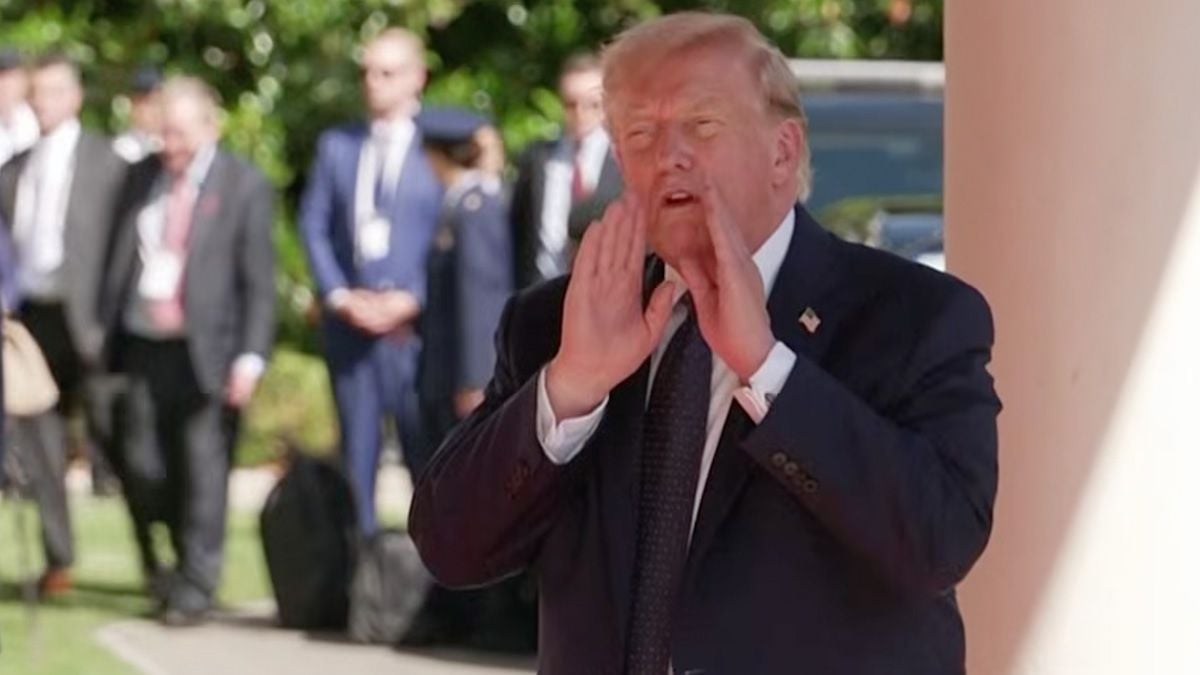
President Trump told PBS journalist Elizabeth Landers on Wednesday that Israel's war against Hezbollah was "not included in the deal," describing it as "a separate skirmish." He said Israel continuing its operations was "part of the deal — everyone knows that."
White House Press Secretary Karoline Leavitt told journalist Barak Ravid: "Lebanon is not part of the ceasefire. That has been relayed to all parties involved."
Vice President JD Vance, speaking to reporters before departing Hungary, said the US had "never made that promise" that the ceasefire would cover Lebanon. He characterised Iranian claims to the contrary as a "reasonable misunderstanding."
"I think the Iranians thought that the ceasefire included Lebanon, and it just didn't," Vance said. "What we said is that the ceasefire would be focused on Iran, and the ceasefire would be focused on America's allies, both Israel and the Gulf Arab states."
Vance added that if Iran chose to abandon the ceasefire over Lebanon — "a conflict where they were getting hammered" and one the US had "never once" said was included — "that's ultimately their choice."
He described the overall situation as a "fragile truce," noting that missile launches had occurred within an hour of Trump's announcement and characterising such turbulence as typical of ceasefires. "No ceasefire ever goes without a little bit of choppiness," he said.
Strait of Hormuz: contested opening and closure
A critical condition of the two-week ceasefire was Iran's reopening of the Strait of Hormuz to international shipping. Trump announced on Tuesday that Iran had agreed to a "complete, immediate, and safe" opening of the passage.
On Wednesday morning, Secretary of Defence Pete Hegseth and General Dan Caine, chairman of the Joint Chiefs of Staff, told reporters the strait had reopened. "What has been agreed to, what has been stated is that the strait is open," Hegseth said. Caine added: "I believe so based on the diplomatic negotiation."
However, Iran's Fars news agency — affiliated with the IRGC — reported that after allowing two oil tankers and a handful of other vessels to pass, Iran had suspended further tanker traffic, citing Israel's attacks on Lebanon. Iran's naval forces had separately warned vessels in the Persian Gulf by radio that they must still seek permission to transit the strait.
Leavitt told reporters the Trump administration had received private assurances that the strait remained open and described the public reports of closure as "false." She called any closure "completely unacceptable" and said the administration had observed an uptick in traffic in the strait on Wednesday.
Araghchi, in his statement on Tuesday night, said that for the two-week period, "safe passage through the Strait of Hormuz will be possible via coordination with Iran's armed forces and with due consideration for technical limitations." He did not define those limitations. Hegseth commented on Wednesday that Iran's "command and control is so decimated they can't really talk and coordinate."
Danish shipping company Maersk, one of the world's largest container carriers, said the ceasefire "may create transit opportunities, but it does not yet provide maritime certainty," adding that the situation required "further clarity" before it would send vessels through the passage.
Shipping analyst Ed Finley-Richardson of Contango Research told ABC News that before Iran declared the strait closed again, shipowners had been "optimistic enough to make serious preparations to exit the Strait." He said that "all of that fell apart when Iran deemed that the ceasefire had been violated," but added that "the conditions are ripe for at least a partial resumption of shipping traffic."