Gerald Giam proposes National AI Equity Fund to support workers through AI transition
Workers’ Party MP Gerald Giam proposed a National AI Equity Fund to help Singaporeans navigate AI-driven disruption, combining direct citizen dividends with employer-led training support while addressing risks of inequality and labour displacement.

- Gerald Giam proposed a National AI Equity Fund with dividends and training support for workers.
- The fund targets inequality risks as AI reshapes labour markets and economic power structures.
- Financing includes higher corporate taxes and increased allocation of investment returns.

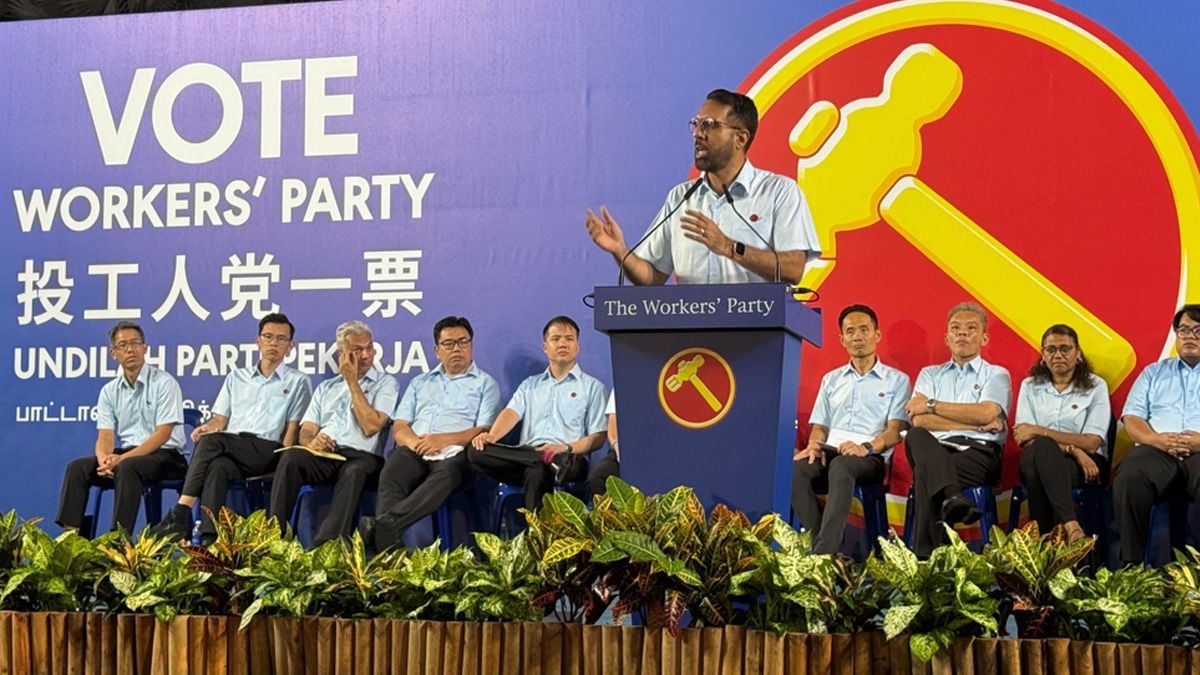
On 6 May 2026, Workers’ Party MP Gerald Giam proposed the creation of a National AI Equity Fund during a parliamentary debate, positioning it as a structural response to artificial intelligence-driven economic disruption.
The proposal aims to help Singaporeans adapt to technological change while preventing widening inequality. It introduces a dual mechanism combining direct financial support with workforce transformation measures.
The Aljunied GRC MP described the initiative as necessary to preserve economic security as artificial intelligence reshapes labour markets and redistributes economic power.
Structural shift in labour and economic power
Speaking in a debate on the motion ‘An Artificial Intelligence with No Jobless Growth’, Giam warned that artificial intelligence represents a fundamental departure from previous economic cycles.
He argued that Singapore’s longstanding reliance on a highly educated workforce may no longer provide the same protection against economic shocks.
“For decades, Singapore's economic model has been built on the premise that a highly educated and skilled workforce would hold the keys to a prosperous future,” he said.
He added that artificial intelligence is not only augmenting human capability but, in some cases, replacing it entirely.
“Unlike past economic cycles… AI promises to be a harbinger of a fundamental shift in our economic and social relationships,” he said.
Giam stressed that the nature of labour’s economic power is changing, cautioning that failure to respond could entrench inequality.
“Failure to address this issue… will lead to an entrenched lower and middle class with a loss of economic agency,” he said.
Evidence and competing trajectories
Giam cited emerging research and commentary to illustrate uncertainty surrounding artificial intelligence’s long-term impact.
He referenced an opinion piece in The New York Times describing a “San Francisco consensus”, highlighting declining hiring of young workers in AI-exposed occupations.
The piece warned of a potential permanent underclass if technological gains remain concentrated among a small group.
However, Giam noted that not all evidence points towards widespread displacement. A 2025 working paper from the US National Bureau of Economic Research found that while AI exposure reduces demand for certain tasks, overall employment effects remain modest due to productivity gains.
He also cited a study in the Quarterly Journal of Economics by Danielle Li of MIT and Erik Brynjolfsson of Stanford, which found generative AI tools increased worker productivity by nearly 15%, with the largest gains among less experienced workers.
Despite this, he cautioned that early studies reflect controlled deployments and may not capture the full impact of large-scale adoption.
“As agentic AI scales across entire industries… the distributional consequences may be more severe and swifter,” he said.
Calls for proactive policy intervention
Giam pointed to concerns raised by leaders in the artificial intelligence sector.
In a 2021 blog post, OpenAI chief executive Sam Altman argued that AI could shift power from labour to capital, potentially leaving most people worse off without policy intervention.
Giam noted that Altman advocated redistribution mechanisms, including giving citizens equity stakes in the economy.
Similarly, Anthropic chief executive Dario Amodei emphasised the importance of economic leverage for individuals in maintaining a healthy democracy.
“The erosion of that leverage is a deeply concerning prospect that requires a bold and structural policy response,” Giam said.
He argued that Singapore is well-positioned to respond due to its strong institutions, educated workforce and well-capitalised sovereign wealth funds.
However, he warned that this advantage may be time-limited as artificial intelligence reshapes global competitiveness.
Design of the National AI Equity Fund
Giam proposed that the fund be structured around two pillars: a social dividend and a Mastery Fund.
The social dividend would provide direct annual payouts to all adult Singaporean citizens. He suggested an initial amount of S$500 per person, with potential increases as funding grows.
“This is modest by design… to provide a tangible signal that every Singaporean has ownership in our shared future,” he said.
He estimated the annual cost at approximately S$1.5 billion, or less than 10% of the previous year’s budget surplus.
The dividend is intended as a structural entitlement rather than discretionary support, offering households stability as work patterns evolve.
The second pillar, the Mastery Fund, focuses on workforce transformation through employer-led training.
Under this scheme, the government would co-fund wages for workers entering or transitioning into AI-augmented roles. The proposed subsidy would cover 50% of the median wage for six months.
“This rewards the worker’s effort in adapting while lowering the barrier for firms to hire, train and retain talent,” Giam said.
Support for businesses and training reform
Recognising that many firms may lack the capacity to design structured training programmes, Giam proposed funding a pool of expert consultants to assist companies in developing on-the-job training frameworks.
These consultants would rotate across firms, tailoring programmes to specific operational needs.
He also suggested a mentorship credit to compensate senior employees for training junior staff, transforming workplaces into “true academies of mastery”.
The Mastery Fund would be open to all Singapore-based entities, including micro-enterprises, with safeguards to ensure funds are used effectively.
Giam estimated the annual cost of this component at S$1.42 billion.
To finance the National AI Equity Fund, Giam proposed two primary revenue sources.
The first is a two-percentage-point increase in corporate tax for firms with annual profits exceeding S$100 million.
This measure is expected to generate approximately S$1.5 billion annually by capturing gains from companies benefiting most from automation.
The second involves increasing the share of net investment returns allocated to the national budget from 50% to 52.5%.
Giam estimated this adjustment would yield around S$1.45 billion annually.
He noted that sovereign wealth entities have already invested heavily in artificial intelligence, including stakes in leading firms and infrastructure partnerships.
Safeguarding the social contract
Giam argued that passive reskilling efforts are insufficient in the face of rapid technological change.
He criticised existing training programmes for producing certifications with limited real-world value, warning of a “two-speed economy” where some workers are left behind.
He emphasised that workers need both skills and financial security to transition into new roles, particularly in sectors less vulnerable to automation.
“The steam engine did not replace human judgement. But AI may do just that,” he said.
He added that the proposed fund would provide a buffer, enabling Singaporeans to pursue opportunities in entrepreneurship, care work, skilled trades, and the arts.
“The National AI Equity Fund is a renewal of our social contract for the digital age,” Giam said.
He concluded by urging policymakers to ensure that technological progress enhances, rather than undermines, economic dignity and agency.
“We cannot allow AI to become a wedge that fractures our society,” he said.