Taiwan launches 18-point family support plan worth NT$380 billion to address falling birthrate
President Lai Ching-te has announced 18 measures totalling NT$380 billion (US$12.1 billion) to counter Taiwan's declining birthrate, covering monthly child allowances, extended parental leave, housing relief, and expanded childcare and reproductive support.
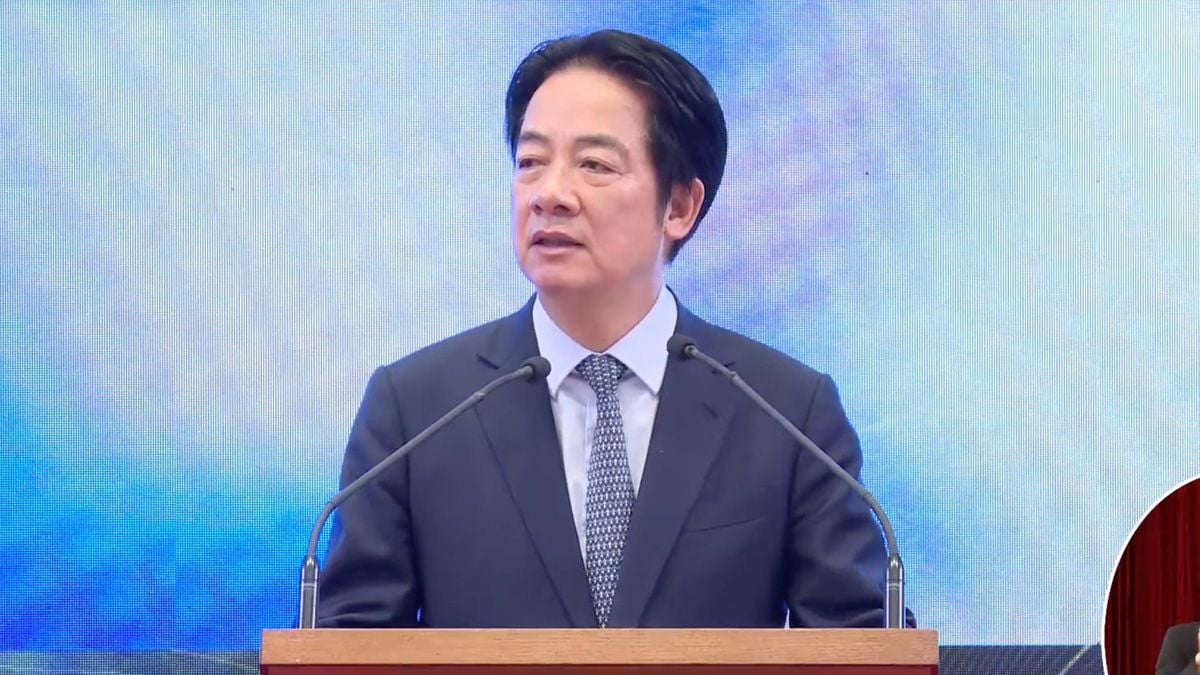
- President Lai announces NT$380 billion, 18-measure strategy spanning childcare, workplace flexibility, housing, and education.
- Every child from birth to 18 receives NT$5,000 monthly; total state investment per child is at least NT$1.08 million.
- Extended parental leave, housing and tax relief, and expanded childcare aim to reverse Taiwan's declining birthrate.

President Lai Ching-te on Wednesday announced an 18-measure family support strategy committing a total of NT$380 billion (US$12.1 billion) to address Taiwan's persistently low birthrate and ageing population.
The announcement was made at a post-meeting press conference at the Presidential Office in Taipei. Vice President Hsiao Bi-khim, Premier Cho Jung-tai, Vice Premier Cheng Li-chun, and senior cabinet and national security officials attended.
Executive Yuan Secretary-General Chang Tun-han said the measures were estimated to require an additional NT$205 billion (US$6.53 billion) per year, with a projected 27.7 million cumulative beneficiary instances once all policies take effect.
Lai said child-rearing would no longer be treated as a purely personal responsibility. The state, society, and businesses would share in the cost and care of raising children under the new framework.
"An advanced country must never force anyone — especially women — to choose between career and family," Lai said.
Monthly allowance from birth to 18
The centrepiece of the package is a monthly NT$5,000 (US$159) growth allowance for every child from birth to age 18. For children under six, the full amount will be paid directly to families for discretionary use.
For children aged six to 18, half of the monthly allowance — NT$2,500 — will be paid directly to families. The remaining NT$2,500 will be deposited into a government-managed savings account in the child's name.
Returns on the savings account are guaranteed at no less than the rate of a two-year fixed deposit.
By the time a child turns 18, the government estimates each account will contain at least NT$360,000 (US$11,467). Families will have had access to a further NT$720,000 (US$22,935) during the child's upbringing.
Total state investment per child from birth to adulthood is projected at NT$1.08 million (US$34,402). When all associated support measures are included, that figure rises to NT$1.54 million (US$49,055).
Lai said families who prefer not to participate in the managed savings portion may opt out and receive the full NT$5,000 monthly payment directly.
Birth support and reproductive assistance
Regardless of which social insurance scheme a mother is enrolled in — labour, national, agricultural, military or civil service — each birth will receive a standardised payout of NT$100,000 (US$3,185).
Assisted reproduction subsidies have been expanded. For those under 45, the first through third treatment cycles will be subsidised at NT$130,000 to NT$150,000 (US$4,141 to US$4,778) each.
Those under 40 who require a fourth through sixth treatment cycle will receive NT$60,000 (US$1,911) per attempt. Higher subsidies apply to earlier rounds to encourage use before efficacy declines with age.
Childcare subsidies for children under six
For children aged zero to two, monthly childcare subsidies will rise in line with birth order and care arrangement.
Home care subsidies will range from NT$5,000 to NT$7,000 (US$159 to US$223) per month. Public nurseries will receive NT$7,000 to NT$9,000 (US$223 to US$287), and quasi-public childcare providers NT$13,000 to NT$15,000 (US$414 to US$478).
For children aged two to six, public kindergartens will charge families a maximum of NT$1,000 (US$32) per month, non-profit kindergartens NT$2,000 (US$64), and quasi-public kindergartens NT$3,000 (US$96).
Families caring for children at home or using private kindergartens will receive a monthly childcare allowance of NT$5,000 to NT$7,000 (US$159 to US$223).
Newborn health screenings for 22 conditions will be provided free of charge. The number of state-funded preventive health check-ups for children will increase to nine.
A dedicated paediatrician model, currently covering children up to age three, will be extended to children aged up to six, with early intervention services also expanded.
Parental leave and workplace flexibility
Maternity leave will be extended from eight to twelve weeks, with the government subsidising wages for the additional period. Marriage leave will rise from eight to 14 days, and paternity leave from seven to 14 days.
Under a "6+3" parental leave scheme, each parent who has already used six months of paid leave may take a further three months. The combined household maximum will be 18 months.
The insured wage ceiling for parental leave benefits will also be raised, allowing monthly allowances to exceed NT$40,000 (US$1,274).
Parental leave entitlement will be expanded to cover children up to age six, from the current upper limit of age three.
Each parent may apply for up to 60 days of leave on a flexible, per-day basis, giving households a combined maximum of 120 days.
Workers with children up to age 12 — extended from the current upper limit of age three — may reduce their daily working hours by one hour without any reduction in pay.
The government will fully reimburse employers for the cost of that foregone hour.
To ease the burden on businesses, the government will subsidise short-term replacement staff at NT$800 (US$25) per person per day. Companies with fewer than 200 employees that hire long-term replacements will receive NT$20,000 (US$637) per replacement worker.
Tax relief for families
Tax exemptions for dependent children under the age of 18 will be raised by 50%, bringing the per-child exemption to NT$151,500 (US$4,826).
Finance Minister Chuang Tsui-yun said the measure would require an amendment to the Income Tax Act and was targeted for implementation in the next tax year.
The measure is expected to benefit approximately 2.7 million people, with an estimated NT$8 billion (US$254.8 million) in total tax relief.
Housing relief for married and child-rearing households
Local governments will be authorised to reduce or exempt owner-occupied residential property tax and land value tax for households with newlyweds or dependent children. Chuang said amendments to the House Tax Act and the Land Tax Act would be required.
The relief is projected to benefit more than one million households, with estimated tax savings of NT$5 billion to NT$7.5 billion (US$159.3 million to US$238.9 million).
The government will expand the share of public housing allocated to married and child-rearing households to 40%. Priority will be given to those married within the past two years or with minor children.
Families with children aged zero to six may remain in subsidised housing for up to 12 years.
Rental subsidies for households with a newborn will be doubled, while those married within two years will receive a 1.5x uplift. Each additional child adds a further 0.5x multiplier, with subsidies potentially covering the full cost of rent.
Education and youth support
Student loan interest rates will be reduced by a further one percentage point, with the government covering the difference. Loan repayment periods will be extended by one year.
Continuing existing commitments, senior secondary school tuition will remain free, and private university students will receive annual subsidies of up to NT$35,000 (US$1,115).
Students living in university dormitories will receive a per-semester housing subsidy of NT$5,000 to NT$7,000 (US$159 to US$223).
Enterprise incentives and support for disadvantaged children
Businesses providing on-site childcare will be permitted to deduct up to 200% of related expenses from taxable income. Subsidies of up to NT$5 million (US$159,270) will be available for companies constructing new childcare facilities.
For disadvantaged children, a matched savings scheme will allow monthly deposits of NT$500, NT$1,000, or NT$1,250, with the government contributing an equal amount and doubling the rate of accumulation.
Implementation
Lai directed the Executive Yuan to establish a dedicated implementation task force, to be convened by Premier Cho Jung-tai.
The task force will track progress across all 18 measures and coordinate the legislative amendments required for policies needing new or revised law.
Chang said the package was designed to address Taiwanese people across generations, from the "sandwich generation" — those simultaneously supporting children and elderly parents — to Generation Z.