Yee Jenn Jong publicly backs Pritam Singh ahead of Workers' Party leadership vote
Former Workers' Party Non-Constituency Member of Parliament Yee Jenn Jong has publicly declared his support for secretary-general Pritam Singh ahead of the party's special cadres conference on 28 June 2026, at which Singh faces a secret vote on his position if he does not step down voluntarily.
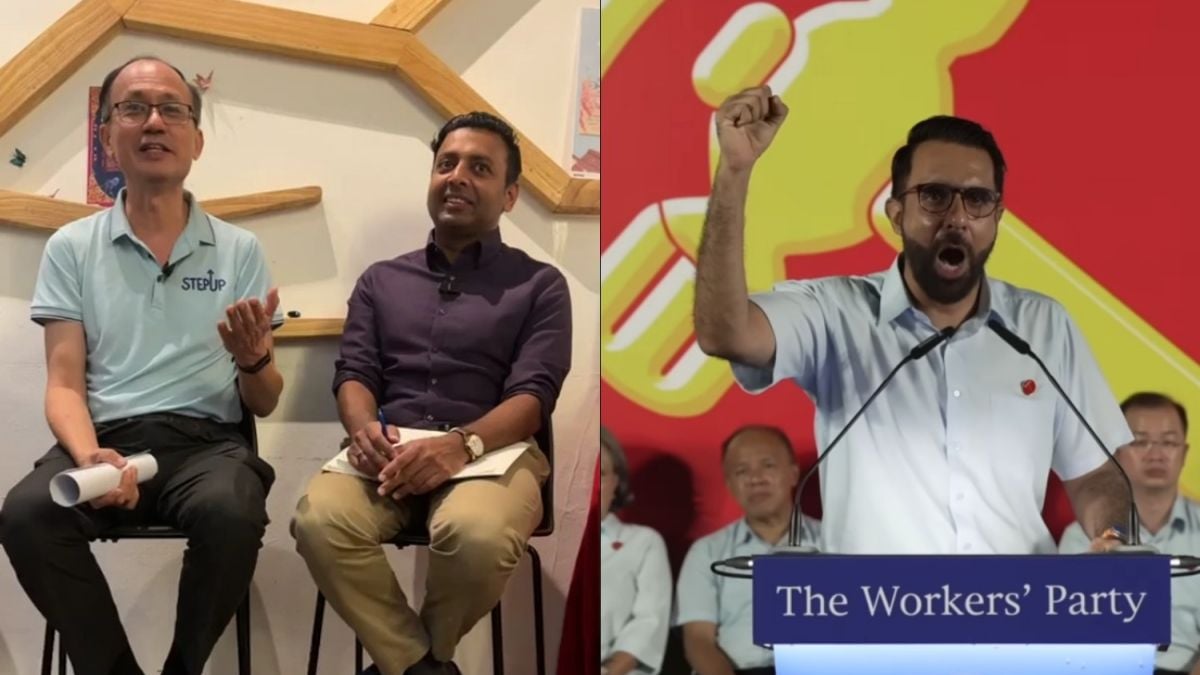
- Yee declared he will publicly support Pritam Singh at the 28 June cadres conference secret vote.
- Yee attributed blame for Singh's conviction to Raeesah Khan, who lied and doubled down in Parliament.
- Yee argued that any credible WP leader will face institutional pressure, making Singh's case part of a pattern.

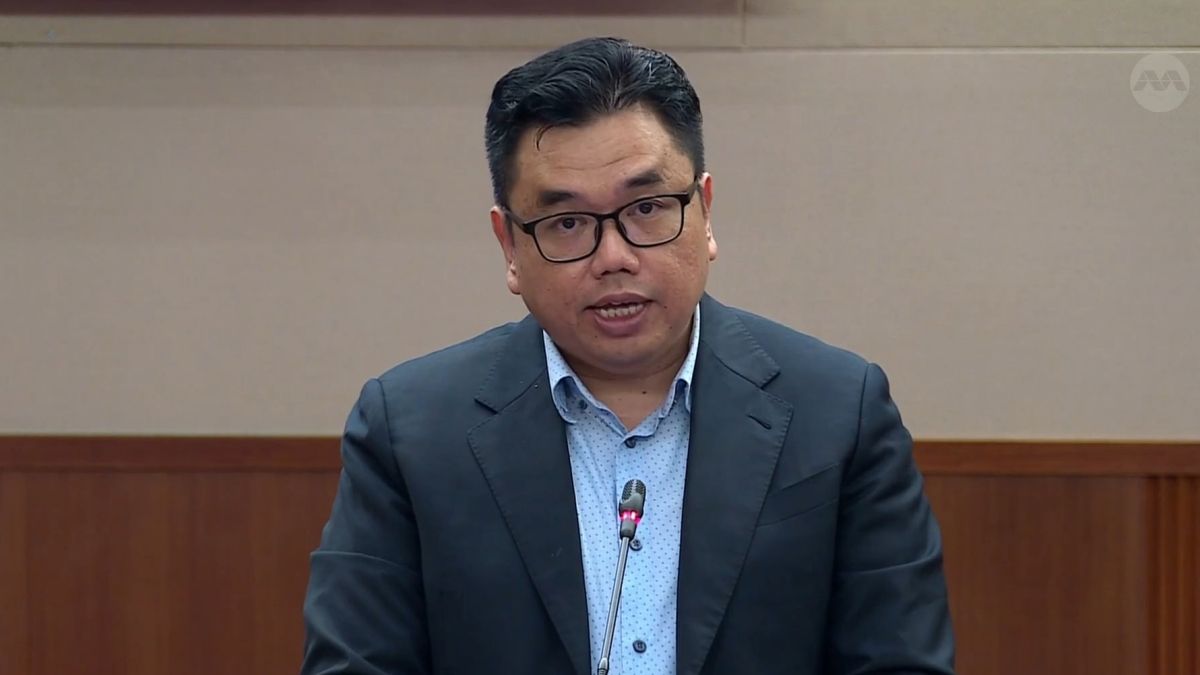
Workers' Party (WP) veteran and former Non-Constituency Member of Parliament (NCMP) Yee Jenn Jong publicly declared his support for secretary-general Pritam Singh on 3 June 2026, saying his vote at the upcoming special cadres conference would be no secret.
"Although it's a secret vote, my vote is not secret. I'm going to support Pritam. I will say publicly," Yee said at the launch of his new book at Book Bar, 57 Duxton Road, Singapore.
The declaration came less than four weeks before the WP's special cadres conference on 28 June 2026, at which Singh will face a direct reckoning over his continued leadership of the party.
The 28 June conference
The conference was convened following a requisition signed by 25 cadres. Its three-part agenda sets out a direct process for determining Singh's future as party chief.
Under the agenda, Singh is first required to account to cadres for his conviction.
Cadres will then call on him to step down immediately as secretary-general, citing a breach of Article 30 of the party constitution, which obliges members to be honest and frank in all dealings with the party and the people of Singapore.
Should Singh decline to resign voluntarily, the third item provides for a secret vote by cadres to decide whether he remains or steps down.
The conference will be chaired by WP policy research head Gerald Giam and is scheduled to commence at noon.
The party's biennial ordinary cadre members' conference — at which a new secretary-general, chairperson, and 12 CEC members will be elected — is set to follow at 3pm the same day.
Background to the conviction
The sequence of events leading to the 28 June conference originated in August 2021, when then-WP Member of Parliament (MP) Raeesah Khan fabricated an account during a parliamentary debate on sexual violence. Khan falsely claimed she had accompanied a rape survivor to a police station and witnessed the survivor being re-traumatised by officers.
Khan repeated the false account in September 2021 before disclosing the truth to Parliament in November 2021, after which she resigned from Parliament and from the party.
Parliament's Committee of Privileges (COP) investigated and found that Singh had been aware of Khan's lie shortly after it was first told, had advised her to maintain the false account, and had subsequently misrepresented his own conduct when questioned by the committee.
On the basis of those findings, Singh was charged, tried, and convicted by the District Court. He appealed, but the High Court upheld the conviction in December 2025.
The WP's internal disciplinary panel, constituted in January 2026, found that Singh had contravened Articles 20(1) and 30 of the party constitution.
The CEC accepted those findings but issued a formal letter of reprimand rather than a more severe sanction, concluding that Singh had not intended to act against the party's principles or interests.
Party Chair Sylvia Lim, Vice-Chair Faisal Manap, and Singh himself recused from the CEC meeting at which the decision was taken.
Separately, Parliament voted on 14 January 2026 on a motion finding Singh unsuitable to continue as Leader of the Opposition (LO). All 11 WP MPs voted against the motion.
Prime Minister Lawrence Wong formally removed Singh from the role the following day.
The WP subsequently declined Wong's invitation to nominate a replacement, framing the refusal as a matter of democratic principle. The position has remained vacant since.
Yee's position
Yee was direct about where he located responsibility for the events that led to Singh's conviction.
"I still point the fault back to who was the one who really told the lie in Parliament, and who was the one who was not careful when it was pointed out," he said, in a clear reference to Khan, who initially fabricated the account, repeated it, and maintained it before eventually confessing.
He added that he did not wish to disrespect the court ruling but retained his own assessment of the underlying circumstances.
"I work with Pritam. I understand the situation. I still support him," Yee said.
When pressed on how the party could reconcile retaining a convicted leader, Yee noted that Singh had already faced the electorate after his first conviction at GE2025 and that voters had rendered their own judgement.
"The election took place after the first conviction. People have decided," he said.
He also called for equal application of institutional standards, and the moderator echoed the point, noting that the case had been initiated through the Committee of Privileges and asking whether the same process would have been applied had a similar misstatement been made on the other side of the House.
"Let's apply the standards equally. Let's apply the standards on them as well. That's all I will say," Yee said.
He pointed to the CEC's swift rejection of Parliament's removal of Singh from the LO position as further evidence of the party's collective stance.
"When he was removed from the Leader of the Opposition position, the Workers' Party very quickly convened the CEC and rejected that. That speaks for itself."
A pattern, not an exception
Yee framed the pressure on Singh not as an isolated incident but as consistent with a pattern faced by every credible opposition leader in Singapore's political history.
"Every leader from the opposition side, as long as you make some significant breakthrough and you are a significant threat, will face that sort of big challenge. It happened with JBJ, it even happened to Low Thia Khiang," he said, referring to the late J B Jeyaretnam and former WP secretary-general Low Thia Khiang, both of whom faced legal proceedings during their tenures.
The implication Yee drew was structural rather than personal: it did not matter who held the secretary-general position.
"Whoever takes over, as long as the Workers' Party is able to mount a very serious challenge, will be under a big microscope. I don't know what will happen, but something will."
This framing directly addressed a question raised from the floor about whether it felt strange that the last contested election for the WP secretary-general position was a decade ago, when Chen Show Mao and Low Thia Khiang stood against each other, and whether the current situation — a leadership question without a named challenger — was unusual.
Yee turned the question back on the ruling party.
"I thought that question should be meant for the PAP. Has there ever been a direct challenge in their equivalent meeting for the secretary-general position? Never, I believe. Everything is even more organised and planned."
Loke Hoe Yeong, co-author of the book, added as an online comment during the livestream that the last time there was a challenge to the PAP's secretary-general position was in 1957 — nearly seven decades ago.
Yee added that a challenge within the WP's rules was entirely legitimate and should not be characterised as strange.
"If anybody wants to challenge Pritam, then let it be. There is nothing in the books that says he cannot be challenged."
The toll on individuals
Yee spoke more personally about the human cost of opposition politics, reflecting on colleagues who had departed involuntarily over the years.
He singled out the late Yaw Shin Leong, the former Hougang MP who was expelled from the party in 2012 following his non-response to the party's queries about an alleged affair, and who passed away in November 2023.
"The most difficult thing I had to experience in my term in Parliament was having to watch Yaw Shin Leong go. It was painful, but it was just a reality of politics — like you are in a gladiator ring, and sometimes you watch your comrades fall."
On Singh's achievements and prospects
Despite the current pressures, Yee assessed Singh's record positively, noting that he had presided over a second GRC breakthrough and had come close to winning two further constituencies at GE2025.
"If he overcomes this challenge and makes another breakthrough in the next general election, he can easily cement his position," Yee said.
He added that Singh's growth as a political figure had been visible in real time to those who had watched him since 2011.
"Somebody in East Coast was telling me it was like a Pokemon — you keep evolving and you reach the boss level. It was almost like that. From 2011 he evolved and he became a boss."