Min Aung Hlaing begins China state visit as Xi Jinping pledges support for Myanmar government
Myanmar president Min Aung Hlaing began a five-day state visit to China on Sunday, 15 June 2026, his first since assuming the presidency. President Xi Jinping pledged support for Myanmar's new government as analysts said Beijing was focused on rare earths, infrastructure and border security.
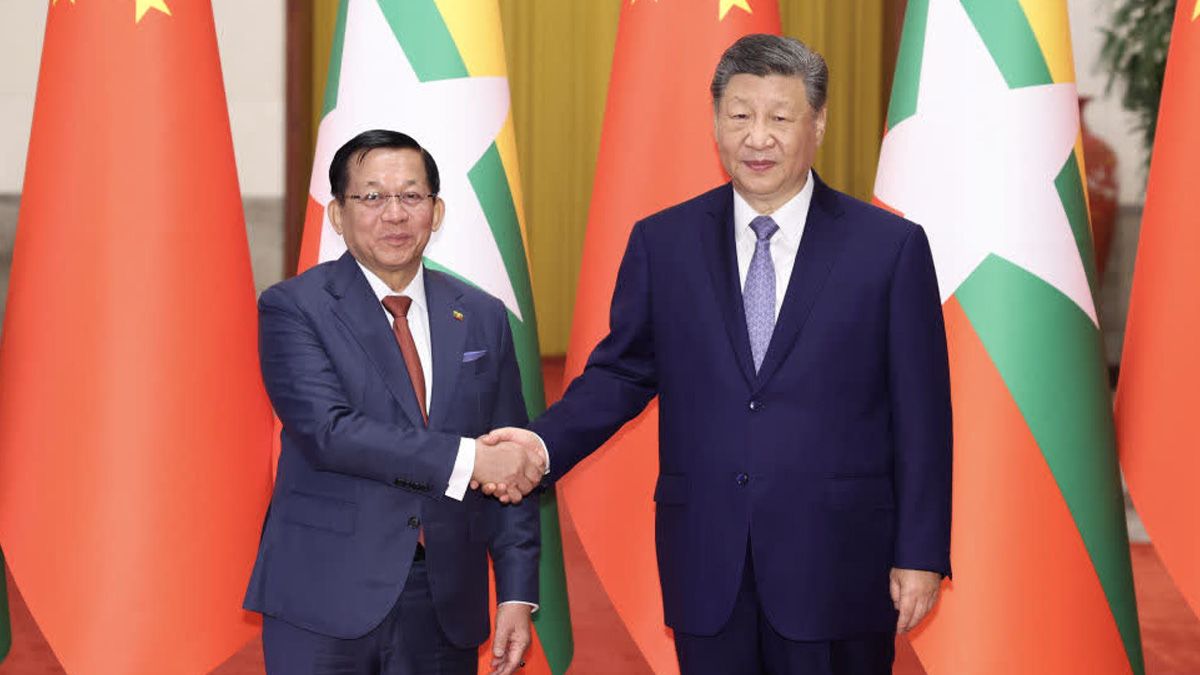
- Min Aung Hlaing began a five-day China state visit on 15 June 2026, his first as president.
- Xi Jinping pledged support for Myanmar's sovereignty and the bilateral economic corridor.
- Analysts say Beijing's focus is rare earths, infrastructure and border security.

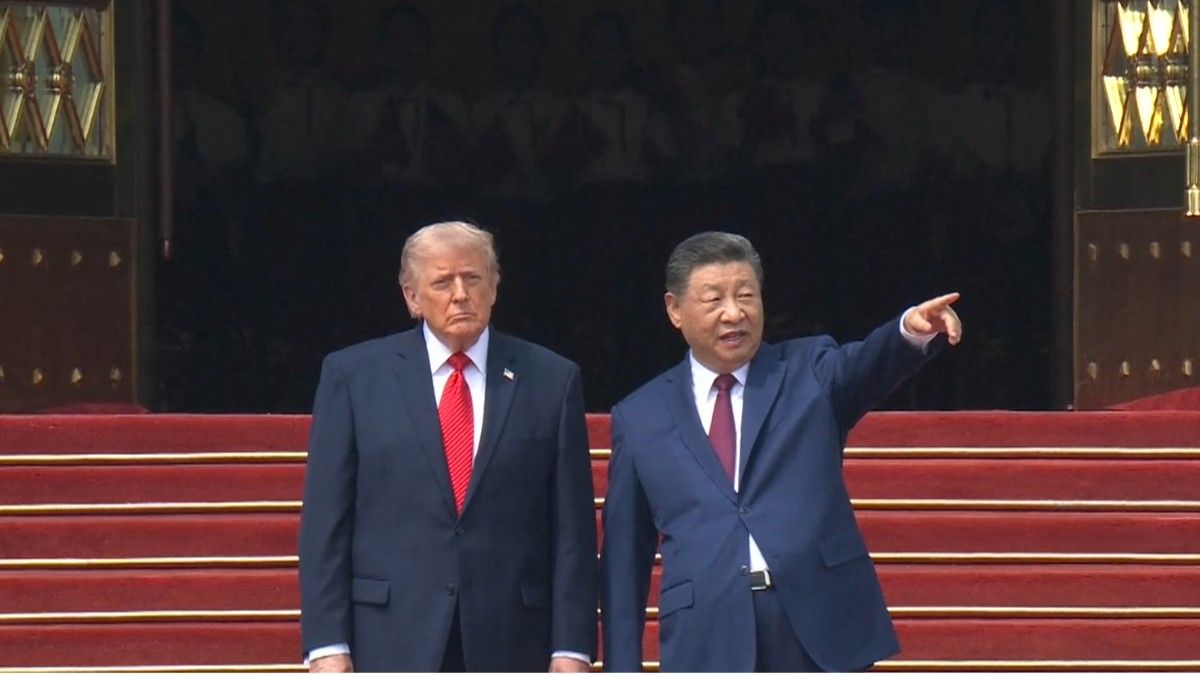
Myanmar president Min Aung Hlaing began a five-day state visit to China on Sunday, 15 June 2026, at the invitation of Chinese president Xi Jinping. The visit, running until 19 June, is his first to China since he assumed the presidency.
The trip is expected to give the former military chief a diplomatic boost as he seeks to consolidate his hold on power following an election held earlier in the year that the Independent described as widely condemned.
It is Min Aung Hlaing's first visit to the powerful neighbour since he stepped down as chief of the military in April and took on the civilian role of president. He was sworn in as Myanmar's president on 10 April 2026.
His delegation reached Beijing after an official visit to India, where he held talks with prime minister Narendra Modi.
According to Chinese state media, Xi welcomed Min Aung Hlaing with a ceremony in the north hall of the Great Hall of the People. A military guard rendered honours, both national anthems were played, and a 21-gun salute was fired in Tiananmen Square.
During the talks, Xi said the two countries shared a deep "pauk-phaw" kinship and had supported each other across 76 years of diplomatic relations. He said China placed its relationship with Myanmar among the priorities of its neighbourhood diplomacy.
Xi stated that China adhered to the principle of non-interference in internal affairs and firmly supported Myanmar in safeguarding its sovereignty and territorial integrity. He said China backed the new government in finding a development path suited to its national conditions.
He described the China-Myanmar Economic Corridor as the flagship project of the two countries' joint Belt and Road cooperation, adding that key projects should advance steadily provided their security was assured.
Xi also said the two sides should continue to crack down on online gambling, telecommunications fraud and drug smuggling, and stated that China supported Myanmar's parties in pursuing peace and reconciliation through dialogue.
In response, Min Aung Hlaing said Myanmar would firmly abide by the One China principle and thanked China for its support of Myanmar's development, stability and reconciliation. He said his government was working to advance domestic peace and to explore a political system suited to its conditions.
He added that Myanmar attached great importance to the safety of Chinese-funded enterprises and personnel in the country and would work closely with China to combat online gambling and fraud and to maintain border stability.
After the talks, the two heads of state witnessed the signing of several cooperation documents in areas including transport and livelihood. Chinese foreign minister Wang Yi and public security minister Wang Xiaohong attended the events.
While the ceremony presented an apparent gain for Min Aung Hlaing, analysts quoted by the Independent suggested Beijing's primary focus would remain on its own strategic interests, including border security and resources such as rare earths.
Richard Horsey, senior adviser at Crisis Group, said a state visit hosted by Xi was a visible signal that China was prepared to treat Myanmar's new administration as a full partner. He noted that India had given Min Aung Hlaing a warm reception but not the full honours of a state visit.
David Mathieson, a Thailand-based analyst, said China's interests lay not in federalism but in rare earths, infrastructure, mining and securing an economic corridor to the Indian Ocean. He said Beijing perceived a Western retreat from Myanmar.
China is Myanmar's leading trading partner and investor. Its Belt and Road projects in the country include a cross-country oil and gas pipeline and a deep-sea port. Beijing also acts as a supplier and diplomatic ally for the Myanmar military.
Myanmar has been embroiled in civil war since Min Aung Hlaing orchestrated the ousting of Aung San Suu Kyi's government in February 2021. Protests against the coup escalated into a nationwide armed uprising.
According to the Independent, the conflict has killed some 93,000 people and displaced more than 3.7 million. Despite the strife, the military held an election at the turn of the year that excluded major opposition groups and delivered a win for an army-backed party.
Min Aung Hlaing's delegation to Beijing includes the chief ministers of Kachin and Shan states, both bordering China, alongside the industry minister. Kachin holds one of the world's major heavy rare earth mining belts.
Their presence indicates that discussions are likely to centre on border trade and the Myitsone Dam, a US$3.6bn Chinese-led project in Kachin shelved in 2011. Aung Kyaw Soe, a Thailand-based analyst, said he expected the project's restart to be raised.
Casting a shadow over the visit is the recent arrest in China of Min Zin, a prominent American scholar of Myanmar, on suspicion of espionage. Horsey said the visit would place greater focus on the arrest, describing Min Zin as among the most prominent Myanmar scholars.