Dear You cast and director meet Singapore fans at premiere as Teochew demand outstrips supply
The director and lead actors of Teochew-dialect hit Dear You met fans at the film's Singapore premiere at Marina Bay Sands on 17 June 2026. Distributors are seeking IMDA approval for more original-dialect screenings after 4,800 tickets sold out in an hour.
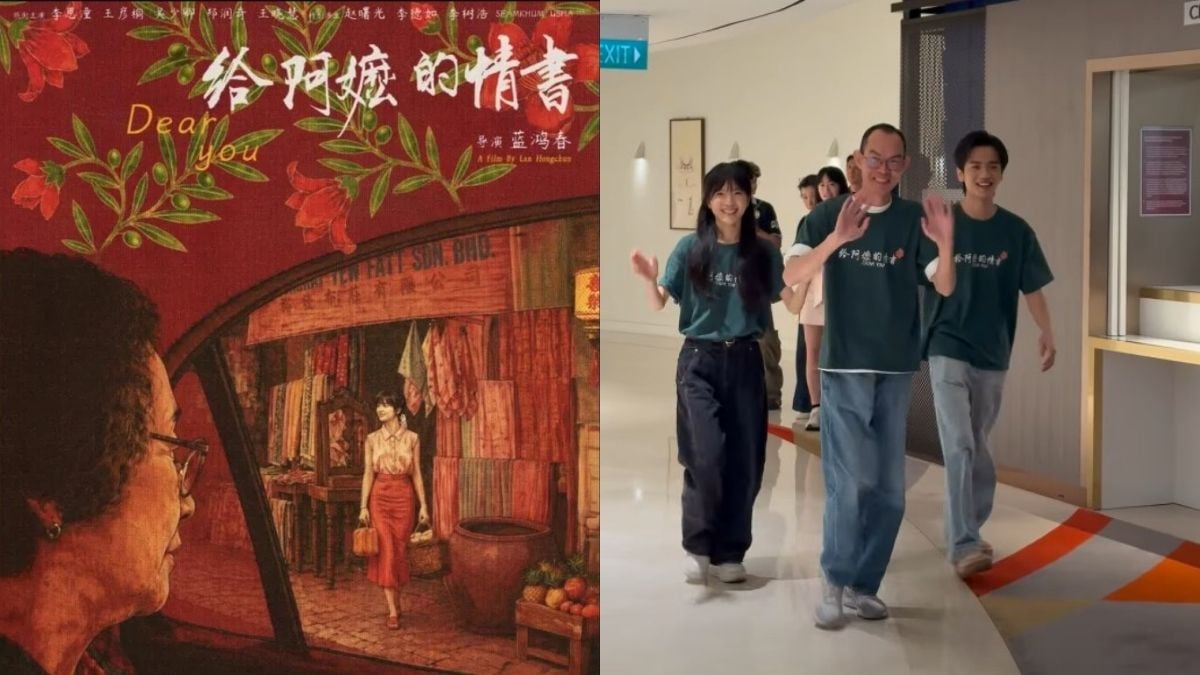
- Dear You cast and director met about 1,500 guests at the Singapore premiere on 17 June 2026.
- Distributors are seeking IMDA approval for additional original-dialect screenings.
- The general release is dubbed into Mandarin, in line with the bilingual policy.

The director and lead actors of the Teochew-dialect film Dear You met fans at the film's Singapore premiere on Tuesday, 17 June 2026, as demand for screenings in the original dialect continued to outstrip the limited sessions approved.
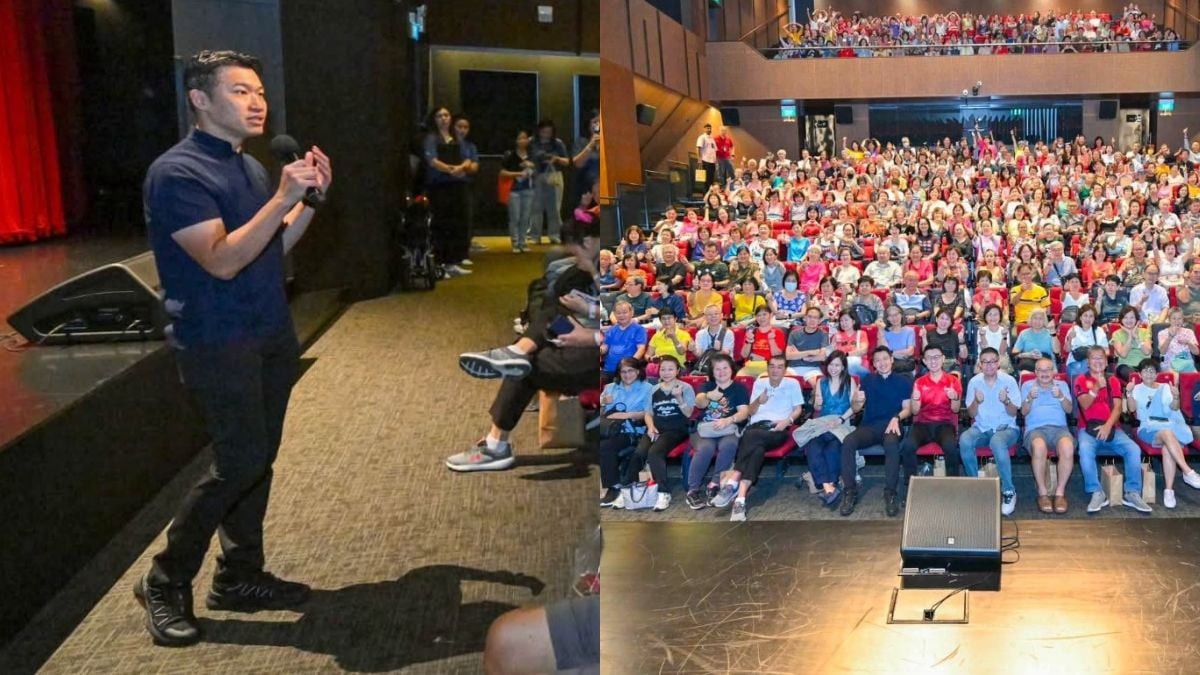
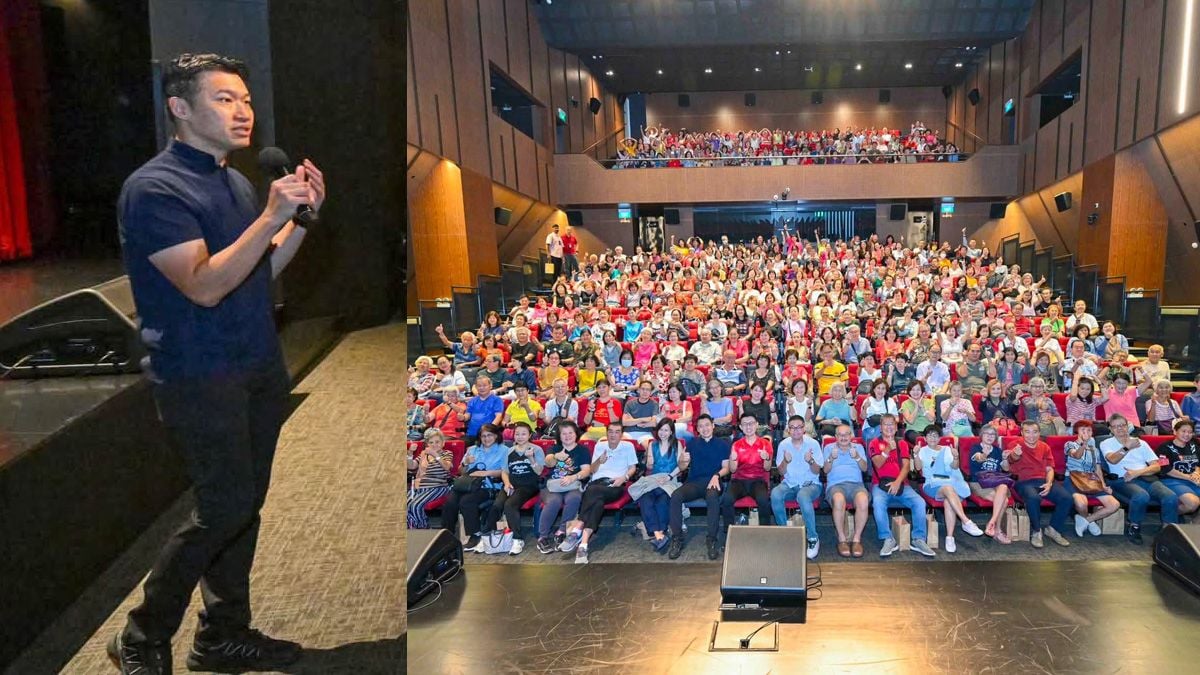
According to Lianhe Zaobao, about 1,500 people attended the press conference and premiere at Marina Bay Sands' Sands Theatre. Guests included representatives of the Teochew Poit Ip Huay Kuan clan association, alongside local celebrities.
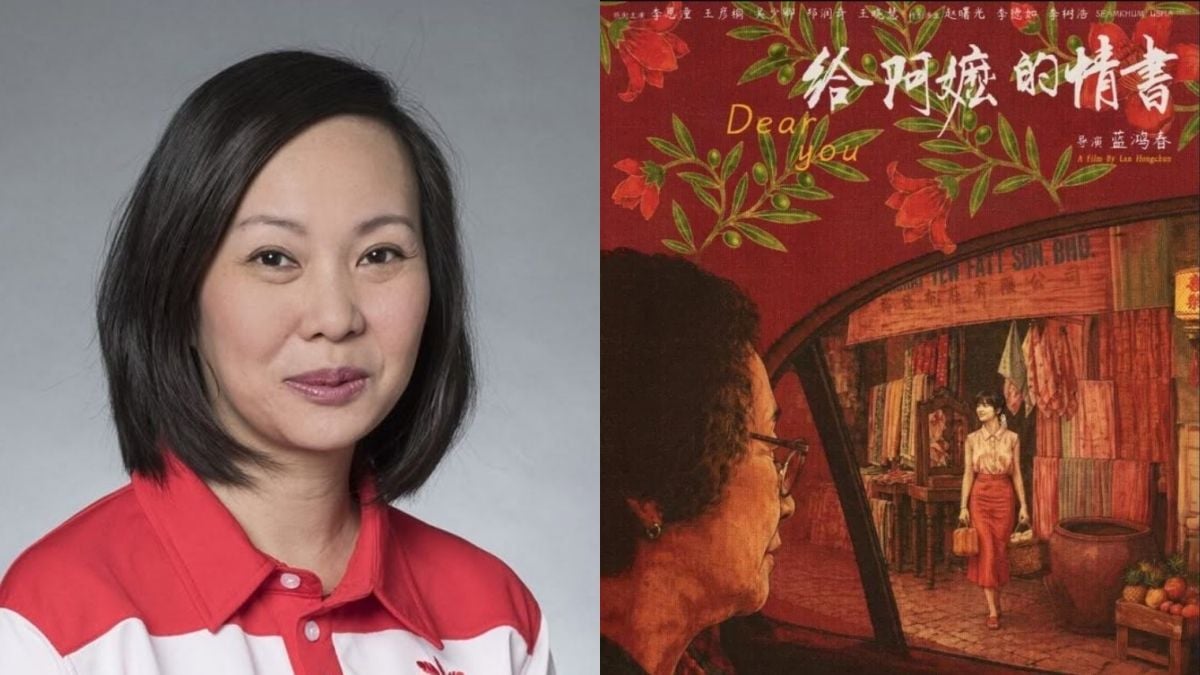
Director and screenwriter Lan Hongchun (蓝鸿春) appeared with lead actors Wang Yantong (王彦桐) and Li Sitong (李思潼), sharing the story behind what Zaobao described as a "phenomenon-level dark horse" of the Chinese box office.
The newspaper reported that the film was made on a modest budget of 14 million yuan (S$2.65 million) but had grossed more than 1.7 billion yuan (S$320 million). More than 90 per cent of its dialogue is in Teochew.
The film's narrative thread is qiaopi (侨批): the combined money remittances and handwritten letters that overseas Chinese workers sent back to their families, often taking one to two months to travel each way.
The dialect's variations featured prominently at the event. Wang, who plays the overseas Chinese character Zheng Musheng, said he came from Shantou but had trained in the sharper Chaoyang (潮阳) accent to suit the character's forceful temperament.
Lan, himself a Chaoyang speaker, joked that he acted as a "dialect switcher" on set, using the gentler Jieyang accent when directing Li, and Shantou or Chaoyang tones when speaking with Wang.
Li, 22, said she had drawn on the more measured Jieyang accent to anchor her role as a Thai-Chinese woman of restrained temperament, consulting historical records and genuine qiaopi letters to prepare.
Lan, who has a documentary background, described a directing approach in which he rarely issued explicit instructions, allowing actors to improvise within a scene to sustain emotional intensity.
He also said he had deliberately kept the relationship between the two leads from sliding into romantic ambiguity, framing it instead as bonds of loyalty and shared hardship, rendered in a plain, realistic style.
Asked why a film about letter-writing moved audiences to tears in an age of instant messaging, Lan said the long wait for each qiaopi to travel compressed emotion to its limit, a depth he said modern life lacked.
The film opened in Singapore in its Mandarin-dubbed version on Wednesday, 18 June 2026.
Zaobao reported that distributor Clover Films and cinema operator Golden Village were actively applying to the Infocomm Media Development Authority (IMDA) to add sessions, seeking to let more local audiences see the work in its original dialect.
The push for more screenings followed strong demand. All 4,800 tickets for the eight special Teochew-language sessions nearly sold out within an hour of going on sale on the afternoon of 16 June 2026.
Background: the dialect restriction
Dear You is screening in Singapore under a longstanding policy that limits Chinese dialect content on mainstream platforms in order to promote Mandarin.
According to The Straits Times, which reported IMDA's response to its queries, the authority said the Teochew version could be shown at the premiere and at subsequent festival and niche screenings, but that the general cinema release would be dubbed into Mandarin. Films featuring dialect content are permitted only on a case-by-case basis.
IMDA told the newspaper this supported the bilingual policy, which aims to promote Mandarin as the main language among Chinese Singaporeans.
Restrictions on dialect use date back to 1979, when the Speak Mandarin Campaign was introduced to encourage Mandarin as a common language among Chinese Singaporeans. The campaign restricted the use of dialects in film, television and radio.
According to The Straits Times, the proportion of households using Chinese dialects as their main language fell from 76 per cent in 1980 to 8.7 per cent in 2020.
The policy has been reaffirmed in Parliament in recent years. In a written answer in October 2024, the Minister for Digital Development and Information, Josephine Teo, said a two-hour Friday belt of dialect programmes on Mediacorp's Channel 8 amounted to about 1 per cent of the channel's annual transmission hours, a proportion that had remained constant.
In an earlier written answer in January 2024, Teo cited a 2023 ministry study which she said found that almost seven in 10 respondents chose Mandarin as the language they could read or listen in, while a very small number chose dialect exclusively.
She said there were no plans to allow more dialect programmes on free-to-air platforms, but that the Government would continue to monitor public views and was prepared to lift restrictions when the need arose.