When process is framed as crisis: CNA’s WP letter narrative
CNA’s report on Dr Tan Bin Seng’s letter spotlights urgency but underplays the constitutional rules. The WP constitution sets no fixed SCMC deadline, only notice requirements, and the party had already announced a due-process timeline. Strip out that context, and procedure is recast as scandal.


CNA’s recent report on Dr Tan Bin Seng’s letter to the Workers’ Party (WP) is a masterclass in how politically potent framing works. By stripping away the mechanics of constitutional process and centering the emotional weight of a "veteran’s intervention," the article moves beyond reporting news—it sets the stage for a morality drama.
For a reader who hasn't followed every twist of the WP's internal timeline, the CNA piece is designed to be persuasive, but it is fundamentally uneducational.
The "feelings" vs. "rules" asymmetry
The article grants significant real estate to Dr Tan’s subjective experience. He "felt" the process has "stretched on" and claims that "normally... it should be very fast."
By foregrounding these quotes, CNA validates a personal perception of "delay" before the reader even understands the actual rules.
The missing fact: The WP had already publicly committed to a clear sequence in a media statement on 3 January: a three-month cap for the disciplinary panel, followed by a two-week notice for the Special Cadre Members’ Conference (SCMC).
By presenting Dr Tan’s "experience" from two decades ago as the primary lens, CNA allows a personal grievance to override a stated, systematic process.
The constitutional stopwatch (That doesn’t exist)
The core of the "drama" is Dr Tan’s demand to expedite the SCMC. However, CNA fails to clarify the constitutional architecture that governs such a meeting.
Under the WP constitution, an SCMC can be called "at any time," but there is no "stopwatch" deadline. There is, however, a mandatory one-month written notice once a date is fixed.
Without this context, the average reader cannot distinguish between a "constitutional breach" and a "political disagreement over sequencing."
By omitting this, the report transforms a logical sequence (Investigation → Report → Decision) into a suspicious stall tactic.
How "commenters" muddy the waters
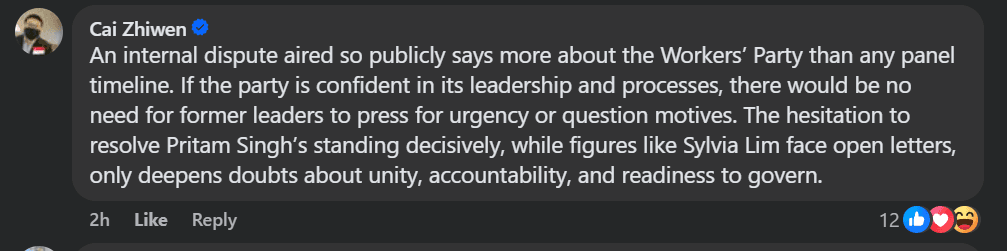
When reporting omits technical guardrails, the resulting vacuum is filled by performative certainty. This is best seen in how commenters respond to the "veteran saviour" framing. Take, for example, these two common types of reactions:
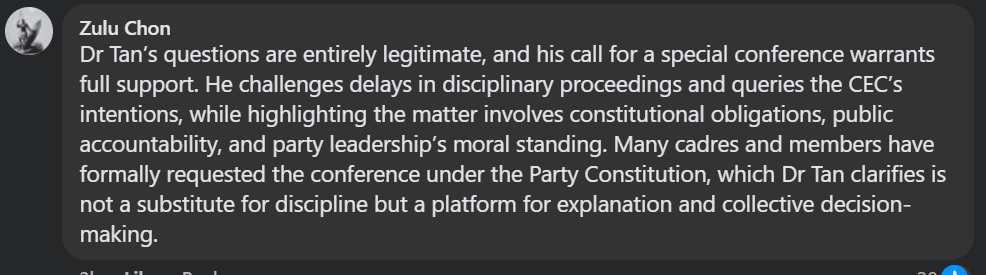
"At least Mr. Tan talks sense unlike those current members 👌"
This comment illustrates the success of narrative stacking. By framing Dr Tan's subjective opinion as objective "sense," the commenter dismisses the actual due process as "nonsense" without ever engaging with the WP's stated three-month timeline.
"WP is fast becoming a joke... 100% practised double standard by not sacking PRITAM..."
This comment moves entirely away from constitutional analysis and into legitimacy warfare. It ignores that a disciplinary panel has been convened specifically to determine if the constitution was contravened. The "joke" narrative is only possible because the article underplayed the legitimacy of the ongoing formal process.
These comments from pro-establishment users don't just reflect public opinion; they re-frame the story for the next reader.
When an unsuspecting person reads the article and then sees these highly-upvoted comments, the "middle ground" of constitutional adherence vanishes. The "waters" are effectively muddied—turning a procedural waiting period into a moral failure.
Selective use of the archives
CNA is meticulous in providing historical context for the current leadership—citing the Raeesah Khan saga and Pritam Singh’s recent conviction to explain why the party is under pressure. Yet, it applies a total "memory hole" to the very man it positions as the moral corrective to this leadership.
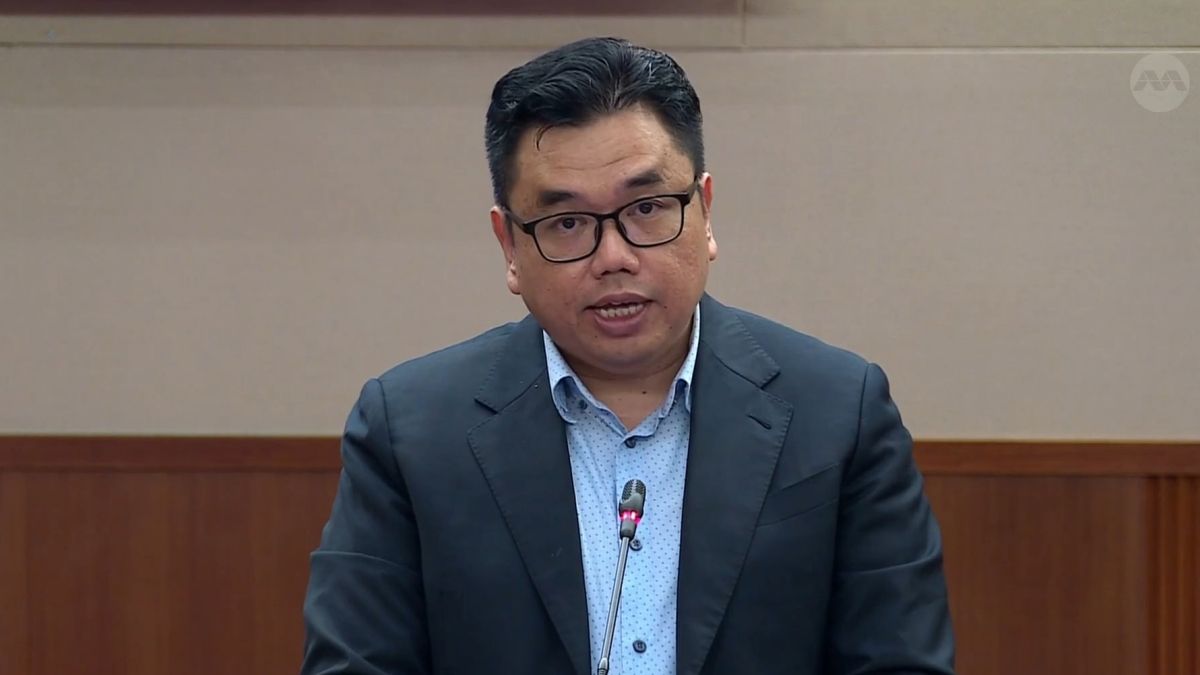
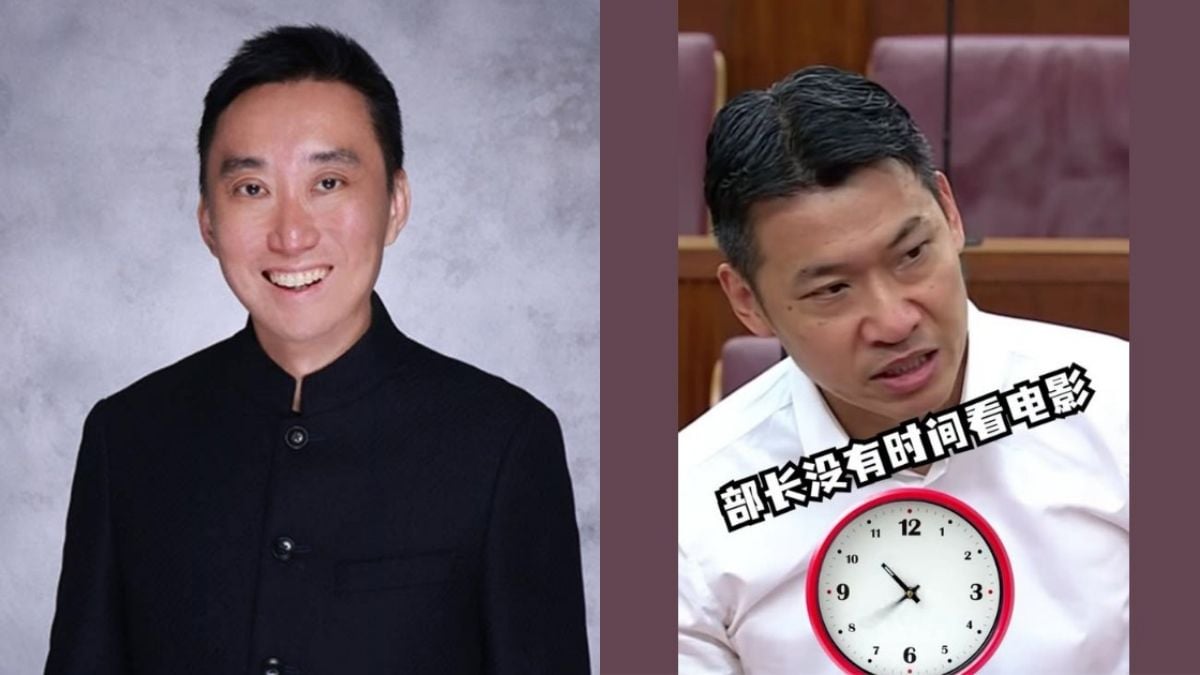
By identifying Dr. Tan Bin Seng simply as a "former Chairman (1992–2003)," CNA creates an image of a seasoned elder statesman returning to restore order. However, for a reader to truly "weigh" his intervention, they need the full record that CNA left out:
-
The Professional Record: Public records show Dr Tan was struck off the medical register twice (in 1993 and 2009) for professional misconduct. In the 2009 case, the Disciplinary Committee noted a failure to exercise due care and maintain proper records. If Dr Tan is now questioning the "moral standing" and "public accountability" of current leaders, his own history with professional accountability is not just a footnote—it is essential context for the reader to calibrate his standing as a moral arbiter.
-
The Political Record: The article omits that Dr Tan’s departure from the party leadership in 2003/2006 was part of a deliberate "renewal phase." This was the era where Low Thia Khiang and Sylvia Lim sought to modernize the party, moving away from an older guard to build the professionalized WP we see today.
Why this matters for the reader: When journalism presents a critic as a "voice of reason" without mentioning their own history of disciplinary issues or their displacement by the very leadership they are now attacking, it isn't being neutral. It is being selective.
By including the "negative" history of the WP leaders but excluding the "negative" history of their critic, CNA tilts the scales. It allows Dr Tan to occupy the "high ground" by default, simply because the reporter chose not to check the archives for him the same way they did for his targets.
Precision over theatre
This is not about defending individual leaders. It is about defending the public from lazy narrative engineering.
If the constitutional text allows leadership discretion on timing, and if they have already declared a due-process sequence with a timeline cap, then calling that "wrong" is not analysis—it is political rhetoric masked as procedural language.
When a major news outlet omits the background that would complicate the "veteran saviour" arc, it becomes an unintended tool for that rhetoric.
That may be high-quality theatre. It is low-quality civic information.