Syed Harun: Ministry of Education reviews measures to curb undesirable tuition advertising practices
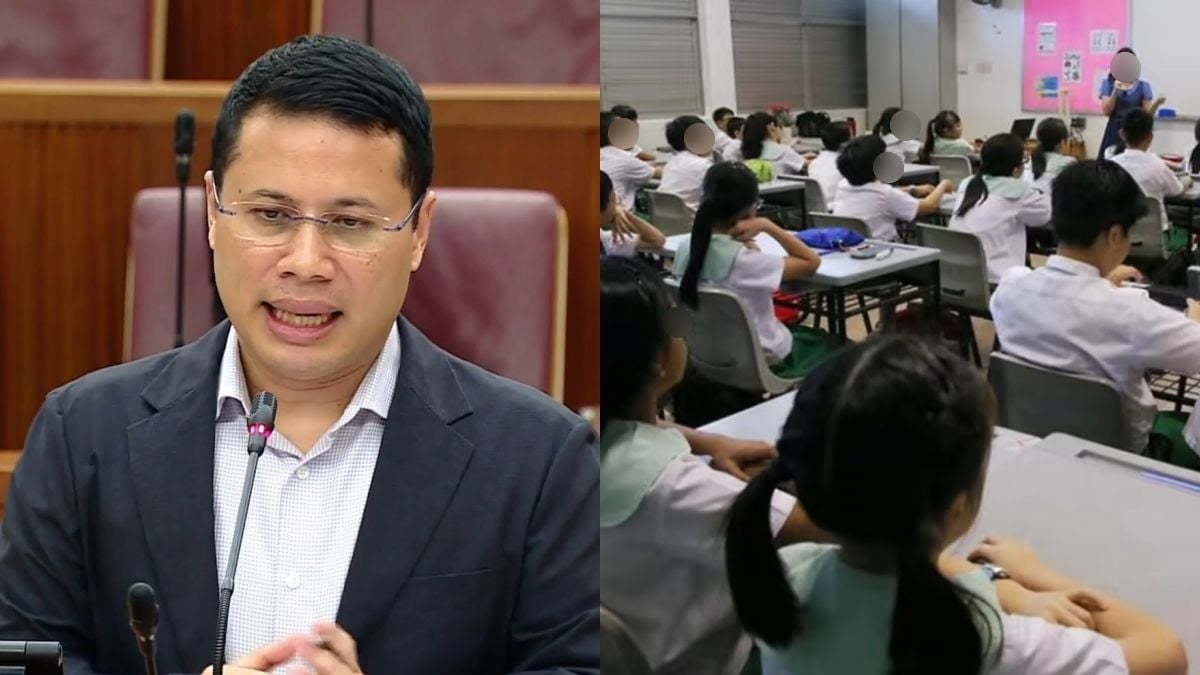
Senior Parliamentary Secretary for Education Syed Harun Alhabsyi told Parliament that the Ministry of Education is reviewing options to discourage fear-based marketing by private education providers while maintaining a focus on the holistic development of students.
- MOE is currently reviewing measures to discourage undesirable and fear-based advertising practices within the private tuition and education sector.
- All education providers must adhere to the Singapore Code of Advertising Practice, which mandates that marketing must be legal, decent, honest, and truthful.
- Members of the public are encouraged to report egregious or outlandish advertising claims to the Advertising Standards Authority of Singapore.

SINGAPORE: The Ministry of Education (MOE) is currently reviewing measures to discourage undesirable advertising practices employed by tuition and private education providers.
Senior Parliamentary Secretary for Education Dr Syed Harun Alhabsyi announced the review during a parliamentary sitting on 24 February 2026.
The announcement followed an inquiry from West Coast-Jurong West GRC MP Dr Hamid Razak regarding the progress of sector-specific advertising guidelines.
Dr Hamid questioned whether a specific code of conduct had been finalised to protect parents and students from fear-based marketing and digital messaging.
Dr Syed Harun stated that all advertisements in Singapore are already subject to the Singapore Code of Advertising Practice (SCAP).
The existing code requires all marketing materials to be prepared with a sense of responsibility toward both the consumer and society.
According to Dr Syed Harun, tuition and private education providers are expected to comply strictly with these standards to ensure advertisements are honest.
He emphasised that marketing should not capitalise on parental or student anxieties to induce demand for private academic services.
He acknowledged that significant pressure often stems from the perceived stakes of academic grades within the current local education landscape.
To address these concerns, MOE plans to engage parents, students, and educators in the coming months to reduce the "arms race" in education.
These engagements follow a January announcement by Education Minister Desmond Lee intended to shift the focus away from an over-emphasis on results.
Dr Hamid raised supplementary concerns regarding subtle forms of fear-based messaging appearing on digital platforms and social media.
In response, Syed Harun noted that while MOE is studying its options, the government does not intend to rush into implementing additional restrictive measures.
He observed that, thus far, the majority of tuition and private education providers have generally remained responsible in their advertising efforts.
For instances involving egregious or outlandish claims, Syed Harun advised the public to file reports with the Advertising Standards Authority of Singapore (ASAS).
ASAS serves as an advisory council under the Consumers Association of Singapore (CASE) to handle complaints regarding misleading or unethical advertisements.
The Senior Parliamentary Secretary reiterated that the focus of MOE remains the holistic development of students rather than purely academic achievement.
The ministry aims to build social and emotional competencies alongside 21st-century skills, such as critical thinking, innovation, and collaborative communication.
Syed Harun concluded that MOE will continue to encourage parents to view education through this broader lens of character and skill development.