MOE to consult stakeholders on reducing exam stakes amid PSLE stress concerns
Minister for Education Desmond Lee says MOE will engage stakeholders through upcoming Education Conversations on reducing examination stakes and addressing concerns over an academic "arms race" amid PSLE stress debate.

- MOE will hold Education Conversations to gather stakeholder views on reducing exam stakes and addressing the academic "arms race"
- Minister Lee argues stress stems from how results are used and performance expectations, not assessment format itself
- No timeline given for major changes; Ministry cautioned that reforms require careful consideration given stakeholder diversity

Singapore's Ministry of Education (MOE) will engage the public and key stakeholders through a series of upcoming Education Conversations to gather views on reducing examination stakes and addressing concerns over an academic "arms race", Minister for Education Desmond Lee disclosed in a written reply to Parliament on 2 March 2026.
The disclosure came in response to questions filed by Workers' Party MP He Ting Ru, Sengkang GRC, who raised growing concerns about academic stress and mental health issues among primary school children, particularly in relation to the Primary School Leaving Examination (PSLE).
Ms He had asked the Ministry to consider adopting more developmentally appropriate assessment models — such as project-based or portfolio-based assessments and computer-adaptive testing — and to provide an updated comparison of Singapore's use of Primary 6 examinations against overseas educational systems that perform well on the Programme for International Student Assessment (PISA), with particular reference to how those systems balance exam preparation with inquiry-based learning and student well-being.
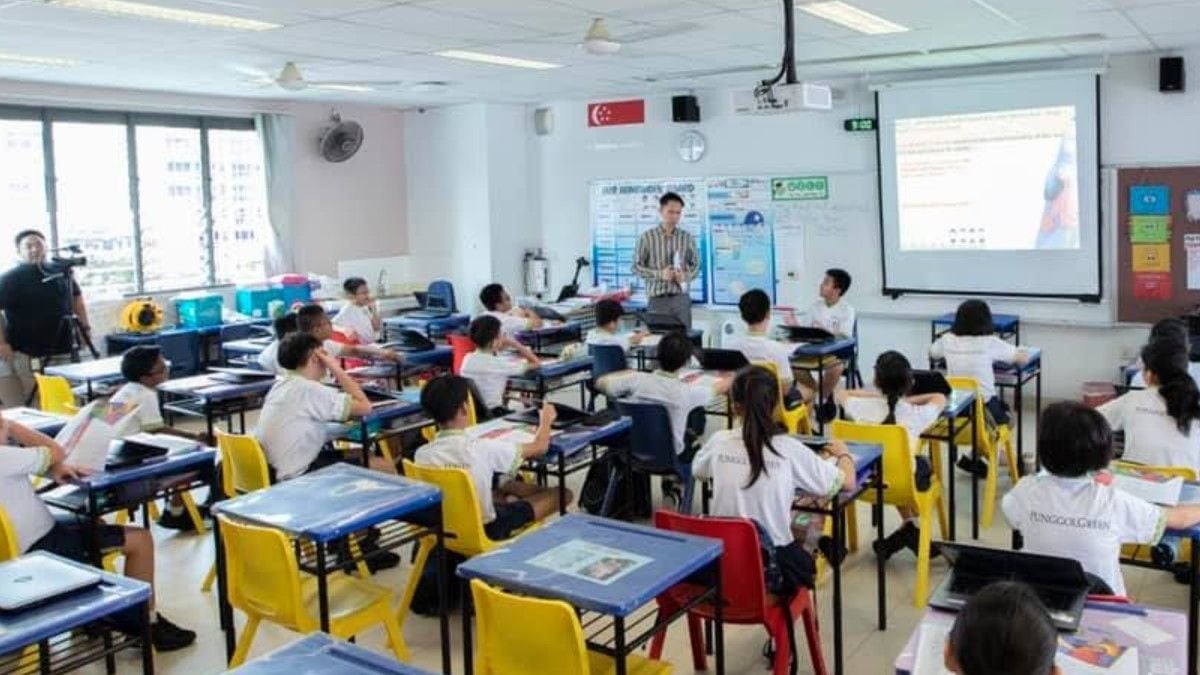
Mr Lee acknowledged that teachers already employ a range of pedagogies and assessment modes at the school level.
"Our teachers use a range of pedagogies to facilitate students' learning, such as inquiry-based and collaborative learning," he noted, adding that school-based assessments already include formats such as project work and oral presentations.
These modes, he said, are selected on a fit-for-purpose basis and form part of the regular learning experience in primary schools.
However, the Minister drew a clear distinction between school-based assessment and the PSLE, characterising the latter as serving a fundamentally different function.
Beyond measuring students' mastery of the primary school curriculum, PSLE results provide guidance for students' next stage of learning and offer what Mr Lee described as "an objective way of posting students to secondary schools."
The dual function of the examination, he argued, meant that the appropriate mode of assessment for the PSLE was "subject to more complex considerations" than school-based formats.
Addressing the core of Ms He's concern about stress and developmental appropriateness, Mr Lee offered a pointed reframing of the issue. "Any form of assessment is likely to generate some stress," he said, but maintained that this did not automatically render an assessment developmentally inappropriate.
The Minister argued that it was "not the assessment itself, but what the assessment results are used for, and the expectation of one's performance that drives academic stress."
On this basis, he cautioned that changing the form of assessment without addressing these underlying causes "will ultimately not be effective and may even be counterproductive."
Mr Lee pointed to measures already taken in recent years to reduce the overemphasis on academic results.
The blunting of the PSLE scoring system — a reference to the shift from aggregate T-scores to a wider Achievement Level banding introduced in 2021 — and the removal of mid-year examinations at certain primary school levels were cited as examples of efforts to encourage a broader societal mindset shift towards holistic development.
On Ms He's request for an international comparison, Mr Lee confirmed that MOE continually studies high-performing overseas educational systems for practices that may be adapted to Singapore's context.
He did not provide a specific updated assessment of how Singapore's Primary 6 examination structure compares with PISA top-performers. Instead, the Minister noted that MOE remained "mindful that these systems operate in different contexts and deal with different trade-offs," signalling caution about direct transplantation of foreign models.
The Minister did not provide a timeline for when the Education Conversations would take place, nor did he specify what concrete changes, if any, were under active consideration. Mr Lee acknowledged both the complexity of the issue and the diversity of views among stakeholders, stating that "any major changes will need to be considered carefully."
The parliamentary exchange reflects a long-running public debate in Singapore over the weight placed on the PSLE and its consequences for childhood well-being.
The examination, sat by Primary 6 students at around 12 years of age, has periodically attracted calls for reform from educators, parents, and civil society groups who argue that high-stakes testing at that age contributes to anxiety and narrows the school experience.
The Government has consistently maintained that the PSLE serves a necessary gatekeeping function in a meritocratic system, while progressively refining its mechanics to reduce competitive pressure at the margins.