Singapore's finest editors somehow all missed the same number
Singapore's publicly funded media receives around $560 million annually to keep citizens informed. They have collectively and consistently declined to inform citizens that a sitting minister sold his home for $88 million. In their defence, they were very busy countering misinformation.

A coincidence so remarkable it deserves celebration
On 2 March 2026, Minister Josephine Teo stood in Parliament during the Committee of Supply debate for the Ministry of Digital Development and Information (MDDI) and delivered what can only be described as a glowing character reference for Singapore's state-funded media.
"Our PSM (Public Service Media) entities reach over 90 per cent of Singaporeans," she said. "They remain highly trusted by the public, more so than reputable international and online media outlets. Consequently, our PSM entities have become indispensable to countering misinformation."
She is, of course, absolutely right. The Straits Times, Channel NewsAsia, and their stablemates are trusted by Singaporeans precisely because their editors are professionals of the highest order — sharp, commercially astute, and deeply attuned to what their readers want to know.
Which makes what we are about to describe all the more extraordinary.
The Number That Somehow Wasn't News
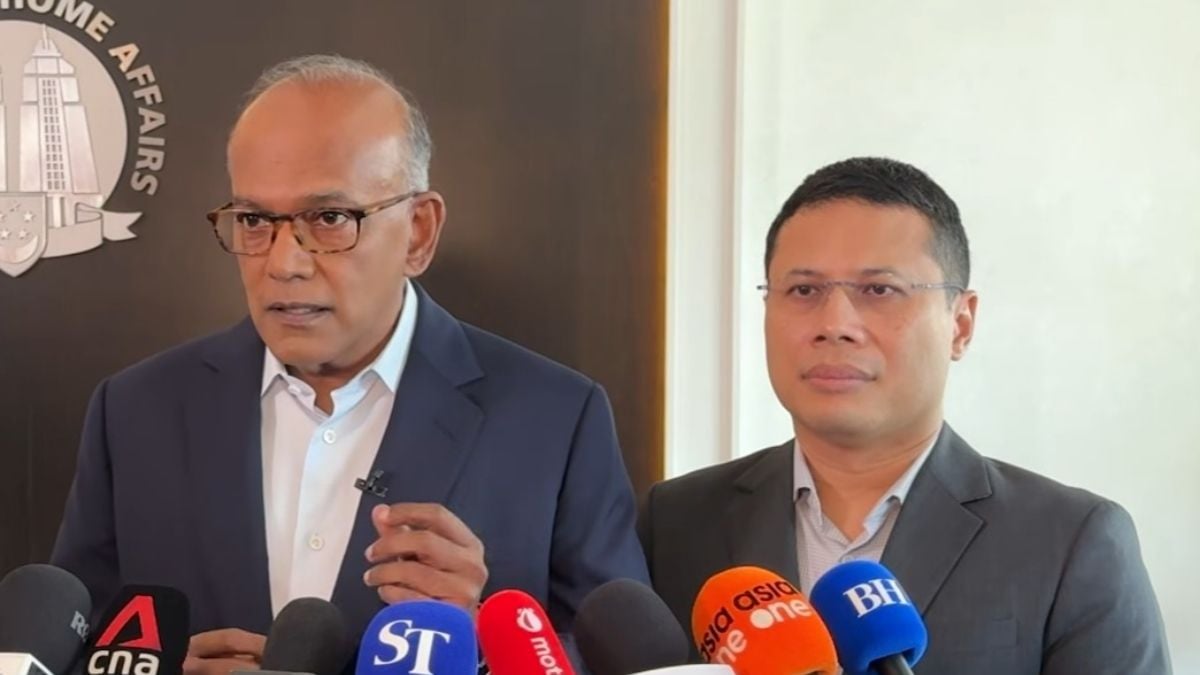
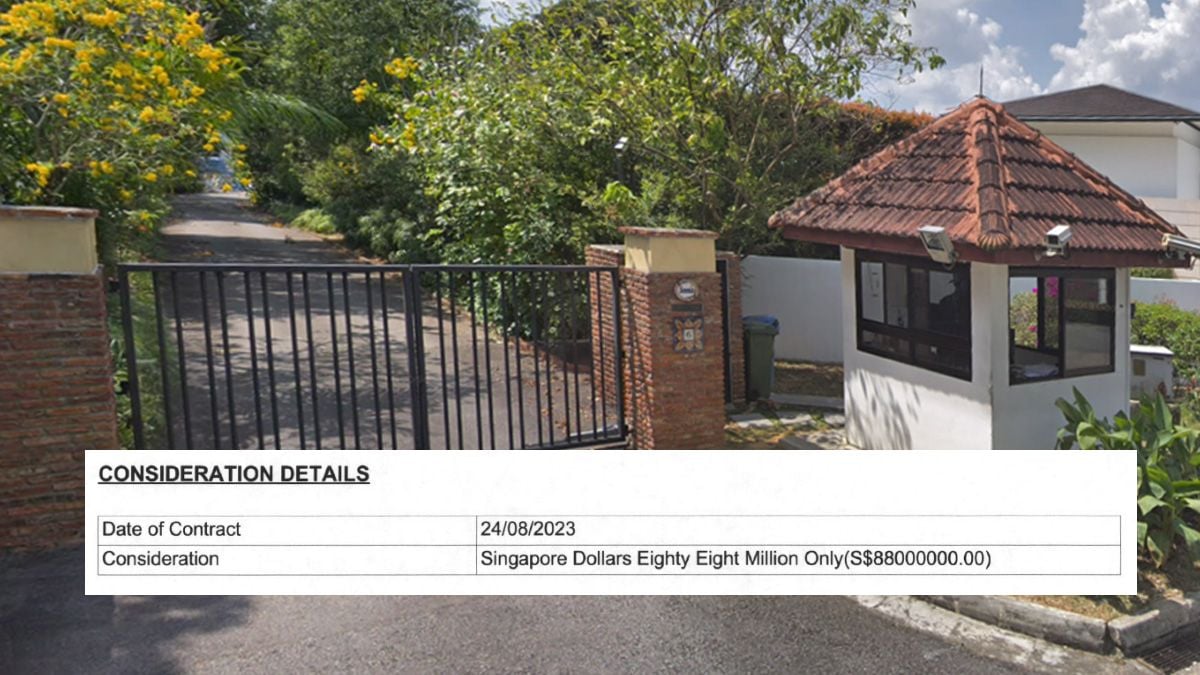
In October 2023, Singapore Land Authority records — publicly accessible to any Singapore resident with a Singpass account, S$7.90, and a working internet connection — showed that Minister for Home Affairs and Law K Shanmugam (who has since relinquished the Law portfolio) had transferred his Good Class Bungalow at 6 Astrid Hill to UBS Trustees (Singapore) Ltd for S$88,000,000. The contract had been signed in August 2023 — one month after his ministerial statement in Parliament.
To put that in context: he had bought the property in 2003 for S$7.95 million.
That is an eleven-fold return. An S$80 million profit. On a property he had described in that same ministerial Parliament statement as one in which too much of his savings were "tied up" — the financial constraint that explained why he had moved into a state-owned rental property at Ridout Road instead.
Now, we want to be absolutely clear about something. Nobody instructed Singapore's mainstream media not to report this figure. Minister Shanmugam is not, to our knowledge, the kind of man who rings up editors to suppress inconvenient numbers. No evidence of any such thing exists, and we are not suggesting it.
What we are observing — with genuine admiration for its consistency — is that Singapore's finest editorial minds, across multiple newsrooms, across multiple desks, across 28 months and counting, have independently and collectively arrived at the same editorial judgement: that the number S$88,000,000 was simply not newsworthy enough to publish.
Not in a standalone article. Not in a sidebar. Not in property market coverage. Not even in their reporting of the Bloomberg defamation lawsuit — a case in which the S$88 million figure was literally the subject of the legal dispute — did any of these outlets find occasion to tell their readers what the property actually sold for.
We salute the remarkable editorial unanimity this represents.
What Any Other Editor Would Have Done
Let us consider, purely as a thought experiment, how a commercially driven editor — one whose salary depended on clicks, subscriptions, and advertising revenue rather than on annual government disbursements — might have approached this story.
To such an editor, a Cabinet Minister selling a property for an S$80 million profit is what is technically known as "gold." It has every ingredient of a viral hit: a recognisable name, a record-breaking number, and a direct connection to a previous national talking point. In any other global financial hub, this would be the "Most Read" story for a week.
To be absolutely clear, and to save any eagle-eyed lawyers the trouble of reaching for their stationery: we are not suggesting there is anything illegal, unethical, or even slightly improper about the transaction itself.
Minister Shanmugam is entitled to sell his private assets at whatever price the market will bear. He has every right to a successful investment, like any Singaporean. We have no reason to doubt that all taxes and declarations were handled with his trademark precision.
Our point is much simpler, and entirely focused on the craft of journalism.
If the transaction was perfectly legal — which it was — and if the data was public — which it was — then there was no "safety" reason for the media to ignore it. There was no gag order. There was no scandal to hide. There was simply a very large, very public number that any junior intern with a Singpass, S$7.90 and an internet connection could have found.
And yet, our state-funded newsrooms looked at that S$88,000,000 figure and collectively decided: "No, our readers wouldn't be interested in that." It is a level of restraint that borders on the miraculous.
While commercial outlets elsewhere are accused of sensationalism for chasing big numbers, Singapore's media has pioneered a bold new form of anti-sensationalism — the ability to look at a massive, public-interest headline and simply... not see it.
But Singapore's public service media, we are relieved to report, is freed from such vulgar commercial considerations. The Straits Times is set to receive up to S$180 million annually from the government for a period of five years. Mediacorp receives approximately S$380 million annually. Their editors can make decisions based purely on editorial merit, unburdened by the pressures of the market.
The market, after all, would have published the number.
On the Matter of Performance Indicators
We should note, in the interest of fairness, that the government's funding for these outlets is not unconditional. It is subject to Key Performance Indicators (KPIs). This is important. It means the public's money is being spent responsibly, with accountability mechanisms in place.
It is therefore perhaps worth asking — and we ask this entirely in the spirit of civic curiosity — whether those KPIs have been consistently met.
In Parliament on 7 March 2026, then-Leader of the Opposition Pritam Singh asked Minister Teo about SPH Media's unmet KPI targets for digital reach, youth reach, and vernacular reach — targets already acknowledged as missed in the 2023 financial year.
He asked what objective criteria had been set for subsequent years, and whether targets had been adjusted up or down. He also asked, pointedly, whether there was "a simple way for the public to track and understand the KPIs" — noting that this point was "important given the size of the subsidy granted to the mainstream media."
While Mrs Teo stated that the ministry will pro-rate and award the Performance-Linked Incentives accordingly, her response did not directly address the question on revised targets. She noted that digital subscriptions are now 35 per cent higher than print subscriptions and advised members to evaluate public service media "holistically."
Holistically. We shall return to that word.
Meanwhile, Mediacorp — recipient of S$380 million annually — has seen its TV reach drop by approximately 10 per cent over the last decade. It recently announced the retrenchment of 93 employees, representing just over 3 per cent of its workforce, citing the "growing dominance of short-form, mobile-first, and social-led formats" and mounting competition for advertising revenue.
To summarise: one outlet missed its KPIs and did not receive its full funding allocation. Another outlet's primary metric fell 10 per cent and it cut staff.
The government's response to both developments has been to reaffirm its commitment to continued and deepened investment in both outlets, encourage a holistic view of performance, and describe them as indispensable to national life.
We do not suggest there is anything improper about this. We simply note that it is a very unusual commercial relationship — one in which underperformance does not appear to meaningfully affect the renewal of the contract. Most businesses that miss their targets find their customers becoming somewhat less generous. These ones have found the opposite.
Mr Singh also raised an intriguing observation: that anecdotal feedback from close followers of English-language news suggests CNA's reporting on local issues has, in terms of depth, overtaken that of the Straits Times. He asked whether the ministry conducts surveys on public perception of individual outlets when deciding how to allocate taxpayer funds between them.
Mrs Teo suggested the two should not be directly compared, as CNA is primarily a broadcaster while SPH Media's assets are mainly print. She recommended, once again, a holistic view.
We are becoming quite fond of that word.
On the Government's Generosity Towards Digital Media
The state's financial relationship with media extends, it should be noted, beyond the traditional outlets.
At the 2023 Committee of Supply debate, then-Senior Minister of State Tan Kiat How confirmed that the government's advertising budget — spanning dozens of agencies — stood at S$304 million in FY2023, rising to S$421 million in FY2025. Approximately half of that budget, he confirmed, is directed at digital platforms. He named Mothership as one such recipient.
To be precise: we are talking about a government advertising budget that grew by nearly 40 per cent in two years, with approximately half directed to digital platforms. This is not a minor sponsorship arrangement.
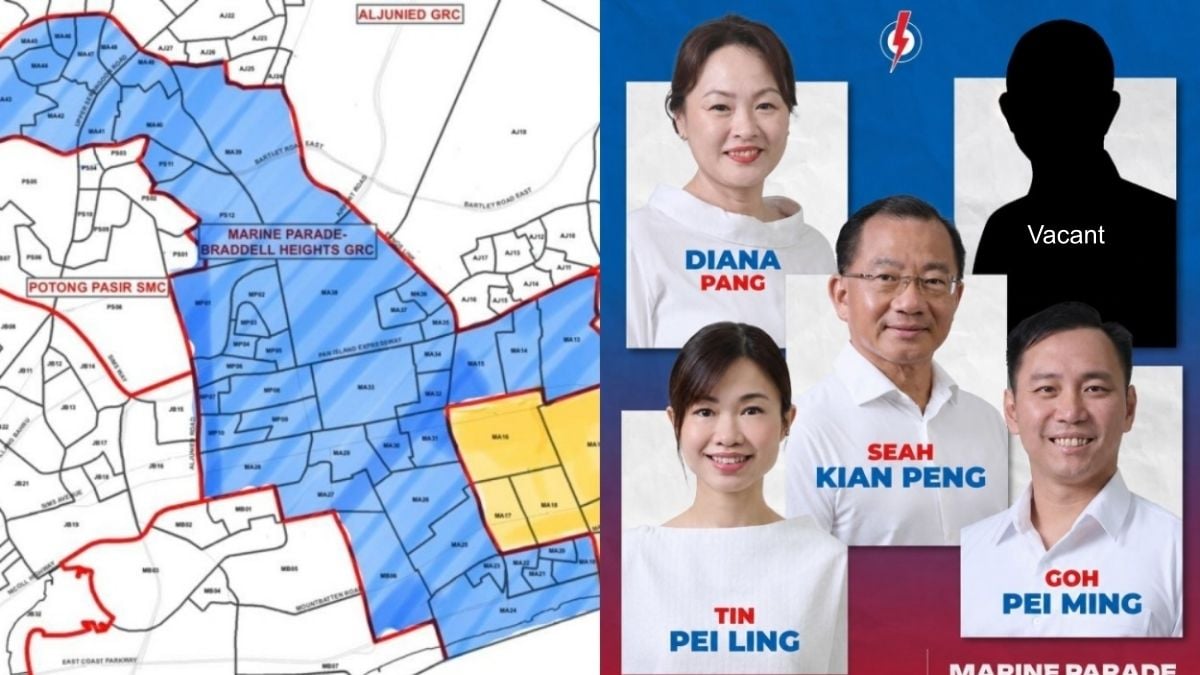
Ms Tin Pei Ling, in the same debate, asked how the government ensures that spending on advertising and engaging influencers "is meaningful, which will benefit the public, and is not for the purpose of self-commendation." It was a fair question. We commend her for asking it.
Mr Tan replied that local netizens are "very sharp" and that if influencers are "purely advocating for the Government, they would not be interested."
He is right that Singaporeans are sharp. Sharp enough, one might hope, to notice that the S$88 million figure has gone unreported across every outlet that receives government money — whether S$180 million in direct funding, S$380 million in broadcasting grants, or a share of a S$421 million advertising budget.
Mothership, for the record, also does not appear to have reported the S$88 million figure.
We are sure this too is a coincidence.
A Partial Exception — And What It Reveals
We are pleased to report one partial exception to this pattern of non-reporting, and we note it in the spirit of fairness.
On 26 February 2026 — some 28 months after the S$88 million figure first became publicly accessible in SLA records, and 18 months after it was first reported by TOC — CNA finally reported the figure. Not as a news story. Not as an investigation. But buried in its coverage of a High Court damages hearing, where it appeared as one of the "offending words" in a defamation suit brought by Ministers Shanmugam and Tan See Leng.
In that report, CNA noted that the "offending words" in the TOC article included paragraphs about "a transaction by Mr Shanmugam, where he sold a GCB in Queen Astrid Park for S$88 million."
There it was. S$88 million. In a CNA article. We pause to appreciate this milestone.
We note, however, two things.
First, CNA did not find the figure. CNA did not retrieve it from SLA records — records that have contained the figure since October 2023. CNA did not investigate it as a matter of public interest.
CNA reported it because it appeared in a minister's own court affidavit, quoted as the "offending words" of a defendant who had already lost his case by default judgment in August 2025. The figure arrived at CNA pre-packaged inside a legal document, attributed to someone else, framed not as a verifiable public fact but as part of a defamatory allegation.
In other words, the S$88 million figure became reportable to CNA not when it appeared in government records in 2023. Not when TOC reported it in September 2024. Not when Bloomberg cited it in December 2024. Not when the POFMA orders were issued. Not when the defamation suits were filed. It became reportable at the precise moment a minister's own lawyers introduced it into court proceedings as evidence.
Second — and this is where it becomes instructive — the Straits Times covered the exact same hearing, the exact same affidavit, the exact same court proceedings on the same day, and still did not mention the figure. Mothership summarised the case without it. Lianhe Zaobao reported at length in Chinese on the same hearing and still found no occasion to mention 8800万.
So to be entirely precise: one outlet reported S$88 million some 28 months after it first appeared in publicly accessible SLA records, when a minister's own lawyers handed it to them inside a court filing. The Straits Times omitted it even then. Mothership did not report it even then. Zaobao did not report it even then.
We are not sure what the opposite of a scoop is. But Singapore's state-funded media appears to have pioneered it.
A Structural Observation, Not An Accusation
Minister Shanmugam has no role in the funding decisions of MDDI or the editorial decisions of these outlets. That is precisely the point. He doesn't need to.
We draw no conclusions — that is for readers to do. We note only that responsible institutions are expected to declare, manage and mitigate potential conflicts of interest.
Particularly the mundane, everyday kind. The kind that doesn't require a phone call or a threat. The kind that operates quietly, through institutional culture, editorial habit, and a shared understanding of where the money comes from.
Which brings us back to Minister Teo's proud declaration that Singapore's state-funded media — the ones receiving S$180 million and S$380 million a year, the ones missing their KPIs, the ones that have not reported a publicly verifiable S$88 million property transaction by a sitting minister — are the nation's frontline defence against misinformation.
We can only assume they were too busy countering misinformation to report on the information.
All parliamentary quotes are drawn from the official Hansard record. Funding figures are drawn from parliamentary responses and official government statements. The S$88 million sale figure is drawn directly from Singapore Land Authority official records retrievable via the INLIS portal — SLA document reference F7927492D records the 2023 transfer by Kasiviswanathan Shanmugam of 6 Astrid Hill to UBS Trustees (Singapore) Ltd at a purchase price of $88,000,000, contracted on 24 August 2023 and registered on 22 October 2023. The original 2003 purchase at $7,950,000 is recorded in SLA document reference L8741014R. Both documents are publicly accessible to any Singapore resident with a Singpass account. The S$88 million figure was first reported by The Online Citizen in September 2024 and subsequently cited by Bloomberg in December 2024. The POFMA correction order issued in December 2024 addressed Bloomberg's framing of GCB transaction transparency — not the sale price itself, which has never been disputed by Minister Shanmugam.
We invite you to check how thoroughly our indispensable media covered it:
https://www.google.com/search?q=straitstimes+shanmugam+88+million