Trump says the war will end soon. The evidence says otherwise.
Trump calls it a "short-term excursion." Iran's Foreign Minister calls it a war they'll fight "as long as it takes." Regime change has already failed — Iran's new Supreme Leader is the hardline son of the man killed on day one, with a wife also killed in the strikes. He has, as one analyst put it, "a lot of revenge to exact."
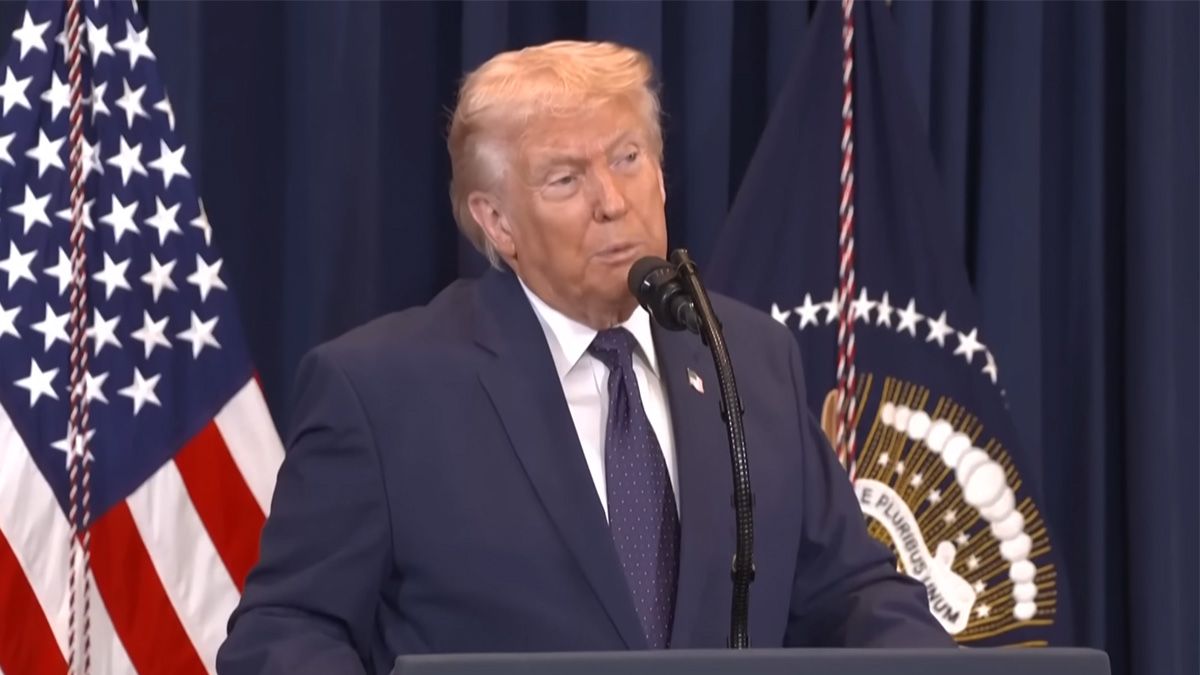

When US President Donald Trump told reporters on Monday that the war with Iran would be “ended soon,” promising it was a “short-term excursion” and declaring “we’ve already won in many ways,” Iran’s Foreign Minister Abbas Araghchi gave the world a more reliable assessment almost immediately.
“We are well prepared to continue attacking them with our missiles as long as needed and as long as it takes,” he told PBS News. Iran’s Revolutionary Guards added that they, not Washington, would “determine the end of the war.”
Araghchi also effectively ruled out negotiations, citing a “very bitter experience of talking with Americans” — a reference to US-Israeli strikes launched on February 28 even as indirect talks were still ongoing in Oman, a mediating country that publicly said progress had been made and a deal was “within reach.”
On the evidence available to anyone paying attention, Trump is not merely mistaken. He is wrong in ways that are structurally predictable and analytically indefensible.
The Attrition Argument: Impressive Numbers, Wrong Question
The administration has a counter-argument, and it deserves to be taken seriously before being dismantled. Defense Secretary Pete Hegseth has presented striking figures at successive briefings: Iran’s ballistic missile fire rate down 86 to 92 percent from day one. O
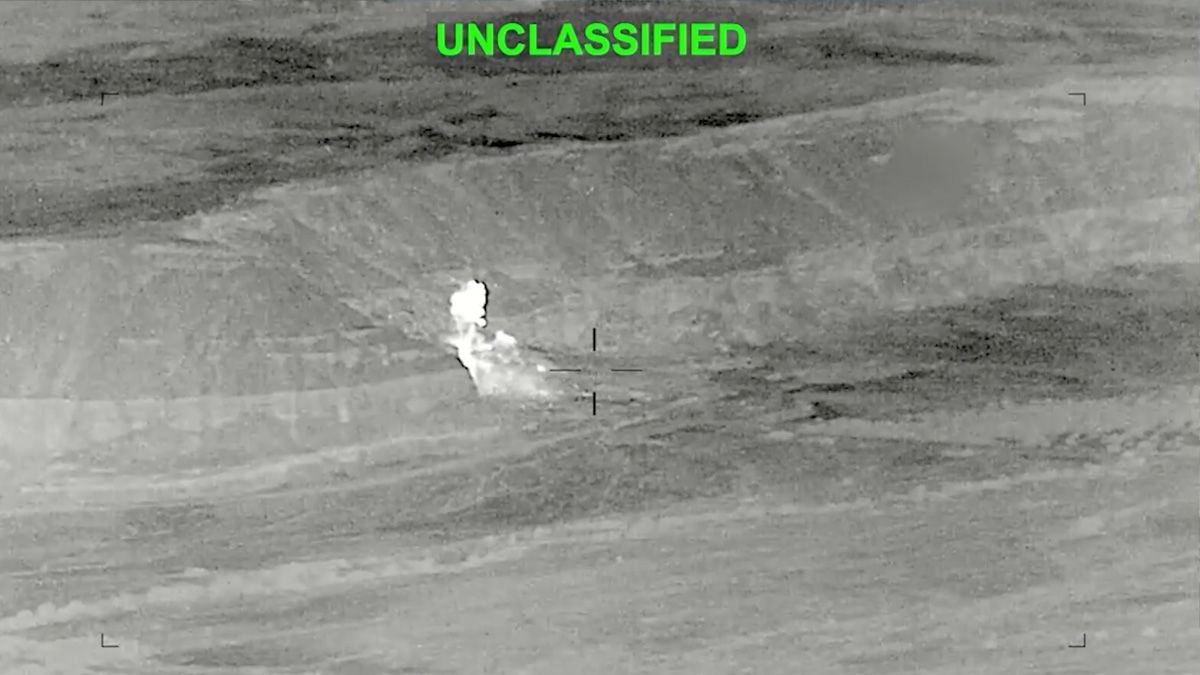
ver 60 percent of missile launchers destroyed. Forty-three Iranian naval vessels sunk or disabled. The air force “built for 1996, destroyed in 2026.” The Iranian navy, Hegseth declared, “rests at the bottom” of the Arabian Gulf. “America is winning — decisively, devastatingly and without mercy.”
These claims, even accepted at face value, answer a question nobody asked. The question was never whether the United States could achieve air superiority over Iran or sink its navy in open water.
Of course it could. The US defence budget is roughly sixty times Iran’s. The question — the only question that has ever mattered strategically — is whether technical destruction of military hardware translates into political surrender, regime change, or a durable peace.
History provides an unambiguous answer: it does not. The United States achieved complete air dominance over Iraq in 1991, destroyed Saddam’s military, and he remained in power for twelve more years.
It levelled the Taliban’s infrastructure in 2001, and the Taliban returned to govern Afghanistan in 2021. It decimated Gaddafi’s forces in 2011, producing a failed state that persists to this day. Military attrition without political resolution does not end wars. It pauses them.
“The Iranian Air Force is no more,” Hegseth declared. But Iran’s air force was never its primary weapon. Its primary weapon is institutional resilience, distributed command, and the willingness to absorb punishment indefinitely.
Even on Hegseth’s own terms, the 92 percent reduction in missile fire reflects both destroyed launchers and disrupted command networks.
IDF Chief of Staff Zamir, notably more cautious, acknowledged that even with 80 percent of air defences destroyed, “the threat has not yet been removed” — hours before a fresh Iranian ballistic missile cluster attack on central Israel proved him right. Iran’s IRGC has already declared it is firing only missiles with payloads of 1,000 kilograms or more. They are not running out of will. They are conserving their most capable assets.
The Objective Has Already Failed
The stated purpose of Operation Epic Fury was regime change. Trump said so explicitly in his eight-minute Truth Social video on the opening night of strikes. The logic was simple, if reckless: kill the Supreme Leader, decapitate the command structure, create a power vacuum, and watch a popular uprising sweep in a compliant successor.
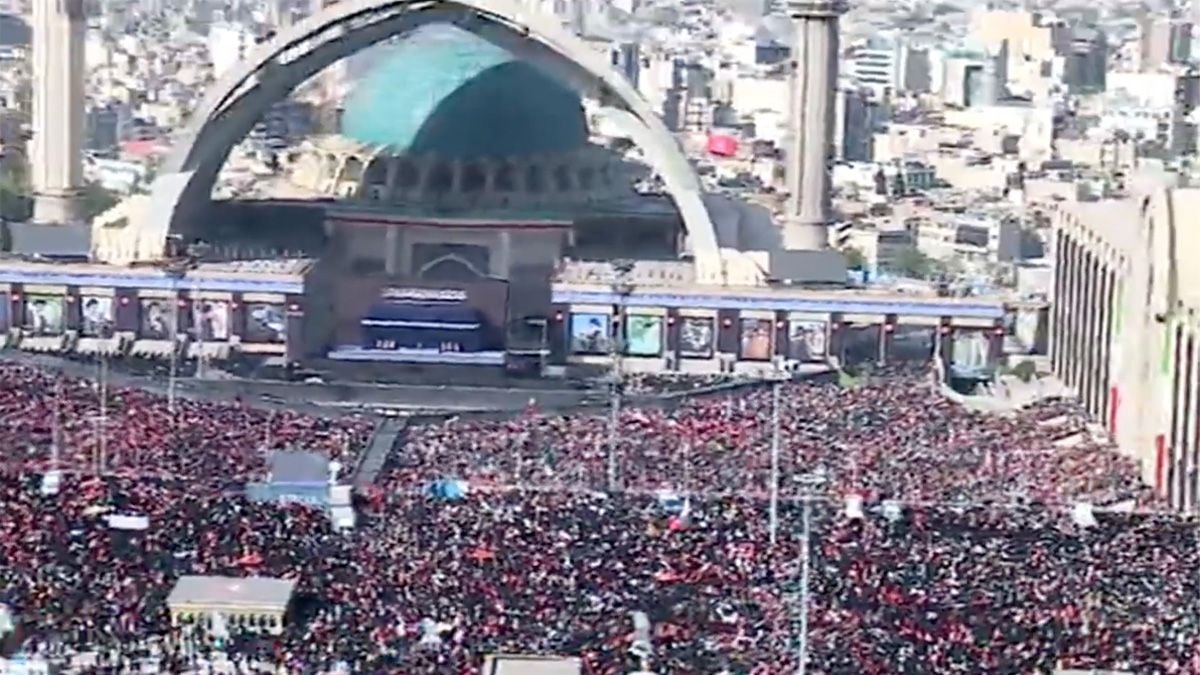
None of this happened. Within eight days, Iran’s Assembly of Experts — under heavy IRGC pressure — named Mojtaba Khamenei, the 56-year-old hardline son of the man killed in the opening strikes, as Iran’s new Supreme Leader. His wife was also killed in those strikes. His selection was explicitly framed as defiance: the new leader should “be hated by the enemy” rather than praised by them, a direct reference to Trump’s prior declaration that Mojtaba was “unacceptable” to him.
Analysts describe Mojtaba as more hardline than his father, with deep IRGC ties and a personal history of supervising violent crackdowns on Iranian protesters. A former US diplomat offered a simple summary: “He’s going to have a lot of revenge to exact.” The regime change goal did not merely fail. It produced a successor with greater institutional support, a martyrdom narrative, and every ideological incentive to escalate rather than negotiate.
The Fantasy of the Unarmed Uprising
Alongside the attrition narrative, the administration has offered a second theory of victory: the Iranian people as its ground forces. Trump has repeatedly urged Iranians to “help take back your country,” promising “total immunity” to those who do so. His adviser was quoted describing this as the plan: “The Iranian people are the boots on the ground.”
This is not a military strategy. It is a fantasy dressed in the language of liberation.
The IRGC alone fields 190,000 active personnel. The Basij paramilitary, directly under IRGC command, can mobilise between 600,000 and one million in wartime. These are not ceremonial forces — they are the same apparatus that killed thousands of protesters in January 2026 alone, during the largest demonstrations since the Islamic Revolution. They are armed with assault rifles, armoured vehicles, surveillance infrastructure, and four decades of experience suppressing domestic dissent.
The Iranian civilians Trump is exhorting to rise up have none of this. The United States has not armed them. It has not trained them. It has imposed no no-fly zone, established no safe corridor, and provided no communication infrastructure to coordinate any uprising. What, precisely, does the administration expect ordinary Iranians to do against soldiers in body armour carrying automatic weapons? Throw rocks? Post on Instagram — on an internet that Iran has already blacked out?
The January 2026 protests were real, and the grievances driving them — economic collapse, currency devaluation, decades of repression — were genuine. But those protests were crushed by the very security apparatus that Operation Epic Fury has now given a new founding myth. Bombing a country does not weaken the bond between a frightened population and the security forces that, whatever else they represent, stand between those people and the bombs. It strengthens it. The IRGC’s narrative writes itself: the regime may be imperfect, but it is the only thing standing between Iran and American colonisation. Again.
You Cannot Bomb a Civilisation Into Submission
Iran is not Iraq. This distinction matters more than it has been allowed to matter in Western coverage of this war.
Iraq in 2003 was a hollowed-out state: a personality cult built around one man, a Sunni officer class with no ideological commitment beyond personal loyalty, an economy strangled by sanctions, and a population that largely did not fight. When the US removed Saddam Hussein, the institutional structure that might have resisted collapsed almost immediately — replaced, of course, by two decades of chaos that no serious analyst had failed to predict.
Iran is structurally the opposite. Its military and political architecture was specifically designed to survive decapitation. Dual command structures, mobile launchers, tunnelled infrastructure in the Zagros Mountains: the system was engineered for exactly this scenario. Even with 60 percent of its launchers degraded — accepting Hegseth’s figures — 40 percent remain. An institution built to absorb this level of punishment and keep fighting is not an institution that will surrender because its navy has been sunk.
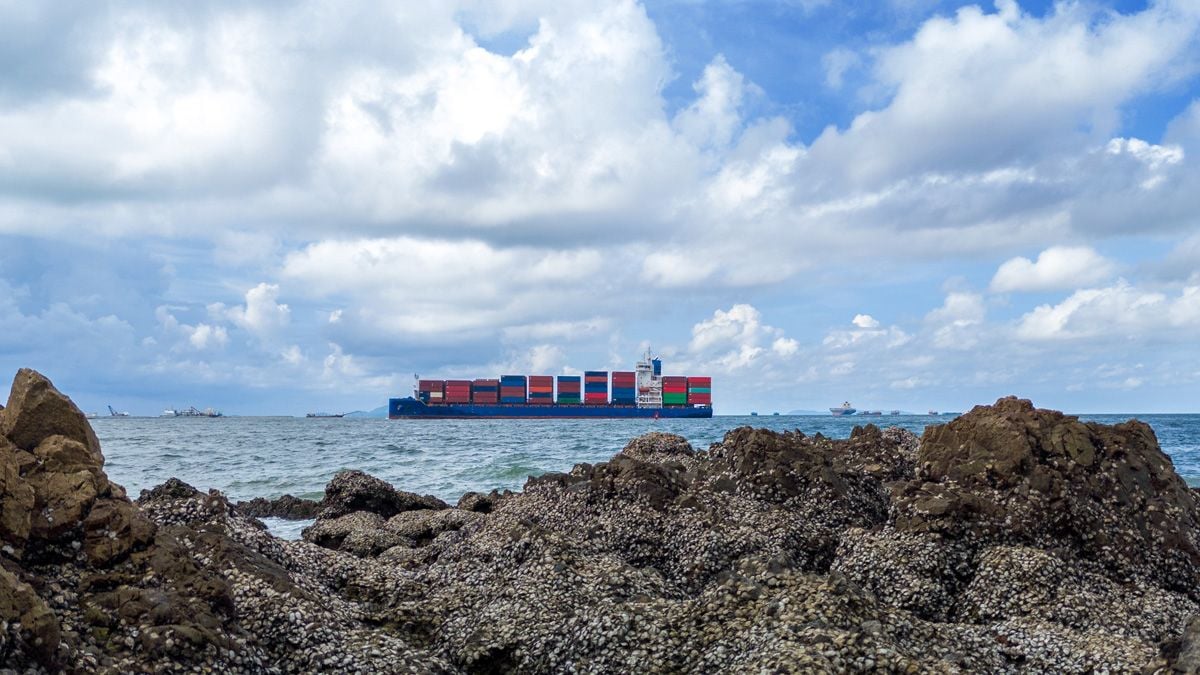
Trump threatened an attack of “incalculable” size if Iran blocked the Strait of Hormuz. But Iran has already effectively closed it to commercial traffic.
Brent crude has passed US$100 a barrel for the first time since Russia’s invasion of Ukraine. Qatar’s LNG facilities at Ras Laffan have halted production. Saudi Arabia’s Ras Tanura refinery was struck. US crude surged 35 percent in a single week — the largest gain in futures trading history dating to 1983.
The first 100 hours of the operation cost an estimated US$3.7 billion, of which US$3.5 billion was unbudgeted. Penn Wharton projects a two-month war costing up to US$95 billion in direct military expenditure alone. These are the costs of a war that was supposed to be “short-term.”
The Allies in an Impossible Position
Before the first bomb fell on Tehran, Qatar, the UAE, Saudi Arabia, and Turkey had all publicly stated they would not permit their territory or airspace to be used for an attack on Iran. Saudi Crown Prince Mohammed bin Salman told Iran’s president directly. Washington proceeded anyway.
Within 48 hours, Iranian missiles and drones had struck every Gulf Cooperation Council member state — landmark buildings in Dubai, airports in Abu Dhabi and Kuwait, refineries in Saudi Arabia, hotels in Doha. Iran’s targeting data reveals the logic: the UAE absorbed 48 percent of all projectiles, Israel only 12.8 percent. This was not indiscriminate retaliation. It was a calculated campaign to destroy the Gulf’s economic infrastructure and expose the cost of hosting US bases.
The economics of that campaign are worth sitting with. A Shahed-136 kamikaze drone — the workhorse of Iran’s retaliation — costs approximately US$35,000 to manufacture. The Patriot PAC-3 missile used to intercept it costs US$3.7 million.
For every dollar Iran spent launching drones at the UAE, the UAE spent an estimated US$20 to US$28 shooting them down. One analyst at the Stimson Center described it as “using Ferraris to intercept e-bikes.” Iran’s total estimated expenditure on strikes in the first days of the war: roughly US$200 to US$400 million. The UAE’s estimated interception cost alone: US$1.3 to US$2.6 billion. Combined Gulf defence spending in the first 48 hours exceeded US$3 billion — against an attacker that spent, at most, a fraction of that.
What makes this asymmetry structurally unsustainable is not just the cost ratio but the replenishment gap. Patriot interceptors and THAAD rounds take months or years to manufacture. Iran’s drones are built from off-the-shelf components and can be assembled in days.
Gulf air defence stockpiles were already being drawn down faster than they could be replaced, and when Gulf states requested urgent replenishment of interceptors from Washington, US officials were reportedly stonewalling those requests. The countries paying the highest defensive cost for a war they opposed cannot get replacement ammunition from the ally who started it.
Yet the Gulf states’ position is more complicated than their public protests suggest, and honesty requires acknowledging this. Saudi Arabia and the UAE have long viewed a powerful IRGC as the primary threat to their regional dominance.
Behind closed doors, some Gulf leaders may quietly calculate that a degraded Iranian military — its navy sunk, its missile infrastructure shredded — serves their long-term interests, even as they condemn the method.
The Chatham House analysis is instructive: Gulf leaders feared “an expansionist and aggressive Israel and the chaos of a potentially collapsed Iranian state” in equal measure. They are caught between a US security umbrella they cannot do without and an Iranian neighbour they cannot permanently antagonise.
This impossible position is precisely what the administration exploited. The Gulf states were never genuinely consulted — they were presented with a fait accompli and left to absorb the consequences, then handed a bill that runs into the billions for the privilege. What they will not receive is compensation.
There is no mechanism and no political will in Washington to cover the economic losses inflicted on countries whose explicit warnings were disregarded. The most they will get is continued US military presence — the same presence that made them targets in the first place.
Netanyahu’s Other War
No analysis of this conflict is complete without accounting for the domestic Israeli politics driving it. Benjamin Netanyahu is simultaneously a wartime prime minister and a criminal defendant facing charges of fraud, breach of trust, and bribery in three separate cases. His corruption trial has now been suspended under emergency measures declared since the outbreak of the Iran war. The courts are closed. The cross-examination is paused.
This is not coincidence. Netanyahu’s critics had made the same argument about the Gaza war: that prolonging the conflict served his personal legal survival. The Iran war extends that logic to an existential scale. Trump has been explicit about the arrangement: “I want him to focus on the war and not on the f—king court case.”
But the legal survival calculus is only half the story. The other half has names: Finance Minister Bezalel Smotrich and National Security Minister Itamar Ben-Gvir. Together, their parties control 20 of the 67 seats in Netanyahu’s coalition. He cannot govern without them. And they are not merely allies of convenience — they are ideologues with a territorial programme that is explicit, documented, and directly served by the destruction of Iran’s military capacity.
Smotrich’s ideology draws from Rabbi Zvi Yehuda Kook’s religious Zionism, which holds that Israel’s 1967 military victory was divinely mandated and that full annexation of Palestinian territory is the will of God — not a political choice but a theological obligation. As recently as September 2025, he unveiled a formal proposal to annex 82 percent of the West Bank.
His stated aim: to prevent any Palestinian state from ever existing. Ben-Gvir’s Otzma Yehudit party goes further, advocating annexation of the entire West Bank without granting Palestinians Israeli citizenship — a programme that the UN Special Rapporteur has described plainly as ethnic cleansing.
Both men have been sanctioned by the UK, Canada, Australia, New Zealand and Norway for inciting extremist violence. Marco Rubio, the US Secretary of State, responded to those sanctions by demanding they be reversed and declaring Washington “stands shoulder-to-shoulder with Israel.”
The September 2025 map is the most concrete expression yet of what Smotrich has called the “Decisive Plan” — a blueprint he first published in 2017 that the Israeli political establishment once dismissed as fringe, and is now executing as government policy.
Its core premise, in Smotrich’s own words: there is room for only one expression of national self-determination west of the Jordan River. Palestinians who remain after annexation are offered three choices — accept permanent subject status without citizenship, relocate voluntarily, or face military force.
When he published it in 2017, people even on the Israeli right laughed. Haaretz was less amused by September 2025: in twenty years of political activity, it noted, Smotrich has consistently turned his stated goals into reality.
The strategic sequence the Decisive Plan requires is not difficult to trace. Neutralise Hamas. Degrade Hezbollah. Destroy Iran’s military capacity. Each step removes a layer of deterrence protecting Palestinian territorial claims. Iran has been the primary financial backer and weapons supplier of the armed resistance that has made annexation politically and militarily costly. A collapsed or militarily defanged Iran does not merely remove a regional adversary — it removes the last meaningful external constraint on the programme. This war is not a distraction from the Decisive Plan. It is its precondition.
Meanwhile, Israel is opening simultaneous battle fronts it lacks the manpower to sustain: Gaza, Lebanon, Iran, the West Bank, Syria. Its own Chief of Staff has warned that without a return to conventional training, the IDF risks losing the skills needed for large-scale regional warfare — because two years of demolishing buildings in Gaza does not prepare soldiers for a coordinated adversary that shoots back with anti-tank missiles and prepared defensive positions.
The 2006 Lebanon war, when a far weaker Hezbollah killed 121 Israeli soldiers in 34 days, is the suppressed warning in every honest IDF assessment.
A Wolf in the Flock: The US as Saviour
There is something particular that must be said about the framing of this war as liberation.
Trump, and much of the Western commentary supporting Operation Epic Fury, positions the United States as a force for Iranian freedom — a benevolent power finally releasing the Iranian people from a tyrannical theocracy. This framing does not survive contact with history.
Before 1953, Iran was one of the most progressive, constitutionally sophisticated states in the Middle East. It had a functioning parliament, an independent judiciary, and a Prime Minister — Mohammad Mosaddegh — who had been democratically elected and was attempting to nationalise Iran’s oil industry for the benefit of Iranians. The CIA and British intelligence organised a coup that removed him, reinstated the Shah, and established the SAVAK secret police, which proceeded to torture and disappear thousands of political opponents over the following 25 years.
The 1979 Islamic Revolution was not an inexplicable eruption of religious fanaticism. It was the direct and documented consequence of a Western-installed authoritarian monarchy that had destroyed every democratic alternative over a quarter century.
The clerical government that emerged was shaped by the experience of having a Western-backed puppet replace a liberal democracy. That history is not background noise. It is the explanation for why “the Iranian people as boots on the ground” did not materialise. When bombs fall on Tehran, ordinary Iranians do not see liberation. They see 1953 on a larger scale.
To ask the Iranian people to trust US intentions today is to ask them to ignore the foundational event of their modern political identity. The sheep and the wolf know each other’s history. The flock remembers.
What “Soon” Actually Looks Like
Consider what would need to happen for Trump’s “short-term” prediction to prove accurate.
Regime collapse: Already failed. Mojtaba Khamenei has been appointed and the IRGC has pledged full allegiance.
Popular uprising: Did not materialise. The administration provided no arms, no training, no infrastructure, and no safe corridor to the people it is urging to rise against a fully armed security state. Bombing a country produces national unity, not revolution.
Attrition victory: Even accepting Hegseth’s figures, 40 percent of Iran’s missile launchers remain intact, the IRGC ground forces are untouched, and the Basij can mobilise one million personnel. Degrading a military’s conventional capacity does not end a conflict when that military’s doctrine is built around surviving exactly this level of degradation.
Ground invasion: Trump himself ruled it out, while Hegseth refused to. No credible invasion force exists, no coalition partner will contribute ground troops, and Iran’s terrain — a country three times the size of Iraq with 600,000 active military personnel and a motivated population — makes the prospect militarily catastrophic.
Iranian capitulation: Iran’s Foreign Minister has explicitly ruled out negotiations with the US. The new Supreme Leader’s mandate is built on defiance. Iran has every strategic incentive to sustain the conflict until oil prices and political costs force a US withdrawal.
There is no mechanism by which this war ends “soon” that does not involve either a US climbdown or a negotiated settlement that gives Iran something substantial. Neither outcome resembles the victory being sold to the American public.
Conclusion
Trump’s “short-term excursion” framing serves a domestic news cycle. It does not describe the war that is actually being fought.
Iran’s strategy has never been battlefield victory. It is cost imposition — making the conflict expensive enough, in oil prices, in Israeli casualties, in regional instability, in international condemnation, that the coalition sustaining it fractures.
Every week of US$100 oil damages Trump’s economic approval ratings, already at 61 percent disapproval before the war began. Every day the Strait of Hormuz remains effectively closed, the global economy pays a price that no press conference victory claim can offset.
The hardest truth of this war is that it was launched on assumptions falsified within the first nine days: that Iran was weak enough to collapse quickly, that Gulf allies would absorb the consequences without long-term cost, that the Iranian people would greet the strikes as liberation, that a compliant successor could be installed within days, and that destroying hardware meant winning a war.
When a war’s foundational assumptions fail in the opening week, the appropriate response is not to declare that it will be over soon. It is to reckon honestly with what was misunderstood — and who, given the history, was always most qualified to understand it.