KF Seetoh questions Singapore container return scheme over complexity & limited effectiveness
Veteran food critic KF Seetoh has criticised Singapore’s new container return scheme, citing confusion, inconvenience and limited impact. His remarks come as the initiative faces a slow rollout, technical issues and mixed public response.

- KF Seetoh criticises scheme as impractical and confusing for everyday users
- Public response highlights inconvenience, low incentives and technical issues
- Authorities emphasise education, infrastructure growth and long-term behavioural change

Singapore’s newly launched beverage container return scheme has drawn criticism from veteran food critic KF Seetoh, who questioned its practicality and overall effectiveness in improving recycling outcomes.
In a Facebook post on 4 April 2026, Seetoh expressed scepticism over whether the deposit-refund system would meaningfully influence public behaviour, particularly if infrastructure and accessibility remain limited.
Seetoh, founder of Makansutra, described it as a concept difficult to understand despite its environmental intentions.
Concerns over system complexity and accessibility
The scheme requires consumers to pay a 10-cent deposit on eligible beverage containers, which can be refunded through designated reverse vending machines.
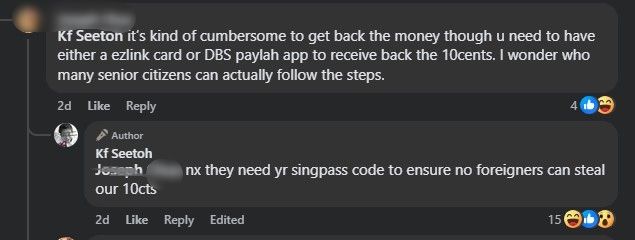
Seetoh questioned whether the system would be intuitive for everyday users, especially seniors, noting uncertainty about locating machines, identifying eligible containers and navigating QR code-based refunds.
He also highlighted broader concerns about accessibility, asking how individuals with limited mobility or technological familiarity would participate effectively in the scheme.
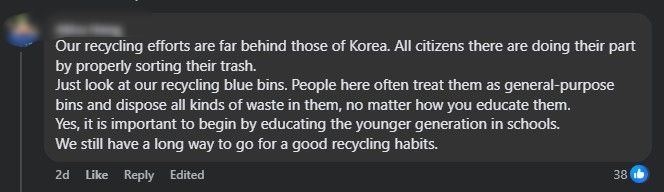
The critic further pointed to inconsistencies in Singapore’s recycling approach, referencing the removal of blue recycling bins in some areas due to contamination issues.
He argued that previous initiatives, such as tray return systems at hawker centres, have not consistently delivered the intended sorting outcomes.
Limited scope raises questions on impact
Seetoh also questioned the scheme’s narrow focus on selected beverage containers, noting that many other common household items remain excluded.
He cited examples such as food tins, plastic packaging and household containers, suggesting that the scheme’s limited scope may reduce its overall environmental impact.
Describing the system as overly complex, Seetoh argued that cultivating environmental awareness and consistent recycling habits would be more effective than introducing multiple layered initiatives.
In the comments section of his post, he added that he would prefer recyclable items to be given to informal collectors, who can derive income from recycling activities.

Public reaction highlights confusion and inconvenience
Online responses to the scheme have largely echoed Seetoh’s concerns, with many users describing the process as confusing and inconvenient.
Some netizens said the effort required to reclaim 10 cents outweighed the benefit, while others raised concerns about potential disputes in shared spaces such as hawker centres.
Several users also questioned whether the reliance on mobile applications and QR codes could disadvantage elderly individuals or those less familiar with digital tools.
Others suggested that simpler recycling systems, combined with public education, might achieve better participation rates and outcomes.

Slow rollout and technical issues reported
Earlier media reports indicated that the scheme had a muted start, with low user participation and limited awareness on its first day.
Under the initiative, pre-packaged beverages in containers between 150 millilitres and three litres carry a deposit mark and can be returned at designated machines.
However, several reverse vending machines were reported to be non-operational, malfunctioning or unable to accept certain containers.
In response to queries by Channel NewsAsia, BCRS Ltd acknowledged that a small proportion of machines experienced technical issues.
The operator said it was working with partners to resolve these problems as part of the system’s rollout.
Authorities emphasise long-term behavioural change
Despite the initial challenges, officials and environmental groups have urged patience, noting that such issues are common in large-scale programme transitions.
Isabella Huang-Loh of the Singapore Environment Council said early operational adjustments were expected.
She emphasised that consistent education and public engagement would be crucial in building long-term recycling habits.
In a separate statement, Janil Puthucheary said that most households are located within a short distance of return points, with hundreds of retail outlets participating in the scheme.
He added that additional machines would be deployed, with a target of reaching 2,000 units within a year.
Puthucheary acknowledged that the initiative represents a behavioural shift for consumers, retailers and operators, and that adjustments would be necessary over time.
Scrutiny over effectiveness of NEA’s 2023 Bloobox scheme
The Bloobox initiative was launched in November 2022 under Singapore’s Recycle Right campaign to promote home recycling habits. It encouraged households to set up dedicated recycling corners to reduce contamination in blue bins.
In March 2023, Dr Amy Khor, then-Senior Minister of State for the Ministry of the Environment and Water Resources, introduced the initiative publicly, highlighting its role in supporting national sustainability goals. The foldable and reusable boxes were distributed free at multiple locations until 30 April 2023.
Designed with students from the Singapore Institute of Technology, each box could hold up to 5kg of recyclables, including paper, plastic, metal, glass and e-waste.
However, adoption was modest.
By April 2023, only about 20 per cent of households had collected a Bloobox, with some expressing doubts about its effectiveness in improving recycling behaviour.
Among users, some repurposed the boxes for other uses, raising questions about practical impact. One example included using the box for household storage rather than recycling.
Despite this, then-Senior Parliamentary Secretary for Sustainability and the Environment Baey Yam Keng later reported that 93 per cent of distributed boxes were collected, describing public response as positive while noting not all households required one.
Associate Professor Jamus Lim, Workers’ Party MP for Sengkang GRC, sought details from Mr Baey on the total cost of the Bloobox initiative and the threshold for deeming the program cost-effective.
In response, Baey indicated that he did not possess the exact cost of the campaign.
“As I mentioned in my reply, we estimated the number of Blooboxes required. We did not produce or procure Blooboxes to cover all households in Singapore because that would not be realistic and we know that not every household would require it. ”
“We were quite close to our estimate – 93% of the Blooboxes were collected. The remaining will not be put to waste because they will be used in our efforts to promote recycling.”