KF Seetoh urges PM Wong to save Singapore hawker culture beyond words amid hawker struggles
Singapore hawker advocate KF Seetoh has questioned whether Prime Minister Lawrence Wong fully understands the pressures facing hawkers, warning that policies and operating conditions are undermining efforts to preserve the republic’s fading hawker culture.

- KF Seetoh questioned whether current policies are sufficient to protect Singapore’s hawker culture.
- Lawrence Wong featured a Marsiling hawker stall in a video promoting hawker heritage preservation.
- Seetoh criticised social enterprise hawker centre management rules and the lack of policy action since 2024.

Singapore hawker advocate KF Seetoh has urged Prime Minister Lawrence Wong to take stronger action to protect and preserve the republic’s fast-fading hawker culture, arguing that the celebrated food heritage is being sustained more through branding and rhetoric than meaningful policy reform.
In a Facebook post published on 19 May 2026, Seetoh questioned whether the government fully understood the daily pressures faced by hawkers struggling to survive under rising operating costs and restrictive management policies.
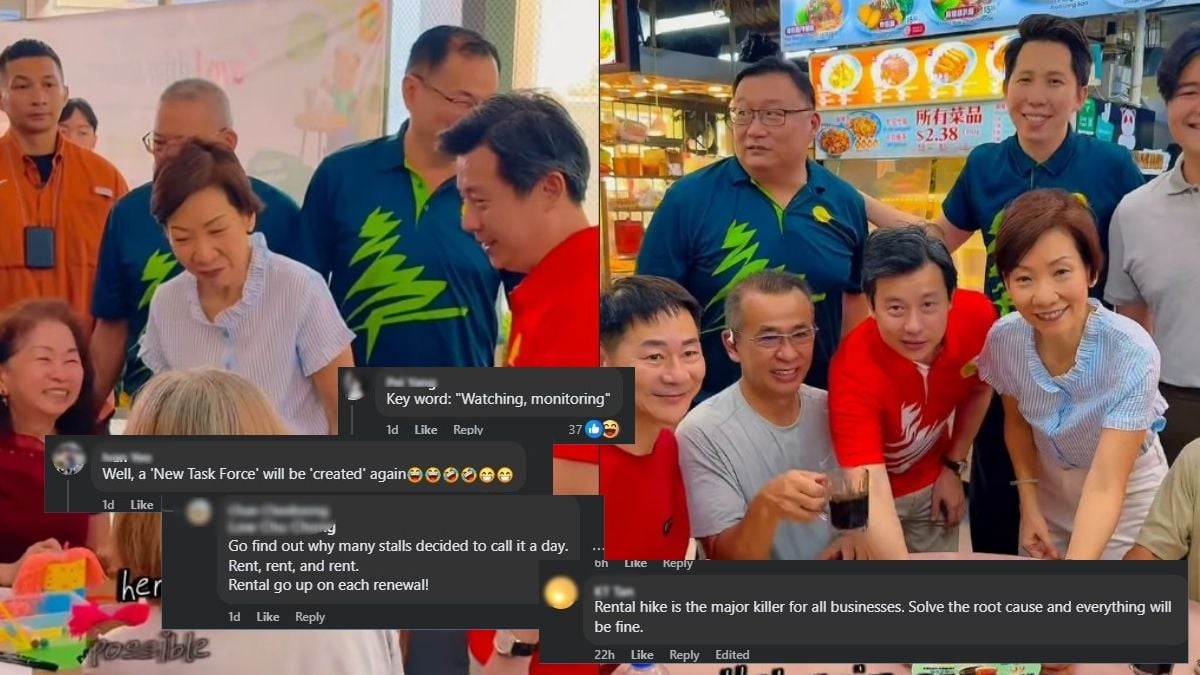
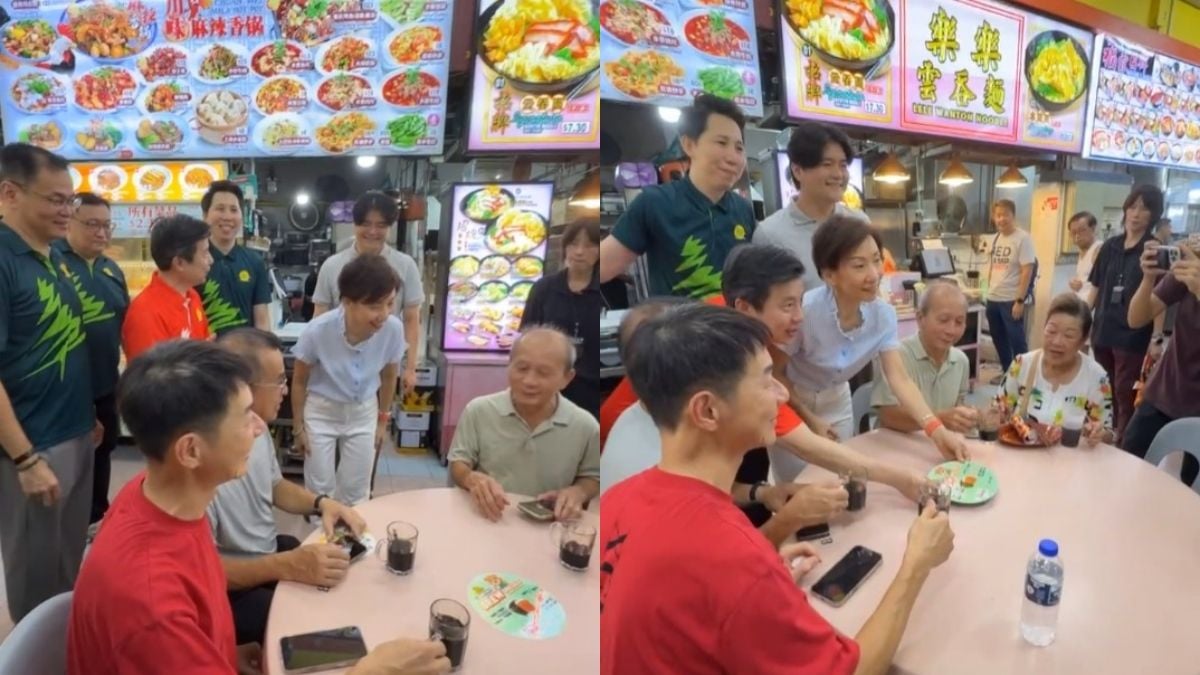
The comments followed a recent video published on Wong’s official YouTube channel, where the prime minister interviewed veteran hawker Roger Wong Hien Lai of Lai Xing Prawn Noodle at Marsiling Lane Food Centre.
The video, uploaded two days earlier, had garnered more than 34,000 views by 19 May.
In the video, Wong highlighted the dedication required to sustain Singapore’s hawker trade and acknowledged the labour behind each dish served.
“Behind every bowl is a lot of hard work — long hours, careful preparation, and recipes refined over time,” Wong said during the visit.
Roger’s hawker business traces its roots back to 1975, when his mother first sold prawn noodles from a pushcart before eventually moving into a hawker centre.
The family-run stall later became known for its carefully prepared prawn mee, attracting loyal customers from across Singapore.
Roger said he did not initially intend to become a hawker.
According to the video, he studied maritime training at Singapore Polytechnic and later worked under shipping company Maersk Line before returning to take over the family business after his mother suffered a serious injury and required knee replacement surgery.
Preserving a disappearing tradition
The conversation between Wong and the hawker family also touched on wider concerns surrounding the future of Singapore’s traditional markets and hawker centres.
Roger’s daughter, Corinne, described hawker culture as an important part of Singaporean identity and expressed fears that it could eventually disappear amid changing consumer habits and modern retail developments.
“I really like the hawker culture, market culture, it’s part of our Singapore lifestyle,” she said.
“I think I will cry if eventually the hawkers or the markets will be replaced by supermarkets.”
Roger also described the physical demands of hawker work, saying the trade required years of discipline, consistency and stamina to maintain quality standards.
Despite rising business costs and broader economic pressures, he said the stall continued trying to keep prices affordable for lower-income Singaporeans, retirees and retrenched workers.
“Some people, they are retrenched, retired, they got no money, so when they add noodle, outside need to pay S$1 or 50 cents, but we don’t charge people extra for all these,” Roger said.
The stall currently sells its prawn noodles for S$3.50.
Wong concluded the video by saying that preserving hawker culture involved more than simply maintaining hawker centres as physical infrastructure.
“Every hawker dish reflects the efforts and pride of our hawkers in Singapore,” Wong said.
He also urged Singaporeans to continue supporting hawkers so the culture could survive for future generations.
“Let’s all do everything we can to keep this culture alive and keep it going strong for many more generations to come,” he added.
Seetoh questions policy commitment
Responding to the prime minister’s visit, Seetoh acknowledged the symbolic importance and influence of Wong publicly endorsing hawkers and highlighting their hard work.
However, he argued that symbolic support alone would not resolve structural problems affecting hawkers across Singapore.
“The one that can actually enact change to ‘preserve’ the food culture as mentioned in the video,” Seetoh wrote.
“But I wonder if PM Wong truly knows the impossible situation our hawkers face in their quest to survive.”
Seetoh criticised what he described as “ridiculous” contractual rules imposed under social enterprise hawker centre management systems approved by the National Environment Agency (NEA).
He argued that hawkers were increasingly trapped between public expectations for cheap food and operational conditions that made sustainable business increasingly difficult.
“The public is also made to think hawkers owe them cheap food and feel entitled to it. Very demoralising,” he wrote.
The Makansutra founder also pointed to a parliamentary motion on preserving hawker culture that was debated and unanimously approved in November 2024.
According to Seetoh, proposals discussed during the motion included improving manpower support for hawkers, removing rent bidding systems, lowering rents or gross turnover obligations and abolishing the social enterprise hawker centre management model.
“No dissensions. But till today, no action too,” he wrote.
Criticism of hawker centre management
Seetoh claimed that some newly issued contracts for hawkers operating under social enterprise hawker centres had become even more restrictive despite earlier discussions about reform.
He alleged that some contracts continued requiring seven-day work weeks while imposing S$100 daily penalties on hawkers who closed stalls without official approval.
He also criticised allegedly higher gas prices imposed by management operators compared with other hawker centres.
According to Seetoh, hawkers were additionally required to use compulsory point-of-sale systems despite no requirement for gross turnover-based rental calculations or sales commissions.
“All this in the midst of energy and cost crisis,” he wrote.
“Again I say, the hawkers are not subsidised. And the govt pays SEHC millions to operate on their behalf.”
Seetoh cited the example of Jurong West Hawker Centre, where operator JW50 Hawker Heritage was awarded a management contract valued at S$4.86 million after the NEA described its proposal as the strongest among tender submissions.
He said Singapore risked losing authentic food heritage if policymakers continued prioritising infrastructure and branding over the welfare of hawkers themselves.
He urged Wong to use his political influence to pursue substantive reforms rather than relying on promotional campaigns highlighting hawker culture.
“I hope this top flight influencer can truly act to protect preserve and imagine new possibilities to our fast fading heritage hawker culture, not just build fancier hawker centres,” he wrote.
“Or these hawker videos are mere political optics.”