Singapore launches workgroup to reverse record-low fertility rate, with findings due early 2027
Singapore has established a new Marriage and Parenthood Reset Workgroup to address the country's record-low total fertility rate of 0.87 in 2025, with a full report expected in early 2027.

- Singapore's total fertility rate fell to a record low of 0.87 in 2025, down from 0.97.
- A new interagency workgroup chaired by Indranee Rajah will review marriage and parenthood policy.
- The workgroup's full report is expected in early 2027, with early recommendations possible.

Singapore has established a new interagency Marriage and Parenthood Reset Workgroup to address the country's record-low total fertility rate, with a full report expected in early 2027.
The workgroup was announced on Wednesday, 29 April 2026, by the National Population and Talent Division (NPTD). It will examine key factors influencing marriage and parenthood decisions, including financial costs, work-life support, caregiving, housing, healthcare, preschool and education.
Singapore's total fertility rate (TFR) fell to 0.87 in 2025, down from 0.97 the previous year — the lowest figure ever recorded for the country. The workgroup, first signalled during the Budget debate in February, may also issue early recommendations before its full report is released.
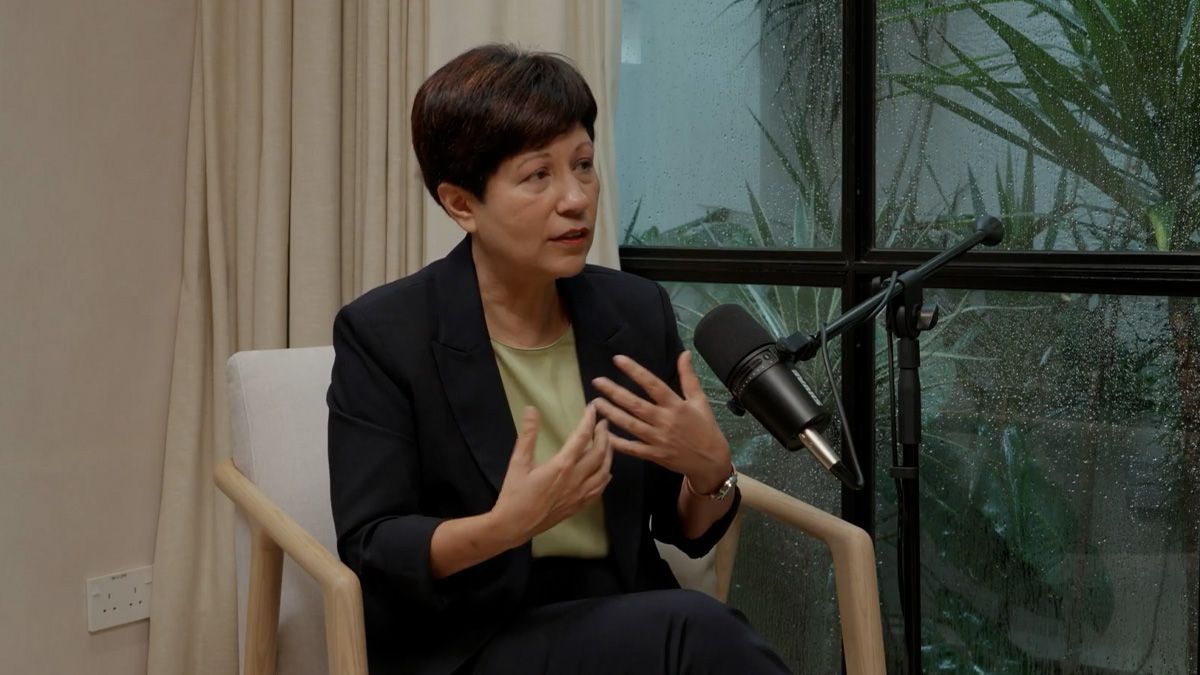
Chaired by Indranee Rajah, Minister in the Prime Minister's Office and Second Minister for Finance and for National Development, the workgroup comprises nine political office holders drawn from the Prime Minister's Office and eight ministries. Four of the nine members are serving their first term in office.
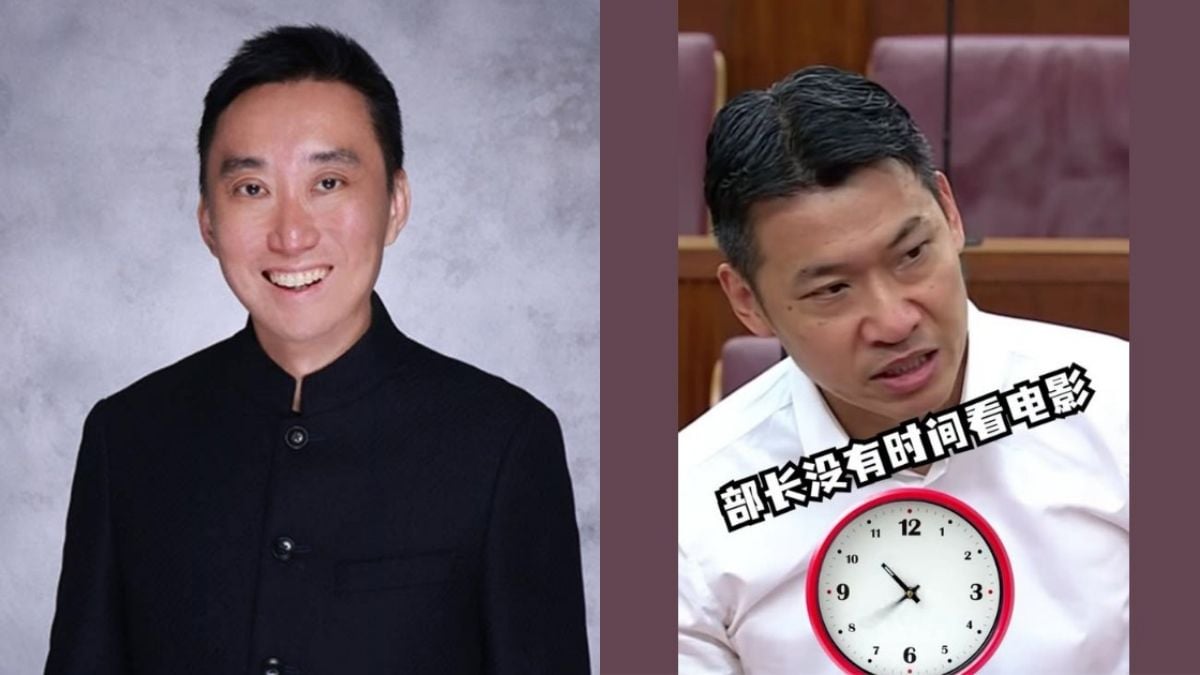
The full membership is: Low Yen Ling, Senior Minister of State for Trade and Industry; Rahayu Mahzam, Minister of State for Health; Dinesh Vasu Dash, Minister of State for Manpower; Jasmin Lau, Minister of State for Education; Goh Pei Ming, Minister of State for Social and Family Development; Zhulkarnain Abdul Rahim, Minister of State for Social and Family Development; Shawn Huang, Senior Parliamentary Secretary for Manpower; and Goh Hanyan, Senior Parliamentary Secretary for Culture, Community and Youth.
A whole-of-society challenge
Speaking at an interview with reporters at The Treasury building, Indranee said the fertility decline carried "deep ramifications" for Singapore if left unaddressed, describing it as an existential issue requiring action before it becomes irreversible.
She cautioned against viewing the problem purely as a matter for government intervention. The issue is "very personal," she said, involving people's mindsets, attitudes, values, personal goals and ambitions — areas where the state cannot intrude too heavily.
"There is a tendency to generally ask: 'So what's the government going to do?' And the expectation is that that will just result in a policy change. You can do that for some things, but not when it involves intangibles like this," she said.
Indranee identified employers, religious organisations, relatives and social influencers as stakeholders who must all play a role in shifting societal norms around marriage and parenthood.
When asked to name a target fertility rate, she declined to set a specific figure, saying it would be a meaningful improvement if the TFR rose above its current level year on year.
Three priority areas for early action
Indranee identified housing, caregiving and preschool education as three areas where changes could be introduced ahead of the workgroup's full report.
She said many aspiring parents seek greater certainty and support on preschool and caregiving arrangements. Goh Pei Ming noted that the Ministry of Social and Family Development (MSF) and the Early Childhood Development Agency (ECDA) would conduct a full review of preschool accessibility and affordability, and would build on recent enhancements to parental leave.
On housing, the workgroup intends to review policies to strengthen access to affordable homes for families.
Six measures of success
Indranee outlined six benchmarks the workgroup will use to gauge progress.
The first is ensuring young people have genuine opportunities to form relationships and find life partners. She noted that many young Singaporeans find it harder to meet people after entering the workforce, and feel uncertain about encounters through dating applications.
The second is shifting the associations people hold around parenthood — from anxiety about competition, stress and the difficulties of child-rearing, toward the support available and the rewards of family life.
Third is a significant reduction in the stigma surrounding fertility treatment, combined with more progressive workplace practices to support employees undergoing such procedures. Rahayu Mahzam noted that as couples marry and start families later, fertility challenges are becoming more common, and said the Ministry of Health would work with healthcare partners to raise awareness and strengthen support for couples at every stage of their fertility and maternity journey.
Fourth is reducing the "maternity penalty" faced by women in the workforce. Indranee proposed the concept of a "detour" — normalising the idea of women taking two or three years away from work to have and raise children, with the assurance of a supportive employer upon their return.
Fifth is a cultural shift in workplaces so that professional and family goals are treated as compatible rather than competing. Indranee said the conversation is currently framed in binary terms, as though dedicating time to family necessarily comes at the cost of work, or vice versa.
"Employees should be able to leave work before dark to spend time with their families, and enjoy weekends and public holidays without work interruptions except in emergencies," she said.
Sixth is the development of better and more progressive human resources practices, acknowledging that some existing workplace norms may be outdated given the flexibility now available through digital tools and artificial intelligence.
Workplace culture and business community
Dinesh Vasu Dash said the Ministry of Manpower (MOM) would engage tripartite partners and gather feedback from workers and employers to identify practicable approaches that support both career aspirations and parenthood commitments, while remaining sensitive to the operational needs of businesses.
Low Yen Ling, representing the Ministry of Trade and Industry, called on businesses to actively support a pro-family environment, citing neighbourhood retail spaces, shopping malls, and providers of products and services for young families as actors who could contribute to more inclusive, family-friendly offerings.
Education and community
Jasmin Lau noted that many families feel the weight of expectations around academic achievement and the concept of perfect parenting. She said the Ministry of Education would work with parents, schools and the wider community to build a supportive environment in which different pathways are valued and children are given space to develop in their own way.
Goh Hanyan said the Ministry of Culture, Community and Youth (MCCY) and the National Youth Council would continue creating opportunities and spaces for young people to meet and form meaningful connections, which she described as giving young people the support and confidence to take the next steps in life.
Zhulkarnain Abdul Rahim said MSF would work with community partners such as Families for Life to foster positive mindsets around marriage and parenthood, and would partner MCCY to equip youth with the skills to build strong relationships and appreciate their importance alongside other life goals.
The workgroup is supported by the National Population and Talent Division and will engage widely with employers, businesses, community organisations and individual Singaporeans. The full report is expected in early 2027.