Shared experience not a prerequisite for empathy, says workgroup chair Indranee Rajah
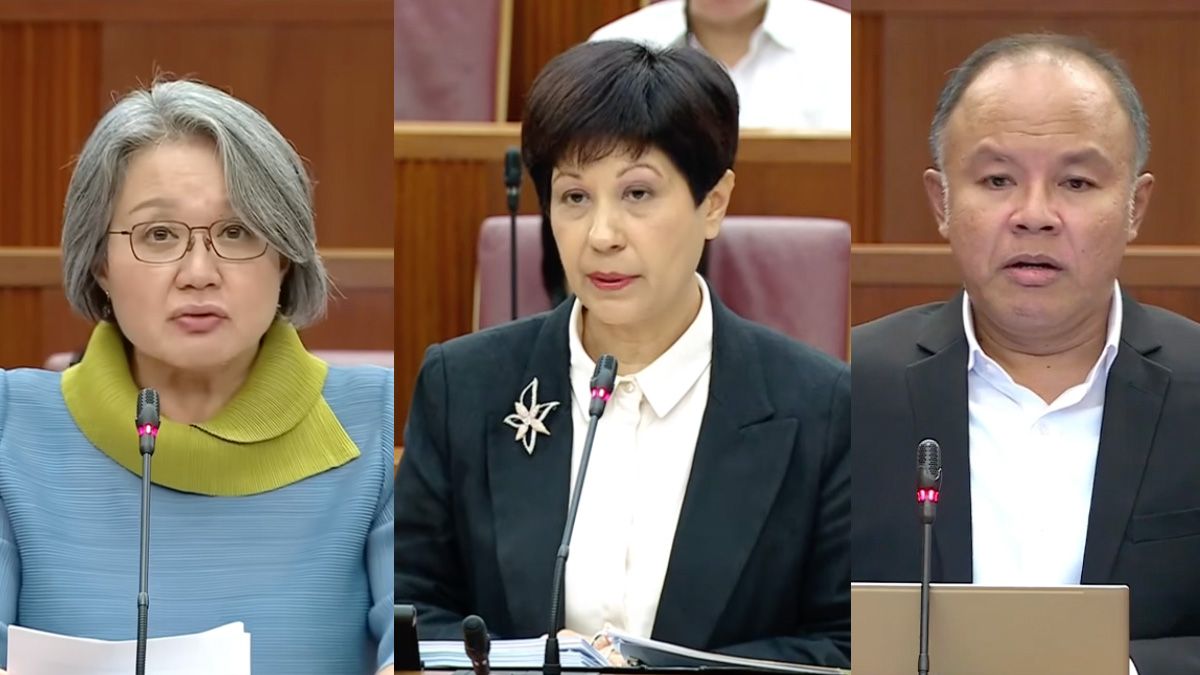
Minister in the Prime Minister's Office Indranee Rajah has defended her appointment as chair of Singapore's Marriage and Parenthood Reset Workgroup, saying empathy does not require shared life experience, despite being a single woman with no children.
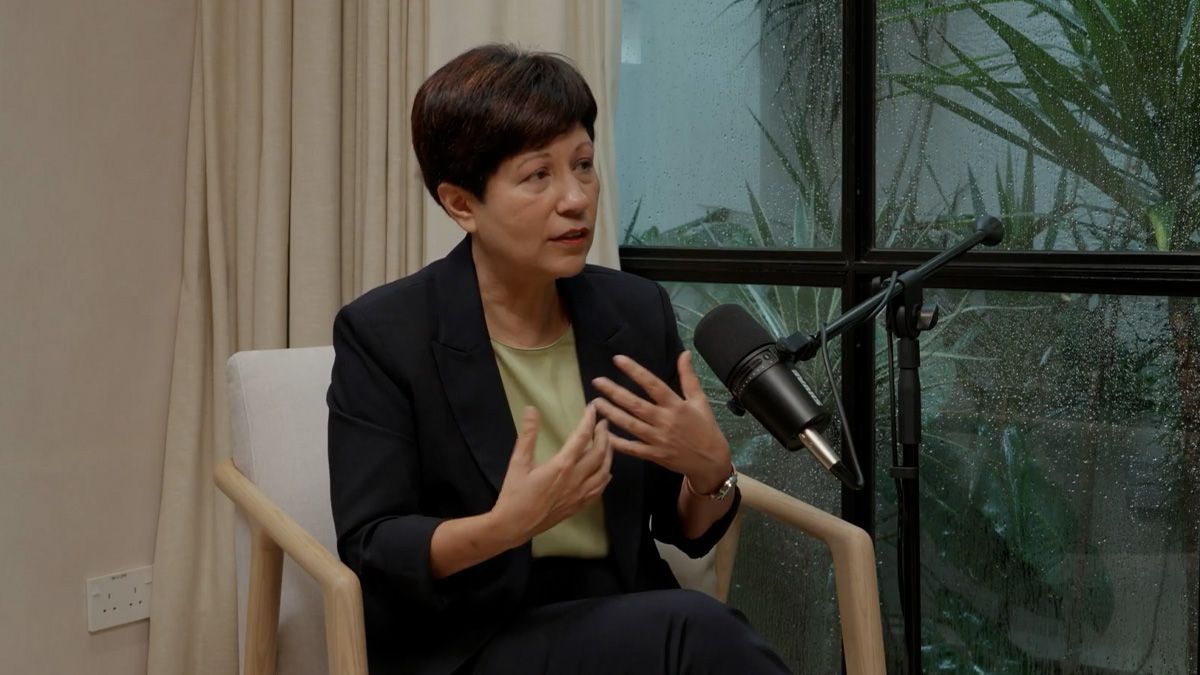

Indranee Rajah, Minister in the Prime Minister's Office and chair of Singapore's Marriage and Parenthood Reset Workgroup, has defended her appointment, saying that sharing identical life experiences is not a prerequisite for empathy.
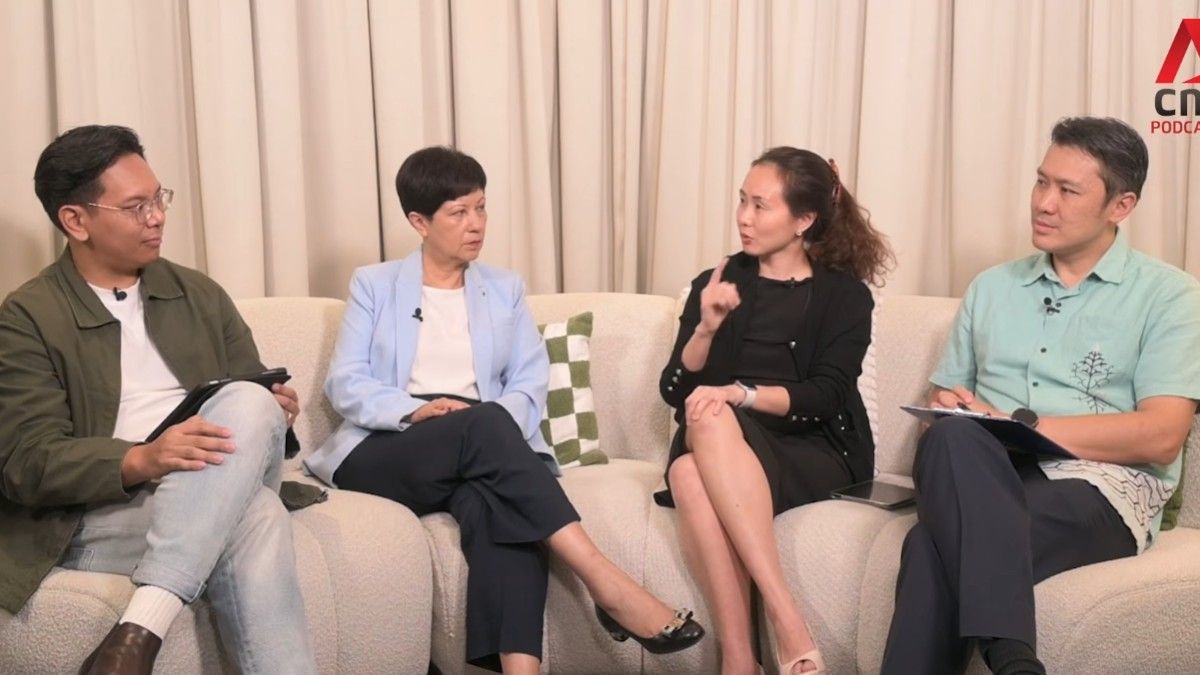
Speaking on the Who We Are podcast hosted by Rachel Lim, co-founder of fashion label Love, Bonito, the minister addressed public scepticism about her suitability to lead a national conversation on marriage and parenthood as a single woman with no children.
When Lim raised the issue directly — noting that some observers had questioned the appointment on those grounds — Indranee replied that she takes the matter "very matter-of-factly."
"You don't necessarily have to have exactly the same experience in order to empathise," she said. She added that the key is to "really understand where their concerns are, and how we can do our best to support them."
On her own single status, Indranee said there "just hasn't been the right person, right time" and described her life trajectory as something she is at peace with.
Personal losses and the importance of family
Indranee said her first-hand experiences have reinforced her understanding of why family matters. She recounted the deaths of her father, sister, brother and, most recently, her mother.
"You feel that absence, which is why I would hope and want for Singaporeans to be able to have families of their own, so that they can be surrounded by that same love," she said.
Her mother lived to 102 years old and witnessed Singapore from its colonial period through to independence and the present day. She passed away last year — and six months later, Indranee stood in parliament to address Singapore's fertility challenge.
During the podcast, Indranee recalled that her mother's guiding approach was never to impose but to ask two questions: "Do you want to do this? Do you think you can do it?"
If the answer to both was yes, her mother's response was simply: go for it. That trust, Indranee said, extended through her school years, university and career.
A life shaped by two cultures
Indranee's background spans two communities. Her father, the Deputy Commissioner of Police, was Tamil Hindu; her mother was Chinese and Anglican. Their marriage in the 1950s was unusual for its time, and Indranee described her parents as trailblazers.
Her father passed away when she was five years old. The household nonetheless combined the best of both cultural backgrounds — she grew up using Chinese honorifics for elder siblings while bearing a name of Sanskrit origin chosen by her father.
She said a core value she took from that upbringing was openness. "It's just being comfortable in your own skin," she said, describing the importance of accepting people for who they are and trying to understand where they come from.
A legal mindset applied to a human problem
Before entering politics, Indranee spent years as one of Singapore's senior counsel. Lim asked whether the precision and structure of a legal mind helps or hinders when tackling something as intangible as the desire to build a family.
Indranee said it is a bit of both, and that the latter requires vigilance. But she identified a key commonality: the importance of listening before drawing conclusions.
"If you are working on a legal case, the most important thing is actually to listen, to hear, to understand what your client is saying and importantly also to understand what the other side is saying," she said.
Applying that approach to Singapore's fertility problem, she said she had come to realise the issue is not a single one but a cluster of overlapping concerns.
These include the difficulty of meeting potential partners after entering the workforce, stress at work, stigma around fertility treatment, the availability of housing and childcare, and financial costs.
"When you have a multitude of factors, you also need to work out what the solutions are to each of these," she said.
The 'detour' controversy
Indranee also addressed criticism of her earlier use of the word "detour" to describe women taking career breaks to raise children. She said she was told the term implied taking a "wrong path", which was "not the intention at all."
"By 'detour', effectively I meant time out, take a pause, have a different season," she explained.
She added that the aim was to normalise the idea of mothers stepping away from work temporarily, with the assurance of understanding employers on their return.
Marriage and parenthood as personal choices
Lim raised feedback from colleagues — single and married — who said they had built lives they genuinely cherished, with hard-won freedom. She asked how the minister would respond to those who see parenthood as a cost to quality of life.
Indranee said she understands that perspective, particularly for those wishing to enjoy life at its prime. However, she encouraged people to consider whether parenthood might also offer satisfaction, joy and fulfilment alongside other goals.
"The question though is, is there something else which would also give you great satisfaction, and joy and fulfilment? And if there is, such as marriage and parenthood, give that a chance," she said.
She also cautioned that "nature and biology have a clock of their own," noting that some who had delayed the decision later encountered difficulties in conceiving.
Baby bonus and children of unwed mothers
Lim raised the question of children born to unwed mothers and their ineligibility for the government's baby bonus scheme. She asked whether there were internal discussions about redefining who qualifies.
Indranee explained that the baby bonus was "designed as an incentive" and acknowledged the difficulty this creates. Extending it to children born outside of marriage would, in effect, signal government encouragement of unmarried births.
"Our societal values are still such, I think, that not everyone is comfortable to say we encourage you to have a child, irrespective of marriage status," she said.
She acknowledged, however, that the government recognises every child "needs support" and that some single mothers require additional assistance where family support may not be forthcoming.
She pointed to the progressive extension of benefits such as the child development account to unwed mothers and their children over recent years.
"The government will continue to look at this to see how children can be supported," Indranee said, adding that the goal is to ensure every Singaporean child has the opportunity to progress.
A vision for ten years from now
Asked what Singapore might look like in a decade if the reset succeeds, Indranee described a mother who feels safe to have children while in full-time work, knowing an employer would be supportive if she chose to take a pause.
"In other words, to feel safe and secure in having children without having to pay a huge price for it," she said.
She also addressed the question of identity — the concern that motherhood risks dissolving a woman's sense of self amid layers of relational roles.
"I hope for women to know who you are, your own identity, and that never changes whether you're a daughter, whether you're a wife, whether you're a mother, whether you are a colleague," she said.
She added that these are different facets of who a person is, not replacements for a core identity.
Not just a government problem
Indranee was direct in framing the challenge as one that cannot be solved by policy alone. She said the issue is "very personal," involving mindsets, attitudes, values and personal goals that governments cannot legislate.
She identified employers, religious organisations, relatives and social influencers as stakeholders who must all play a role in shifting norms around marriage and parenthood.
Her examples were deliberately small in scale: giving up a seat to a pregnant woman on the MRT, ensuring workplaces have lactation rooms, and organising social events so unmarried employees have opportunities to meet.
"If each of us can do something in that way, if every organisation can do something within their means, within their resources, then I think we can change," she said.
When asked whether she believed the effort could genuinely move the needle, Indranee said the difficulty was precisely the reason for acting. She declined to describe the task as mission impossible, noting that in such stories, the protagonist ultimately succeeds.
"Maybe mission possible," she offered.
Background
The Marriage and Parenthood Reset Workgroup was announced on 29 April 2026 by the National Population and Talent Division (NPTD). Singapore's total fertility rate (TFR) fell to 0.87 in 2025, its lowest ever recorded, down from 0.97 the previous year.
The workgroup comprises nine political office holders from the Prime Minister's Office and eight ministries. Four of the nine members are serving their first term in office.
A full report is expected in early 2027. Early recommendations may be issued on housing, caregiving and preschool education ahead of that date.