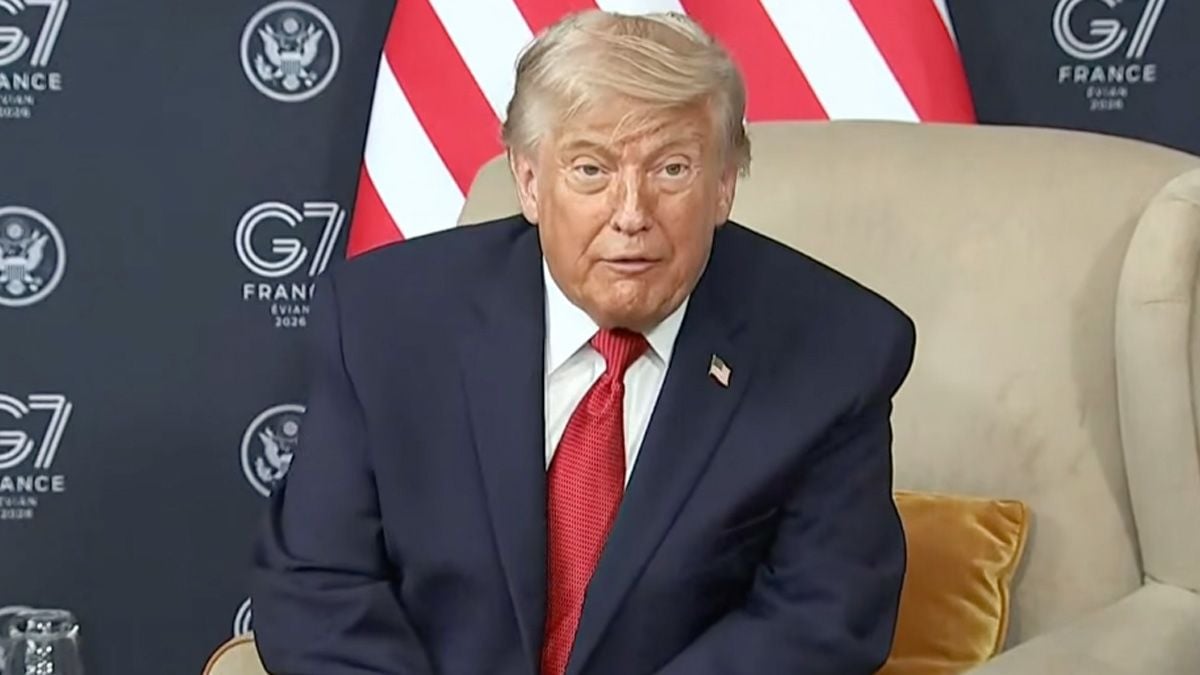
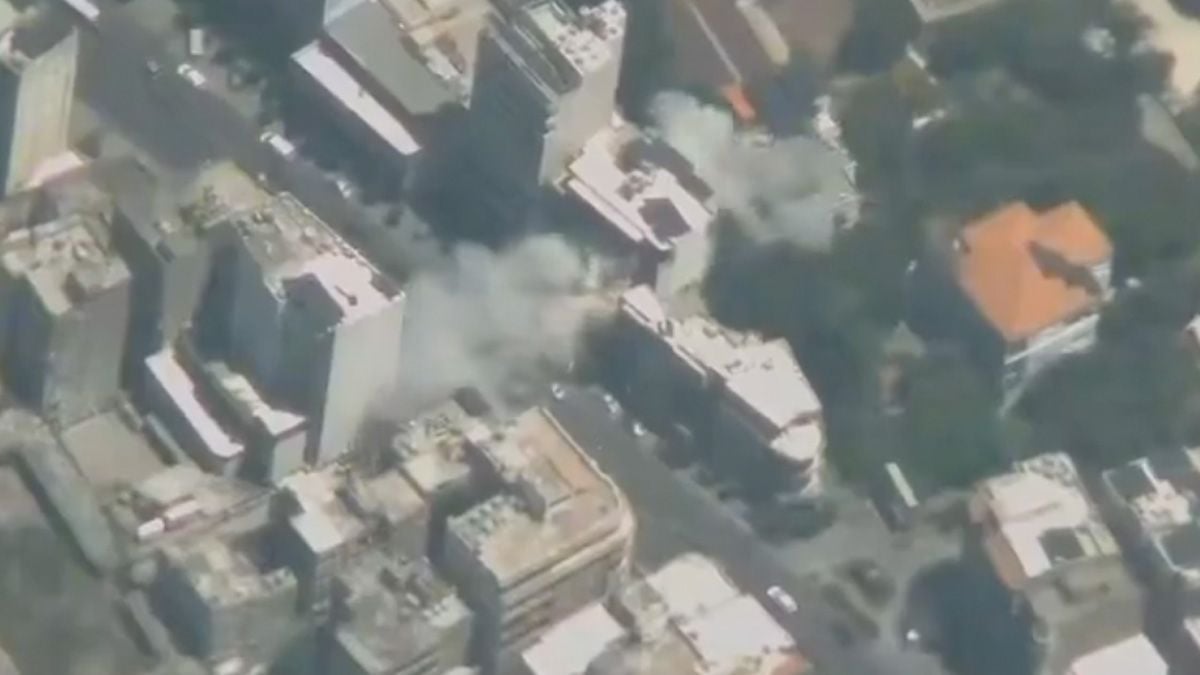
The war that could not end on American terms has ended on Iran's
A war begun to disarm and isolate Iran has produced a settlement that sits far closer to Tehran's minimum acceptable outcome than to Washington's opening demands. Iran avoided defeat, preserved its system and secured a pathway out of decades of isolation.

When the first bomb fell on Iran on 28 February 2026, the United States set out sweeping objectives. Iran's enriched uranium would be removed from the country. The regime would be weakened, perhaps to collapse.
The Strait of Hormuz would be secured against closure. And Iran would abandon the enrichment programme that has anchored every Western confrontation with Tehran for two decades.
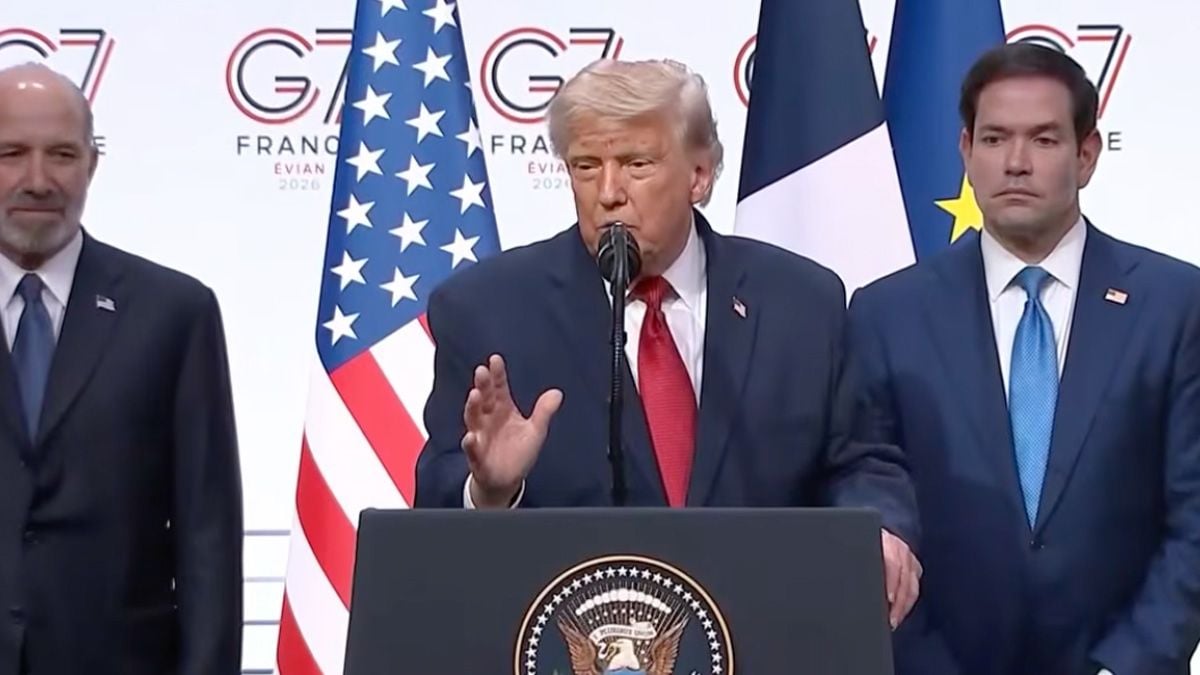
The memorandum of understanding signed at the Palace of Versailles on Wednesday, 17 June 2026, meets almost none of those objectives in the form they were set. This is not the same as saying Iran dictated the outcome.
Iran's true preference was no war at all — no bombing of its infrastructure, no economic devastation, no dead children, no monitoring regime, no obligations on its stockpile, no further negotiation over enrichment. Measured against that, Iran suffered enormously.
But a war is judged against the aims of the party that started it, and against the outcomes each side could have accepted. On that measure the settlement sits considerably closer to Iran's minimum acceptable outcome than to Washington's opening demands.
The state that was expected to capitulate instead survived, preserved its governing system, retained its nuclear infrastructure, and secured a pathway toward the lifting of sanctions it could not obtain in decades of negotiation. By the standards of strategic bargaining, that resembles an Iranian avoidance of defeat far more than an American imposition of victory.
We argued throughout the coverage over the past months that this conflict could not end on American terms, because the configuration of interests that started it was not satisfiable by any negotiated outcome Iran could survive. The settlement now in effect confirms that argument at its foundation. The war is ending, and it is not ending the way its architects intended.
The regime that was supposed to fall
The most consequential outcome is the one that did not happen. The regime change scenario Israeli Prime Minister Benjamin Netanyahu presented in the Situation Room on 11 February — complete with a video montage of potential successor leaders — was set aside by United States President Donald Trump as "their problem" even before the war began, after his own Central Intelligence Agency director reportedly called the scenario farcical.
Four months later, the Islamic Republic remains intact. President Masoud Pezeshkian signed the memorandum as head of a government that survived the largest military assault on Iranian state infrastructure in the country's modern history. No successor government was installed. No rebellion toppled the theocracy. The supreme leadership endured.
For a state that has organised its entire strategic posture around survival, this is the outcome that matters most. Iran did not need to prevail on the battlefield. It needed to outlast the political appetite for the war on the other side, and it did.
No surrender, though not without concession
The second outcome concerns what Iran conceded and what it did not. The original US demand was that enriched uranium be physically removed from the country. The memorandum requires instead that stockpiled material be down-blended — diluted — on site, under the supervision of the International Atomic Energy Agency (IAEA).
This is a genuine concession, and the piece would be dishonest to minimise it. The purpose of highly enriched uranium is its enrichment level, and an obligation to dilute the stockpile under international monitoring constrains Iran's breakout capacity in a real way. Iran also accepted, pending the final deal, a monitoring regime and a freeze on the status quo of its programme.
What Iran preserved, however, is significant. Down-blending on Iranian soil keeps the material, the facilities and the expertise inside the country. The agreement states that enrichment itself is to be resolved in the final deal, based on what the text calls a satisfactory framework for Iran's nuclear needs. Iran conceded constraints on stockpiled material but preserved the infrastructure, the personnel and the legal claim to enrichment itself.
IAEA Director General Rafael Grossi, speaking to the BBC, declined to compare the new arrangement with the Obama-era nuclear deal, framing it instead as a post-war agreement. The previous deal, negotiated over nearly two years, was designed to constrain a programme that continued to exist. This one leaves the same programme standing after a war fought ostensibly to end it.
The end of decades of isolation
The third outcome may matter most to ordinary Iranians. The memorandum commits the United States to terminating all categories of sanctions against Iran — United Nations Security Council resolutions, IAEA Board of Governors resolutions, and the full architecture of unilateral US primary and secondary sanctions — on a schedule to be agreed within the 60-day window for the final deal.
This must be stated carefully, because the mechanism matters. The sanctions are not lifted by the memorandum itself. The text commits both sides to terminating them on an agreed timetable. What the document establishes is a signed commitment toward relief, not relief itself.
But the commitment is historic in itself. The US Treasury is to issue waivers for the export of Iranian crude oil, petroleum products and associated banking, insurance and transport services immediately upon signing. Frozen Iranian assets — estimated at more than US$24 billion held in foreign banks — are to be made fully usable.
The naval blockade is to be lifted within 30 days. Layered on top is a commitment, undertaken by the United States with regional partners, to develop a reconstruction plan worth at least US$300 billion.
Trump had publicly dismissed reports of this fund as fake news; it appears in paragraph six of the text he signed. American officials insist Washington need not contribute a cent, and that delivery depends on Iran's conduct — a caveat that is real and should be weighed.
Iran entered this conflict with an economy battered by years of sanctions and then by the war, the cost of which its own government has estimated at US$270 billion. Whatever else the war achieved, it produced a signed commitment toward sanctions relief that decades of confrontation had failed to secure.
A commitment against further attacks — with both fingers near the trigger
The fourth outcome is the security undertaking, and it requires the most precise handling. The memorandum's opening paragraph declares the immediate and permanent termination of military operations on all fronts, including in Lebanon, and commits both parties to refrain from the threat or use of force against each other. For Iran, a written mutual undertaking of non-aggression is a substantive gain.
It is not an unconditional guarantee, and editorial honesty requires saying so. On the day he signed, Trump warned the United States would bomb Iran if it violated the agreement, calling the threat of further strikes the enforcement mechanism. Iran's chief negotiator, parliamentary speaker Mohammad Bagher Ghalibaf, responded that his distrust of the United States remained and that Iran's finger was on the trigger.
The accurate description is this: Iran secured a written commitment against renewed attack, embedded in a document Washington chose to sign before its allies, while both sides preserved the explicit threat of force should the other default.
The constraint on American action is not surrender of the war option but a public, written commitment that Washington must now be seen to break before resuming hostilities. The diplomatic cost of restarting the war has risen. For a state seeking to deter, raising that cost is the objective.
What Washington can claim
A fair analysis must state the American gains before weighing them, rather than dismissing them by omission. Washington can point to several. Iran's highly enriched stockpile is to be diluted under monitoring, constraining breakout capacity. An intrusive IAEA inspection role is preserved. The Strait of Hormuz reopened. Hostilities in Lebanon are formally terminated under the text. A prolonged regional war was averted. And the United States demonstrated a willingness to use force that it had long left ambiguous.
These are not nothing. A revised American objective — down-blending, monitoring, sanctions traded for compliance, an open strait — is closer to being met than the maximal aims of February. The honest distinction is between Washington's opening demands and its minimum acceptable outcome: the war plainly failed at the former, and a critic is right to note it may have salvaged something near the latter.
But even measured against the revised standard, the gains are thin and largely temporary. Hormuz is toll-free for only 60 days, after which charges become a matter for Iran and its neighbours — leaving open fees where none existed before the war.
The Lebanon ceasefire is fragile, and Iran's foreign ministry has already warned that continued Israeli presence there would violate the deal. The nuclear questions that justified the war are deferred to a final deal Trump has already said has no hard deadline. The monitoring constrains a programme that, after the war, still exists.
Senators within Trump's own party have drawn the conclusion plainly, one calling it the worst foreign policy blunder in decades. Their criticism, from the opposite political direction, concedes the central point: the war did not achieve what it set out to.
The standing of a state that endured
There is a further dimension that the bilateral ledger does not capture. By withstanding a sustained air campaign waged by the foremost military power on earth, backed by Israel, without its government collapsing or its system surrendering, Iran demonstrated the limits of American military coercion in a way visible to every state watching.
The claim should be calibrated. Iran is not, by economic, conventional-military or institutional measures, a world power, and surviving a war does not make it one. But strategic standing is built partly on demonstrated resilience, and Iran's resilience was demonstrated against the strongest possible test.
The lesson that the global south and other states weighing the value of deterrence will draw is the one we identified before the war: Gaddafi disarmed and was killed; North Korea built a deterrent and was not invaded; Iran was bombed, did not capitulate, kept its programme, and obtained sanctions relief. Iran emerges with enhanced deterrent credibility and a stronger hand in the regional order, even as it remains a middle power constrained on every conventional metric.
The materials for a narrative of vindication
The final outcome is the hardest to quantify and may prove the least certain. A government that went to war, survived, refused to surrender, and returned with a pathway to sanctions relief now possesses the raw materials from which a narrative of vindication can be constructed.
The caution matters, because surviving a war and being credited for it are different things. The Soviet Union survived Afghanistan and emerged weaker; the Iran-Iraq war exhausted the very state that endured it. Authoritarian governments can win wars and still lose legitimacy.
Anti-establishment protests over the economy preceded this war, and the killing of protesters in January had badly damaged the government's standing. Whether sanctions relief, unfrozen assets and a surviving programme translate into restored legitimacy depends on the economy, not the memorandum — and the reconstruction money is contingent, the sanctions timetable unwritten, the hope real but unguaranteed.
What is not in doubt is that the government has been handed the materials from which such a story can be built. President Pezeshkian, elected on a promise of better relations with the West and sidelined for months as hardliners took over, returns as the signatory of the agreement that ended the war.
The structural argument, confirmed
We argued before the war that its inability to end on American terms was structural, not contingent — that it was begun from a configuration of interests no negotiated outcome could satisfy, and that Iran's strategic logic made capitulation impossible.
The settlement confirms that argument. A war fought to disarm Iran has left its programme standing. A war fought to isolate Iran has produced a committed pathway out of its sanctions. A war fought to topple the regime has handed it the materials for survival.
The war is ending. The resulting settlement sits considerably closer to Iran's minimum acceptable outcome than to the objectives Washington set when the first bombs fell — and the state that was meant to lose it instead endured the strongest military power on earth, and remained standing.