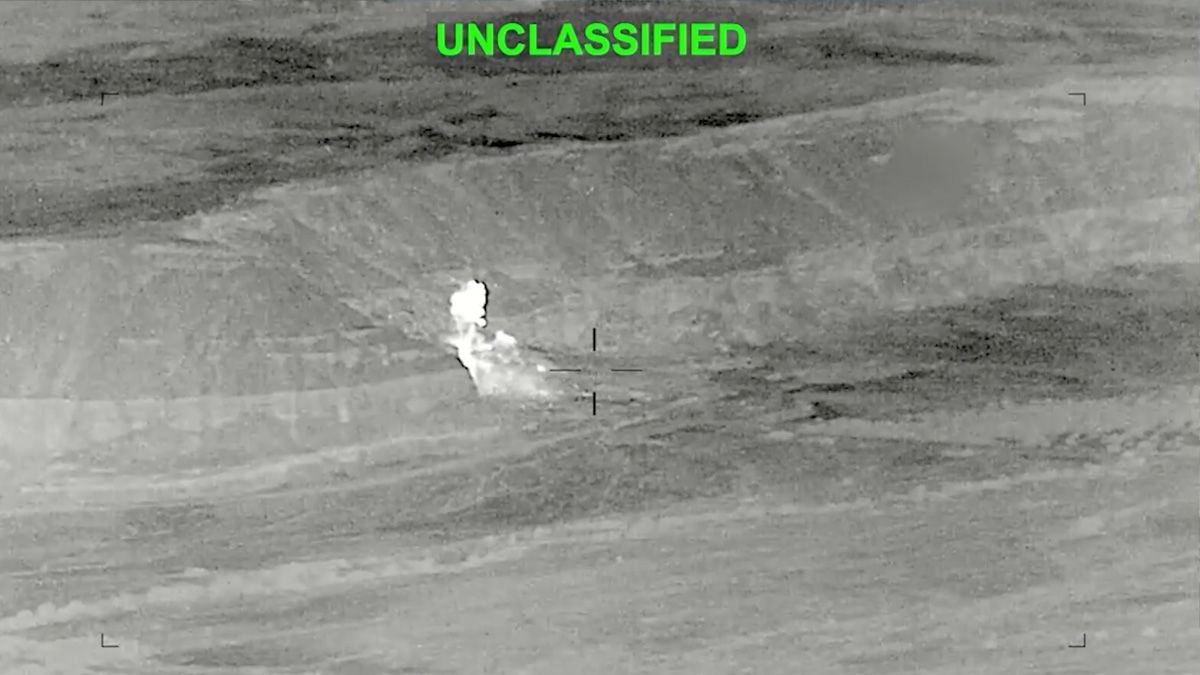
Rubio says pre-emptive US strikes on Iran were aimed at averting heavier American casualties
US Secretary of State Marco Rubio has said Washington launched pre-emptive strikes on Iran because it knew Israel was going to attack first, which would have triggered Iranian retaliation against US forces in the region.

- Rubio says US struck Iran pre-emptively to prevent heavier American casualties from anticipated Iranian retaliation.
- Six US service members have been killed; over 500 people reported dead in Iran.
- Congressional Democrats demand clarity on war goals; Republicans defend Trump's authority to act.

US Secretary of State Marco Rubio said on Monday that Washington launched pre-emptive strikes against Iran because it was certain Israel was going to attack the country regardless, and that Tehran would respond by targeting American forces across the region.
Rubio made the remarks to reporters at the Capitol ahead of a closed-door congressional briefing, offering the administration's clearest public justification yet for its surprise entry into the conflict over the weekend.
"We knew that there was going to be an Israeli action," Rubio told reporters. "We knew that that would precipitate an attack against American forces, and we knew that if we didn't pre-emptively go after them before they launched those attacks, we would suffer higher casualties."
Rubio was joined at the briefing by CIA Director John Ratcliffe and Joint Chiefs of Staff Chair Dan Caine, who addressed lawmakers behind closed doors ahead of an expected vote later this week in the House of Representatives on a war powers resolution.
Six US service members confirmed dead
The briefing came shortly after the US military confirmed that its death toll in the conflict had risen to six, following the recovery of two bodies from a regional facility struck by Iran.
Iran retaliated against the joint US-Israeli strikes with waves of drone and missile attacks across the Middle East, targeting US bases and assets, including in the Gulf. The Iranian Red Crescent Society has reported that more than 500 people have been killed in Iran.
The air campaign has killed several of Iran's top military and political leaders, including Supreme Leader Ayatollah Ali Khamenei.
Israel, a close US ally, has received at least US$21 billion in military aid from Washington since 2023.
Congress divided along party lines
Reactions to the administration's explanation split sharply along party lines following the briefing.
Senate Democratic Minority Leader Chuck Schumer said before entering the meeting that he regarded the conflict as a war of choice. After the briefing concluded, he told reporters he found the officials' responses "completely and totally insufficient" and said the session raised more questions than it answered.
Democratic Senator Mark Warner, vice-chair of the Senate intelligence committee, said he was concerned about the precedent set by allowing Israel to draw the United States into a new conflict.
"There was no imminent threat to the United States of America by the Iranians. There was a threat to Israel," Warner said.
"If we equate a threat to Israel as the equivalent of an imminent threat to the United States, then we are in uncharted territory."
Warner said he remained unclear on the administration's ultimate objectives after the briefing concluded. He called on President Donald Trump to articulate a specific goal, an exit plan, and the legal basis for the conflict.
Rubio, for his part, cited two objectives to reporters: the destruction of Iran's ballistic missile capability and its navy. Trump himself has outlined broader goals in recent interviews, including preventing Iran from developing a nuclear weapon and severing Tehran's support of proxy forces in the region.
Republicans back Trump's authority to act
House Speaker Mike Johnson defended the strikes as a defensive operation, arguing that Israel faced what it considered an existential threat and would have acted with or without American support.
Johnson said the objective was not regime change, but nonetheless welcomed the death of Ayatollah Khamenei. He expressed confidence that the House would defeat the war powers resolution when it comes to a vote.
"The idea that we would take the ability of our commander in chief, the president, take his authority away right now to finish this job, is a frightening prospect to me," Johnson told reporters.
Trump ordered the strikes without seeking prior authorisation from Congress. Rubio confirmed that the Gang of Eight — a group comprising Democratic and Republican leaders in both chambers and the senior members of the House and Senate intelligence committees — were notified before the attack began.
War powers resolution faces steep odds
The war powers resolution, if passed, would compel Trump to end hostilities against Iran. However, Republicans control both chambers of Congress and rarely break with the president on significant votes.
Even if the resolution were to pass both chambers, Trump retains the power to veto it. Overriding such a veto would require a two-thirds majority in Congress, a threshold considered unlikely to be met. Previous war powers resolutions introduced during this Congress have been voted down.
Johnson said he was confident the administration had the votes to defeat the measure.