Iran pledges to halt strikes on neighbours as conflict with US and Israel enters second week
Iranian President Masoud Pezeshkian has announced that Iran will cease attacks on neighbouring countries unless provoked, issuing an apology to regional states as fighting with the United States and Israel enters its eighth day.

- Iran's president orders armed forces to stop attacking neighbours unless provoked first.
- IRGC retains full military command; analysts say Pezeshkian's pledge carries limited authority.
- Qatar warns regional energy exports could cease within weeks if the conflict continues.

Iran's President Masoud Pezeshkian announced on Saturday that the country's armed forces have been instructed to cease attacks on neighbouring states unless those countries strike first. The declaration came on the eighth day of sustained military operations by the United States and Israel against Iran.
In a prerecorded five-minute address broadcast on Iranian state television, Pezeshkian said a formal decision to that effect had been approved by the Iranian interim leadership council on Friday. He also issued a direct apology to regional neighbours for strikes carried out against them in recent days.
"I deem it necessary to apologise to neighbouring countries that were attacked," the president said. "We do not intend to invade neighbouring countries."
He called for regional cooperation to "establish peace and calm," and issued a warning to any party considering taking advantage of the moment: "Those considering exploiting this moment to attack Iran must not become puppets of imperialism."
Pezeshkian's address, as reported by Al Jazeera's Tohid Asadi from Tehran, began with reference to Iranian residential areas, schools and hospitals having been struck in what he characterised as a breach of international law. He called for national unity and solidarity in defence of Iranian sovereignty.
Asadi described the statement as "a de-escalation, however small, in a very escalated situation," noting that air attacks had been reported across more than 170 Iranian cities during the first eight days of the conflict.
The president also addressed the United States directly, declaring that what Washington sought was an unconditional surrender — one that Iran would, in his words, never concede.
Limits of the presidential pledge
Despite the significance of the announcement, political analysts have cautioned that Pezeshkian holds limited authority over military decision-making in Iran.
An analyst identified in regional reports as Serdar noted that Iranian political figures, including the president, are responsible only for state and non-strategic affairs. Strategic matters — including foreign and security policy — remain the exclusive domain of the Supreme Leader and the Islamic Revolutionary Guard Corps (IRGC).
"When it comes to strategic affairs, politicians don't have a say, including the president who according to the constitution is the number two in charge — this is a very well known fact in Iran," Serdar said.
An analyst identified as Resul went further, arguing that given the existential nature of what Iran perceives as a war of survival, Pezeshkian's message to regional countries "carries no weight."
"The IRGC is now in charge fully and they will decide whether to attack or not," Resul said.
He added that IRGC chief Ahmad Vahidi is considered among the most hardline commanders in the organisation's history. "I don't think Pezeshkian or other politicians will have any influence when it comes to security politics," Resul added.
Regional fallout and civilian casualties
All six member states of the Gulf Cooperation Council (GCC) — Saudi Arabia, Qatar, the United Arab Emirates, Kuwait, Bahrain and Oman — have been drawn into the conflict due to the presence of United States military assets within and around their borders. Iraq, Jordan, Azerbaijan and Turkiye have also been affected by strike activity.
The conflict has resulted in deaths and significant infrastructure damage across the Gulf. It has also caused widespread disruption to commercial aviation, forced the closure of airspace, and delivered a severe blow to regional oil and gas production with global consequences.
More than 1,200 Iranians have been killed in US-Israeli strikes during the first week of the conflict, according to reports. The only US fatalities recorded so far came when Iran struck a US command centre in Kuwait, killing six personnel.
Qatar's defence ministry separately reported that it had intercepted a missile during the period of the conflict.
IRGC targets tanker at Strait of Hormuz
The IRGC announced that it had struck an oil tanker named Prima in the Gulf after the vessel passed through the Strait of Hormuz. In a statement shared on Telegram, the IRGC said the tanker was hit by a drone after "ignoring repeated warnings" about a prohibition on vessel traffic through the strait.
The IRGC stated it would not permit oil tankers or commercial vessels "allied with hostile countries" to transit the passage.
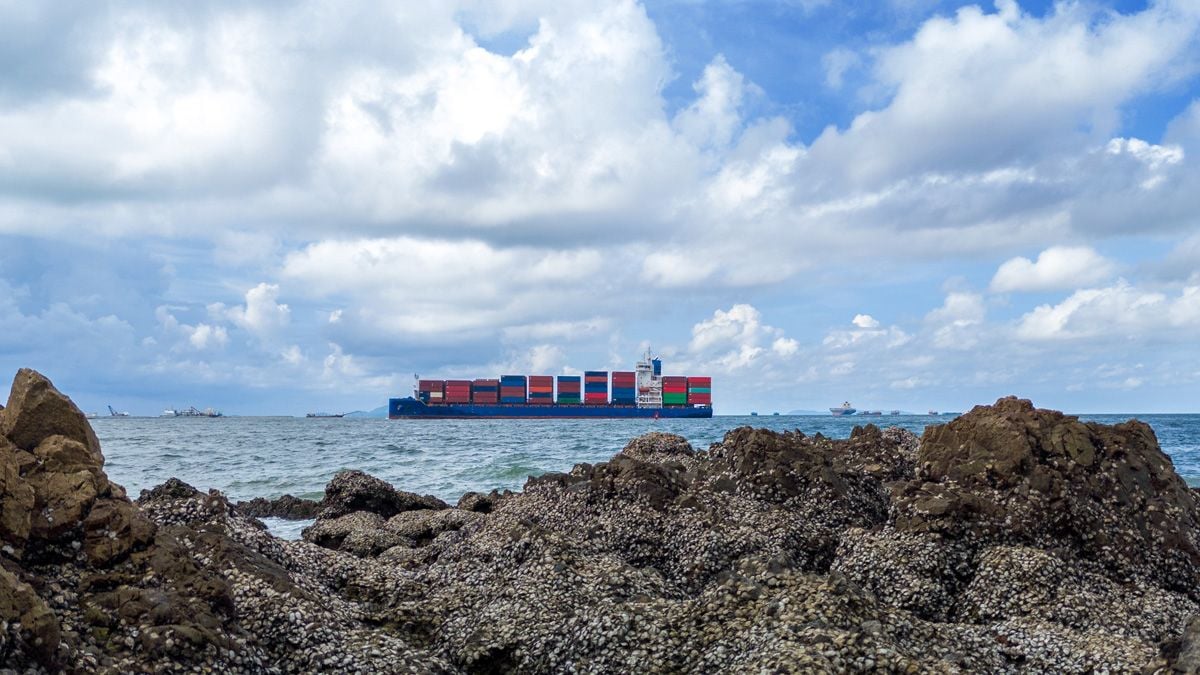
The Strait of Hormuz is among the world's most critical energy shipping lanes, with approximately one fifth of global oil and gas supply passing through it. The conflict has brought maritime traffic through the strait to a near standstill.
Earlier in the week, Iranian authorities threatened to "set fire" to any vessels attempting to transit the passage. US President Donald Trump subsequently stated that the US Navy could escort ships through the strait "if necessary."
Energy market alarm
Qatar's Energy Minister Saad al-Kaabi has warned that Gulf energy exports could come to a halt within weeks should the conflict continue to escalate. In an interview published on Friday by the Financial Times, al-Kaabi said the consequences for the global economy would be far-reaching.
"GDP growth around the world will be impacted," al-Kaabi told the newspaper, adding that energy prices would rise globally and product shortages would trigger a chain reaction across manufacturing supply chains.
"Everybody's energy price is going to go higher. There will be shortages of some products and there will be a chain reaction of factories that cannot supply," al-Kaabi was quoted as saying.
The warning underscores growing international concern about the conflict's economic trajectory, as regional states scramble to contain the fallout from a confrontation that shows few immediate signs of resolution.
Several Gulf countries had attempted to dissuade Washington from launching its campaign against Iran. Regional states hosting US military bases have insisted those facilities were not used to conduct strikes against Tehran — a claim that Iran has disputed through its targeting of bases across the Gulf.
Despite Pezeshkian's conciliatory statement, the conflict's direction remains firmly in the hands of the IRGC and the office of the Supreme Leader, according to analysts, casting doubt on whether Saturday's pledge will translate into any durable reduction in hostilities.