UN Security Council condemns Iran's attacks on Gulf states and Jordan in landmark resolution
The UN Security Council adopted Resolution 2817 (2026) by 13 votes to zero, condemning Iran's attacks on seven regional neighbours and demanding an immediate halt to hostilities, as the Middle East conflict entered its second week.
- UNSC adopted Resolution 2817 (2026) 13-0, with China and Russia abstaining, condemning Iran's regional attacks.
- A competing Russian draft resolution calling for a general ceasefire was defeated 4-2, with nine abstentions.
- Iran's ambassador rejected the resolution, citing over 1,348 civilian deaths since the conflict began.

The United Nations Security Council adopted Resolution 2817 (2026) on Wednesday, 11 March 2026, condemning Iran's attacks on seven of its regional neighbours and demanding that Tehran immediately cease all hostilities. The vote was 13 in favour, none against, with two abstentions from China and the Russian Federation.
The resolution, which was drafted and led by Bahrain and co-sponsored by 135 other UN member states, marks one of the broadest shows of multilateral support in the Security Council's recent history.
Al Jazeera correspondent Gabriel Elizondo, reporting from UN headquarters in New York, described the co-sponsorship figure as likely the largest ever recorded for a Security Council draft resolution.
The conflict began on 28 February 2026 when Israeli and United States airstrikes targeted Iran. The war has since spread across nearly a dozen nations throughout the Middle East, entering its second week at the time of the vote.
Scope of the resolution
By the terms of the resolution, the Council condemned in the strongest terms Iran's attacks against Bahrain, Kuwait, Oman, Qatar, Saudi Arabia, the United Arab Emirates and Jordan. It reiterated strong support for the sovereignty, territorial integrity and political independence of those countries.
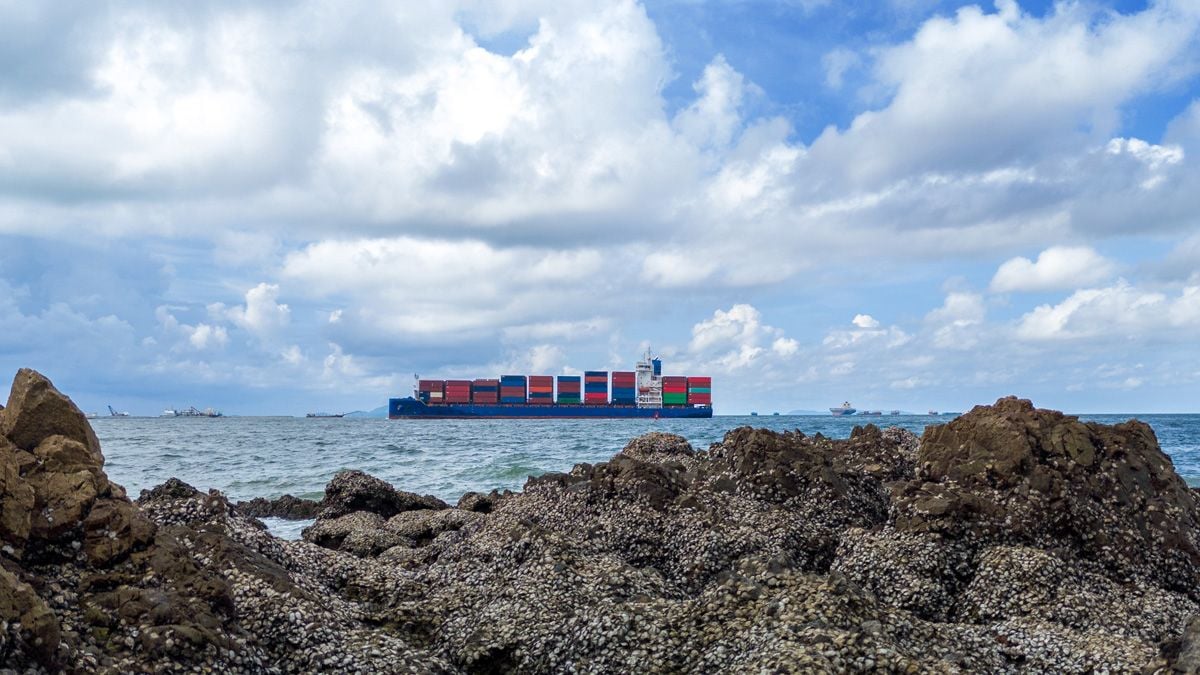
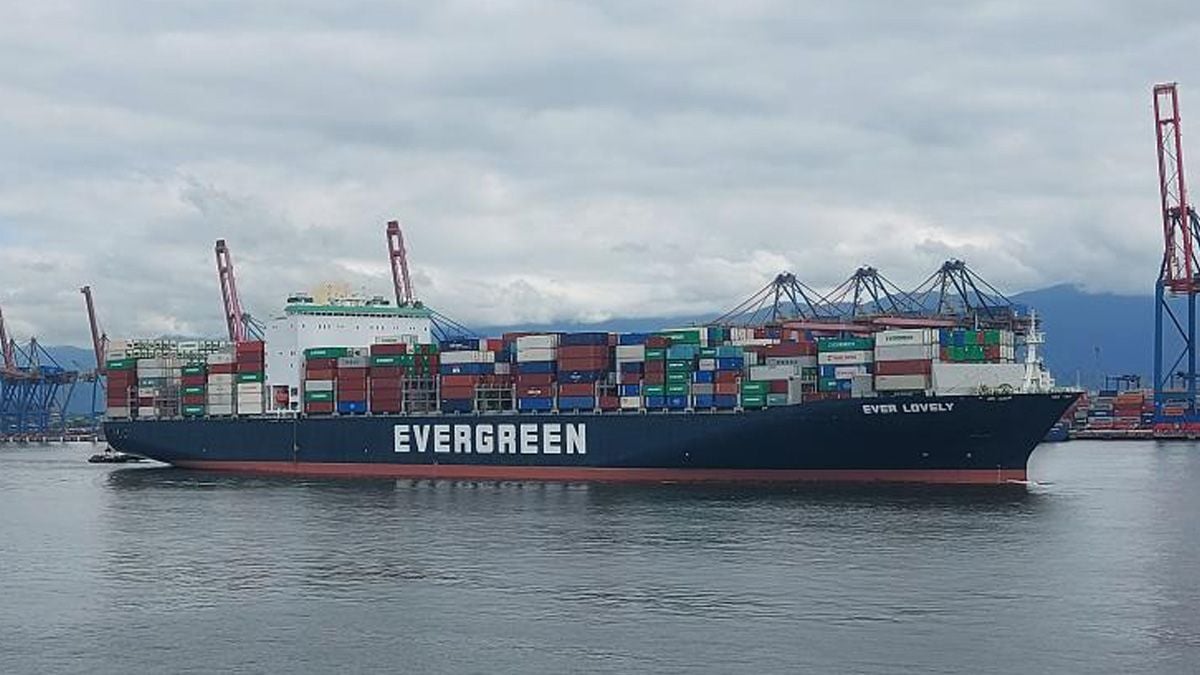
The text specifically condemned Iran's strikes against residential areas and civilian objects, demanding their immediate cessation. It also called on Tehran to halt threats and provocations aimed at disrupting maritime trade and to end its support to proxy groups across the region.
Elizondo noted that the resolution also deplores Iran's targeting of critical infrastructure, including ports and energy facilities in the Gulf region. He cautioned, however, that implementation remained an open question. "The resolution is very clear; it is now part of international law. The question becomes, will Iran abide by it?" he said.
Reactions from Council members
Bahrain's representative welcomed the adoption and stressed that the near-universal support reflected what he called the world's "collective conscience." He said the Gulf region is a pillar of global security, trade and economic stability, and that protecting it is therefore in the entire world's interest.
France's representative declared that Iran "bears a heavy responsibility for the current escalation," noting that Tehran had vastly expanded the war in recent days. "This war, which poses grave risks to regional security, must end now," he said, adding that only respect for international law and diplomacy could deliver lasting stability.
Denmark's representative condemned Iran's attacks and called for their immediate cessation, warning that "every day passing, we are witnessing a further destabilisation of the already volatile and tense situation." She echoed calls for maximum restraint, protection of civilians and adherence to international law.
The United States, serving as Council President for March, voted in favour. Its representative noted that nations that previously had serious disagreements had now joined together and spoken with one voice.
Liberia, speaking also on behalf of the Democratic Republic of the Congo and Somalia, said the three countries voted in favour to reflect what their representative described as "our principled commitment to diplomacy, dialogue, de-escalation and respect for international law."
He cautioned, however, that the Council must not endorse interpretations of Article 51 of the UN Charter that expand beyond its core principles or erode longstanding constraints on the use of force.
China and Russia abstain
China's representative abstained from the vote, arguing that the United States and Israel launched military strikes without Security Council authorisation and must cease their actions immediately.
While stating that the sovereignty and territorial integrity of Gulf Arab states must be fully respected, he said the adopted resolution "does not fully reflect the root cause and overall picture of the conflict in a balanced manner."
Russia's Ambassador Vassily Nebenzia also abstained, describing the Bahrain-drafted text as "expressed in a biased and one-sided tone."
He argued that reading the resolution without context would leave the impression that Iran acted with no provocation and out of pure malice. He also said the resolution presented civilian protection in an extremely one-sided way, making no mention of casualties in Iran caused by US and Israeli strikes.
Both China and Russia notably chose not to exercise their veto power to block the resolution, despite their stated objections. Elizondo attributed this in part to the overwhelming level of co-sponsorship.
Russia's draft resolution fails
Following the adoption of Resolution 2817, Russia tabled a separate draft resolution calling on all parties to immediately cease military action. Moscow described its text as an "impartial document aimed at urgently de-escalating the situation," one that intentionally did not name any parties to the conflict.
The Council rejected the Russian draft by a vote of 4 in favour — China, Pakistan, the Russian Federation and Somalia — to 2 against, from Latvia and the United States, with 9 abstentions.
France, which abstained, said that despite Moscow's good intentions, the Russian text "was not a viable basis for bringing the Council together." Bahrain also abstained, with its representative saying the draft "adopts a general tone, which in no way reflects the dangerous military escalation currently besetting the region."
Latvia, which voted against, said it was deeply cynical for Russia to present itself as a guardian of international peace and security while simultaneously using force against civilian infrastructure in Ukraine. The United Kingdom's representative echoed this, calling Moscow's position hypocritical.
Iran denounces resolution
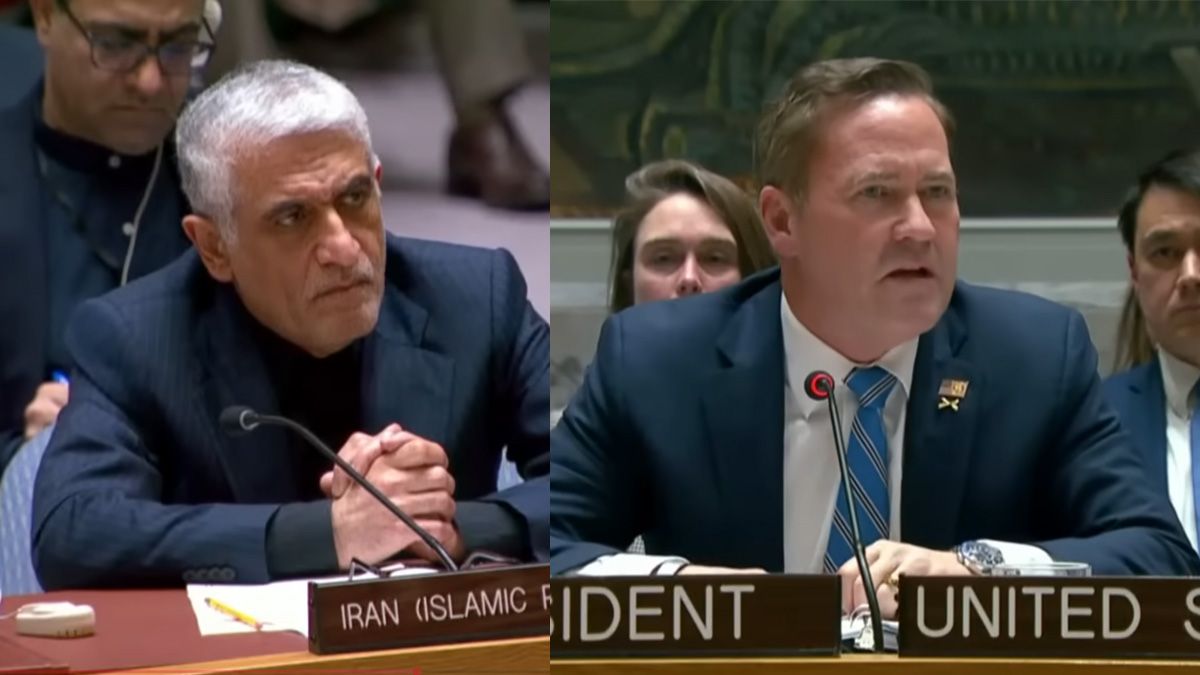
Iran's UN Ambassador Amir-Saeid Iravani addressed the Council after the vote, expressing what he described as "profound regret" at the adoption. He called the resolution "a manifest injustice against my country, the main victim of a clear act of aggression."
"Today's adoption is a serious setback to the Council's credibility and leaves a lasting stain on its record," Iravani said. He accused the United States of abusing its position as Council President to obstruct efforts to end what he called "the barbaric war."
Iravani stated that more than 1,348 civilians have been killed and more than 17,000 injured since the US and Israeli attacks began on 28 February.
He said more than 19,000 civilian sites, including residential homes and hospitals, have been damaged. He also referenced what he described as the "massacre of 170 schoolgirls in Minab."
Iran has previously rejected the characterisation of its nuclear programme as a threat. Israel's representative, addressing the Council separately, dismissed Tehran's claim that its nuclear programme is exclusively peaceful. "That is simply not true," he said.
Israel's representative also welcomed the Gulf states' initiative, saying the Council's message was unambiguous: "Targeting civilians is wrong, targeting cities is wrong, and Iran must stop."
China's ambassador Zhang Jun told the Council that the conflict had "neither legitimacy nor legal basis," calling on the United States and Israel to cease their attacks to prevent further deterioration of the regional situation.