Netizens challenge Indranee’s ‘detour’ framing of parenthood amid job insecurity, bias & rising living costs
Public reaction to Indranee Rajah’s remarks on parenthood as a “detour” has exposed tensions between policy ideals and lived realities, with concerns over job security, costs and workplace culture dominating online responses.

- Indranee Rajah framed parenthood breaks as valuable “detours” rather than career sacrifices.
- Employers and policymakers acknowledged operational and cost challenges, especially for SMEs.
- Netizens raised concerns over job security, discrimination and rising living costs.

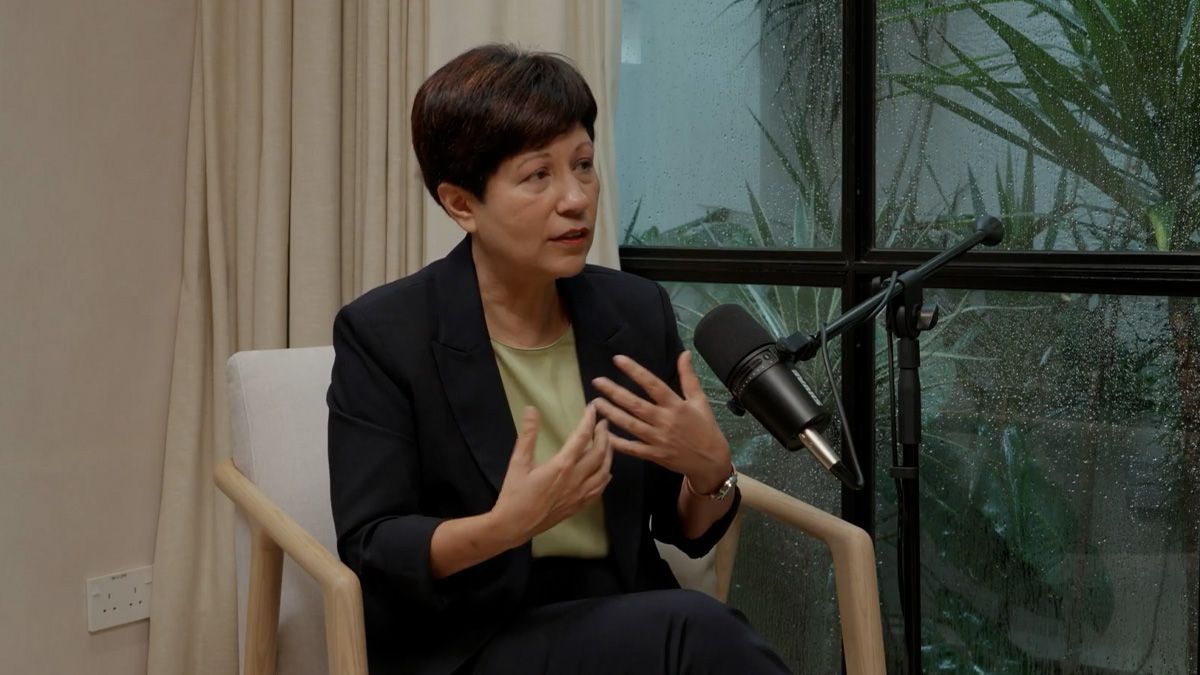
SINGAPORE: Public debate has intensified following remarks by Minister in the Prime Minister's Office Indranee Rajah, who suggested that time taken away from work for parenthood should be reframed not as a loss but as a meaningful “detour” in life.
Her comments, delivered during a podcast discussion published on 4 May 2026, have drawn mixed reactions, with supporters welcoming the emphasis on family while critics questioned whether such perspectives reflect the realities faced by working individuals.
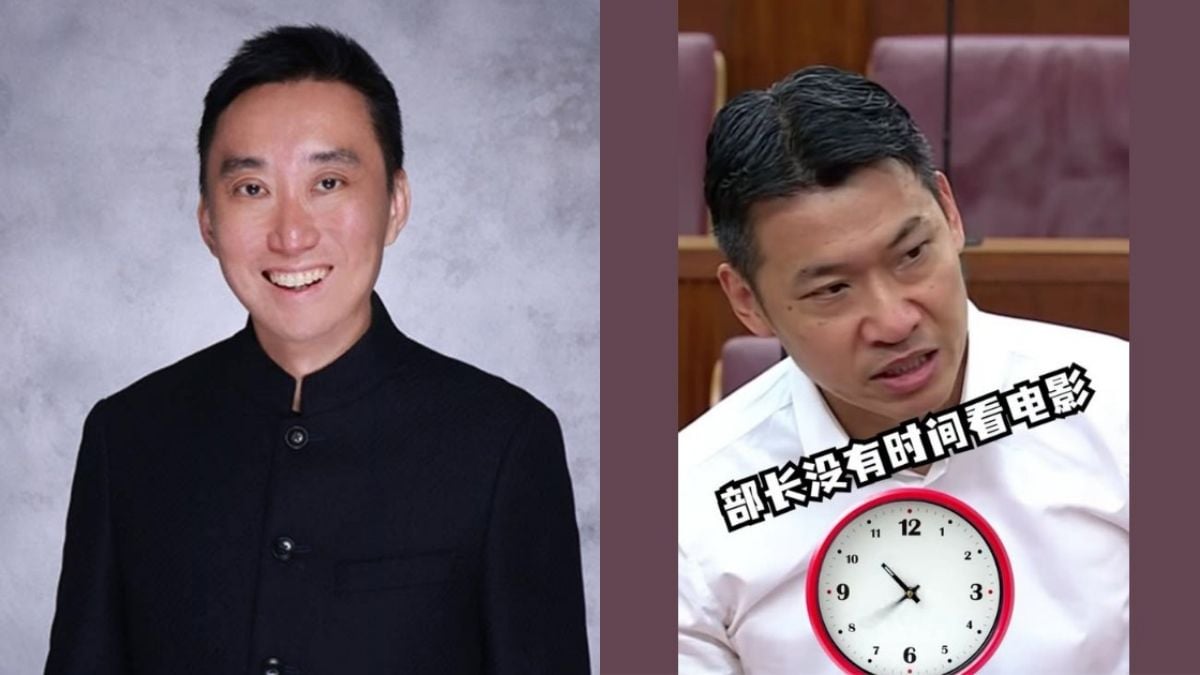
The discussion featured Indranee alongside Senior Parliamentary Secretary for Manpower Shawn Huang and Fertility Support SG president Lin Shumin, focusing on how workplaces can better support parenthood while maintaining fairness and sustainability, particularly for small and medium-sized enterprises.
Reframing parenthood in career terms
At the centre of the conversation was a shift in how career breaks for parenthood are perceived.
Indranee, also the Second Minister for Finance and for National Development, argued that time away from work should not be viewed as a sacrifice.
“What we would hope is that the timeout is not seen as a loss or a sacrifice. It is seen as a detour in which you gain something priceless and invaluable, which is your family,” she said.
She emphasised that such a perspective requires broader cultural change, extending beyond policy design into workplace attitudes and societal expectations.
The remarks were framed as part of a wider push to reshape thinking around work-life balance, particularly in the context of declining birth rates and evolving workforce expectations.
Balancing policy with business realities
Participants in the discussion acknowledged that pro-family policies come with practical challenges, especially for employers managing limited resources.
Extended shared parental leave, while beneficial for employees, raises concerns about manpower gaps and operational continuity, particularly among smaller firms.
Indranee noted that when such policies were first introduced, employers primarily sought clarity on implementation details, including advance notice and cost implications.
She highlighted that the government now covers the cost of shared parental leave, reducing the direct financial burden on companies.
This arrangement, she said, allows businesses to reallocate resources more flexibly, such as hiring temporary staff or compensating existing employees who take on additional responsibilities.
However, she stressed that policy effectiveness ultimately depends on employer attitudes, urging companies to adopt creative and progressive approaches rather than viewing such measures as disruptive.
Diverse experiences among SMEs
Huang pointed to a wide spectrum of responses among SMEs, noting that while some struggle to adapt, others have successfully implemented flexible work practices.
He suggested that businesses facing challenges could benefit from learning from peers and engaging in dialogue to identify workable solutions.
Flexible work arrangements emerged as a central theme in the discussion, described as essential for ensuring fairness across employees at different life stages.
Huang argued that flexibility supports not only parents but also caregivers and individuals with other commitments, helping organisations remain competitive while addressing diverse workforce needs.
Employee responsibility and communication
Indranee also addressed the role of employees, encouraging open communication with employers when planning leave.
She emphasised the importance of providing sufficient notice and working collaboratively to balance professional responsibilities with family needs.
Such cooperation, she said, is necessary to ensure that policies function effectively in practice rather than remaining theoretical frameworks.
Lin reinforced this perspective, noting that many employees experience guilt when taking time off for family reasons.
Drawing from her own experience, she encouraged individuals to “stay the course”, even if their career trajectory temporarily diverges.
She added that continued, even partial, contribution remains valuable and should not be underestimated.
A broader societal reset
Indranee characterised parenthood as requiring a “society-wide reset”, highlighting that financial support alone is insufficient to address declining fertility rates.
She identified time pressures, workplace culture and societal expectations as key factors influencing decisions to have children.
She called for a reduction in 24-hour work culture and greater protection of family time, alongside a shift towards outcome-based performance evaluation.
Supervisors, she noted, play a critical role in shaping whether workplaces genuinely support such changes.
On career progression, she acknowledged that having children may temporarily slow advancement, noting that “there are only 24 hours in a day”.
However, she argued that supportive environments can enable employees to return, catch up and continue their professional development.
Policy context and fertility concerns
The discussion comes amid broader policy efforts to address Singapore’s declining birth rate.
A newly established interagency Marriage and Parenthood Reset Workgroup, chaired by Indranee, is tasked with examining the issue.
The country’s total fertility rate fell to 0.87 in 2025, down from 0.97 the previous year, marking the lowest level on record.
The workgroup, first signalled during the Budget debate in February, is expected to release a full report in early 2027, with possible interim recommendations before then.
Netizens voice concern over challenge of time constraints, economic pressure
Public reaction to Indranee’s remarks has revealed significant ground-level concerns, particularly regarding whether policy narratives align with lived experience.
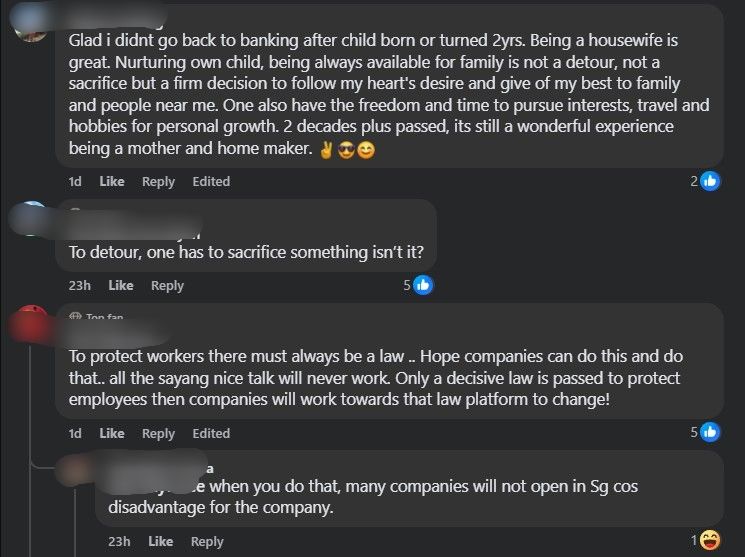
A recurring theme among netizens is the challenge of time constraints and economic pressure.
Many agreed that time is a primary limitation, arguing that long working hours leave little room for family life.
Others questioned how career “detours” can be realistically pursued when financial obligations such as daily expenses and bills remain constant.
Concerns over job security and discrimination were also widely raised, particularly among mothers.
Some individuals shared experiences of retrenchment following maternity leave or difficulties securing employment due to perceived caregiving responsibilities.
They argued that while policies may exist on paper, hiring practices often favour candidates without family commitments.


Structural economic challenges
Several responses highlighted broader structural issues, including rising living costs, stagnant wages and uncertain job markets.
These factors, commenters said, discourage couples from having children regardless of workplace flexibility or government messaging.
Questions were also raised about the feasibility of implementing family-friendly practices across all businesses.
Some argued that companies, particularly SMEs, prioritise efficiency and cost management, making it unlikely they will adopt such measures without stronger incentives.


Calls for stronger enforcement
Another strand of feedback focused on enforcement, with some suggesting that guidelines alone are insufficient.
Netizens argued that stricter labour protections or penalties may be necessary to prevent companies from disadvantaging employees with family responsibilities.
The framing of parenthood as a “detour” also drew criticism.
Many disagreed with the characterisation, arguing that career breaks often result in long-term or permanent setbacks rather than temporary pauses.
Some cited difficulties re-entering the workforce after extended periods away, especially when competing with younger candidates.
Perceived disconnect and limited support
A number of responses pointed to what they perceived as a disconnect between policymakers and everyday realities.
They described the suggestions as idealistic, noting that not all workplaces provide supportive environments.
Others highlighted the potential for significant income loss during career breaks, which may not be easily recovered.
Despite the criticisms, a smaller group of commenters expressed support for aspects of the message.
They agreed with recognising the value of family and the legitimacy of non-linear career paths.
Some also called for greater visibility of employers who successfully implement flexible and supportive workplace practices.