Singapore monitoring food price pressures as rising logistics costs weigh on hawkers: Grace Fu
Sustainability and the Environment Minister Grace Fu said on 6 June that Singapore is closely monitoring the impact of rising logistics costs on food prices, particularly for hawkers, while new community support schemes were launched in Canberra to help residents manage living cost pressures.

- Authorities are monitoring food prices as higher logistics costs increase pressure on hawkers.
- Grace Fu said supporting hawkers’ livelihoods remains a priority amid global energy market volatility.
- Canberra residents will benefit from new community support schemes aimed at easing living cost pressures.

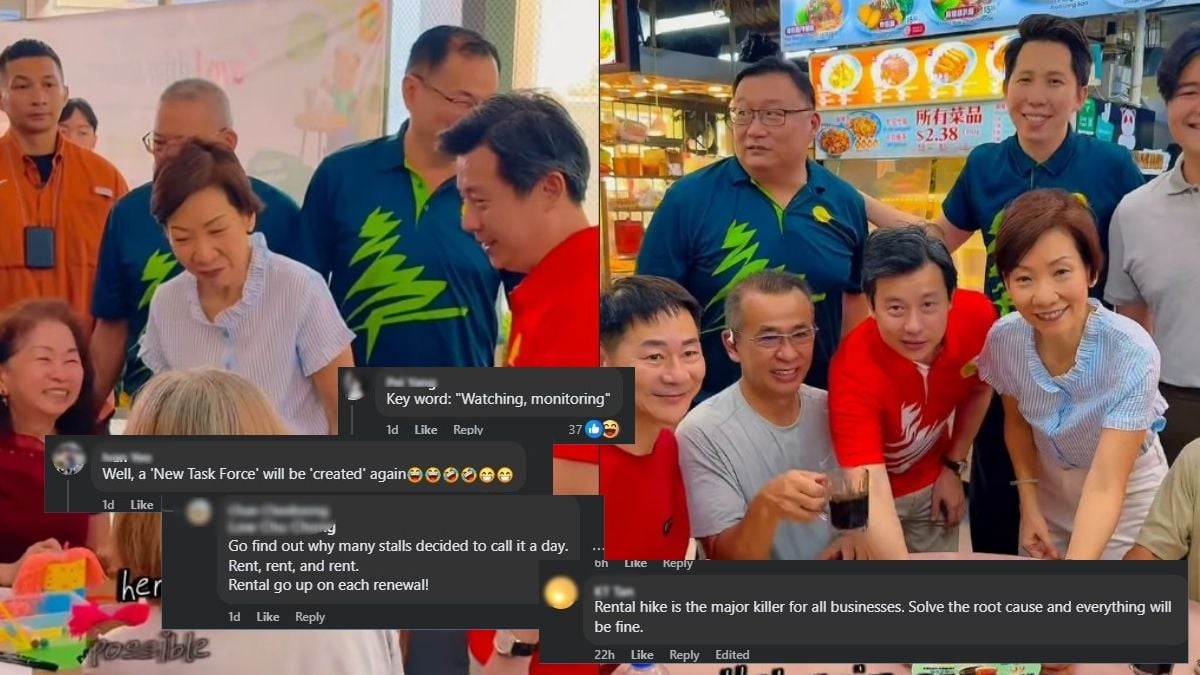
SINGAPORE: The Government is closely monitoring the impact of rising costs on food prices, particularly for hawkers, with supporting their livelihoods remaining a key priority, Minister for Sustainability and the Environment Grace Fu said.
Speaking during a ministerial community visit to the Canberra ward of Sembawang GRC on 6 June, Fu said her ministry and the National Environment Agency (NEA) have been engaging hawkers and food distributors to better understand the pressures affecting the sector.
While wholesale food prices have remained relatively stable, she noted that increasing logistics costs have continued to exert pressure on food prices.
“We understand that the cost of food is a big part of their expenses, and we are to stand ready to assist them if needed,” Fu said, as reported by state media The Straits Times.
Rising costs and global uncertainty
Fu's comments come against a backdrop of heightened volatility in global oil and gas markets following the outbreak of the war on Iran involving the United States and Israel, which began in February.
The conflict has contributed to uncertainty in energy markets, raising concerns about transportation and logistics costs that could eventually affect businesses and consumers.
Authorities have been monitoring these developments closely as Singapore continues to manage broader cost-of-living concerns.
The Canberra visit marked the fifth ministerial community engagement stop since Deputy Prime Minister Gan Kim Yong visited Fengshan in East Coast GRC on 26 April 2026 for the first such visit of the current term of government.
Community efforts to address living costs
Beyond government assistance, Fu highlighted the importance of community-led initiatives in helping residents cope with rising expenses.
She said grassroots organisations and community groups can play a complementary role in supporting households facing cost pressures.
The visit saw the launch of two support schemes aimed at helping Canberra residents manage rising living costs.
One of the initiatives is Project SAVE, which stands for Supporting Access to Value Essentials. The programme is a partnership between grassroots organisations and volunteer group Heartwarmers.
Under the quarterly initiative, a pop-up grocery store will be set up at Canberra Community Club, offering between 30 and 50 commonly purchased household items at subsidised prices.
Support for Canberra households
Gabriel Lam, MP for Canberra division in Sembawang GRC, said households will be able to purchase up to S$100 worth of goods while paying only S$50.
The programme is open to all Canberra households with at least one Singapore citizen member, regardless of income level.
Lam said the initiative was designed to provide meaningful assistance across different income groups.
“This will definitely help with cost-of-living pressures, even for the middle income,” he said.
The scheme is expected to benefit up to 5,000 households in the constituency.
Residents may register their interest through the designated online portal, with details of the redemption process expected to be released in the third quarter of 2026.
Hawker concerns remain in focus
Fu’s remarks come amid continuing concerns over the sustainability of Singapore’s hawker trade.
Many hawkers have cited rising operating expenses, manpower shortages and rental costs as key challenges affecting the viability of their businesses.
The issue has attracted growing public attention as policymakers and industry stakeholders seek ways to preserve Singapore’s hawker culture while ensuring businesses remain financially sustainable.
In May, Prime Minister Lawrence Wong highlighted the importance of preserving the nation’s hawker culture during a visit to veteran hawker Roger Wong Hien Lai at Marsiling Lane Food Centre.
During the visit, Wong acknowledged the long hours and commitment required of hawkers and encouraged Singaporeans to continue supporting local food businesses to ensure the culture endures for future generations.
Calls for longer-term solutions
Despite public recognition of hawkers' contributions, some industry observers have argued that more structural reforms are needed.
Hawker advocate KF Seetoh welcomed efforts to highlight the role of hawkers in Singapore society but said policy measures should go beyond symbolic support.
He argued that issues such as rental frameworks, operating costs and management practices require closer attention to strengthen the long-term sustainability of the sector.
Seetoh described Singapore’s hawker culture as a national heritage facing increasing pressures and said addressing structural challenges would be important to securing its future.