Canopy Hawkers Group appointed new operator for Yishun Park Hawker Centre
Canopy Hawkers Group will take over management of Yishun Park Hawker Centre from 20 July 2026, following scrutiny of Singapore’s socially conscious enterprise hawker centre model and tenancy practices.
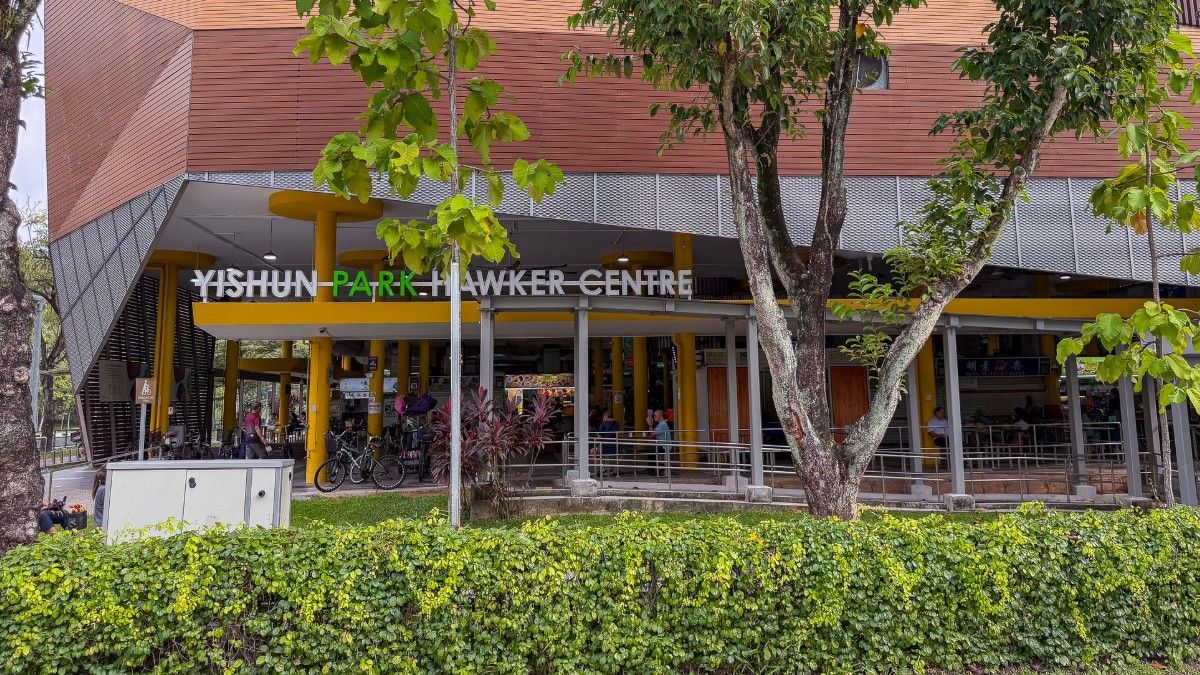
- Canopy Hawkers Group will operate Yishun Park Hawker Centre from 20 July 2026.
- The appointment follows scrutiny of tenancy practices at socially conscious enterprise hawker centres.
- NEA said existing hawkers may continue operating under the new management.

SINGAPORE: Canopy Hawkers Group has been appointed as the new operator of Yishun Park Hawker Centre and will officially take over management from 20 July 2026.
The National Environment Agency (NEA) announced the appointment in a Facebook post on 26 May 2026, saying the operator would introduce “fresh ideas” aimed at increasing footfall and enhancing the experience for patrons and stallholders.
“Canopy will be bringing fresh ideas to drive more footfall and create a more vibrant hawker centre experience for both patrons and stallholders,” the agency said.
NEA added that existing stallholders who wish to continue operating under Canopy’s management would be allowed to remain at the hawker centre.
Yishun Park Hawker Centre currently houses 43 stalls and has seating capacity for about 800 patrons, according to information published on its website.
Tender attracted multiple bidders
Public tender documents showed several operators had submitted bids for the management contract.
These included Broadway Food Centre, Foodgle Social Enterprise and incumbent operator Timbre + Hawkers.
According to the tender documents, Canopy will manage the hawker centre for a base term of up to three years.
The agreement also includes options extending management for up to six years.
Canopy currently operates Bukit Canberra Hawker Centre, which, like Yishun Park Hawker Centre, falls under Singapore’s socially conscious enterprise hawker centre (SEHC) model.
The SEHC framework was introduced after the Government resumed building hawker centres in 2011.
Authorities said the model was intended to tap the expertise of experienced food and beverage operators to improve hawker centre management while ensuring residents continued to have access to affordable meals throughout the day.
Debate over SEHC management practices
The appointment comes after public scrutiny of management practices at several SEHCs during 2025.
Timbre + Hawkers faced criticism in August 2025 over its rental structure and management practices at Yishun Park Hawker Centre.
The operator also currently manages One Punggol Hawker Centre, another SEHC.
However, its tenure there will end on 14 August 2026, one year before its three-year contract was originally scheduled to expire.
A fresh public tender for One Punggol Hawker Centre was called in January 2026, although a replacement operator has not yet been announced.
Canopy itself also faced scrutiny in 2025 over tenancy clauses at Bukit Canberra Hawker Centre.
The controversy centred on provisions requiring hawkers to provide free meals under a “pay-it-forward” charitable scheme.
The issue triggered debate over whether socially conscious initiatives unfairly transferred operational costs onto stallholders.
Canopy later announced in August 2025 that the clause would be removed from tenancy renewals beginning the following month.
Parliamentary scrutiny over hawker protections
The broader SEHC model subsequently came under parliamentary scrutiny during a sitting on 24 September 2025.
Senior Parliamentary Secretary for Sustainability and the Environment Goh Hanyan defended the framework, saying it was designed to balance affordable food access with hawkers’ livelihoods.
Goh said the NEA continued to oversee operators to ensure tenancy agreements protected stallholders’ welfare while supporting affordability goals.
Goh told Parliament that while stallholders had been informed of the charitable meal initiative before signing tenancy agreements, the programme had not been implemented.
“The clauses would be removed when the tenancy agreements were renewed,” she noted.
Workers’ Party Members of Parliament Louis Chua and Gerald Giam also questioned NEA’s role in safeguarding hawkers operating within the SEHC framework.
The MPs raised concerns over contractual obligations linked to affordable meals, mandatory discounts and operator-imposed schemes.
Goh said NEA establishes baseline tenancy guidelines and reviews tenancy agreements before they are signed.
These include limits on penalties and provisions intended to safeguard hawkers’ welfare.
However, she added that operators retained flexibility in structuring contracts and developing business models.
“NEA’s requirements strike a balance between ensuring that patrons’ needs are adequately served and safeguarding stallholders’ well-being,” Goh said during the parliamentary sitting.
Affordable meal requirements
A key requirement under the SEHC framework is that each stall must offer at least one “value meal” priced between S$3 and S$3.60.
Goh stressed in Parliament that hawkers were “not expected to make a loss” and should consider such obligations during rental negotiations.
Questions were also raised about operator-developed mobile applications requiring hawkers to absorb discounts of up to 10 per cent.
Goh defended the initiatives as marketing tools intended to increase customer traffic.
She added that hawkers “walk in with their eyes wide open” regarding the conditions attached to such schemes.
Gerald Giam called for stronger safeguards against potentially unfair tenancy clauses, including turnover-based rent models and mandatory supplier arrangements.
In response, Goh said NEA would intervene if agreements breached official guidelines or imposed excessive hidden costs on stallholders.
At the same time, she maintained that operational flexibility remained central to the SEHC model.
According to Goh, NEA surveys conducted between 2021 and 2024 recorded satisfaction levels exceeding 80 per cent among stallholders and occupancy rates of about 96 per cent across SEHCs.
Singapore currently has 22 hawker centres managed by NEA-appointed operators under the SEHC framework.