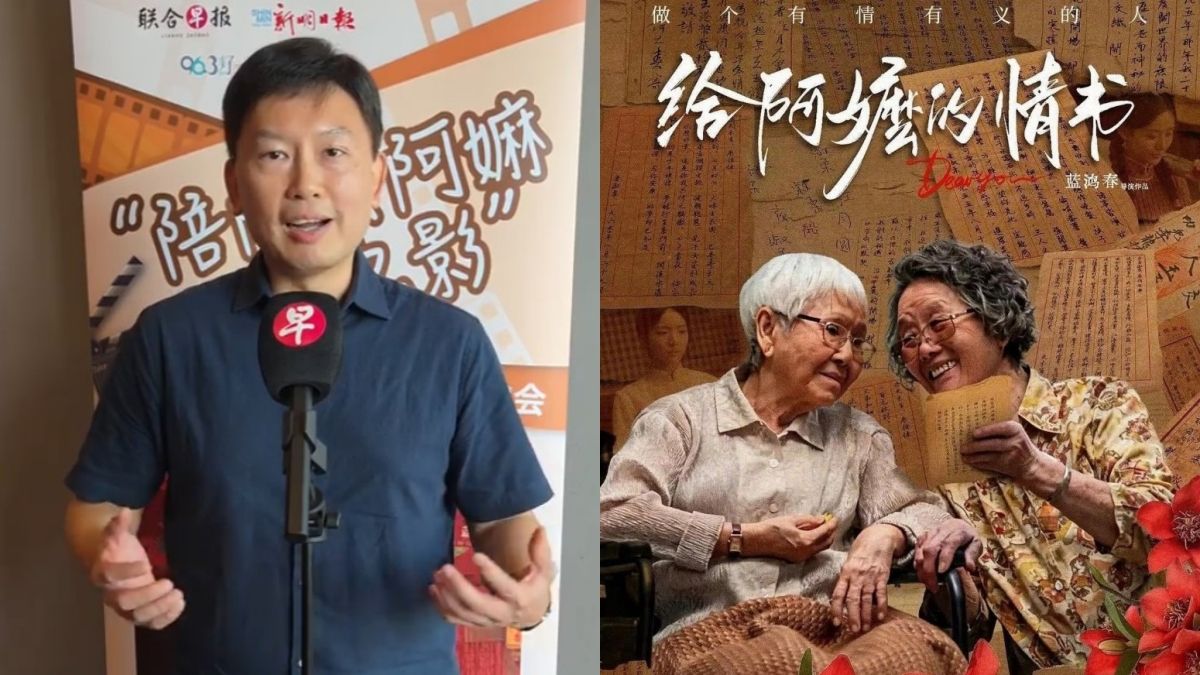
MP to ask in Parliament why Dear You was dubbed into Mandarin instead of retaining its original Teochew version
Bishan-Toa Payoh GRC MP Cai Yinzhou has filed a Parliamentary Question over IMDA’s decision to release Dear You in a Mandarin-dubbed version for general screening, as debate intensifies over dialect preservation, cultural heritage and Singapore’s language policies.
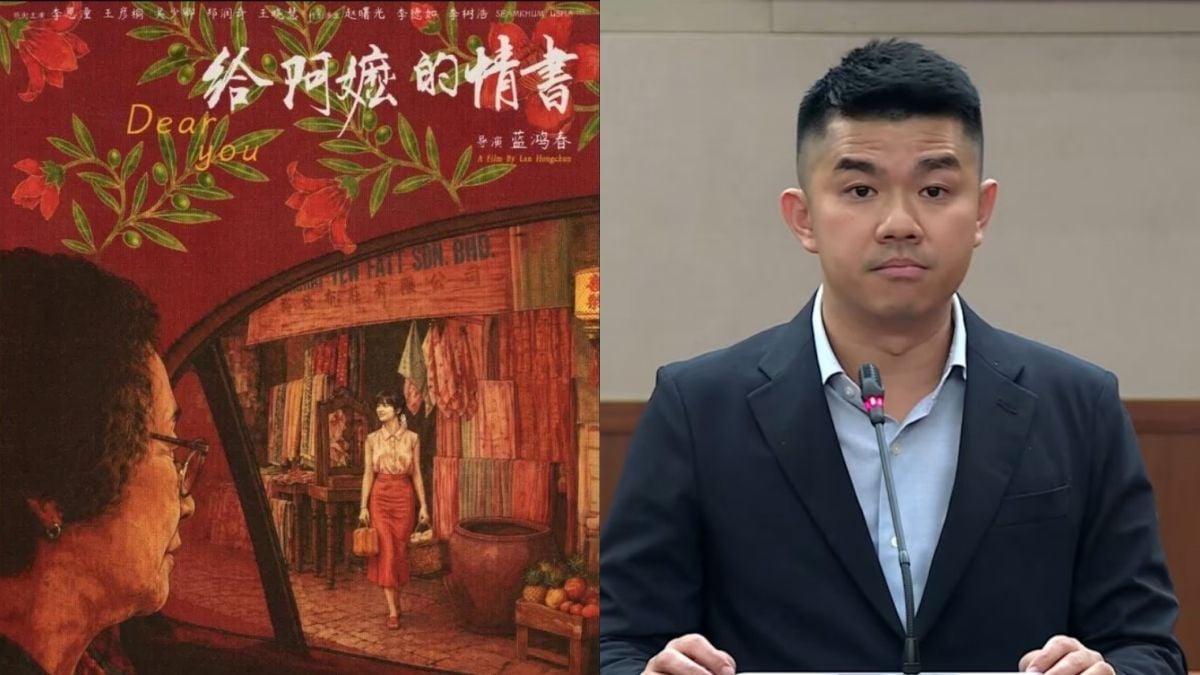
- Cai Yinzhou has asked whether heritage preservation was considered in IMDA’s decision to require a Mandarin-dubbed release.
- Public discussion has expanded beyond one film into a broader debate about safeguarding Chinese dialects in Singapore.
- Several Workers’ Party MPs have voiced support for preserving dialect heritage and reconsidering existing language policies.

SINGAPORE: Bishan-Toa Payoh GRC Member of Parliament Cai Yinzhou has filed a Parliamentary Question for the sitting on 7 July 2026 seeking clarification over the Infocomm Media Development Authority’s (IMDA) decision requiring the film Dear You (给阿嬷的情书) to be dubbed into Mandarin for general cinema release instead of screening in its original Teochew version.
The move comes as public reaction to the screening arrangements for the Teochew-language film has reignited debate over dialect heritage, cultural identity and Singapore’s longstanding language policies.
In a Facebook post published on 18 June 2026, Cai said he had received feedback from members of the public, many of whom expressed disappointment that Dear You would be commercially released in a Mandarin-dubbed version rather than retaining its original Teochew dialogue.
He confirmed that he had submitted the Parliamentary Question to Minister for Digital Development and Information Josephine Teo.
Under the question, Cai asked what factors IMDA considered in deciding that the film should be dubbed into Mandarin for general screening instead of being shown in its original Teochew language.
He also sought clarification on whether heritage and cultural preservation value formed part of the authority’s assessment and whether IMDA would consider giving greater weight to such considerations in future evaluations.
“Language carries culture,” Cai wrote while explaining his reasons for raising the issue.
He added that dialects and linguistic nuances form part of how stories are told and remembered, stating: “They were the words spoken by our parents, grandparents, and it is through them that we remember the values associated too.”
Public urges greater openness to dialect films and stronger protection of linguistic heritage
Responses posted beneath Cai’s social media statement reflected differing public opinions over the issue.
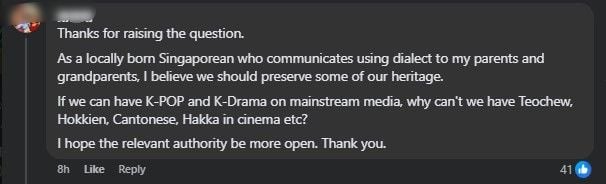
One commenter argued that preserving dialects was essential to maintaining Singapore’s cultural roots, writing: “As a locally born Singaporean who communicates using dialect to my parents and grandparents, I believe we should preserve some of our heritage.”
The commenter questioned why audiences could watch Korean popular culture and productions in foreign languages while Teochew, Hokkien, Cantonese and Hakka content remained limited in local cinemas, adding that the authorities should adopt a more open approach.
Others contended that language policies should evolve alongside changing social realities.
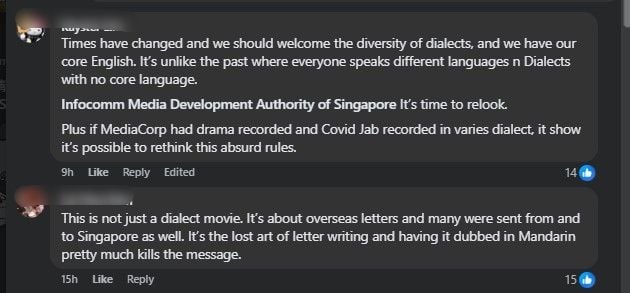
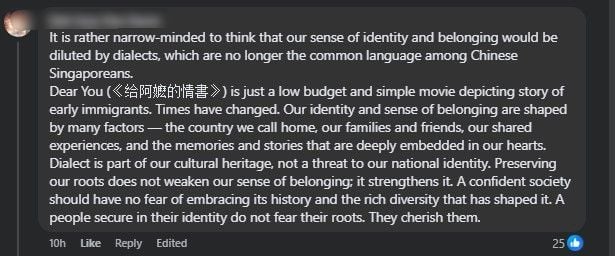
One post stated that attempts to restrict dialects had become increasingly counterproductive in the age of social media and argued that preserving dialects and maintaining bilingualism “are not mutually exclusive”.
Some also questioned why cinemas could screen films in Hindi, Japanese or Korean while limiting the use of dialects spoken by communities that helped build modern Singapore.
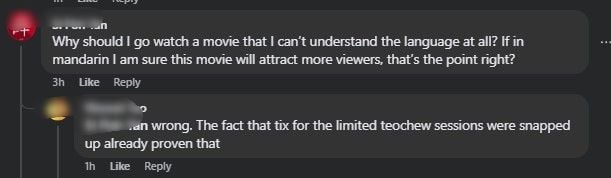
However, not all respondents agreed. Some argued that a Mandarin-dubbed version would be more accessible to mainstream audiences and therefore attract more viewers.
Another perspective held that the rapid sale of tickets for limited Teochew screenings demonstrated substantial demand for the original-language version.
Dennis Tan renews call to preserve Chinese dialects
The controversy emerged after IMDA confirmed that the Mandarin-dubbed version of Dear You would receive a commercial theatrical release, while the original Teochew-language version would be confined to its premiere as well as festival and niche screenings.
The decision prompted widespread discussion among Singaporeans, with many arguing that the matter extends beyond a single film and reflects broader questions about the future of Chinese dialects and intangible cultural heritage.
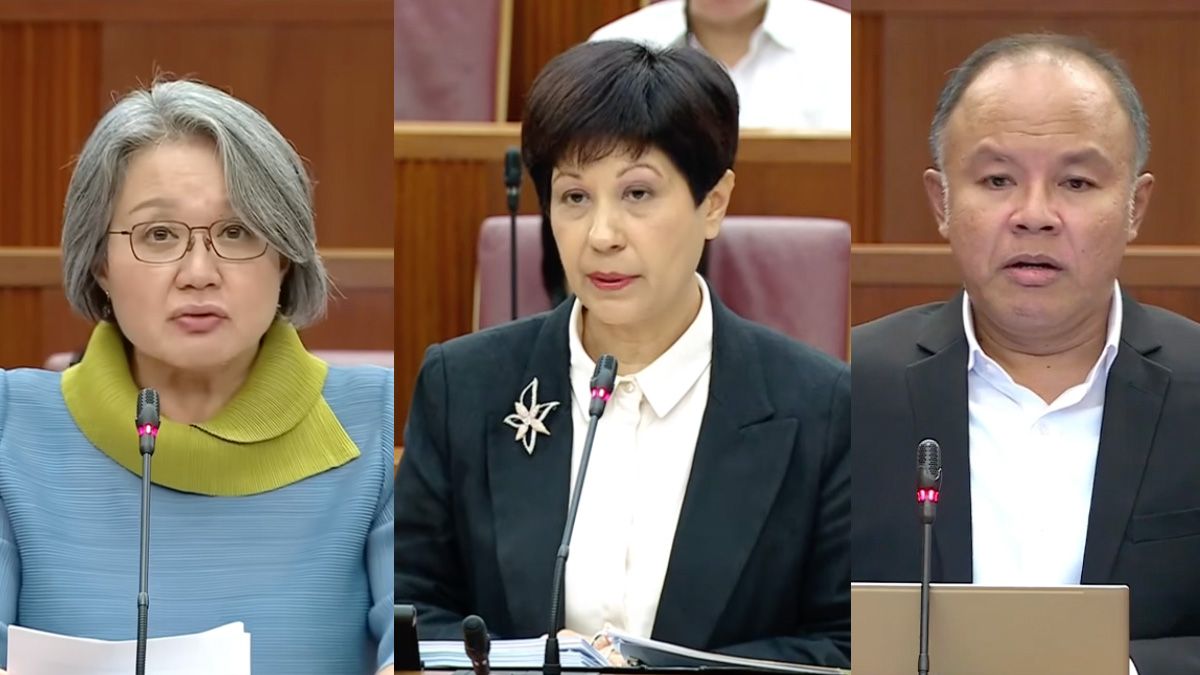
The issue has also attracted responses from several Workers’ Party parliamentarians.
Hougang SMC MP Dennis Tan described public reaction to Dear You as having sparked an important national conversation about preserving dialect heritage.
In a social media post published on 17 June 2026, Tan expressed support for efforts to preserve and promote Chinese dialects, describing them as an integral part of Singaporean Chinese cultural identity.
“In Hougang SMC, dialect has often been the language many residents use,” he wrote.
Tan noted that Teochew and Hokkien greetings remain common in neighbourhood coffee shops and that some Meet-the-People Session cases are conducted entirely in dialect.
He also voiced concern over declining usage among younger generations.
“Unfortunately, fewer younger Chinese Singaporeans know or use dialects,” Tan said.
“To lose it would mean losing not just a way of speaking, but a way of remembering, the culture, customs and food that come bundled together with the dialect itself.”
Tan questioned whether additional measures could be taken to safeguard dialects as Singapore’s population ages and younger generations have less exposure to them.
“Our Chinese dialects—whether Teochew, Hokkien, Cantonese, Hakka, or Hainanese—are the living, breathing repositories of our forefathers’ journeys, customs, and identity,” he added.
He also highlighted the continuing role of clan associations in preserving dialect traditions through community activities and cultural programmes.
Kenneth Tiong calls for original release
Workers’ Party MP Kenneth Tiong also argued that Dear You should receive a general cinema release in its original Teochew version with subtitles rather than being dubbed into Mandarin.
Referring to the migration-themed story, he said the film had resonated with many Singaporeans and noted that all 4,800 tickets allocated for original-language screenings had sold out within two hours.
Tiong argued that objections based on the Speak Mandarin Campaign were less persuasive today, pointing to the significant decline in dialect-speaking households since 1980 and asserting that “Mandarin is not under threat from Teochew”.
He also questioned why Singaporeans were effectively being encouraged to travel to Johor Bahru to watch the film in its original dialect and urged IMDA to reconsider its position.
Pritam Singh links debate to broader national discourse
Workers’ Party chief Pritam Singh also reflected on the issue as part of a wider discussion encompassing foreign talent, race and national identity.
Drawing on remarks from his 2021 parliamentary speech, Singh reiterated that concerns surrounding jobs and immigration could be legitimate while stressing that racism and xenophobia should be rejected.
Referencing commentary published by Lianhe Zaobao, he endorsed the principle that individuals should identify as “a Singaporean first” regardless of ancestry or ethnicity and warned against external attempts to manipulate domestic discourse.
He added that discussions on employment, fertility and immigration should continue but should never target any racial community.
Background to the Dear You controversy
Dear You has attracted considerable attention as a low-budget Chinese independent production that unexpectedly became a major commercial success.
The migration-themed drama follows a man travelling to Thailand in search of his estranged grandfather while uncovering long-hidden family secrets. Most of its dialogue is delivered in Teochew rather than Mandarin.
Despite its modest production budget and largely non-professional cast, the film has grossed more than 1.6 billion yuan, equivalent to approximately S$303.5 million, in China.
The film opened in Singapore cinemas on 18 June 2026 in a Mandarin-dubbed version.
IMDA previously said the arrangement was consistent with Singapore’s longstanding bilingual framework and efforts to promote Mandarin among Chinese Singaporeans.
Public interest in the original-language version nevertheless remained high, with reports indicating that all 4,800 tickets across eight Teochew-language screenings sold out within an hour after distributors secured approval for additional sessions.
The debate has also revived discussion about the Speak Mandarin Campaign launched in 1979, which aimed to encourage Mandarin use and reduce reliance on dialects.
Official figures show that households using dialects as their primary language declined from 76 per cent in 1980 to 8.7 per cent in 2020.
Although dialect use has fallen significantly, dialects have reappeared in selected public campaigns and transport announcements in recent years.
In Parliament in January 2023, Josephine Teo reaffirmed that restrictions on dialect content in free-to-air broadcasting remained necessary to support Mandarin while acknowledging that dialect programming could play an important role in communicating with elderly residents.
During the 2023 Budget Debate, Dennis Tan warned that Chinese dialects were approaching a “tipping point”, arguing that many younger Singaporeans no longer understood their ancestral languages and urging stronger efforts to preserve what he described as an important form of intangible cultural heritage.