Identity tensions behind Dear You dialect debate reflect competing visions of China, says Ian Chong
Associate Professor Ian Chong argues the dispute over the Teochew film Dear You exposes how Singaporeans hold divergent, complex understandings of China and Chinese culture, and that heritage does not equate to political allegiance.
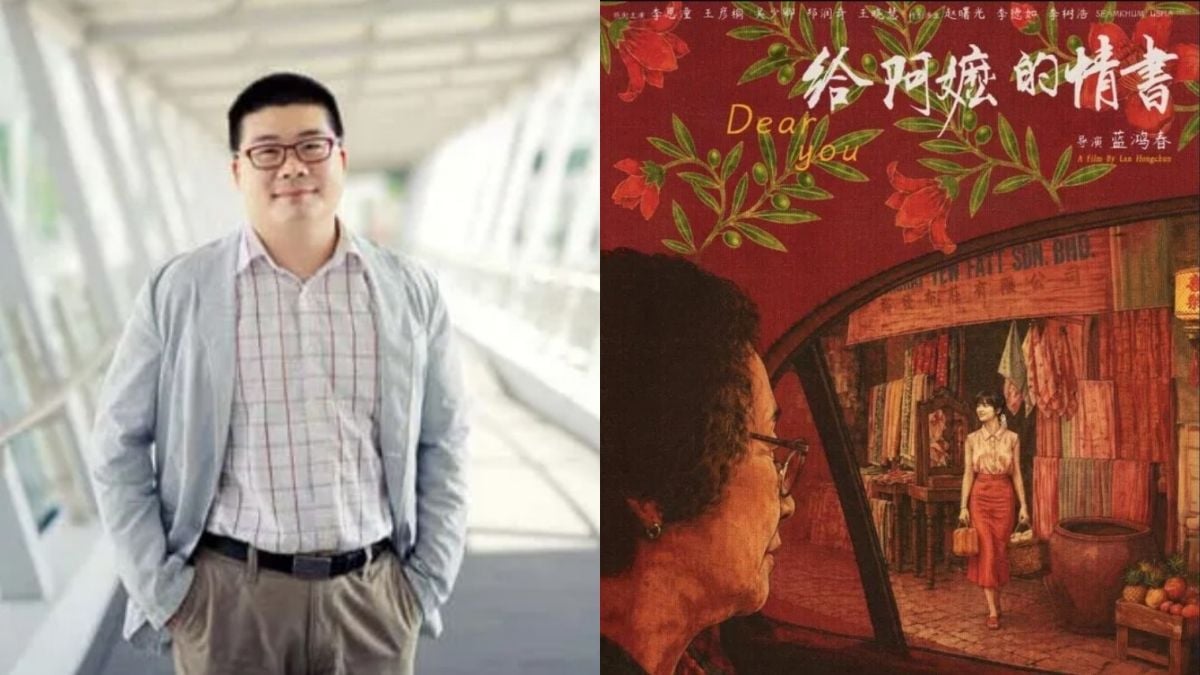
- Ian Chong says the Dear You debate exposes differing views of China and Chinese identity.
- He argues culture and ancestry should not be equated with political loyalty to China.
- The controversy reflects broader tensions over identity, multiculturalism and foreign influence.

A public commentary by Associate Professor Ian Chong, a political scientist at the National University of Singapore, argues that the controversy surrounding the Teochew-dialect film Dear You has exposed competing interpretations of what "China" and "Chinese culture" mean.
Writing in a Facebook post in the early hours of 21 June 2026, Chong entered a debate that had seen numerous calls for dialect films such as Dear You to be allowed to screen in their original language.
He argues the dispute, alongside other recent flashpoints, highlights the diversity, multiple dimensions and complexity of these concepts. He contends they are far less fixed than public debate often assumes.
His central argument is that, for the Singapore authorities and for most Chinese Singaporeans, culture, ancestry and even family feeling do not represent or equate to political identification.
Appreciating China or Chinese culture, or taking part in associated festivals, he writes, carries no requirement to accept, agree with or promote the positions of the People's Republic of China under the Chinese Communist Party.
Chong frames the debate against the wider backdrop of several recent episodes. These include public remarks by Lee Hsien Loong and government concern over social media content originating from China.
According to Chong, Lee had said in a public setting that the relationship between Singapore and China was built on interests rather than blood ties. He also notes the government's identification of online content targeting Singaporeans of Indian descent.
That content, Chong writes, sought to stir internal discrimination and economic anxiety and to manufacture social division. Dear You, screened largely in a Mandarin-dubbed version, generated heated discussion domestically and prompted exchanges at home and abroad.
Migration history
Much of Chong's analysis turns on history. He observes that many Chinese-Singaporean families migrated to South-east Asia before the People's Republic of China was founded in 1949.
Those who left, he writes, may have departed the Ming dynasty, the Qing empire, the Republic of China during the Beiyang period, or the Republic under the Kuomintang.
Chong notes that colonial governments classified many ethnic Chinese as aliens. This is borne out in the legal record.
In a 1978 study in the Malaya Law Review, Professor R H Hickling documented how colonial statute defined a "person of Chinese nationality" by descent, domicile, and tests of name, language and custom, and how restrictive citizenship laws kept many Chinese ineligible well into the 1950s.
A surviving landing permit illustrates the system. Issued under the Aliens Ordinance 1932 by the Government of the Straits Settlements, the numbered permit recorded the holder's photograph, fingerprints, nationality, vessel and date of arrival, processing the bearer as an alien entering the colony.
For the majority of these migrants, Chong argues, the attachment was to family and home village rather than to a vast, abstract nation or party-state.
The Speak Mandarin Campaign
Chong connects this history to language.
He writes that until the 1970s and 1980s, when the Speak Mandarin Campaign began, most Chinese Singaporeans spoke a range of Chinese languages at home.
These included Hokkien, Teochew and Hainanese; Cantonese, Taishanese and Sanshui varieties; Hakka; and Baba Malay, which blends Malay and Hokkien elements.
The campaign, in Chong's reading, may have served as a tool to unify the Chinese community and to pursue commercial opportunities in China. But slogans promoting a single Chinese language carried a cultural and political imagination of uniformity.
He notes that language policy serving political ends is neither unusual nor new, observing that consolidating power often involves standardising language.
Today's Mandarin, Chong writes, is based on the speech of Beijing.
Many Chinese Singaporeans lack an environment to use it at home, school or work, where English, Singapore's working language, dominates.
The folk culture they encounter day to day, he adds, derives from southern coastal traditions rather than a northern-Chinese frame of reference. He suggests this helps explain the recurring anxiety in Singapore's Chinese-language media about Mandarin proficiency and cultural fluency.
Divergent allegiances
Chong identifies a different strand among some Chinese Singaporeans who became caught up in modern China's nation-building movements.
These ranged from supporting late-Qing reformers, to backing the overthrow of the Qing, to involvement with the Kuomintang, the Beiyang governments, or the Chinese Communist Party and the People's Republic.
Such individuals, he writes, were more likely to see themselves as Chinese nationals and to seek affirmation in defending the culture and politics of the modern Chinese state.
Chong contrasts this with Chinese Singaporeans who, after the Second World War, chose to put down roots in an independent Malaya or Singapore. They needed to coexist with people of different ethnic, cultural and religious backgrounds.
He is careful to note that this coexistence did not mean an absence of prejudice or discrimination, describing mutual adjustment as a long process marked by setbacks and conflict.
For some who encountered difficulty or felt slighted, Chong suggests, this may have deepened a desire to identify with what the Chinese state represents, particularly as the People's Republic has grown more powerful.
Converging tensions
Chong argues that the recent disputes drew controversy because several distinct tensions converged at once.
These include some Chinese Singaporeans' anxieties about cultural identity, Singapore's positioning as a multi-ethnic society, and the contested, multi-faceted nature of Chinese language and culture itself.
He also lists the way some people in China, particularly internet users, imagine ethnic Chinese of other nationalities, alongside Singapore's own existing prejudices and unease over economic prospects, migration and social change.
To these, Chong adds friction between states amid global instability, and the united-front and propaganda methods of the People's Republic and the Chinese Communist Party.
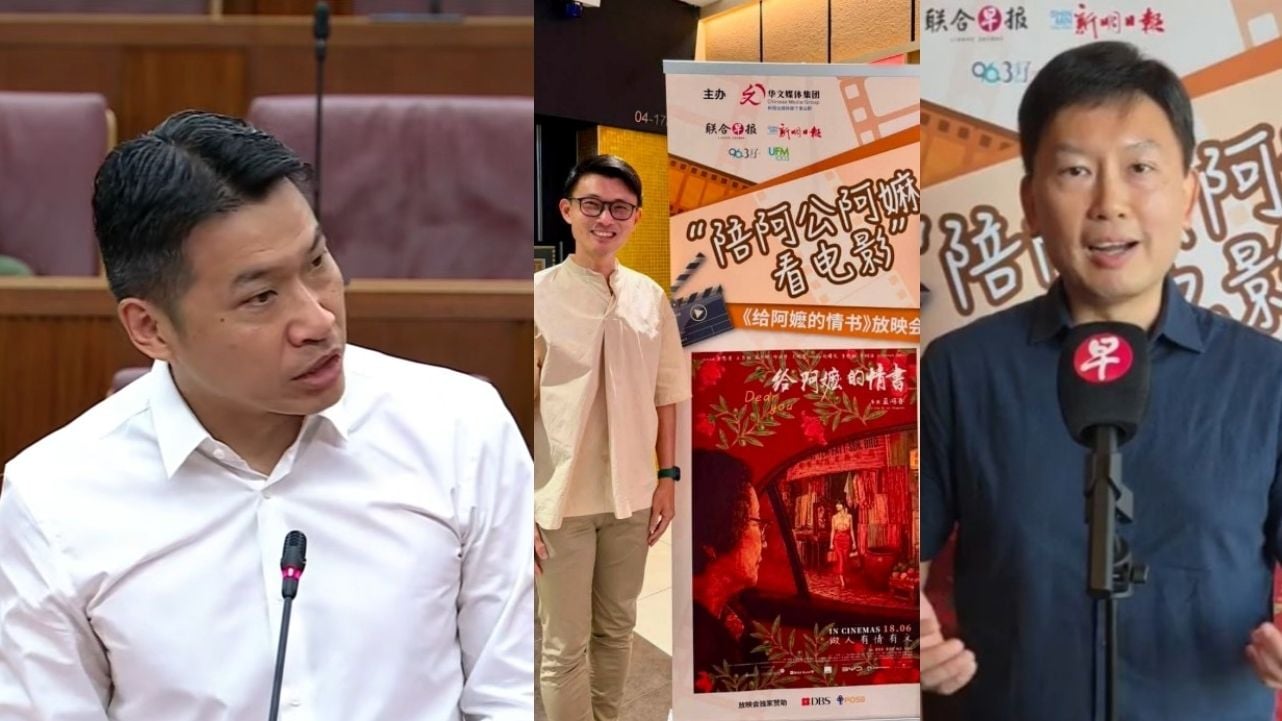
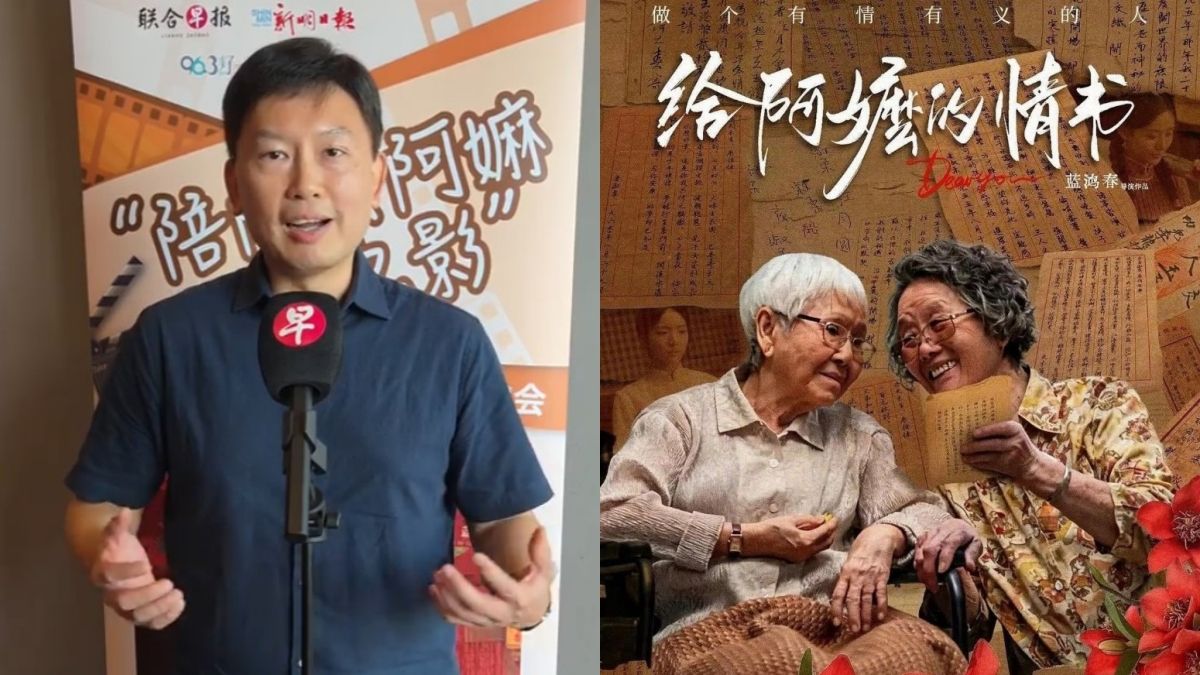
On whether Dear You was conceived as united-front work or external propaganda, Chong writes that this is difficult to know and perhaps unimportant. He notes that several official united-front websites have actively promoted the film.
It is natural, he writes, for the Chinese party-state to protect and advance its own interests, and this should not be surprising. The significance of the latest dissent, in his view, lies in revealing the strain Singapore faces as anxiety and uncertainty grow.
Whether Singapore can manage the situation appropriately, Chong writes, may be too early to judge. The starting point, in his view, is at least to recognise the environment and clarify the sources of tension.
In a later addition to his post, Chong reframes the question. The issue, he writes, is ultimately not one of lying or truth-telling, but of how to interpret and discuss phenomena that are multi-faceted, non-singular and at times unsettlingly complex, without over-simplifying.
Beyond the authorities and the filmmakers, and the decision over whether to screen a dubbed version, Chong argues that driving discussion and reflection is also the audience's responsibility. Some things, he writes, are simply bittersweet.
Closing his post, Chong points readers interested in the history of the terms guoyu, putonghua and huayu, and the earlier guanhua, to a book on the subject.
The work is The Sounds of Mandarin: Learning to Speak a National Language in China and Taiwan, 1913–1960 by Princeton historian Janet Y. Chen, which examines how phonetic standardisation across China and Taiwan served social norms, identity and national politics.
Background: the dialect screening debate
Chong's commentary follows weeks of public debate over Dear You, which opened in Singapore on 18 June 2026 in a Mandarin-dubbed version, with the Teochew original permitted only at the premiere and at festival or niche screenings.
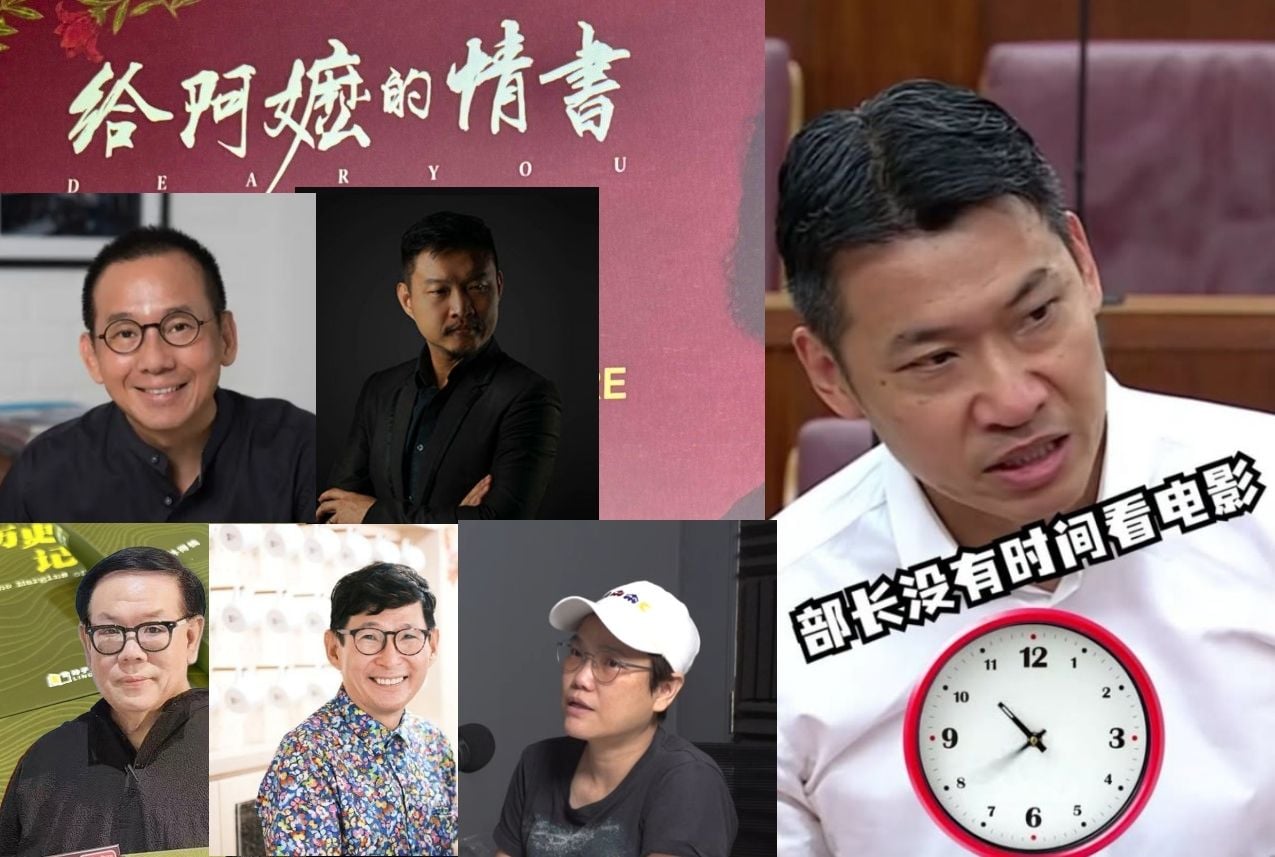
The arrangement drew appeals from film and theatre figures.
In a letter to The Straits Times Forum on 19 June 2026, filmmakers Eric Khoo and Jack Neo urged the authorities to relax the rule.
Theatre director Ivan Heng, who watched the premiere in Teochew, wrote that policies must evolve with the society they serve. Veteran producer Daniel Yun said the appeal represented almost every filmmaker based in Singapore.
The Infocomm Media Development Authority (IMDA) said the Mandarin-dubbed release supported the bilingual policy promoting Mandarin as the main language among Chinese Singaporeans, with dialect content allowed case by case.
Demand was high. All 4,800 tickets for eight Teochew sessions at VivoCity sold out within two hours.
Cinema operator Golden Village (GV) subsequently announced eight additional Teochew screenings at GV VivoCity from 25 to 29 June 2026, with tickets at S$18.50 for the public and S$16.50 for club members.