Netizens challenge Speak Mandarin Campaign narratives over language policy defences amid Dear You dialect screening buzz
Online discussion intensifies as netizens question Speak Mandarin Campaign’s historical impact on dialects and language policy, sparked by Dear You screenings and renewed scrutiny of Mandarin, dialects and English usage in Singapore.
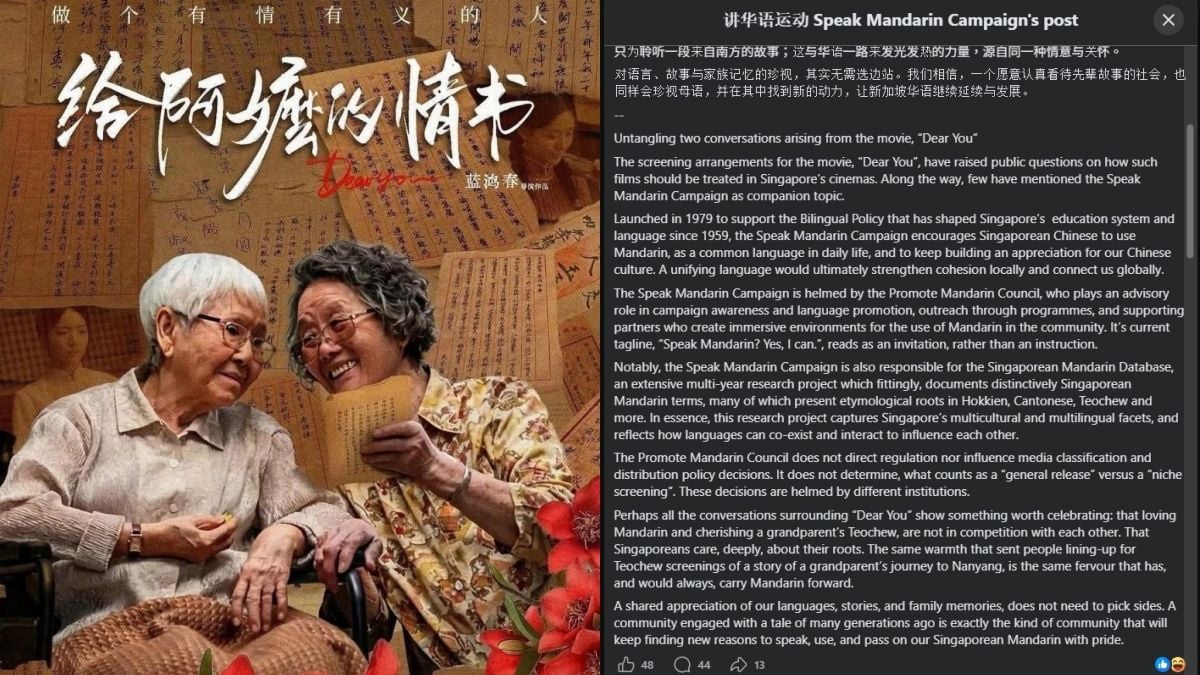
- Netizens questioned whether past language policies contributed to the decline of dialect use among Chinese Singaporeans.
- Dear You’s Teochew screenings triggered renewed debate over cinema rules, heritage preservation and language identity.
- The Promote Mandarin Council defended Mandarin’s role while saying it does not regulate film classification.

SINGAPORE: Netizens have challenged narratives surrounding the Speak Mandarin Campaign, questioning whether its defence of Singapore’s language policy has adequately addressed concerns over the historical suppression of dialects.
The online debate intensified following public interest in Dear You, a Teochew-language film released in Singapore, after discussions emerged over why its original dialect version received limited cinema screenings compared with its Mandarin-dubbed version.
Some netizens argued that the Speak Mandarin Campaign’s historical approach contributed to the decline of dialect usage, including Hokkien, Teochew and other Chinese varieties, while others defended the policy as necessary for social cohesion in a multilingual society.
Discussion over Speak Mandarin Campaign response
On 23 June 2026, the Promote Mandarin Council responded to the discussion through a Facebook post on “讲华语运动 Speak Mandarin Campaign”, addressing questions surrounding the screening arrangements for Dear You.
The council acknowledged that the film’s screening arrangements had raised public questions about how dialect-language productions should be treated in Singapore cinemas.
The council said the Speak Mandarin Campaign was launched in 1979 to support the Bilingual Policy that has shaped Singapore’s education system and language landscape since 1959.
It said the campaign encourages Singaporean Chinese to use Mandarin as a common language in daily life while building appreciation for Chinese culture.
“A unifying language would ultimately strengthen cohesion locally and connect us globally,” the council stated in its explanation of the campaign’s purpose.
The Promote Mandarin Council said the campaign is focused on awareness, language promotion, outreach programmes and supporting partners that create environments for Mandarin use in the community.
It added that the current campaign tagline, “Speak Mandarin? Yes, I can.”, was intended as an invitation rather than an instruction.
The council also highlighted the Singaporean Mandarin Database, a multi-year research project documenting Singapore-specific Mandarin terms.
According to the council, many terms recorded in the database have etymological roots in Hokkien, Cantonese, Teochew and other languages, reflecting how different languages can interact and influence one another.
The council stressed that it does not regulate media classification or distribution decisions.
It said decisions over whether films receive general release status or niche screenings are handled by other institutions and that the council does not determine such classifications.
Netizens challenge dialect policy explanations
Following the statement, some netizens criticised the council’s response, arguing that it did not directly address historical concerns over restrictions and discouragement surrounding dialect use.

Some commenters said dialects were previously treated negatively and compared past attitudes towards speaking dialects to discouraging habits such as smoking.
One netizen questioned the change in official descriptions, writing: “Now suddenly refer to them as languages ‘Hokkien, Cantonese, Teochew, and other languages’ because of the huge outcry and long queue of ah mah and ah kong waiting up to four hours to get tickets for the Teochew version?”
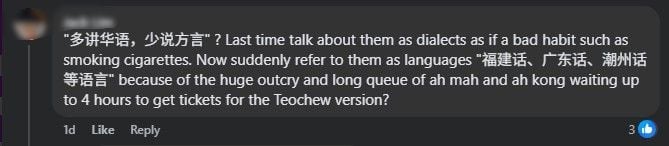
Other commenters argued that describing Chinese varieties only as “dialects” reduced recognition of their cultural and linguistic significance.
They criticised restrictions affecting dialect film screenings and called for greater access for older audiences who may better understand heritage languages.
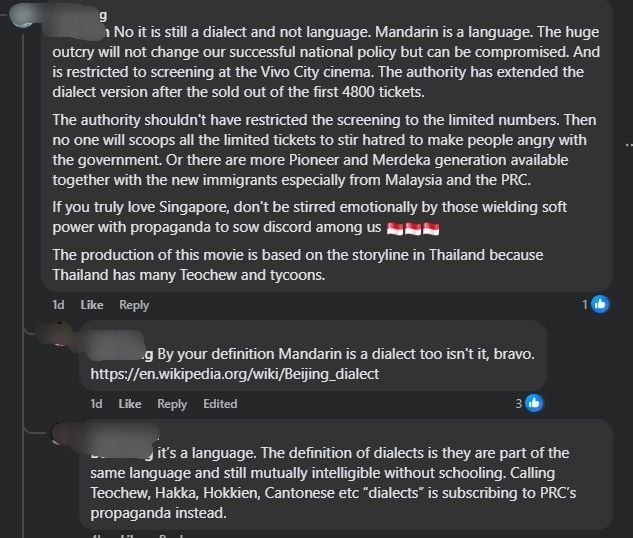
Some comments defended Singapore’s long-standing language policy, arguing that the bilingual framework had been effective and necessary in maintaining social cohesion.
One commenter said that earlier statements from the Infocomm Media Development Authority (IMDA) created the impression that cultural preservation and bilingual policy were being presented as competing choices.
The commenter argued that treating a dialect film as a threat to bilingual policy was unnecessary, describing it instead as a production preserving cultural heritage and telling stories of previous generations.

Debate over Mandarin, English and cultural identity
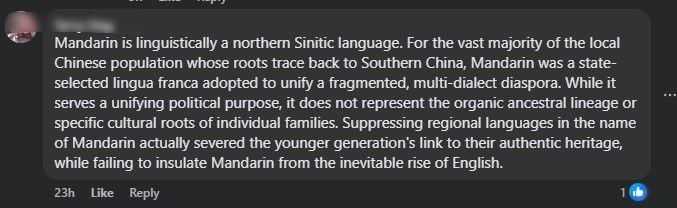
One commenter noted that Mandarin is linguistically a northern Sinitic language and argued that many Chinese Singaporeans trace their ancestral roots to southern China.
The commenter said Mandarin was selected as a common language to unify a fragmented, multi-dialect Chinese diaspora, but argued that it does not represent every family’s specific ancestral language.
The same commenter argued that suppressing regional languages in favour of Mandarin had weakened younger generations’ connection to heritage while not preventing English from becoming increasingly influential.
Another commenter said that since his granddaughter was born in 2018, he had frequently heard parents and children speaking mainly English at neighbourhood playgrounds.
The commenter said Mandarin speakers in such environments were often from Malaysia or China and argued that the challenge facing Chinese language education in Singapore was that many families no longer use Mandarin at home.
The commenter compared the situation to learning a foreign language, arguing that Mandarin becomes harder to acquire when it is not used in daily family settings.

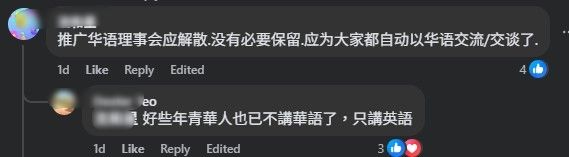
Some commenters questioned whether younger Singaporeans still maintain strong Mandarin ability and argued that English has increasingly become a mother tongue for many families.
Others said preserving dialects and heritage stories could strengthen cultural roots and encourage greater appreciation of linguistic traditions.
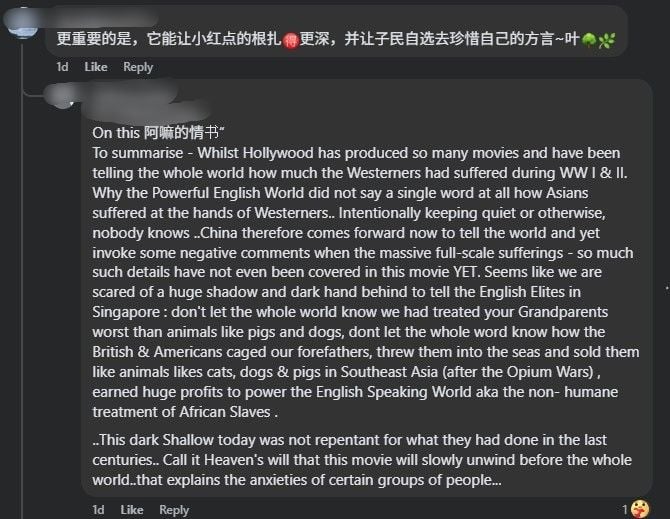
Some discussions linked Dear You’s popularity to broader historical narratives involving Chinese migrants and Asian communities under colonial rule, with commenters arguing that these experiences have been less visible in mainstream English-language discussions.
Calls for policy alignment
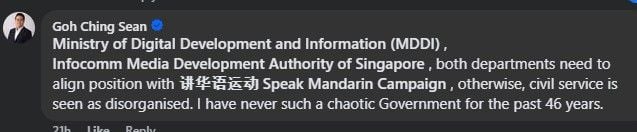
Some netizens called for the Ministry of Digital Development and Information (MDDI), IMDA and the Promote Mandarin Council to present a more coordinated position on language policy.
One commenter argued that different government bodies appearing to present different approaches created perceptions of disorganisation.
Another criticised concerns that foreign-language films could undermine the Speak Mandarin Campaign, arguing that such concerns reflected a failure of the campaign’s overall objectives.
The commenter also criticised ticketing arrangements for Dear You screenings, claiming that the situation benefited Golden Village, the film’s distributor, while elderly viewers faced difficulties securing tickets.

Other commenters suggested that the Promote Mandarin Council should be dissolved, arguing that Mandarin was already widely used in Singapore.
Several also questioned the long-term effectiveness of the campaign and expressed concerns over the future of Chinese language and cultural heritage.
Some attributed declining interest in Chinese language learning to an examination-focused education system and called for Chinese lessons to become more engaging.
IMDA signals more flexible approach
The debate followed an earlier statement by MDDI on 22 June 2026, when it said IMDA would adopt a more flexible approach when considering applications for dialect films to be screened in cinemas.
The ministry said it remained open to facilitating and supporting further Teochew screenings of Dear You if the distributor applied, citing public interest in the film.
Following the statement, Singapore distributor Clover Films applied for approval to hold up to 50 Teochew-language screenings in Singapore.
Demand for original Teochew screenings
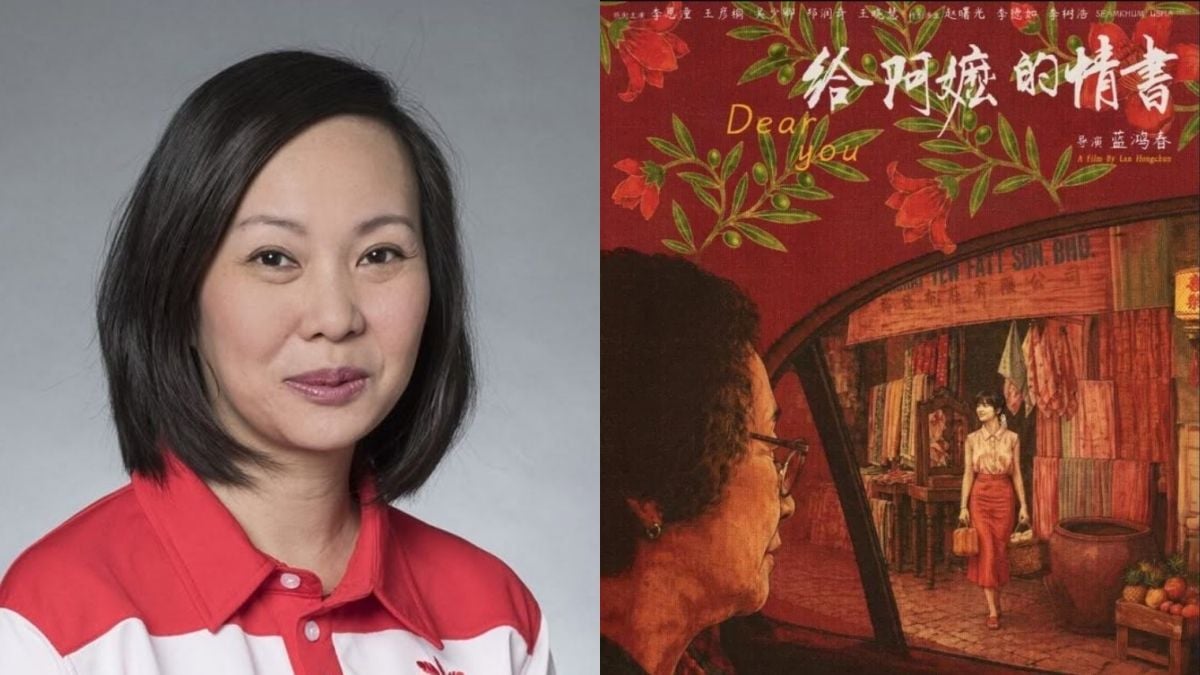
Dear You, directed and co-written by Lan Hongchun, follows two connected timelines.
One storyline follows a grandson searching for his long-lost grandfather in present-day Thailand.
The other follows a newly married man who leaves China for Southeast Asia in the 1940s in search of work.
The film became one of China’s biggest box-office successes in 2026 and opened in Singapore cinemas on 18 June.
Interest in the original Teochew version increased rapidly after its release.
Golden Village screened eight Teochew-language sessions between 18 June and 21 June, with all 4,800 tickets sold within two hours after sales opened on 16 June.
On 19 June, Golden Village announced eight additional Teochew screenings at GV VivoCity’s GVMax theatre between 25 June and 29 June.
The cinema operator said it worked with Clover Films to seek IMDA approval for the additional sessions.
Tickets for the newly approved screenings went on sale at 3pm on 22 June through Golden Village’s ticketing channels and box-office counters.
They sold out within one and a half hours, with long queues reported online and at cinemas.
Parliamentary questions over dialect films
Members of Parliament from the Workers’ Party and the People’s Action Party also raised questions over Chinese dialect films and language policy following the Dear You controversy.
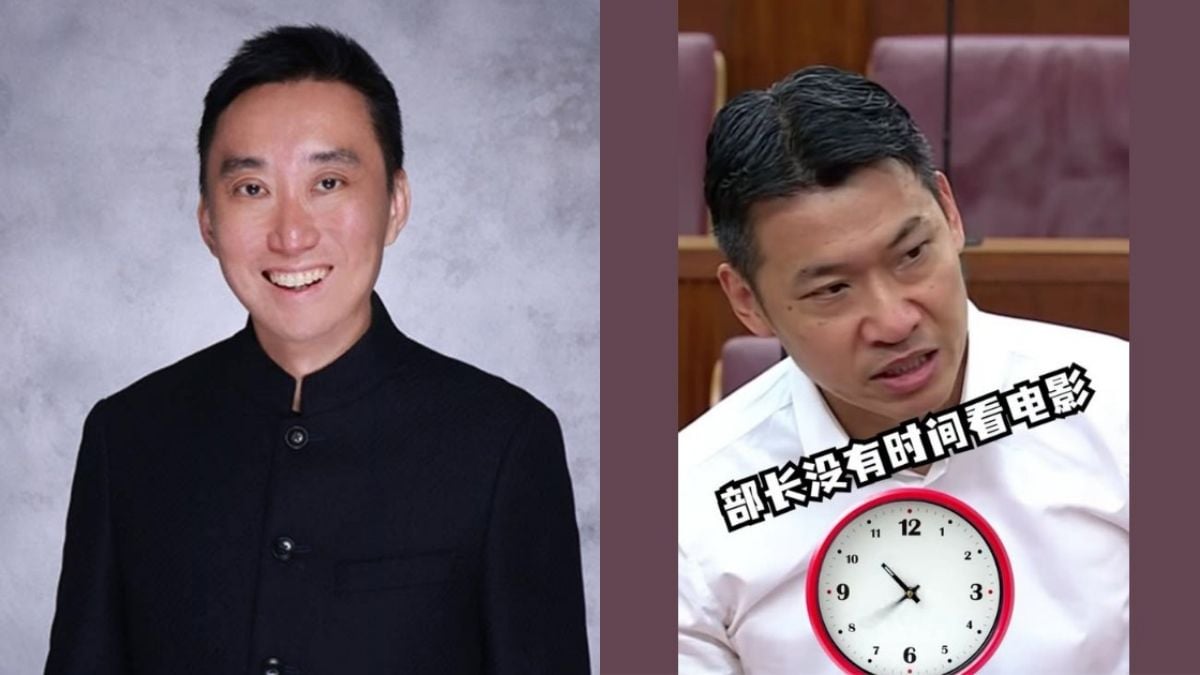
Workers’ Party MP Kenneth Tiong asked MDDI whether guidelines requiring Chinese films for general release to be in Mandarin could be reviewed to allow original dialect versions with subtitles.
He also questioned whether the rationale behind the Speak Mandarin Campaign remained relevant, noting that dialect use at home had fallen below 12 per cent.
PAP MP Cai Yinzhou asked about IMDA’s decision requiring a Mandarin-dubbed version of Dear You for general screening.
He sought clarification on whether factors such as cultural and heritage value were considered and whether such factors could receive greater weight in future decisions.
Separately, Dennis Tan renewed calls for preservation of Chinese dialects, describing them as an important part of cultural identity and noting their continued use in some communities despite declining usage among younger Singaporeans.
Filmmakers call for policy review
Singapore filmmakers have called for authorities to reconsider restrictions affecting dialect-language films.
Veteran filmmakers Eric Khoo and Jack Neo argued that dialect films should be treated similarly to foreign-language productions, particularly as dialect content is already available on streaming platforms and flights.
Other directors, including Boo Junfeng and Royston Tan, said dubbing could reduce authenticity and weaken the cultural and emotional nuances carried through dialects.
Several filmmakers said Singapore should continue balancing bilingualism objectives with the preservation of dialect heritage and original artistic expression.